Home

Dharmachakra  TeluguTalli   File:Shraddha Arya wearing a Sari, traditional Indian attire.jpg  nri       Dharma                       Culture                        History                     Trends                           NRI
Welcome to the Andhra Cultural Portal: the cultural network, interface, and database for the serious Andhra person. For the latest articles on the most relevant ACP topics, choose from the clickable icons above or go to the menu to view by subject area. Readers from Telangana, Rayalaseema, and Kosta are all welcome with open arms as we cover the common history, language, and culture from all regions of ancient Andhra. This website focuses on serious issues pertaining to and the high culture of the Undivided State of Andhra Pradesh: The Diamond of India. It is the e-Society for all true lovers of the Telugu Language, Andhra Culture, and Indic Civilization.

If you would like to contribute articles or blog posts to the Andhra Cultural Portal, please contact the admin:   admin@andhraportal.org  

Latest From ACP Blog Forum

ACP Blog
December 20, 2025Continuing our theme on Vijayanagara, long-time readers would have seen the work of many a Telugu poet. However, the poetesses of India in general and Aandhra in particular have received less limelight. This article is an attempt at rectifying that. Our Post today is on the talented Princess of Vijayaganagara named Ganga Devi, and her poem on her mighty husband Kampana and his Madura Vijayam. Introduction History is part objective fact and part poetic re-telling. It is not the rote recitation of dates and personalities  that stirs the hearts of a populace or that inspires the mind of children, but the brandishing of the bon mot to the benefit of the people. Although this has most often been the ken of men, there have been many a poetess in sanskrit literature as well. “Among the authors of the hymns of the Rg Veda, We have some women. The Aatreya house produced the poetesses, Visvavaaraa (V.28) and Aapalaa (VIII.91). In the Kaksivat house, there was a line of poetesses and of these Ghosaa was the greatest. She was the daughter of Kakseevan. She called herself a princess and probably her father was a ruler. She remained unmarried to a late age, when she was favoured with a husband by the grace of the Asvins. She wrote in Jatee metre and her verses are easy and well balanced.” It should be noted that  “Juhuu (X.109), Sasvatee (VIII. 1), Maandhaatree (X. 134), Maadhavee (I.91), Saasiprabhaa (IV.4), Anulakshmi (II.78, III., 28, 63, 74,  and 76)m Revaa *I.87), Pahaayee (I. 83), and Rohaa (II. 63) are also poetic seers of the hymns”. “Vijjaa was Sarasvatee incarnate except that she was dark in com-plexion. VIjjakaa has been identified with the queen of Candraaditya son of Pulakeshin II, from the Nerur and Kochre grants dated 659 A.D. Raajasejharacarita mentions poetesses, Kaamaleelaa, Sunandaa, Kanakavallee, Madhuraangee, Lalitaangee, and Vimalaangee (of Malava). Ballaala’s Bhojacarita mentions some poetesses too…The anthologies also quote verses of Jaghanacapalaa (Padyav), Avilambitasarasvatee (Padyav, Indulekhaa (Subh), Kuntidevi (Subh), Candaalavidyaa (Skm), Nagamaa (Sp.), Padmaavatee (Pmt), Madaalasaa (Sp), Rajakasarasvatee (Skm), Lakshmee (Sp), Veerasarasvatee (Padyav), Sarasvatee (Skm), and Seeta (Bhojaprabhandha). ” There are of course many, many more, such as Priyamvada, Vaijayanti, Jayanti, Uppaya, Kahina, Triveni, Lakshmi Raajnee, Sundaravalli, Jnanasundari, Kamakshi as well as the famed Mohanaangi (better known as Thirumalamba, daughter of Emperor Krishna Deva Raya). This litany of poetesses aside, there is one who stands tall in the history of Aandhra and Bhaarathavarsha in general, and that is Princess Ganga Devi. Traced to the Royal Line of the Warangal Kakatiyas, this talented literateuse was proudly married to Prince Kampana of the Sangama Dynasty. She wrote of his magnificent exploits in the Southern Campaign catalogued in the Madura Vijayam. History The history of Princess Gangadevi begins with the rise of the Vijayanagara Empire. She is prolific in the details about her husband, Prince Kampana the Elder (son of Bukka I). The Sangama dynasty remains a contested claim. Nevertheless, it’s rise to Imperial stature is incontestable. In this it was aided by a number of loyal lieutenants who would critically feature in later periods. One such was Saluva Manga. Saluva Manga, of course, would be the ancestor of the famous Saluva Narasimha, Emperor of the Second Dynasty of the Vijayanagara. “Saluva Narasimha was a king of VIjianagar of the second dynasty who ruled in 1456-1486 A.D. His father was Gunda, grand-father Gauta (Gautamara) and great-grandfather Saaluva Mangi. His mother was Mallaambikaa. He married Sreerangaambaa. He died in 1493 A.D. Gauta was the chief of Kalyaana and his decent has been traced to the Moon. Mangi was a friend of prince Kampana, son of Emperor Bukka, and accompanied him in his expeditions to the south. He made extensive gifts to the shrine of Sreerangam. He was for a long time commander of the forces under king Mallikaarjuna and his successors of the first (Sangama) dynasty and appears to have proclaimed himself king late in his life. His mother Mallaambikaa had no issue for a long time. Gunda and Mallaambika retired to Ahobilam for perfoming penance near God Narasimha of that place. ‘Please with their devotion the God appeared before the king in a dream, and expressing his satisfaction at their devotion, promised them a son possessed of all virtues and ordained to rule the whole world. The king awoke from his dream and communicated it to his wife. After a short time a son was born to them whom they called Narasimha after the God. The military genius and excellent qualities of Narasimha are then described at length. He is said to have ruled over the territory comprising the Kalyana, Kanchi, Katak, Kuntala, Chola and Pandraka.” Nevertheless, the outset to all of this remains the fall of the Pandya Dynasty and the rise of the despicable polity of Ma’abar. More colloquially known as the Madurai Sultanate, it was the southernmost vestige of Malik Kafur’s campaign. it attained infamy for its bigotry, rapine, and debauchery in its brief period. It had routed the brave Hoysala King Veera Ballala III by treachery. Having initially been defeated in the field and surrounded by his mighty force of an estimated 100,000, it feigned surrender. Then within the declared 2 week armistice it launched a surprise attack on the unwitting Hoysala, and brutally flayed and stuffed his corpse. It was by breaking the laws of (chivalrous) war that the defending army of 6,000 could sally forth 2 victory. Rather than cry betrayal—it is time defenders of Dharma understand the nature of their foe and adjust accordingly as per Sri Krishna. So villainous and despicable was this brief, 48 year tyranny, that even famed Moroccan traveller Ibn Battuta was disgusted at its cruelties. He condemned this sultanate, despite his being a moslem jurist by profession. Indeed, more than virtue, it was an ephemeral victory for unrestrained vice. Though these disgusting names aught not be uttered out loud, they have nevertheless been recounted here: When faced with such flagrant inhumanity that an own-side account could not disguise its opprobrium for the figure, then providence could not help but raise a hero for the age. And that hero was Kumaara Kampana. Author Though Ganga Devi herself is thought to be of the Royal House of Kaakatheeya, not much is in fact known about her. She was the Chief Consort of Kumaara Kampana, who was otherwise much married. She is reported to have accompanied him on his Southern Campaign, making possible her closely delineated details of this prowess. Composition The Composition is actually known as the Kamparaaya-charita, as per the colophon. Nevertheless, the poem is coequal to the city of Madhura/Madurai itself. It is a Sanskrit Mahakavya, and was composed in 8 cantos. It is replete with biographical information and accurate retelling of events. This makes it of significant historical value. From the refractory feudatory Sambhuvaraya to the heinous and hideous anti-Hindu bigots that ruled Madurai, this poem is a veritable chronicle of the period. Selections § The poesy of Princess Gangadevi is at once uplifting and educative. She commences with the obligatory Benediction of all proper Kaavyas. § Contrary to modern Indologists, there is an obvious literary spectrum that runs from North through South that embraces the tradition of Purvacharyas. The poetess lavishes generous encomium upon her antecedents. § Princess Gangadevi bemoans the withering of Dharma in the Kali Age. She recounts the reign of her father-in-law, Bukka I, and praises him to high heaven. The Imperial City of Vijayanagari is compared to the Amaravati of Indra himself. § Contrary to the self-abasing persianisation that is replete in the rekhta-induced raktha of today’s alleged ganga-jamuni “sophisticate”, the high-born Indic royals and elites of yesteryear scorned Farsi and condemned it as inauspicious and guttural to the ear: § The concluding canto concludes with an exciting blow-by-blow recounting of the duel between Kumara Kampana and the Thurushka Madurai ruler. References: Thiruvenkatachari, S. Madhuravijayam of Ganga Devi. Annamalai University. 1957 Krishnamachariar, M. History of Classical Sanskrit Literature. Delhi: MLBD. 2016 Sastri, G. Harihara. Madhura Vijaya or Virakamparaya Charita. Trivandrum. 1924 Modali, Nagabhushana Sarma, Ed. Mudigonda Veerabhadra Sastry. History and Culture of the Andhras. Hyderabad: Telugu University. 1995 [...]
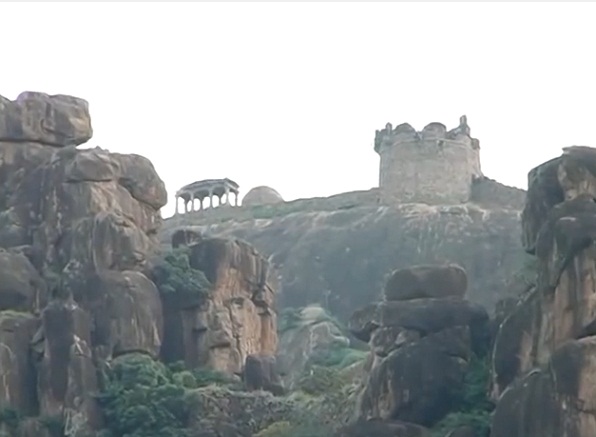
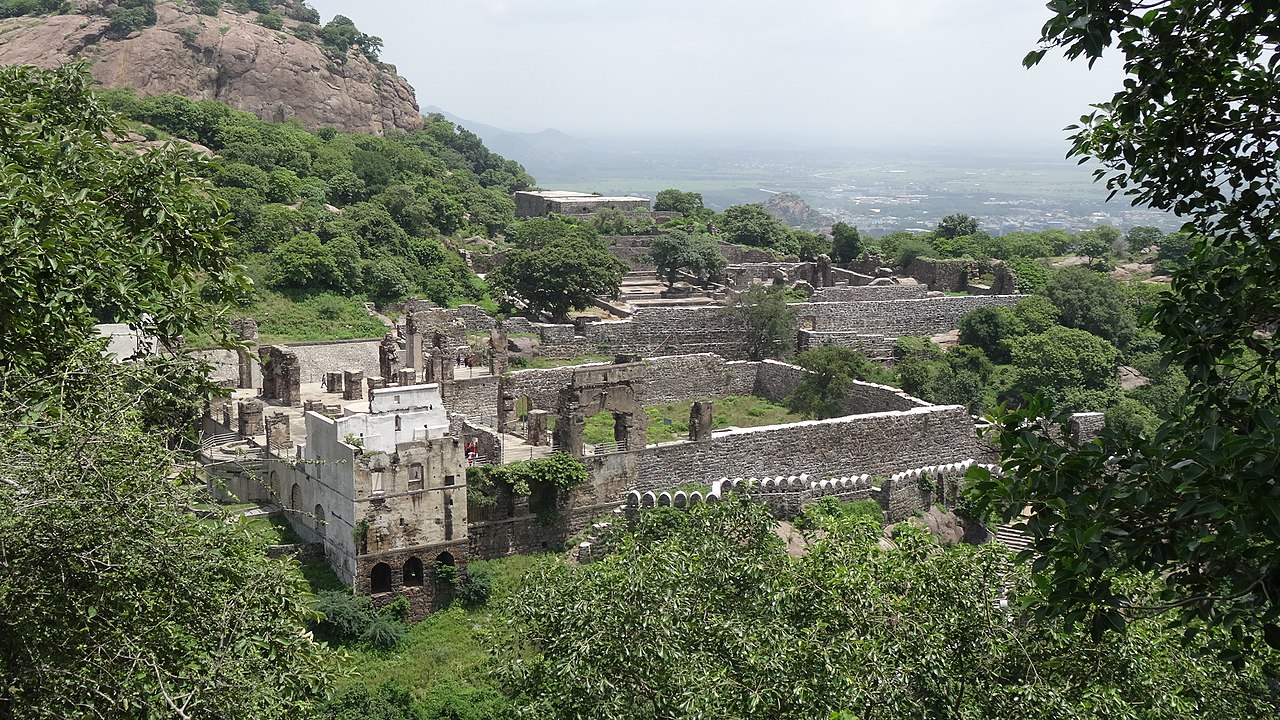
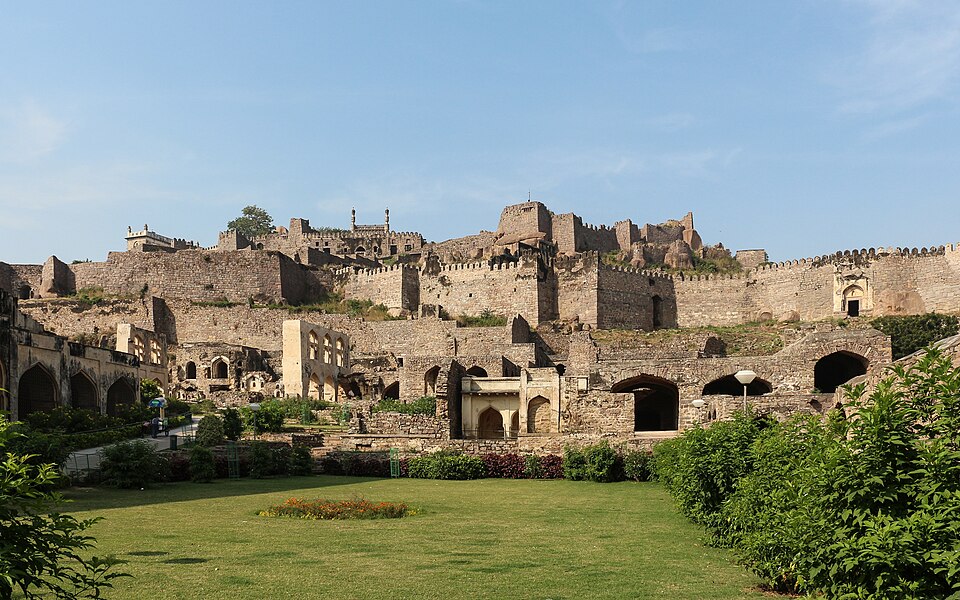
November 30, 2025Continuing from our Ancient Desa Series over at Indic Civilizational Portal is the natural next step in clearing up the propaganda around Telangana state. The people of Telangana have earned their new state and have their own cultural distinctiveness; however, this cannot be used as pretext for changing ancient history in order to advance new claims or even nizami razakar separatism. Indeed, there are reasons to believe that this is the purpose behind the bifurcation of old Andhra Pradesh state which honoured the old Andhra desa, dating back to Kakatiyas & Satavahanas. It is possible to respect a new state, and its cultural festivals, while rejecting it’s shameless praise for turkic invaders like the bahmanis and asaf jahs. History should be studied objectively. But in an environment of colonial slavery, one must pushback against actual propaganda. One such baseless compliment lavished upon these medieval colonisers is the one around Golkonda Fort, and the creation of Hyderabad/Bhagnagar. History “Golconda: Described as the king among the hill forts of Andhra Pradesh, it stands about 5 miles west of Hyderabad. The beginnings of the fort go back to 14th C. i.e. The Kaakateeyas of Warangal and known locally as “Golla konda”. It stood as the border of the Kaakateeyas on the west…The fort of Golconda stands on a rocky granitic hill and surrounded by a strongly built crenellated wall of stone curtain, with little over 3 miles in circumference, having high bastions 87 in number. ‘The bastions, semi-circular in shape, are built of solid blocks of gran, firmly cemented together and sometimes with iron clamps”. Originally it had 8 gates, but only 4 in use now.‘” The history of the Golkonda Fort dates at least as far back as Rani Rudrama Devi. None other than Marco Polo himself mentions her and her just reign and flourishing diamond/textile trade at Motupalli. He writes that the diamonds were sourced from mountains near her capital (Warangal). Some argue it may go further back than the Kakatiya Dynasty to the Yadava Seunas of Devagiri. Just as Devagiri was renamed Daulatabad, so too was the Fortress town of Golla-konda renamed to Hyderabad. A point of note is that both ‘Giri’ and ‘Konda’ mean hill, in Sanskrit and Telugu respectively. Close examination will demonstrate that it was not a mere “mud fort” but already an existing fortress by the time of Anapota, the Recherla Velama king. Golkonda was first ceded by Kapaneedu to the Bahmanis in 1350, it was retaken and lost by the Velamas in the 1400s, and taken and lost by Vijayanagara in the 1500s. In Kanha Nayak/Krishna Nayak’s time itself it was a fortress-town. “Kaapaaya Naayaka had to flee to the jungles and was only able to purchase peace by…the cession of the town of Golconda, much gold and many elephants. He also yielded a throne studded in turquoises”. When the diameter of ancient Pataliputra (Patna) was itself 9 miles long, the satellite-town of Hyderabad/Bhagnagar being 5-7 miles from Golkonda town does not make it a new city—but in effect, a suburb. No doubt Bhagyanagar was founded by Mohd. Qutb Shah and a number of years later renamed to Hyderabad, followed by the construction of Charminar. But like Shahjahanabad, it is merely an extension of a pre-existing fort/city/town.  Diminishing Gollakonda to a mere “mud fort” when there is clear evidence to the contrary is emblematic of an effort to minimise the contributions and claims of the Telugu natives of the land. Those with allegiance to pakistan and turkistan are welcome to return there. Telangana state belongs to Telugus and tribal Gonds, and as one can now see, so does the ought-to-be restored fort-city of Golkonda. From Kaapaaya/Krishna Nayak, the city would be ruled by the bahmanis and their Qutb Shah subordinates. It is important for dharmics to study the history of other peoples, though independent of our own legitimate rulers. The history of a land’s colonisers can often be edifying for political events, not recorded in our own. Qutb Shah Dynasty Quli Qutb Shah was the first of this dynasty. Qara Qoyunlu Azeri Turkmen 1374 Bairam khwaja, then qara mohd. Qutb shah was latter’s cousin. The second Qutb Shah was considered more tolerant than the first, who was considered a bigot. Third & Fourth Qutb Shah The third Qutb Shah was forgettable. The fourth was the infamous Ibrahim Quli Qutb Shah, who first sought refuge in the Imperial Court of Vijayanagara. Araveeti Rama Raya controlled the reins of power and ruled as Emperor-in-all-but-name. His munificent generosity to the ingrate Ibrahim would be betrayed at Talikota (Rakkhasi-Tangadi), where the latter fought on the opposing side. IQS would go on to displace his nephew at Golkonda. Ibrahimpatnam tank is credited to him, as is the popularisation of Classical Indic Music at his court, which he learned during his time at Vijayanagara. His reign was nevertheless politicking and typical for turkic invaders, who slew family members with little compunction. This set the stage for the rise of one his middle sons. Fifth Qutb ShahHe is credited for marrying the hindu dancing girl Bhagmathi. The suburb of the capital of Golkonda, Bhagnagar, would be built in her honour. Later, under the pressure of religious bigots, Ibrahim would officially renamed it as Hyderabad. Nevertheless, it continued to be popularly—and often officially—referred to as Bhagnagar and Golkonda. There are numerous European maps evidencing this. The reason for the newly designated “Hyderabad” was due to over-population in the fort-town of Golkonda. Sixth Qutb Shah The Sixth QS’s reign is primarily notable for his putative desire to construct a new capital to rival Hyderabad—a mere 4 miles east of it. This again underscores how whether it is Hyderabad or this aborted Sultannagar, a mere 4-5 miles from the original city does not a new city make. Seventh Qutb Shah The Seventh Qutb Shah had an eventful reign. The famed French traveller Tavernier frequented the kingdom during this period. The politicking Mir Jumla expanded his power as minister until he finally alienated the king. He fled Golkonda seeking aid from the mughals, who promptly sent an army to besiege Golkonda. The king was saved only by giving a daughter to aurangzeb’s son, whom he promised to make heir. In the mean time, it should be noted that the even moslem chroniclers record that Chhathrapathi Shivaji collected tribute from Golkonda during this time. Tanashah The 8th and last of the Qutb Shahs was Abul Hasan ‘Tanashah’. He is considered the most tolerant of the QS sultans, mostly on account of his hedonistic ways, considered refined (hence his epithet). Kuchipudi (which originates in Chindhu Yakshagana) is often erroneously credited to him—though he did give it patronage. His reign is notable for his ministers Madanna & Akkana, who aligned him with Shivaji Raje, for the War against aurangzeb, the fanatic. It should be noted that he would be the second Qutb Shah to pay tribute to the Marathas (this time to Sambhaji).  Sambhaji would greatly assist Golkonda in fighting the final mughal siege in 1687. Tanashah would resist the mughals for months, but would eventually be captured and imprisoned by the mughals. Epilogue After the Qutb Shahs, Golkonda was taken by the mughals in the time of Tanashah. It would later by assigned by the mughals to the turkic asaf jahs to govern as viceroys, rather than sovereign kings. The asaf jahs would then be defeated by the Marathas and Hyderabad state would pay tax and become subordinate to them. Then finally the nizam signed the Treaty of Subsidiary Alliance becoming british imperial subordinates. Even if one takes into account their disobedience to Delhi, nizami Hyderabad would have been fully autonomous for barely a decade or two given its fealty to the Maraatthas and later vassalisation by the East India Company. A barely autonomous vice-regalty does not an independent sovereignty make. Whether old Andhra Pradesh state or new Telangana state, Hyderabad-Golkonda belongs to the native Telugus by right of historical origin and modern Liberation by India in 1948. Architecture The description of the architecture of this fort will be general. Like many medieval sites, Golkonda is a product of many layers. However, the danger of Indology is the constant effort at erasure of the ancient. The qutb minar complex in Mehrauli is on such example, where 27 Jain temples once existed near Delhi, but were destroyed for the maseed. The old fort, Puraana Qila, is dated at least as far back as Anangpal Tomar, if not to Indraprastha itself. This does not change the reality that Lal Qila (Red Fort) dates to Shahjahanabad. Similarly, there is no doubt that the Golkonda maseed and various other additions can be credited to the four centuries of (oft-interrupted) administration by the qutb shahs and asaf jahs.  This is all discussed in great detail by various academic works. As a result, the focus of this article will be primarily on the native Telugu-Kakatiya contribution. Construction The general construction of Golkonda fort seems to align with ancient Arthasaastra fort designs: “As regards the plan or shape of a fort, Kautilya prescribes, either circular (vritta), rectangular (deergha chaturasra) or square (Chaturasra). While choosing the site of a fort, he warns that care should be taken to see that it is not exposed to external dangers. Hence, he says that the capital city shall be in the centre of the kingdom, preferably on the bank of the confluence of rivers or a deep pool of perennial waters.” Indeed, even the irregularity of a rhombus (a kind of trapezoid) is not unknown: “This place is identical with modern Naagaarjunakonda in the Krishna valley of Guntur district. Archaeological excavations conducted here between 1955-60 revealed numerous structures of early historic period. ‘Of them, the citadel with its grand fortification wall, ditch, gates, and barracks is indeed very important. The citadel wall which encloses a trapezoidal area of 3000′ x 2000’, ran along the right bank of river Krishna in the west” One might go back even further to account for this: “The Vishnu Dharmottara mentions three shapes (viz.) aayata (oblong [rectangular/trapezoidal) chaturasra (square) and vritta (circular). The assertion that the prior construction could only be a “mud fort”, a.k.a. mud-brick, is also false. “During this period developed a new masonry technique called cyclopean, in which, large blocks of stones were piled up one above the other and tightly fitted into each, without the use of any joining or binding material as chunam or mortar. Writing about Forts in medieval Deccan, Yazdani observers “By the advance of knowledge, masonry seems to have been introduced in building defence works, first in crude forms, but later quite regular, although the size of the stones, as in cyclopean walls, remained a significant feature of military architecture of the Deccan, until the advent of the Moslems“. In fact, many other Telugu forts including and ante-dating Golkonda were also made of stone, and in particular, granite: “The second criterion that governs the construction of a fort is the availability of strong building materials, locally or in close proximity. This is amply proved by the fact several hill forts are built on high rocks, where granite or black granite (basalt) which is locally available, in the hills of Hanumakonda which lies nearby, within a distance of 3 miles, while the huge mud rampart was built of the dug out earth and mud from the deep moat. Similarly other hill forts like Gutti, Gandikota, Golconda, Kondaveedu, Kondapalli and Udayagiri were built of red granite that is locally available where as Penugonda, Charagiri and Aadoni were built of white granite available in the local hills.” A survey was taken of all the forts of United Andhra Pradesh state as follows: “I. Sthala durgas Coastal Andhra 66            Rayalaseema 42       Telingana 21 II. Jala durgas Coastal Andhra  3             Rayalaseema 1          Telingana ___ III. Giridurgas Coastal Andhra   6            Rayalaseema 8           Telingana 16 IV. Vanadurgas Coastal Andhra  __         Rayalaseema 2            Telingana___ ” Even Europeans mapped modern Hyderabad as “Golconda”, noting “as far as Santhome on the east coast and in land as far as Penukonda, Kurnool, and Indoor, while its north-eastern border touched modern Orissa. The whole of this area, in fact, corresponded to modern Andhra Pradesh, and named as Tilang by the Indo-Persian Chronicles, for, to a large extent, the population of this region spoke Telugu as their mother-tongue.” The modern fort of Golkonda is 3 miles in circumference. The fortifications maintain two walls called Puttakota and Khilla, although 3rd also exists. As stated previously, there are 87 bastions. Similar layouts can also be seen elsewhere. “Kondapalli is stated to have been built at the behest Komaragiri, by one Dinakarareddi in the year Bhaava, corresponding to A.D. 1394. There were in all 84 forts termed as tthaanas. It also mentions that a certain Donti Allaada Reddi was the Durgaadhyaksha of Dharanikota in A.D. 1225 There were also appointed several officers to defend different forts, who belonged mostly to the Velama and Balija communities. ” Structures Even the most biased accounts from the nizami period of Golkonda attest to the preceding older structures. These include not only cave shrines but an actual Hindu temple and hall of justice. While one might be credited to Madanna, the Maraatthi brahmin (some assert Telugu Niyogi) minister of the Qutb Shahs, the cave shrine would clearly be older. Conclusion Among the more preposterous claims since the turn of the millennium is the notion that Coastal Telugus are somehow “settlers” in Telangana, and that urdu speakers are somehow “native”, when they would in fact be colonisers. They are merely the leftover chaff of turkic invaders who treat Telugu/Maraatthi/Kannada speakers with contempt. Anyone claiming camaraderie with razakars is bereft of dignity and self-respect and deserving of the same fate their masters experienced in 1948. No AP-ite cares if Telangana people want to create a new identity around their tribal influences. But Telangana itself is a neologism from foreign turkic hordes who enslaved and oppressed the locals. The true heroes of Telangana are those who fought the Sayudha Poratam, like Chakali Ailamma and the tribal hero Komaram Bheem. Hyderabad was merely founded as a satellite city of the existing fortress-town of Gollakonda. Indeed, the agglomeration known Cyberabad/Hyderabad, if at all it should be renamed, it should be Golkonda since that was the original municipality.  There are undoubtedly maps by Europeans showing the name Bhagnagar, indicating the renaming to Hyderabad is at a later date. It too is similar to the cultural colonialism seen in changing names from Manukota to Mahbubabad, Mahishapuram to Bhainsa, Edhulapura to Adilabad, Enugandhala to Karimnagar, and Indrapuri to Nizamabad. Whether from Turkestan or Inglistan, an invader is an invader & is there to exploit. Every once in a while there might have been a less criminal ruler, but the real locals of the land, the true bhoomiputras are the Telugus of Telangana, Rayalaseema, & Coastal Andhra. Those who live alongside them, must learn that respect is a 2 way street. Those who embrace this one-sided love story are either shameless slaves or dora collaborators pushing for the same separatism that was crushed in 1948. The asaf jahs were cowards who were the first local rulers to slavishly sign the british East India Company’s treaty of subsidiary alliance. They were servants of the mughals, servants of the Marathas, and servants of the british. They are bereft of any dignity and worth, and have no claim to sovereignty based on a mere 200 years in the satellite-city of Hyderabad/Bhagnagar (only 7 miles from the original fort, with connected subterranean walkway). Most modern cities and even many ancient cities were several miles in diameter. Even in that time, Emperor Krishna Deva Raya captured Golkonda town—so much for exclusive possession. He also conquered Warangal in 1516 CE. There were Hyderabadi Moslems like Shoaibullah Khan and Bilkis Latif who embraced their own identity while respecting the local culture and distinguished medieval history from modern politics. Accepting the democratic status quo and living together in harmony is one thing, re-fighting settled issues and inventing phony colonial identities is another. No number of new political parties or digital accounts or purchased professors/academics will change the reality that Asmaka desa was in Western/Central Maharashtra (Nashik) only, and that the vast majority of Telangana was in Andhra desa itself. Indeed, rather than Asmaka, if Telangana were to cede districts to any desa, it would be to some new Vidarbha state, which was the ancient desa on that border. Seeking to extend Telangana’s archaeological sites towards Andhra’s coast only proves Puranic history itself. Andhra/Trilinga desa was marked by Kalesvaram, Bhimesvaram, & Srisailam—in Telangana, Coastal Andhra, and Rayalaseema respectively. It is also why the Telugu Association in Hyderabad Princely State was called “Nizam Andhra Mahasabha” and why even Warangal was called “Andhranagara”, and the Grand Kakatiyas were called”Andhreswara”. Telanganites have every right to celebrate their new state, cultural festivals like Bonalu, and tribal heritage from the Gonds. But all of these must respect the true Puranic history of Trilinga/Andhra desa of which Telangana, Andhra Pradesh, and Rayalaseema were all a part. After all, historically Andhra itself meant Telugu, and it was settled not from the West (i.e. Asmaka), but from the east (Prachya/Trikalinga).  If one is really “shaastriya” and not a propagandist, undivided Andhra Pradesh would actually be the view of “dharma”. It is most hilarious that nizami-dora propagandists are now claiming to speak on behalf of “dharma” and “shastra” when here is an actual Vedic Brahmin Pandith (Kota Venkatachalam gaaru) on the topic of Andhra desa: References: Sastri, K.A.Nilakantha. A History of South India. New Delhi: Oxford. 2015 Kota, Venkatachalam Paakayaaji (Pandith). Chronology of Ancient Hindu History Part I. Vijayawada: AVG. Punjala, Alekhya. Rani Rudrama Devi. New Delhi: National Book Trust India. 2016 Sreenivasachari, P. Golkonda. Dir of Archaeology: Govt. of Hyderabad. 1954 Rocco, Sha. A Guide to Golconda Fort and Tombs. Government Central Press. Hyderabad Tavernier, Jean-Baptiste. Travels in India. Vol. I. London: Macmillan & Co. 1885 Ramanayya, N. Venkata. Velugotivarivamsavali. University of Madras. 1939 Murthy, Dr. N.S.Ramachandra. Forts of Andhra Pradesh (fron the earliest times upto 16th c.A.D.). Delhi: Bharatiya Kala Prakashan. 1995 Frampton, John. The Travels of Marco Polo. London: Argonaut Press. 1929 Gole, Susan. Early Maps of India. New York: Humanities Press. 1976 [...]
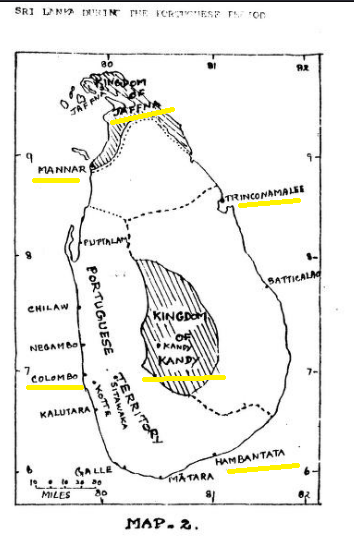
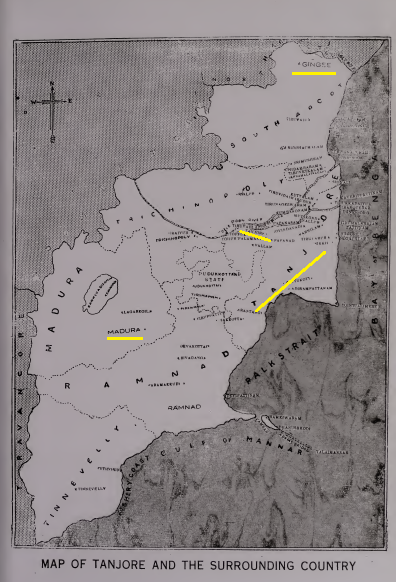
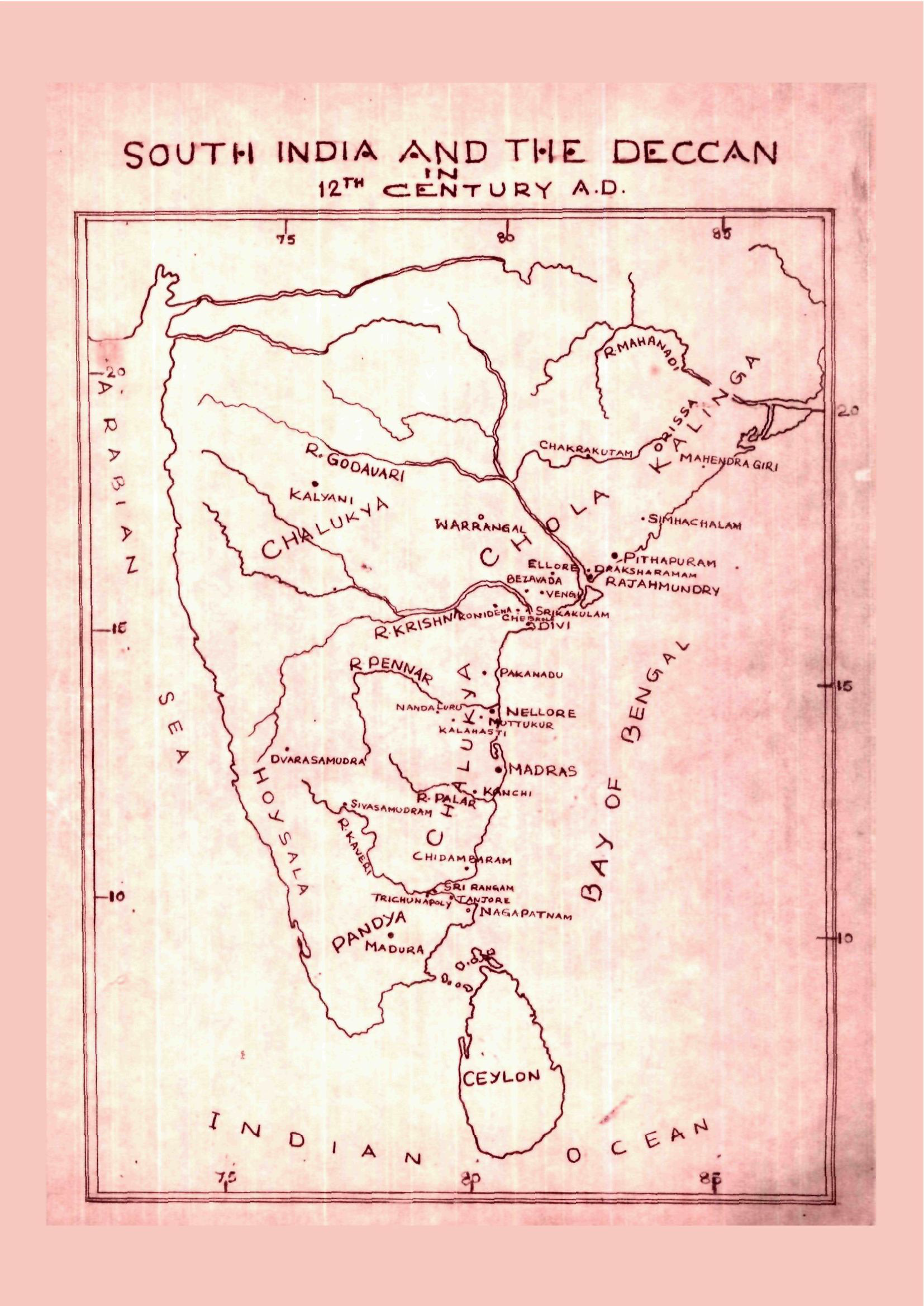
October 31, 2025Subsequent to our article on the Tanjore Nayaks, it is only natural to round out this Series with the Southernmost outpost of Nayakdom. This polity would be located not in the geographical boundaries of the Indian Mainland, but on the island of Ceylon, better known today as Sri Lanka. Today’s Post is on the Telugu Kingdom of the Kandy Nayaks. Introduction A little known but consequential polity in the subcontinental littoral was the Telugu Nayak Kingdom of Kandy. Unlike the delectable sweet with which it is homophonous, this story is not treacly saccharine. Contrary to popular opinion, conquest by colonial Europeans was not a cakewalk. With dedicated financing not only by their home nation corporations and kingdoms, but by the Church itself, these various East India Companies (from the Northern to the Southern ends of Western Europe) could concentrate forces and finances in a way subcontinental peers and near peers could not. Even if defeated, the invader home base was 6,000 miles away and defended by the most advanced naval power. Indeed, Hindu cupidity and greedy stupidity being what it is, Surati bankers were in fact financing locally many of these same companies, who were expanding elsewhere (and later, closer to home). This is the policy of hoping the crocodile eats you last.  True, there is the hope that he might have eaten his fill and become tired of a next gulp, but who wants to bet survival on space in another’s stomach. The Madurai Nayaks have of late, come under much deserved condemnation for their selfish conduct and disloyalty to their Imperial overlord, the Emperor of Vijayanagara, but also the craven opportunism versus the Mysore Maharajas. While the Wodeyars can be castigated for declaring independence first (effectively sealing Sriranga III’s fate), they were still somewhat supportive of Vijayanagara’s struggle against Bijapur & Golkonda. No such luck with the Madurai, which had truck with the likes of the latter, and shamelessly invited and aided their campaigns against Mysore. However, scions of Madurai Nayaks need not hang their hands in complete shame. There were a number of bright patches. First and foremost was the cultural significance of this dynasty, which was one of the exemplars of pure samskrthi in this age (rajadharma vis-à-vis Vijayanagara was another matter…). Second, was that Chokkhanatha, the last major ruler, himself had a change of heart and reversed Madurai Nayak policy versus Bijapur & Golkonda by opposing them. Madurai took up the native cause all too late, and was in fact, devoured last. However, from this same family was spawned a Nayakdom that would prove a stubborn opponent to rising European colonialism—in Sri Lanka of all places. The provenance of this and other Nayakdoms can be traced as such. The Kandy Nayakdom was founded by a member of the Madurai Balija Nayakudu family. Contrary to modern politickers in dravidian circles, these Telugus were not related to the native Sinhalese populace, but ruled over the Bengali-Odia origin Sinhalas (as per their own traditional history).  Sri Lanka at this time was divided into multiple petty polities. These proved to be easy pickings for the piratical portuguese, who could only be held back by the might of large kingdoms and empires, such as Vijayanagara & the Maraatthas. At a time when the piratical portuguese were gulping ports & petty kingdoms left and right, Kandy not only successfully resisted them & won multiple battles against them, but decisively defeated them with their Dutch alliance. Though Kandy would eventually be taken over by the british, this formidable foe of colonialism had its crescendo in the Telugu Nayak Kingdom of Madurai. Background The Background of the Madurai and Kandy Nayakdoms must be understood in the background of the Viceregalty of Madurai. The Madurai Nayaks were not merely another Nayakdom but were treated by Vijayanagara as the Viceroy of the entire South. This is what gave them the authority to intervene in the affairs of other kingdoms (even Sri Lanka) and why they arrogantly demanded deference from Thanjavur—even in the matters pertaining to the Imperial Capital, such as Imperial Succession. Here is the backstory of this erstwhile Pandya kingdom capital. Once ensconced in Madurai, the Naayaks almost immediately had to contend with the portuguese hunger for converts and church territory. Due to the Imperial Family’s indulgence of the portuguese since the days of Veera Narasimha and eventually Krishna Deva Raya himself, this was a mix of force and favour. Although licenses and properties were granted, force was applied whenever the portuguese (inevitably) overstepped. The Viceregalty of the South meant that the Madurai Nayak was the Overlord of all of Kerala, including Travancore (which famously defeated the Dutch at Colachel). Mysore declared independence in 1646 & Madurai followed. The Empire effectively reigned from 1332-1646 CE. Shivaji Raje issued coinage on the model of Vijayanagara. Emperor Sriranga III d.1677. Imperial lists end 1710CE. The outset of the Sri Lankan Conquest Though Sri Lanka was a Tributary of Vijayanagara and in its Sphere of Influence, due the prevailing winds of fortune, the piratical portuguese washed up on their shores and almost immediately began meddling, subverting, and pillaging the coast. The rulers at this time were the Tamil Jaffna kingdom of the North, the Sinhala Kandy kingdom of the centre, and the Kotte kingdom which was nominally the high king. All three were idiots. The latter later sub-divided due to a succession crisis (the reigning king wanted his adopted son to succeed over his own descendants). These 3 sons then overthrew him and proved to be even more idiotic. In this climate, it was relatively facile for the portuguese to play protector to the less powerful claimant to the throne as pretext to control. When the new king proved hostile (as Mir Jafar later proved to the british after plassey) he was simply replaced. They also insisted on conversion to Catholicism, which a number of claimants did. Despite desultory revolts, the short-sighted chaanakyan policy Bhuvanekabahu and his successors adopted resulted in the same pattern. They would seek the invader’s help against a local rival, then be despatched after so that an ever more slavish candidate could be set up. By 1538 CE, the portuguese began to dominate the island’s biggest kingdom and by 1597 CE had full control of it with a Catholic vassal-king: the ironically named Dharmapaala, who would be rechristened as, I kid you not, Don Juan. The inland Kandy kingdom originally proved no different. It was defeated by another Sinhala kingdom (Sitawaka and its king Raajasinha) and its deposee Karaliadde Bandara fled and made abject samshraya to the portuguese. They promptly rechristened his children as Don Philip and Dona Catherina. And like that, all 3 kingdoms fell like dominos. Jaffna had routine civil wars, with the portuguese finally pacifying them with a mix of carrot-and-stick in 1591. By 1620 the last regent of Jaffna (Sankili II) was deposed and Tamil Jaffna became a portuguese province.  However, the portuguese overstepped when they attempted to insist that the Kandy Sinhalese Royal Lady marry a portuguese nobleman. This led to a popular revolt. The preceding Sinhalese convert king then reverted to Buddhism as Vimala Dharma Suriya and led a freedom struggle against the portuguese. This eventually succeeded. The struggled continued with Suriya’s successor. It was a mixed bag. Though the portuguese succeeded in burning Kandy, the polity remained independent and came to terms. But Goa remained adamant in its burning desire to control the Island and restarted the war. At least 2 phirangee armies were cut to pieces by the Sri Lankan natives. Through a mix of heroics, intrigue, and outside intervention, the portuguese were finally expelled after 153 years. If the portuguese sought outright violent control of strategic chokepoints, the Dutch were more clever. Due to competition from the first-mover advantaged portuguese and later british, they focused less on chokepoints and more on indirect (followed by direct) control of the areas of production. It was a ingenious bit of strategic adaption that allowed them to lay a tight noose by which the fiercely independent Sinhala Kandy kingdom had its affairs muzzled. The Dutch In contrast to the modern ambivalence that Sinhalas have to South Indians, there has long been a closeness between the royal families of Sri Lanka and Madurai going back to legendary sinhalese Prince Vijaya himself. After arriving from Bengal by way of Gujarat, he insisted on a consort of royal lineage. As a result he sought out the royal family of Madurai. This tradition continued into the Kandy Sinhala kingdom. It is in this manner that the Telugu Nayaks of Madurai came into possession of the Kingdom of Kandy. If the Sinhala Kandy Dynasty can be credited with evicting the portuguese on their own, with the Dutch then encroaching on the coasts, then the Kandy Telugu Nayak dynasty can be credited with evicting the Dutch and stoutly resisting the british. Vamsa Vrksha (Genealogy) The origin of the Kandy lineage is rooted in the Madurai Nayak dynasty. This family traces its root to Naagama Naayaka of the Vijayanagara Empire. The curious case of Naagama and his son Vishwanatha is described thus: Sri Vijaya Rajasinha The Sinhala Kandy Kings had a long history of intermarrying with Southern Royalty. Sometimes it was Madurai, sometimes it was Thanjavur. But as time wore on, and especially with the rise of the Nayakdoms, the Royalty became increasingly Indian rather than Sinhalese, and Telugu at that. Officially the Telugu Nayak dynasty starts with Sri Vijaya Raajasinha in 1739. In the aftermath of the heroics against the portuguese, this dynasty would follow in its predecessor’s footsteps by becoming ardent Bauddhas. Ironically, many Buddhists retained their portuguese names to this day. Though Hindu in origin, the Telugu Nayaks gave patronage to the sangha and the buddhist clergy. Narendrasinha was the last Sinhala dynast. Though there is an anecdote that the Madurai Nayak, a staunch Hindu, denied the request for marital alliance, this appears apocryphal. Narendrasinha was succeeded by his brother-in-law Vijaya Rajasinha, who married the daughter of Narenappa, a relative of Bangaru Thirumala Naayaka. His reign was relatively uneventful. He was succeeded in 1747 CE by Keerthi Raajasinha. Sri Kirthi Rajasinha An intractable opponent of the Dutch, Sri Keerthi Raajasinha was a redoubtable king with dreams of full sovereignty. The Dutch had effectively tied a coastal noose around the Kandy kingdom. This was the price for their cooperation against the fanatical, piratical portuguese. It was out of the frying pan and in to the fire. King Keerthi even reached out to the british in 1760. This however failed in 1762. The Dutch tried mollifying the king of Kandy, but war became inevitable. Keerthi succeeded in the first war, and utterly defeated the Dutch in the same year. Stung by the loss, they plotted revenge and struck again with a decisive defeat in 1765 CE followed by harsh terms. For the next 20 years, it would be a defeated and subordinating peace. From mere caretakers of the maritimes, the Dutch had managed to legally established themselves as formal co-rulers of Lanka, rather than mere merchants-adventurer. Keerthi would stew in silence ’til his passing. Rajadhi Rajasinha When the previous king passed, he delayed the succession and appointed Raajadhi Raajasinha as regent. The Telugu Nayaks, to their credit, did everything needed to integrate into Sinhalese life. They learnt the language, became ardent Buddhists, and were even beloved by the masses. The aristocracy, however, fumed at their foreign origin. While it is true that Sinhala had become its own distinct nation since the days of Vijayabahu, since the days of Devanampiya Tissa, it had become staunchly buddhist and a part of Indic Civilization. As Europeans would show at the Battle of Vienna, even non-nationals of the same civilization can be favoured over complete outsiders to the subcontinent and its littoral. The Sinhalese aristocracy, time and again, did not seem to get that message. They remained as subordinate and subordinated adigars. The First Adigar in precedence was Pilima Talauma. Operating as veritable prime minister, his eye remained fixed on the throne even whilst serving as tutor to the minor-king Kannusami (later Vikrama Raajasinha), who would later have his tutor executed for treason. For all the active intrigue and diplomacy, Sri Lanka remained in the eye of avaricious foreigners. This was primarily due to 2 reasons: cinnamon and the Bay of Trincomalee. Eventually, Kannusami made it to the throne into majority and immediately prepared to despatch the Dutch. His predecessor suspected the latter plotting to assassinate him from the Maritime Provinces they controlled in Sri Lanka. This policy would continue with the successor. Vikrama Rajasinha (aka Kannusami) Vikrama Raajasinha, for all his glaring flaws, was a redoubtable king who stood out for his long resistance to both the dutch and the british. He engaged in hectic international diplomacy from the beginning, reaching out to not only european naval powers, but southern Indian powers such as Mysore (usurped by Haider Ali from the Wodeyars) and Tanjore (under new Maraattha management). None came to his aid, forcing him to seek out the French and finally the british. Indeed, he won the first war against the british, relying on the time-tested guerrilla warfare of his people. He purposefully kept the roads in disrepair for logistic impediment. He lured them into the city, denied them supplies at every turn and then worsted them when they least suspected. He gave no quarter to the foreign invaders—a fact which ironically led to their somewhat lenient terms 10 years later. Though british conquest of the island was only a matter of time given their dominance of the Indian southern peninsula by this time, the treacherous sinhalese aristocrats would lead to his rapid downfall in the second war. Divide-et-impera is a time tested policy which occasionally worked even on the Nayak’s dynastic relatives, but the Sinhalese aristocracy proved uniquely inept (or adept at dividing and subdividing their already small island). The fact that they failed to modify policy even in the wake of wanton portuguese cruelty, but somehow had the stones to routinely revolt or betray entire columns of troops to the british only shows why Sinhala’s resistance was middling at best. After more than a decade of dogged resistance, the defeated Vikrama was sent to Vellore by the british. Legacy The Nayak kingdom can be credited with its formidable resistance to foreign invasion. They respected the local culture and indeed half-assimilated into it. However, they were everywhere surrounded by assassins (on 1 occasion, even the buddhist clergy was suspected). The british were (and are) uniquely skilled at flattery to the face and subversion behind the back. They raised defamation, slander, and calumny to an artform and reserved it for their most inveterate foes. In the case of the Maraatthas, it was Tulaji Angre who was slandered by angrezi rumour-mongers. In the case of Sri Lankan fish-mongers, however, Vikrama Raajasinha was the choice target. The violent Vikrama no doubt turned sanguinary at the end, being surrounded by literal conspiracies that were not mere theories but actual truths. Squashing coup plots time and again leads to angry rulers. Whether or not Vikrama turned tyrannical, it is clear that he was surrounded by threats. The populace that initially loved him later turned on him due to these bloody tactics. Whether the various stories are true or not, he gave the Sri Lankans (whether Sinhala, Tamil, or Telugu) a resistance worthy of remembrance. Administration Part of what made Madurai and ostensibly Kandy Nayakdom so effective was the Polgyar (Palayyakarrar) System. Regarding revenue, these lesser aristocrats (Feudal Gentry) would maintain 1/3 to the Nayak, 1/3 for troops, and 1/3 for the Polygar himself. The brave Veerapandya Kattabomman was a polygar himself and fought ’til the bitter end. A variation of this was no doubt in function at the Kandy court. An additional note on Madurai: Contrary to Kautilyan shenanigans in the Arthasaastra, the Pradhani was not a position appropriate for Pandits. Indeed, the story of the original Dalavay (Chief Prefect/Shogun) and his origin is of particular interest. Cultural Contribution Kandy is famous among Buddhists today for the Temple of the Tooth. The Kandy Nayaks can be credited with reviving and preserving the Bauddha ways of the island in the wake of baleful colonial influence. Conclusion Many European colonial powers have overly large maps showing not only political influence but coastlands that the inland Indian powers never recognised. The advantages of superior sea power and naval tactics aside, not all of this was fake. The portuguese frequently converted fisherman and then claimed them and their villages as subjects & territory of the portuguese king (until an invariable salutary defeat by Madurai cavalry here or Tanjore cavalry there, disabused them of such notions). Nevertheless, patrolling each an every patch of coastal territory is a tall order for any society, particularly inland powers who are being simultaneously invaded by the most successful  cavalry armies on the planet. When this is joined by the most technologically impressive naval powers on the planet, any indigenous inland power is near sunk—especially when both foes field advanced artillery. And yet despite this, not only Vijayanagara, but many of its smaller successor states were successful at not only resisting these colonial powers, but in decisively defeating them. Madurai-tributary Travancore famously defeated and drove the Dutch from India via the Battle of Colachel. What is particularly impressive is that they did this on their own, with no European ally. The Pusapati of Vizianagaram defeated the French via the british (an understandable, albeit, fatal decision). But more fortuitously, after defeating the Dutch in multiple battles, the the Telugu Nayak Kings of Kandy drove them out with their british allies. The Dutch proved to be less cruel but more greedy and subtle than the portuguese, causing the Nayaks to ally with the brits to eject the Dutch. However, the british proved most cunning of all, and immediately set about subverting Telugu Nayak rule by bribing Sinhala aristocrats to perpetually revolt. This was compounded by an occasional Telugu dynasty pretender seeking to usurp power. In the end, it proved too much even for the redoubtable, albeit violent, last king of the Telugu Nayaks of Kandy. For all the criticisms of the Madurai Nayaks and their progeny in Kandy, the general opinion of them remains more objective and generous. References: Sharma, R.S. The History of the Vijayanagar Empire. Hampi: Prakasan. 1978 Aiyar.R., Sathyanatha, Ed. S.Krishnaswami Aiyangar. History of the Nayakas of Madurai. Oxford. 1924 Gopalakrishnan, S. The Nayaks of Sri Lanka. Madras: New Era Publ. 1988 [...]
September 8, 2025Picking up from our previous article on the Telugu Cholas, we skip ahead several dynasties to one of the later non-upper caste royals, after a long time. A state obsessed with caste needs to see beyond lineage and understand duty. The Tanjore Nayaks are one such aristocratic lineage that acted not in the interest of its caste but on the basis of duty to wider Telugu society— in Tamil Nadu of all places. Introduction Ancient and Medieval India did not have the caste and regional obsession that modern India has. Kings and Acharyas knew their roots and regional identity, but saw beyond varna… recognising themselves as Bhaaratheeyas, or more commonly, Vaidikaryas. True, they were both certainly far more orthodox, far more strict, and frankly speaking, far more unfair to so-called backward and scheduled castes. The question is whether there is a way for Hindu society to be fairer to lower castes and yet focused on duty to the wider society and nation? The legacy of the Thanjavur (Tanjore) Naayakas indicates that this was indeed possible—where the common dharma is prioritised over ambition. Ambition (Mahatvakaanksha) is praised today as the sine qua non of success in a materialistic, capitalistic, unforgiving, and adharmic world. And yet, as discussed that article, ambition is what leads to division in families, suspicion in kingdoms, and destruction of society. We skip ahead from the Telugu Cholas to the Telugu Naayakas in Tamil Nadu because the history and origin of the Vijayanagara Empire is filled with similar suspicion, competing caste and regional claims, and a zero-sum battle to the bottom. When the elites-in-waiting themselves behave childishly, what hope is there for the common wage-earner? This is what happens when politicians and the so-called worthies, even parents themselves, cater to the lowest common denominator instead of the highest ideals. It is possible to be both practical and good. It is the difference between those who bend when they have to rather than crawl cause they want to. In contrast to Ambition is Aspiration. It is the noble desire to improve oneself as Sri Krishna stated (Uddharet atmane atmana). Rather than ask,”why not me?“, it asks “why me”? Rather than merely proclaim marks and merit…aspiration actually demonstrates it through consistent contribution. One should elevate oneself means not to trample over everyone or destroy the natural order; rather, it means one should improve one’s character and elevate one’s behaviour from the lecherous and treacherous to the noble and loyal. Despite coming from the Fourth Varna, the Thanjavur Naayakas rose to gentry (lesser aristocracy) and remained loyal to the Kshathriya Raayas of Vijayanagara—even ’til the ignoble end. Being born in high caste does not automatically make one noble. Many of the most debased imbeciles today can be found in all 3 upper castes. This could be the case even in the Puranic Age, of which Kalidasa praises Sri Raama but castigates one of his scions (many generations later…) as a debauch unworthy of the throne of Maryada Purushottam. Worst still are the succession crises that plague royal families. For all the praise of Vijayanagara, all four dynasties saw their share of greedy-bastard dynasts, who used intrigue and treason to plot against their sovereign or suzerain (the Emperor). This selfishness would frequently put the Empire at risk and even destabilise it, despite being so powerful and well-provisioned. It is for this reason that Raajadhroham requires capital punishment (regardless of Varna). “Rajdroh” was the reason for the fall of Karnavati and the premature capitulation of impregnable Devagiri. Both these capitals were both “rechristened” later to Ahmedabad and Daulatabad (the cost of petty revenge for caste pride). The caste pride of treasonous ministers resulted in punishment not only to foolish kings but the slavery of entire societies…but hey that’s “chaanakyaniti!” after all, and its true cost. But the blame for such stupidity falls not only on brahmin ministers, but more often kshathriya royals. The antics in the later period of the Raayas (particularly the plots of Araveeti Raama Raaya, an unworthy scion of his noble Telugu Kshathriya ancestor, Araveeti Somadeva of the Eastern Chalukya line) can show just how internal discord is even more damaging than external threat to the dharmic cause. What’s worse, not merely due to “chaanakyaniti!” but due to moha of mothers and fathers greedy for the throne and ambitions for their unworthy and otherwise unqualified progeny, do we find ambition worse than Kaikeyi’s. Many a sordid episode that resulted in cultural or national disagrace, was a result of this over-sentimentality. This could be seen not only Vijayanagara but even in Mewar where Yuvraj Suraj Pratap Singh Sisodia was denied the throne due to his scheming step-mother Bhatiyani, who, much like the original Kaikeyi of Ayodhya, used lust to tempt her husband into promising the throne to the more ineligible Prince. What’s worse, Jagmal was not Bhaaratha, and happily took the throne on the death of Udai II (founder of Udaipur), until it was taken away from him by his uncle. After this he promptly ran to akbar, and in time tested idiotic caste-obsessed fashion, demanded petty revenge on his worthier brother in return for national slavery. Fortunately, both Mewar and Rana Pratap proved to have more mettle than most ministers and kingdoms. Udaipur resisted akbar fiercely, and through superior strategy and guerrilla warfare, won back most of Mewar (save Chittor itself). In contrast, the rulers of Chittoor (in the South) proved to be more imbecilic—time and again. Fortunately, they had loyal lieutenants who served with distinction and rose to the occasion whether their liege-lord and suzerain did not. One such dynasty was the Naayakas of Thanjavooru. Background If the Rayas of Vijayanagara were from the Second Varna, then their most loyal lieutenants and regional commanders were from the Fourth Varna. This arrangement worked very well for not only the Chola Empire and the Kakatiya Kingdom, but also the Vijayanagara Empire. Malampalli Somasekhara Sarma gaaru remains a widely respected historian to this day. Though key periods on his part proved to be revisionist history, he nevertheless was a dedicated scholar who carefully cited archaeological and scriptural evidence. As per him, the Veera Balanjya corporation of traders and businessmen are prominent in inscriptions of this period. “as the Veera Balanjya corporation was the sole Trade Union which spread its activities over the whole of South India, Ceylon, and some countries and islands in the East, its records are found outside the Andhra country also” As we wrote previously in our article on Andhra Economic History, it was not always  brahmins and kshathriyas who provide to be pivotal to the politics of the Telugu people. The fourth varna rose on a number of occasions to prove to be equal to the occasion—where ritual-status failed. The Reddi dynasty proved to be one such in the aftermath of the fall of the Kakatiyas. As per revisionist history, the Musunuris were another. Nevertheless, there was another of note, and this was the Balija Naidu (Naayakudu) community that has proven influential throughout the South (usually—though not always—for the better). “In some of the Canarese inscriptions of the twelfth century, they are said to have been Bananjigas (Vanajigas) ‘the brave of the brave, protectors of the submissive, cruel to the wicked, good to the good, and conquerors of powerful enemies’. In this inscriptions their warlike spirit is well described” Indeed, not being tied down to tradition and ritual-status permitted the Reddis and later Telugu Naayakas of Tamil Nadu to deploy precisely these qualities to their more treacherous Turkic antagonists. Kshathriya acharya-yuddha (ritual war) has no place in the face of poorna-samgraama (total war). Here—regardless of caste—the Dharma yoddha must fight a true Kurukshetra-style Dharmayuddha (and use all reasonable means to defeat the adharmi). It is not fought only with brawn, but with brain. This is why mere blockheads running high to die in high heaps are unfit to rule kingdoms. “The Mongols did not find honor in fighting; they found honor in winning.” https://twitter.com/LColubrum/status/1532963832821272576 Where noble ideals and chivalry fails, these concepts should not be deceased or derided, but de-prioritised and temporarily retired in favour of pragmatism and practical exigencies. One cannot play Satya Harischandra before Raakshasas & Asuras. The Turkic rulers of Delhi proved to be veritable demon kings for their atrocities North and South. From 30,000 dead at Chittor itself to 100,000 dead in the Raichur-doab, suratraanas north and south stood in stark contrast to the more humane “Hindu suratraanas” of Vijayanagara. But one need not engage in civilian depradations to punish a ravenous foe. Focus on the practicalities and tactical flexibilities is what made the mostly Telugu Naayakas of Vijayanagara so useful to their Imperial Overlords. It is for this reason that Emperor Krishna Deva Raya anointed a Telugu Nayak family as rulers of Madurai and veritable Viceroys of the South. His half-brother Achyuta Raya followed suit and nominated his sister-in-law’s husband as the Nayak King of Tanjore. Vamsa Vrksha (Genealogy) Thanjavur was the famous capital of the Tamil Kshathriya Cholas and the Telugu Braahmana Pallavas, but would also serve as redoubtable redoubt to the Telugu Soodhra Naayakas. Madurai, Gingee, Thanjavur, Kandy Due to various competing caste-claims (all-too-common in Andhra’s caste olympics), here is a listing of these Nayak dynasties (barring the lesser known Kandy kula) as further evidence. “Poligars, land owners and tax collectors of Tamil Nadu of Balija origin. They ruled over Tamil Nadu with 13 lines of Kings over 300 years. Here they are listed with their surnames. Madurai Dynasty * Garikepati (kotikam) Nagama Nayaka * Garikepati Viswantha Nayaka * Garikepati Kumara Krishnappa Nayaka * Garikepati Muthu Krishnappa Nayaka * Garikepati Tirumala Nayaka * Garikepati Muthu Alakadri Nayaka * Garikepati Chokkanadha Nayaka * Garikepati Ranga krishna Muthu Veerappa Nayaka * Garikepati Rani Mangamma * Garikepati Vijaya Ranga Chokkanatha Nayaka * Garikepati Rani Meenakshi Chenji / Gingee Dynasty * Tupakula Periya Ramabhadra Nayaka * Tupakula Krishnappa Nayaka * Tupakula Ramalingayya Nayaka * Tupakula Peda Venkata Perumallu Nayaka Last, but certainly not least, is the Tanjore (Thanjavur) dynasty under present consideration. Thanjavur Dynasty * Alluru Sevappa Nayaka * Alluru Achyutappa Nayaka * Alluru Raghunatha Nayaka * Alluru Vijayaraghava Nayaka Sevappa Naayaka This dynasty’s origins in the region go back to Sevappa Nayaka who was granted the region in 1532 CE. The first Nayak of Thanjavur (Tanjore) had served with distinction as an administrator and builder under Krishna Deva Raya and was Achyuta Raya’s ceremonial betel bearer. Sevappa himself was the son of the viceroy of Arcot, before being rewarded for his loyalty and accomplishment with this vassal kingdom. Hence he was also known as Sevanrpati. There is much apocrypha over the rise of this foundational dynast. After ruling for many years, he later appointed the famed Govinda Dikshita as purohitha & finally pradhaani. There are many sangh-style cock-and-bull stories (easily identifiable to the true student of history) that mirror the same trends regarding the rise of the bahmanis or tipu, involving such “loyal” characters. Here, even the resident historian avers. Nevertheless, Sevappa was very munificent patron, and true to the legacy of the Naayakas, was quite generous in Vedic charity. Many an agrahara is traced to him. Achyutappa Naayaka After nearly a half century under the dynasty’s founder, the next Nayak King of Thanjavur was Achyutappa. He would have a long reign as well as a fateful role in the terrible Rebellion that endangered VIjayanagara. If Madurai proved treacherous, Thanjavur proved loyal and faithfully supported the imperial cause. Despite Thirumala’s attempts to rope them in, they ultimately sided with their rightful overlord rather than bray “gaste unity”, like today’s politicians and elites-in-waiting. The Battle of Vallamprakara proved pivotal. The recalcitrant Madurai Nayak was beaten to submission, Thanjavur rewarded for loyalty, and Emperor Venkatapati I was politically secured. Raghunatha Nayak In this dark period of Andhra history, there remained at least one bright light in the name of Raghunatha Nayak. Though of the same community background, Raghunatha and Thirumala are an interesting study in contrasts. While the latter gave in to unrestrained ambition, Raghunatha ultimately saw the greater good of maintaining his loyalty to the cause of the Emperor. After all, did not the Imperial Sovereign of Vijayanagara invest his family in such high position. Rather than betray the trust, it was to be honoured. Unlike the ingrates of Madurai, Thanjavur felt a sense of fealty. He faithfully served in dispatching the Bijapuris from Penukonda, and ousted the pretender from imperial throne at the Battle of Toppur, during the terrible Civil War.  He was also a sworn enemy of the Portuguese and drove them back at every turn through open campaign and intrigue, and ended their rule (albeit temporarily) in Jaffna, Sri Lanka. In the realm of culture, Raghunatha was no laggard. Indeed, he stood as cultural lodestone for the age. Vijaya Raghava Unfortunately, despite the efforts of Raghunatha, this Nayakdom proved comparatively short-lived to their counterparts in Madurai. Indeed, the blood feud between the two houses proved so great that Raghunatha’s successor, Vijaya Raghava spitefully blew up all the ladies of his house in a fiery combustion rather than hand over his daughter (Madurai nayak’s secret beloved)  in marriage to the faithless house of Madurai. He died in battle on the steps of his palace, leaving a grieving Chokkhanatha of Madurai to end the former’s house and install his foster-brother, Azhagiri, in 1634 CE. In time tested fashion, the latter began showing ingratitude almost right away, and behaved curtly as an equal rather than as feudatory. The latter was soon displaced by the Marathas—bringing the rule of Aandhra kings in Thanjavur to an end, and a fresh start with the Maharashtra kings. The Thanjavur line would in fact go on. The terrible tragedy at the capital did have 1 survivor. However, his brief reign was indicative of the perils not only of staying on too long but trusting the wrong people and rising the wrong way. Interestingly, the Thanjavur Nayaks would be replaced not by the Nawabs but by the Bhonsles of Maharashtra. The politicking Venkanna Niyogi felt slighted at being denied the Pradhan (prime minister) position, so he betrayed his ward (Chengamaladasa) and incited Ekoji to replace him on the throne—chaanakyaniti! in action (time for another doordarshan serial). The latter took the offer, displaced the last of the Tanjore line (rumoured to have sought sanctuary in the Kandy Nayakdom). The Marathas of Tanjore would continue in the cultural tradition of the Nayak Court. Contrary to the invidium and invective thrown at the House of Bhonsle by internet trolls, the Thanjavur Maraatthas were highly respected for their cultural contributions as well. They picked up where the Telugu Nayaks left off and provided a genteel atmosphere for Sanskritic culture, in contrast to their more mlecchafied military & and regal counterparts to the north. Legacy The legacy of the Thanjavur Nayaks is one of fierce loyalty, cultural distinction, & respect for roots & locals. This balancing and blending of Telugu & Tamil culture, imbued with Sanskritic High Culture, made for one of the cultural leaders of India (if not the leader) in this age. Indeed, Tanjore faltered only once, and that too in the end. Vijaya Raghava was a geriatric ruler long past his prime when his greatest challenge (Golkonda) imposed itself on him. Rather than take a page from Pratap, he became a tributary to the very power his liege-lord (Sriranga III) opposed throughout his reign. One may say, Vijaya Raghava was merely being practical, and that following dharma to his fullest would have been foolhardy, but what was his fate anyways? Rather than go down fighting to his rival kingdom in Madurai, would it not have been better to have made his glorious last stand against Golkonda & Bijapur? He should he had no compunction about blowing up his entire harem and family against a rival, why stain an otherwise polished dynasty as brief feudatory to civilizational foe? The Tanjore line continued anyways, but as they glibly say, “You either die a hero, or live long enough to see yourself become the villain“. The Nayakdoms, particular of Tanjore, are often the target of caste-bravado or unfair revisionist critique. They lived in a very difficult time, with competing interests, and changing ethics, in the midst of not 1 but 2 impending colonisations. They, like their nemesis in Madurai, nevertheless shielded aasthika culture for well over a century. Carnatic Music, as we know it today, is in no small part due to their patronage, and more important, their protection. Cultural Contribution Although one could critique them for their final conduct in the deccani wars, the Tanjore Nayaks invariably shielded the dhaarmika culture of the region for over a century. It is most fitting that one of the traditional historical sources for this period was literally called Thanjavur Andhra Raajula Charithra. That is because historically Aandhra was synonymous with Telugu. It referred not just to the old Aandhra desa region, but the people and culture itself. “The Andhra society was in a ferment and all castes were affected in some way or other by the social awakening generated by the religious reformers like Basava and Ramanujacharya. The Brahmins no longer confined themselves to religion and learning only. Some of them took up secular avocations and they came to be known as ‘niyogis’. The others who continued to confine themselves to religious pursuits were known as Vidikis.” “Raghunatha Nayaka is richly cre-dited for having perfected the Vina which is since called the Tanjavur Vina or Raghunatha Vina, for he played raga, aalaapana and also taana on it.” It is not Sevappa or Achyutappa but Raghunatha Naayaka who stands as the greatest of the dynasty, not only militarily but culturally. In this period, Govinda Dikshita (pradhan manthri & more properly, purohitha) was accompanied by his sons Yajnanarayana & Venkatesvara better known as  Venkatamakhin. This Venkatamakhin was the time-honoured completer of the 72 Melakartha Raaga system, which finalised Carnatic Classical Music as we know it today. Though it originated with Vidyaranya Svami and was defined by Purandara Dasa, it would be the contributions of Govinda & Venkatamakhin (with plentiful patronage from Raghunatha) that would make the musical tradition what it is today. This patron of the arts was a gifted musician himself, not only being a skilled veena player, but even pioneering his own carnatic music ragas, talas, and melas (Jayanta sena ragam, Ramananda Talam, Sangita vidya and Raghunatha melas).  He also constructed the Saraswathi Mahal Library along with several temples. His son Vijaya Raghava continued in this literary tradition and wrote more than 30 books in Telugu, himself. Interestingly, the brief but fierce succession crisis saw Venkatamakhi intrigue to bring Vijaya Raghava to the throne—it appears even music masters were not above politicking. It begs one to wonder what the possibilities for Telugu literature would have been had not the blood feud between Tanjore and Madurai brought this line of Nayaks to a premature end. Literature It was in literature that the Nayaks of Thanjavur most distinguished themselves. They proved themselves  both poet and patron, and were the centre of cultural vibrance in that period. If Thirumala of Madurai was a great builder, then Ragunatha of Tanjore was a great composer. A patron of literature, the Nayak of Thanjavur presided over a tremendous production of literature. His son wrote a history of this dynasty called  Raghunathabhyudayam  and is also described by Yajnanarayana’s Sahitya Ratnakara. One of his wives, Ramabhadramba was also a gifted poetess. He also patronised other Telugu poets such as Madhuravani, Chemakura Venkataraju, and Krishnadhwari. A poet himself, Raghunatha composed the Telugu kavyas Parijatapaharanamu, Valmikicharitram, Rukminiparinaya Yakshaganamand Ramayanam as well as the Sanskrit works Sangita Sudha  and  Bharatha Sudha. Sevappa Nayaka Poluri Govinda Kavi                         -Taaladasa paamadeepika (telugu), Raagataala Chintaamani (telugu) Raghunaatha Nayaka                     -Paarijaatha Paharanam, Achyutabhyudayam, Gajendra Moksham, RukminiSrikrishnavivaaham, Jaanaki Parinayam, , Vaalmeeki Charitra (Telugu), Raamaayanamu (Telugu), Sringaara Savitri (telugu), Nala Charitra (Telugu), Sangeeta Sudha (sanskrit), Mahabhaaratha Thaatparya Sangraham, Raamayana katha sara, Saahithya Sudha (sanskrit), Bharata Sudha (sanskrit). Chemakura Venkata Kavi             -Vijaya Vilaasamu (Telugu), Saarangadhara Charitra (Telugu) Ramabhadramba                             -Raghunaathaabhyudayam (sanskrit). Madhura Vaani                                 -Ramaayana Kaavyasaaratilakam (Sanskrit) Kumara Tata Charya                        -Paarijaatha Naatakam (Sanskrit) Yagnanaarayana Deekshith         -Saahithya Ratnaakaram(sanskrit),Raghunadha Vilaasa Naatakam Krishnadhvari                                    -Raghunaadha bhoopaaleeyam (Sanskrit) Vijayaraghava Nayaka                    -Kaaleeya mardanamu (telugu), Sri Krishna Vilaasamu, Vipranaarayana Charitra, Raghunaadhaabhyudaayamu, Raghunaadha naayakaabhyudaayamu, Poothanaaharanamu, Prahlaadha Charitra Venkatamakhin                                -Chathurdandiprakaasika (Sanskrit), kaalaamritam, vaartikaabharanam Rangajamma                                      -Mannaarudraasa Vilaasamu (telugu), Mannaarudaasa Vilaasa Naatakamu, Usha parinayamu Chengalva Kala Kavi                        -Raajagopaala Vilaasamu (telugu) Koneti Deekshitha kavi                  -VIjayaraaghava Kalyaanamu (telugu) Purushottama Deekshita kavi     -Tanjaavurunanadaana Naatakamu (telugu) Kamarasu Venkatapati Somaya   -Vijayraaghava, Chandrikaavihaaramu (telugu) Mannaru Devudu                            -Hemaabjanaayikaasvayam Varamu (telugu) Gollabasava naayaka Paccha Kappurapu Tiruvengala Kavi                               -Chokkanaadha Charitra (telugu) Viswanaadha Naayaka                   -Sthanapathi0Raaya Vaachakamu (telugu) Muddalagiri (Muddu veerappa’s second son) Ganapa Varapu Venkata kavi      -Vidyaavathi dandakamu (telugu), Prabandharaaja Venkateshvara, Vijaya Vilaasam (telugu) Linganamakhi Kameshvara          -Sathyabhaama Santhvanamu (telugu), Dhenukaamahaatmayamu (telugu) VIjayaranga Chokkanaadha Vangala Seenayya                           -Raamaanuja Charitra Seshamu Venkatapathi                 -Sasaanka Vijayamu Surappa Naayaka Ratnakhet Sreenivasa                    -Bhaavana purushottamamu (telugu), Bhaishmi Parinayamu Tupakula Ananthabhoopala        -Vishnupuraanam (telugu), Mahabharata Anusaasanika Parvamu Raamayanamu Sundhara kaanda, Bhagavad Geethamu. Kundavarapu Kavi Chowdappa  -Kavi Chowdappa Rangajamma                                      -Mannaarudaasa Vilaasam Kshetrajna                                          -Sringaara Pada  VijayaRaghava Nayaka had a number of women at his Tanjore court. Most famous were the dancer Chandra Rekha, the scholar Krishnaji, and the poetess Pasupuleti Rangajamma. Rudramba Sukavani was a scholar poetess in Raghunatha’s court. Madhura vani was given kanaka abhishekam by him. She wrote the translation for Raghunatha’s Telugu Ramayanamu. In fact, one could argue that these Nayaks were competing in the Letters & Arts when they should have been competing in Navies. As a result, Jinji was no slouch in the cultural department as well. In Jinji there was a ruler named Surappa Nayaka. “Surappa Nayaka the ruler had in his court Ratnakheta Srinivasa Deekshitha who had written Bhaavanaa purushothamam a play in five acts and dedicated to the ruler. He had also written a ‘Campu’ Kavyam (a dexterous comobination of prose and poetry) known as Bhaishmiparinayam. Tupakula Venkata Krishnappa the army chief showered his patronage on the famous pada composer Kshetrayya. Kshetrayya in fact had included in the ‘mudra’ of his composi-tions the name of Venkata krishnappa Nayaka. His son Tupakula Anantha bhupala had written to his credit a number of prose works – Vishnupuranam, Anusasanika Parvam of Mahabharatha, Sundara kanda of Ramayana and Bhagavad gita- of them only Vishnupuranam is published.” Ganavarapu Venkati Kavi was an eminent scholar of 30 works. Only 3 are available. Notably among them is Sarvalakshana Shiromani, which was the first Telugu dictionary in verse form. Arts Perhaps most memorable today to the common man is the beautiful Tanjore artwork. It is known for its signature style that is instantly recognisable and appealing even to non-Indophiles (an increasingly rare breed these days…). The gold-foil inlay glitters without being gaudy. Be that as it may, it was in Dance and Music that the August court of Tanjore most distinguished itself. Most notable here was the great Kakarla, Thyaagabrahmam. Better known as Thyagaraja, all his compositions were full of bhakti and bhaavam and so they become popular and naturally his fame spread all around. The Maharaja of Thanjavur wanted him to be the Royal court musician. Thyagaraja declined the offer by singing a kriti   “Nidhi chala sukhama”. The Thanjavur kings who were connoisseurs of classical music and fine arts, invited Thyagaraja numerous times to come to their court as Aasthaana Vidhvaan, but he repeatedly refused patronage, honours and gifts from the kings as well as other wealthy zamindars and smaller princes. The only gift he willingly accepted was a portrait of Lord Rama presented to him by his disciple Walajapet Venkataramana Bhagavatar. When Thyagaraja was offered this portrait he was so overcome with happy emotion that he composed the beautiful kriti in Mohana ragam “Nannu palimpa nadachi vacchitivo”-Did you come all the way to bless me , O Rama. Dance Andhra Pradesh has a rich legacy of the performing and plastic arts eversince man was known to have expressed him-self through Chindu ata (dance step) and pata (song).” Though Yakshagana was in fact an ancient Sanskritic musical form, preserved best in Karnataka today (and the precursor to Kuchipudi), it found beautiful expression here. “’Tanjore kings’-a general term attributed to both the Nayaka kings (1600-1684) and the Maratha kings (1684-1832), who ruled South India with Tanjavur as their capital. Popularly called the Golden Age of music dance and the composite dance-drama called the Yakshagana, its particu-lar and peculiar phenomenon is that almost all these kings, be-sides being great patrons and connoiseurs of arts, are also able writers of kavyas, padas and Yakshaganas. Each of the kings patronized hosts of poets, musicians, dancers and performers and saw to it that the newly popular form of Yakshagana was even enacted in the royal auditoria. Raghunatha Nayaka and Vijayaraghava Nayaka, among the kings of the Nayaka period, richly deserve our gratitude for the many works they had them-selves written and many performances of plays they had or-dered to be put up in the court theatres.” Dance-drama reached its invariable peak in this period. It is remains one of the crest-jewels of culture in Tamil Nadu, Andhra, and India in general. It was the union of not only dance, drama, and music, but also of literature. “The fine arts reflect a nation’s culture. Their development enrichnment is the hall-mark of a nation’s progress. Literature is the most important among the fine arts. A uni-ting link of all of them, literature functions as the basis.” Administration From the rise of Sevappa to the downfall of Chengamaladas, the administration of the Nayakdom of Tanjore remained remarkable static. Unlike the more de-centralised Madurai Nayakdom (which was sub-divided into paalaiyakarars (i.e.the eponymous members of the later “polygar war”), Tanjore retained a large, mostly centralised officialdom. Beyond the pradhan and purohit, it had a rayasam (chief secretary), senapathi (commander-in-chief) and a host of lesser bureacrats, accountants, and tax collectors. Interestingly, the Thanjavur nayaks saved the last Chola king (who had a small principality) and are said to have married into an obscure line of the Paandyas (otherwise said to have gone extinct). They were munificent patrons of temples and traditional learning. This tradition would continue with the later Bhonsle dynasty. The Maraattha Raja of Thanjavur (Tanjore) gave Syama Sastri‘s father large estates, an agraharam and cultivable lands, along with a temple. This mandiram dedicated to Sri Kamakshi Amma is (as of 1934) served by an Archaka named Natesa Sastri, himself the great grandson of our Great Personality. Indeed, the Thanjavur Nayaks, like Vijayanagara in general, proved to be very-broadminded in religious affairs. This was perhaps overly so in the case of the iconoclastic and bigoted portuguese who held an actual Hindu Inquisition in Goa, slaughtering and force-converting many brahmins and even women—through the cruelest methods. Evidence of that stands to this day. Regardless of such stories, whether out of pragmatism or principle, Thanjavur gave patronage to not only the Dvaita sampradaya (which stood in opposition to the predominant Advaitas of the imperium) but also to members of the Moslem faith and Christian as well. And before one argues prejudice against the piratical portuguese, here is what no less than their later English in-laws had to say (above). To their credit, the Tanjore Nayaks were suspicious of the English from the beginning. They did their utmost to keep them out of the realm, and denied them a port. Conclusion The Nayak kingdoms of Madurai, Gingee, Kandy, and ultimately Tanjore took root and ruled at a time when India was beset by foreign invasion not only by land but by sea. The latter proved even more difficult, dangerous, and ultimately fatal, and underscored the importance of naval power. Nevertheless, there is a perception that the European colonisers merely stepped in to the peninsula and gained instant colonies. In reality, it was a long tug-of-war, differing perceptions, and complex game of intrigue, playing one off against the other. The Portuguese and the French certainly gained colonies in India; however, the extent of them is not only disputed in the present, but was disputed in the past due to differing perceptions. For example, not understanding the missionary zeal of the Catholic faith, the Nayak kings were ordered by the Emperor to retain friendly relations and grant docking/factory rights to the Lusitanians (who had been useful against Bijapur). The Portuguese then used this opportunity to begin converting coastal fisherman (Paravas). They then used their docking rights at San Thome (site of a church) to expand into Negapatnam and Jaffna, Sri Lanka. This was intolerable to the Nayak king of Tanjore, who then promptly dislodged the Portuguese from Jaffna, and restored the Sinhalese king to his throne. Even the refractory Madurai Nayak (embodiment of selfish stupidity in this period) had the sense to drive out the Portuguese whenever they claim coastal sovereignty and these Parava fisherman as subjects of the Portuguese king on account of said conversion. As such, barring a few places such as Goa and Mangalore, and parts of Sri Lanka, this period is a grey area regarding where pure commercial ties stopped and colonial authority began. It is much like today’s SEZ’s (special economic zones) or MNC-run ports (i.e. China or Dubai Ports Limited—de jure, de facto, and commercial authority can often all be simultaneous or conflicting). Furthermore, the aforementioned Kandy Nayaks contributed to native freedom by successively defeating the Portuguese and even the Tranquebar-based Danish (in their lone attempt at conquest). However, the victory over the Portuguese was short-lived. Between 1614 and 1621, Raghunatha Nayaka fought no less than 3 wars to overthrow their rule of Jaffna. The dire straits facing the Nayak kingdoms on land, meant that they (and their liege-lord) could no longer retain their military power at sea. In this vacuum, the portuguese had, of late, overthrown the Tanjore-candidate for the Jaffna throne (who withheld the tribute of his Portuguese-beholden predecessor). This King Sankili of Jaffna was then captured and taken to Goa, being replaced with an official Portuguese governor. Raghunatha sent at least 3 armies over this decade to dislodge the Portuguese (who were better armed and equipped with the best Navy in the region). He did this not with naval-power, but by engineering power and stitched multiple-boats into a bridge. Despite terrible loss, this shows his commitment to driving out foreign invaders, and that it was not a simple walk-over. Indeed, Raghunatha in particular was an opponent of the peculiar practice of granting the right-to-fortification for European trading companies. After all, a fortified factory is one thing, a formal fort is another. Due to their (unduly) close relations with the failing Danish, the Tanjore Nayak would remain (duly) suspicious of the English (later british), and give them a well deserved frosty audience, but not port or factory. In addition, accounts are often contradictory due to sources often being letters or them mistaken about the identity (i.e.conflating the Nayak of Gingee with the Nayak of Tanjore, etc). Policies too are often contradictory. A general policy not to permit fortification is later belied. Was this due to force or cupidity or treaty violation (usually the latter). Is a factory a fort? Is a fort a settlement? Is a settlement a foreign controlled colony? Finally, there is the simple reality that being at the pointed end of the peninsula, the Nayak kingdoms were surrounded on all sides (to the North by  advancing Bijapur & Golkonda (encouraged by the mughals) in the Southern Sea by encroaching Europeans, and in the middle by their moronic Indic rivals)). All blame cannot be laid at the feet of Madurai or Mysore for that matter—as the Imperial Family of Vijayanagara was all too frequently beset by succession crises, and one terrible Civil War due to Gobburi Jaggaraya. This frittered away the remaining strength that could have and should have been better deployed against foreign invaders. It is here again that the genius of Shivaji Raje becomes apparent. He intelligently divided his realm so that even when it broke apart from centralised kingdom to de-centralised confederacy, the Maraattha empire could advance in common interest (particularly with the thalassocratic Angres being given an effective naval monopoly). The back-and-forth between Madurai & Mysore over marginal territorial gains was only rivalled in imbecility by the Madurai & Thanjavur petty rivalry. For all those who think caste monopolies guarantee unity—the hatred between these two kingdoms  to the bitter end, shows otherwise. While this extended the native rule in the deep south for over a century, it paved the way for the nizam, tipu, and finally the british to beat all in the 1700s. Even if it were clear that Vijayanagara were finished, wise state policy of prioritising threats & key territories rather than zero-sum petty rivalries should have been the approach. As the maxim goes: “Hang together or hang separately“, and that is ultimately what happened with The Nayak kingdoms—even Tanjore. Proxy-Prexy Another factor was the over-delegation to prime ministers, apparent again in this period. This is something that has transcended mere caste politics (as seen with Kumaragiri Reddi & Pedda Komati Vema). A king who retires to harem is sad but understandable—but retiring to “culture” whilst his minister takes up the full responsibility of governance and war—that is a recipe for disaster that is seen time and again. Culture as hobbie is well-and-good, but culture as be-all-end-all for a king’s pursuit is dereliction of duty. This could be seen not only in the last rulers of Madurai & Tanjore in the South but even in the nawab of Awadh in the north. No wonder all 3 polities were devoured during those reigns. Indeed, even more admiring commentators condemned the overly-pious Vijaya Raghava, who tried to be excessively spiritual, in a time of religiously fanatic foreign invaders. This is what is known as sukrtodheerana (or piety merely for religious show, rather than genuine adherence to the no-nonsense dharma of Sri Krishna). Even today, our asinine elites-in-waiting try to lionise those who “fought from the front, and died in heaps!“—but lost, rather than those who won with guile and strategy against unethically adharmic foreigners. Whither the notion of ruling for the benefit of the entire family, or simply being content in the dynastic wealth of the legitimate king? This serial instability stands in contrast to foreign-invader kingdoms not because they were better, but because they were worse, or more specifically, more ruthless & intolerant of incompetence. Entire lineages were not only thoroughly wiped out, but entire cities that supported rival candidates were depopulated (read what the british did in the aftermath of 1857). While videshi vidharmis ruled with massacre, terror, and treaty violation our adharmic clowns (no doubt driven by “chaanakyaniti!” would find each petty claimant was waiting to stake claim either as ruler or as proxy-ruler.   It is this greed and myopic stupidity that made so-called “dharmic” polities easier pickings than their vidharmic ones. Also, the latter had a concept of religious war, which would wipe out all traitors who failed to show up for said religious cause. Our soft-hearted statesman not only forgive treason, but reward and protect it (after all most ministers in the later period were protected from capital punishment—just as Sambhaji or more recently the king of Nepal, would find out). There is also the penchant to proclaim each and every king as “protege” of his minister on the pretext of “guidance”. But this is nowhere proclaimed in rajadharma. A kulaguru should teach and train his princely students, but that is all. An amaathya (councillor) should counsel his king, but that is all. A manthri (minister) must advise and implement the king’s decisions, but that is all.  It is only the regent or royal elder that “guides” the king, as Rajmata Jijabai “guided” Shivaji Raje in his early years. This belief that ministers should “guide” their ruling kings or that acharyas and “rishis” should “guide” to rule-by-proxy is no doubt a product of kapalika-brahmins who oppose vedic brahmins in virtually every age. This was supplemented by their historiographers-descendant who credit every royal achievement to his vipra-councillors, usually inaccurately. For example, the cinema “Mahamantri Thimmarasu” would have one believe that all achievements of Krishna Deva Raya could effectively be credited to this “brilliant jeenius”, when in reality, there was no Thimmarasu. This popular story and legend (naturally a product of “chaanakyaniti!”) is based on a composite of no less than 3 Thimmas and 1 rasu: Thimma Bhupala (a royal general), Thimma Manthri (an actual Kshathriya minister), & Thimma Naayaka (there were numerous lieutenants by that name), as well as Apparasu (the Amaathya). That is how the same character is credited with policy, military achievement, as well as rebellious sons who had to be punished with capital punishment. And this is the danger of caste narcissism. In the quest for credit, history is destroyed and legend is concocted from composite-conflation. The conflation of these roles is apparent here: This same conflation has caused people to mistake Madhava Vidhyaranya with Madhava Manthri (brother of Sayana, of dubious dharmasaastra translation). 1 was merely a minister, while the other was a revered Sankaracharya of the Sringeri peettha and veritable Sthapanacharya of the city of Vijayanagara (the empire started at the first capital of Anegondi). This penchant of casteist historiographers no doubt only became worse following the rise of colonial casteist bureaucrats. Indeed, the corruption preceding colonial rule only worsened under its disruption. Nevertheless, there was a silver lining. As we wrote in our previous article, just as braahmanas were to be amaathyas (councillors)  but not manthris (ministers) so too were soodhras often banthulu (soldiers) but not intended to be raajanya (royals & kings). “The main occupation of the sudras were agricultural labour and military service. It was in fact this fourth caste that supplied the great bulk of infantry to the rulers of the country. Some of the sects of the sudra caste like Ontarlu (Vantarlu) exclusively took to military service. Similarly, a great majority of the fourth caste were employed in agriculture and its allied works. Some sects like Balanjas (corruption-Balijas) followed both trade and military service. Some others were engaged in handicrafts.” And yet, in the later periods, this is precisely what happened. It was in contravention of the old orthodox Vedic Dharma precisely because it was a time of apad. Apad Dharma necessitates (temporary) adjustment and laxity precisely because vyasana (catastrophe) and foreign invasion and colonisation make it impossible to observe all the rites strictly. Even the ethics of war begins to be bent or broken because a barbarian foe has overcome the land and enslaved the people. If the Kshathriyas were de-throned by “scheming brahmin ministers”, they only have themselves and their blockheadedness to blame. The self-sabotaging fashion of brahmin ministers is in fact traced not to Chaanakya (he merely codified it…adharmically), but to the Pradyota dynasty. The Pradyotas were the prime ministers of the Barhadhradha dynasty (Jarasandha’s lineage) of Imperial Magadha. They overthrew the last Barhadhra in a fit of regicide. Fearing that similar kshathriya prime ministers would plot to replace them, they anointed the first brahmin Prime Minister—believing in their saatvik honesty they would not plot against them. But true to diabolical Dronacharya’s descent, many a Kautilya, Pusyamitra Sunga, Madhav Manthri, and Shrivardhan Peshwa would plot against their liege-lords and rule-by-proxy instead. This proxy-prexy led to the downfall of not only Karnavati but Bhaaratavarsha itself (as evidenced by the battle of the ironically named Vijaydurg). Even in this era, the idiotic succession politics of Vijayanagara undid all the promise of this empire under not just the Araveedu dynasty, but even the later Tuluva. It is for this reason that a family that fails to govern itself fails to govern its kingdom or empire, and the true reason the CIty of Victory fell. That is the importance of Vamsa Rajadharma. For this, Raajus and Rajputs and others asserting kshathriya identity cannot constantly blame brahmins for everything. Whether it was the Salakarajus or Gobburis or even the Sisodias, the cruel internecine warfare for the throne by each and every pretender means other varnas need to start taking responsibility for their own stupidity, instead of laying all blame on brahmins. The internal and external rivalries of the soodhra nayak kingdoms also prove this point. One may find this commentary overly harsh, but even proponents of the Thanjavur Nayaks most celebrated minister, Govinda Dikshita support this notion: Govinda Dikshita was correct here that it is improper for non-kshathriyas to be governors and kings, but this also applies to the ministry which he accepted as well. Braahmanas, as per Bheeshma in the Raajadharma Anusaasana Parva could be Acharyas and Amatyas (i.e. Purohitas, Dharmasthas, etc). But due to short-sighted squabbling among Kshathriyas & much later, Soodhras, not only did Braahamana ministers become en vogue, but even later, so did Soodhra kings. Uddaret atmane atmana. One should elevate oneself and work, govern, or even rule in the benefit of the kingdom and its people, not with view of sinecure or ministerial monopoly. Therefore, rather than blame “baman raaj!” for everything (though there is evidence for some of that, even here with the soodhra Tanjore & Madurai Nayaks) other varnas would do well to ask why they have proven so stupidly greedy as to fall for not only such ministers, but also turkic generals such as Hyder Ali or missionaries of colonial Europeans. If there is no sentiment even within one’s own family, how can there be outside one’s own nation? Perhaps nowhere is this idiocy more apparent in the contrast between how easily Bijapur and Golkonda achieved an understanding, while even national survival failed to bring together Hindu idiots on the other side (time and again, from Lahore to Jinji). Hindus who pride themselves for their intelligence are viewed by all others as ch*tiyas (myopic buffoons for lacking practical judgment). Who cares how well you compose poetry or play the veena when you do not know how to properly unite (even temporarily) for mutual advantage and national survival. For all the braggadoccio over who was advising whom, one really begins to wonder, just who the hell advised them? Whether it was the octogenarian Araveedu Raama Raya or the octogenarian Vijaya Raghava, the foolish kings of India really need to know when to retire. No wonder so many a successful ruler failed in his latter years. People are so obsessed with varna that they forget Ashrama—vanaprastha means retire on time! What began as glorious loyalty ended with with inglorious surrender. Here Madurai proved no better, and the externally stupid policy of Chokkhanatha’s predecessors was matched by the treachery of the internal policy of the pradhan, dalavay, and rayasam. As for those who clamour for the casteism and the return of the old Varnasdhrama Dharma rules, let them also remember the merit of such enetically meritorious candidates. Whatever the “merit” of brahmin ministers, the soodhra aristocrats provided the most consistently unruly and intractable opponent for Turkic invaders. Look no further than Kannu Mantri. Even when the Kshathriya Royals were defeated and Maliq Maqbul (converted Kannu brahmin) placed as governor, these Soodhra Nayaks continued the Liberation struggle. As Prolaya Vema Reddi would proudly proclaim, it was he who restored the agraharas to the vedic brahmanas (vaidikis), despite arising from the Fourth Varna. The so-called “Service Caste” would render an incalculable assistance to the Vedic religion, time-and-again, privilege or no. As later proven  by the Thanjavur Nayaks, men don’t follow title…they follow courage. References: Malampalli, Somasekhara Sarma. History of the Reddi Kingdoms.Delhi:Facsimile Publ. 2015 Vriddhagirisan, V. Nayaks of Tanjore. New Delhi: Asian Educational Services. 1995 Aiyar.R., Sathyanatha, Ed. S.Krishnaswami Aiyangar. History of the Nayakas of Madurai. Oxford. 1924 Sharma, M.H. Rama. The History of the Vijayanagara Empire. Mysore: Wesley. 1956 Rao, P.R. History and Culture of Andhra Pradesh: From the earliest times to 1991. Delhi: Sterling. 1994 Bai, Kusuma K. Music-Dance Forms And Musical Instruments during the Period of the Nayakas. [...]
August 20, 2025After an extensive and unintended hiatus from historical dynasties, we return to the topic.  Perhaps one of the most influential yet under-rated Royal Houses in Aandhra’s history is one that is better known as feudatory than as sovereignty or suzerainty. Colloquially known as Chodas, the next Post in our Continuing Series on Andhra History is the Telugu Cholas. Introduction The Telugu Cholas are one of those large-scale royal dynasties who have had a widespread yet under-appreciated impact. So prolific and plentiful were these royal lines, that it would be inaccurate to describe them as a singular dynasty. If the Pallavas were Aandhra Brahmins who dominated Tamil Nadu, then the Telugu Cholas were Tamil Kshathriyas who ruled for several centuries in Aandhra. Indeed, it is often questioned whether the Cholas are from Dravida desa or Andhra desa. The reality is, their original domains are in their namesake Chola desa, much of which is divided between modern Andhra Pradesh and Tamil Nadu. Though the majority of their inscriptions were in Tamil, true to ancient Dharmic kings, they would inscribe their edicts in local languages wherever they went. Indeed, the Renati Cholas in Trilinga desa are credited with some of the first Telugu inscriptions. “Two ancient Telugu inscriptions belonging to around 7th century CE and 9th century CE, respectively, were found recently engraved on two broken slabs in Gollavidipi village of Yerragondapalem (Y Palem) mandal in Prakasam district.Found at an agricultural field belonging to Vanukuri Surahmanyam, the broken inscriptions have letters and characters resembling the first Telugu inscription..belonging to Erragudipadu-Renati Chola kingdom period (around 575 CE).” As is common with the top two varnas, the Cholas transcend mere language or mother tongue, and made an impact wherever they went, embracing the local culture. And in the case of the Imperial Cholas, this was no small geography of operation. Background The Imperial Chola Dynasty reached its apex with Raja Raja Chola and Rajendra Chola. They would be feared for not only their peninsular prowess, but for their naval operations and conquests as far as South East Asia. What they did not conquer outright, they laid to tribute and retain commercial power and interests. Powering much of their mercantile and military machine were the Veera Balanjyas, connected to the Ayyavolu 500. The Cholas became the dread of the deep sea. However, long before this famous family reached national and international fame, it was one of numerous kshathriya polities that dotted Bhaarathavarsha. The rise and dominance of the Cholas in Aandhra was inextricably linked with the Eastern Chalukya Dynasty. It is for this reason they are often referred to as the Chalukya Cholas. Origin Thanjavur is the site of many an historical episode. It would feature none other than the Telugu Nayak kings, who loyally served the Vijayanagara Rayas as vassals. Their contributions to Telugu and Tamil culture are celebrated even today. However, the history of this temple town dates back even further. Though the capital of the Imperial Cholas would be at Thanjavur (Tanjore) and Gangaikondacholapuram, their first capital would be at Uraiyur. This family claimed descent from the Suryavamsa and indeed, is mentioned in the Puraanas and the Raghuvamsa of Kalidasa, at a Northern Svayamvara. Indeed, many Aandhra Kshathriya Raaju families claim descent from Karikala Chola, and maintain him as part of their Raaja pravara even to this day.Unlike modern pretenders, the Cholas were exceedingly consistent in their dynastic claims, lineage, and gothra: Surya Mahavamsa, Kasyapa Gothra, Karikala Vamsa. Vamsa Vrksha (Genealogy) The Vamsa Vrksha (Family Tree) of the Chola Vamsa is as vast as the veritable Ocean that they dominated. Theirs is the ancient, original line of Uraiyur from which Karikala and the collateral Renatis are sprung. These go at least as far back as the 7th or even 6th centuries CE. It is for this reason there is often dispute over whether the origins are Aandhra or Dravida. The answer is neither, as Chola dynasty hails properly from Chola desa (in what is now evenly split between Andhra Pradesh and Tamil Nadu). Then there is the Imperial mainline of Thanjavur, which originates with Vijayalaya, Parantaka, and Raja Raja I (born as Arul Mozhi Varma, as featured in the epic Tamizh film Ponniyin Selvan). It is here that we see the predominance of Tamil inscriptions and the firm Tamil culture of the Imperial Chola line. Then, there are the various cadet lines that grew following the period of Imperial Chola ascendancy, in the 10th and 11th centuries. By the 13th and 14th centuries, the Chola Imperium had all but come to an end, and it was replaced by the Kakatiyas and the Pandyas as the primary players on the Coromandel Coast. Indeed, Coromandel is believed to be an anglicisation of Chola-mandalam—the land which derives its name from the dynasty. Velanadu Cholas If the Renati Cholas were the earliest of the collateral or cadet Chola lines, then the Velanadu were arguably the most famous. The dynasty began with Eriya. He and many others of this line were feudatories of the Eastern Chalukyas. Gradually, however, they began to spread their wings. After Maliya, however, there was the great Gonka I. He is considered the true founder of the Velanadu Chola kingdom. His loyalty, however, would be transferred to Kulottunga of the Chalukya-Cholas at Thanjavur. In the Velanati line, the standouts are Gonka I and the greatest of all, Gonka II. Unlike the others, they played the game of thrones far and away from the original Chola stomping grounds. They were at the Telugu tri-junction of Telangana, Kosta, and Rayalaseema. More appropriate for the time however, one could say that they were at the centre of Trikalinga, with frequent forays into Odia land and Bengal itself. Following Gonka was Choda I, Choda II, Gonka III and finally Prithvishvara, with whose demise the dynasty would effectively conclude.  Ironically, he would die at the hands of the Telugu Cholas of Nellore. The long and peaceful reign of this king would feature a violent end both to him and his line. Though the royal line ended, claimants to this house would be found as late as the 1300s. The Velanatis would become feudatories of the Reddi Raajas, later inter-marrying with them. Konidena Cholas Next in consideration are the Telugu Cholas of Konidena, near Guntur. Though Telugu Choda is the colloquialism, the use of Choda as a personal name make the use of Telugu Chola less confusing and more consistent. Balliya Chola is the first of this Konidena line. Some refer to him as the last of the Renati line as well. He would be followed by Chodaballi, who in turn would be succeeded by Nannechoda (or at least the first of them). The name Nannechoda would begin to feature in this time. Interestingly, one of these Nannechodas had a son who ruled as feudatory to the Mahratta Seuna Yadavas. The continuity of the name Mahratta (Maharatha) can be seen in this time. The word Maharashtra dates at least as far back as Xuan Zhang, the itinerant from the East. The Kings of Konidena would not last too long. From Kamachoda, we see the decline with Ballichoda. The Velanatis and the Kakatiyas were all closing in. There was not much room to maneuvre or expand. Decline became inevitable.The Konidenas would fade into oblivion by the 14th century. However, they might be noted later for the cultural contributions. Kalahasti (Pottapi) Cholas Pottapi Cholas are more properly known as Kalahasti Cholas. There were six prominent rulers of this dynasty, starting with Bettarasa. Nevertheless, the line traces its origin to a King without a name. His father was Bijjana and his son was Malladeva. The political situation in 1222 CE is quite clear on whom the rulers were. Across the board, while there is only occasional mention of a minister or sat-soodhra vassal, the kings are clear kshathriya lineages (with an occasional Pallava mention here and there). Chalukya, Chola, Haihaya, and Maharatta Yadava Seunas are all clear on their origins. The point is not to dwell on caste, but to clarify who exactly was a Kshathriya originally, and how the political structure changed in the subsequent centuries.Social mobility is well-and-good, but ritual-status also matters.Opilisiddhi was another prominent king of this dynasty. He would be notable as a feudatory of Ganapathi Bhupala of the Kakatiyas. Velanadu is often shorthand for Aruvela-nadu, and the Aruvela Niyogi Community. Opilisiddhi II is the last of the mainline. With no issue, he was soon followed by Rajadeva and Bhimadeva Kesavadeva. He soon faded from memory, and with that, so did the Pottapi Cholas. There would be feudal dukes or landed aristocrats claiming descent from this line down to 1498 CE, as mahamandaleshvara. Kanduru Cholas Contrary to the claim of some nizam-dora apologists, the Raaju community (and its antecedents) did rule in the Telangana region of Aandhra desa. This is all the more interesting since avid hatemonger of coastal Aandhras, and razakar-flunkey, KCR is a Velama from Bobbili, whose community itself hails originally from Tamil Nadu. “Andhrula Sanghika Charitra” (1950): Velamas were part Golla origin, migrated from Tamil areas and settled in Telugu region; hence the word… “Vellala”. And joined Kakaitya armies as soldiers”. They would be later promoted as Padma Nayakas during the time of the Cholas and their Haihaya feudatories. Eventually breaking off to become the Bahmani allied Devarakonda & Rachakonda Raajas, KCR’s casteists should remember that those who live in glass houses should not throw stones. In any event, the Telugu Cholas of Kanduru would rule at Nalgonda & what is now Mahbubnagar. There liege-lord was the Kakatiya Kings. Nellore Cholas Perhaps the most influential and powerful of all Telugu Cholas was the Nellore Chola line. The early rulers of this clan were Madhurantaka (interesting in the wake of PS-2), and Manumasiddha I. He ruled for 18 years and was followed by Dayabhima and Nallasiddhi I. They would in turn be succeeded by Errasiddhi, Manumasiddha II, and Tammusiddha.  Finally, we reach 2 outstanding rulers with interesting nomenclature. Regarding Tikka & Allutikka, there is of course a joke to be made—but I’m not going to make it. Culinary expertise aside, the names of this period was particularly distinct. Tikka Bhupala was the most powerful of the Kings of Vikramasimhapuri. The Southernmost of the Telugu Chola lineages, the Nellore line would frequently interfere in Dravidamandalam, laying claim to Kanchipuram itself. The residual Pallavas featured in the early years of Nellore Chola escapades. By 1231 CE, the Pallavas were all but extinguished as a power player. Tikka I is prominent for the early interaction with Ganapathi Deva Kakatiya. He retained his independence in this era, and though there was no allegiance as of yet, there remained the stirrings of an alliance.   Tikka did go on the offensive and is credited with the fearsome yet somewhat unchivalrous feat of destroying Kalyani, capital of the Hoysalas. The latter would later relocate their administration to Dhvaarasamudra (Dorasamudra). Ethics of the action aside, this action was testament to the power of the Vikramasimhapuri, and the Nellore Cholas.The reign of Tikka I would be followed by a veritable dhvairaajya shared between the aforementioned alimentary anointed Allutikka, and his brother-in-law Manumasiddha III. The more culinary of the Kings would be installed at Kanchi, while the latter (as son of Tikka I) would rule from the traditional Nellore. Nevertheless, the camaraderie between the two was a rare phenomenon for the otherwise bitter and self-sabotaging politics of Hindu polities in the Kali Age. While Allutikka would later declare independence, Manumasiddha III would feature as feudatory to Ganapathi Bhupala of the Kakatiya Great Kingdom. Notably, Tikkana Somayaji would feature as the ambassador to the Court of Warangal, on behalf of the ruling Nellore Chola. Manumasiddha’s reign would be notable for the fearsome continuation of the rivalry between the Cholas and the Pandyas.The Mani Ratnam mass-starrer would deftly demonstrate the bitterness of the conflict between the rulers of Madurai & Thanjavur. Manumasiddha III would be betrayed by their cousins, who sided with the Pandyas (who promised the Nellore throne). Manumasiddha would be aided by the Kakatiyas and reinstalled by them,  establishing firmly the relationship between client and patron. By the time of Prataparudra Kakatiya, the ruler of Nellore was Rajagandagopala. He would prove recalcitrant and would be overthrown by Kakatiya General Muppidi Nayaka. The original Nellore Chola line would be replaced by a rival relative in Manavira. And with that, this most illustrious of Telugu Chola lineages we would hear no more. The Eruva Cholas are another minor line that ruled scarcely 2 centuries. They merit only a passing mention that they ruled. A more in-depth study might be justified elsewhere. However, they indicate the existence of a plethora of minor Telugu Chola royal lines and feudal aristocrat kinglets. Each fief in this period often operated as its only petty sovereignty. If not Raaja, the title was the grandiloquent Mahamandaleshvara, or sometimes, Naayaka. But in the end, they too exited the pages of history. So plentiful were all these families that there was even (briefly) renewed line of Nellore Cholas. It is of course difficult, perhaps well-nigh impossible to reproduce the entire history of the Telugu Cholas (or even most historical dynasties). For consideration, one should read the comprehensive (if unevenly spell checked) The History of the Andhra Country by B. Yashoda Devi. The two volumes cover not only the historical chronology in the first, but secondarily, the administration and culture. Offshoots For any dynasty there are often collateral branches (Western vs Eastern Chalukyas), cadet branches (Telugu Cholas vs Imperial Cholas), and offshoots (Pallavas vs Satavahanas). One of the persistent assertions regarding the Kakatiyas is that Durjaya is misunderstood as a tribal ancestors rather than the Chola desa descendant that traditional sources assert he was. Other than stray references, the Kakatiyas have historically been considered a Suryavanshi Kshathriya dynasty, from the Karikala line. This gothra is maintained today among Aandhra Kshathriya Raajus, and their descendants can be found in Chattisgarh (often caucusing with the Rajput community). Moreover, the social engineer story of Prataparudra II being captured and sent North (suiciding at the Narmada) may in fact not be true, as he and his descendants are said to have continued to the resist from Rekapalli, and yes, the aforementioned Chattisgarh. Inscriptions from the dynasty and Prataparudra’s son and grandson are noted (suppressed?) even today, and end around 1360 CE. Thus, leaving aside the caste origins of the heroic dynasty (the least important matter here), it is apparent that the Kakatiyas continued to resist even after the fall of Warangal in 1323. It’s retaking in 1336 is credited to the great Musunuri Nayaks, but the much of this account is at variance with the inscriptions and even mention in Turkic chronicles The Telugu Cholas would mostly feature as loyal feudatories to their Kakatiya overlord, even in the midst of Turkic invasion. While Western Historians assert there were 5 wars between Delhi & Warangal and 3-5 walls, traditional historians attest to 7 Wars and modern archaeologists to 7 walls for Warangal. The scoreboard of 2-1-2, may in fact be 4-1-2 in favour of the Kakatiyas. Though they were ultimately defeated, there is reason to believe they, and their vassals, would carry on the war from Chattisgarh. But Telugu Cholas weren’t their only fiefs. The Sagi dynasty (derived from Tyagi), is considered a Chola offshoot as well. The ancient Tamil Arasar caste (now extinct) is considered to have folded back into this cadet dynasty of theirs—still prominent among Telugu Raajus. Legacy The aforementioned Nannechoda featured not 1 but atleast 5 namesakes. Clarity of each identity becomes difficult, and allocating achievement appropriately becomes well-nigh impossible. What can be asserted is that Nannechoda was one of the earliest Telugu language auteurs, and contributed to the development of the literary tradition. While this will be discussed more elsewhere. The name of this figure must nonetheless be mentioned as a key part of the legacy. Perhaps another not so savoury aspect of the Telugu Cholas legacy was the growth in the popularity of Kalamukhas. Better known as the useful idiot counterpart to Kapalikas, the twain found many a follower in this period, much to the chagrin of Aasthika Vaidikas. Nevertheless, there were also many bhakthi saints who sought divine favour directly, without intermediaries or sacrifice, but with pure devotion. Furthermore, while these aspects explain the karmic load that Indic Civilization would begin to bear in its heartlands, it should not colour the administrative acumen of the brilliant, Chola governors, viceroys, and kings in the Aandhra desa. Administration Building an empire also means governing and dividing it. This would mean not only parceling it out to governors and fiefs, but also establishing an administration with ministers (manthris) and councillors (amaathyas). The Chola empire brought its own Tamil-esque take to governance. But governance is not meant to be merely top-down. There is the bottom-up aspect of village assemblies as well. The Chola peninsular and trans-oceanic Imperium would not have been possible without a well-devised and implemented administrative system. Administration being a key aspect of Rajadharma, the Imperial Cholas would have practiced it well. https://x.com/haraharasankara/status/1386115238739648512 In contrast to the foreign-derived nomenclature of the present, here some of the more traditional names. https://x.com/haraharasankara/status/1386840014059974657 Civilizational Legacy One of the long-standing questions has been why at the peak of Ghaznavid incursion did the Chola empire (as the most powerful of the potentates of the era) not organise a Dharmayuddha to liberate at least the coastal country of Sindhu desh. The horripilation of historical counter-factuals aside, the reality is that, like the Vishnukundins before them, the Imperial Cholas did send aid to the North. “Few people are aware that Rajendra Chola sent his army to assist his friend Paramara Bhoja of Malwa in Madhya Pradesh, which would likely have been to fight the invasion of Mahmud Ghazni and relieve the kingdoms that had fallen victim to the invasions. An inscription from Kulenur in Karnataka confirms that there was an alliance between Bhoja of Malwa, Rajendra Chola and Gangeya of Kalachuria.” Perhaps in asking questions of our kings and ancestors, we should not be so quick to judge them after all. Indeed, over-opinionated and half-read recalcitrance seems to be the bane of the new generations. But this was not the Cultural Contribution of the ancients, leave aside the Telugu Cholas themselves. Indeed, they can be praised for their contributions to political sagacity and societal wisdom, long since lacking the present crop of casteist elites-in-waiting. Cultural Contribution of the Telugu Cholas Despite hailing from other parts of India, both the Eastern Chalukyas and the Telugu Cholas had tremendous impact on Telugu culture and literature. If the former commenced the patronage of the Andhra Mahabharata by Nannayya, the latter continued it under Tikkana. However, the Telugu Cholas featured not only as patrons of poetry, but producers of it as well. One is the previously discussed Nannechoda. The other is the famed  Baddena. Better known by the alliterative appellation, Baddena Bhadra Bhupala, this Telugu Chola is credited with 2 primary works, the first of which is the celebrated Sumathi Satakam. There has been some recent discrepancy as to the origin of Baddena. Due to the incorrigible caste competition in AP, he has been claimed by many groups. However, as per multiple authorities, he was quite clearly a Telugu Chola, and therefore, of Kshathriya background. As per P. Ragunadha Rao: “The immensely popular works Sumati Satakam is attributed to Baddena, a Telugu Choda king of the Kakatiya period. His other work is Niti Sastra Muktavali. ” One of the issues with Indic History has been the the frequent use of names without qualifiers. Part of the confusion over who came first, Nannechoda or Baddena has been the result of numerous Nannechodas dotting the Nellore line. Nannechoda is nevertheless famed for both his poems and his poetics. “The twelfth century is often called the Chola period. From an inscription of Kulottunga Chola, it is learnt that the King provided agriculture land for the maintenance of a number of dance halls (theatres). There is adequate inscriptional evidence which shows that, a large number of dance halls were built in temples. In a poetic work, Kumaarasambhava written by poet Nannechoda who lived in this period there are numerous refer-ences to music and dance. It can also be learnt from Kumaarasambhava of Nannechoda and the works of poet Palkuriki Somana that, during this period, music and dance programmes were conducted not only in royal courts and tem-ples, but also on occasions like marriage, the birth of a son, celebration of victory, and other jubilant times like festive pro-cessions” “Nannechoda in his poetic work, narrates that Rambha, the heavenly dancer, performed dance on the occasion of marriage of Parvati and Paramesvara. He describes that Rambha danced concentrating her looks wherever her hand was and concen-trating her mind wherever her looks moved, thereby conveying the richness of message and producing the aesthetic effect ulti-mately in the spectators, in a wonderful manner.” Nandikeshvara describes Rasa in similar fashion in the Abhinayadarpanam, sl. “Yato:hastaha tato: drishtihi Yato:dristihi tato: manaha Yato: manaha tato:bhaavo Yato bhaavaha tato: rasaha” Another prominent of this era was Palkuriki Somanatha. “There are frequent references to Music and dance in Palkuriki somana’s works, Basavapuraanam and Panditaaraadhya caritra. In Basavapuraanam, the Naatya style Panditaaraadhya caritra. In Basavapuraanam, the Naatya style is described in the episode of Sangayya. A similar instance found in the story of a devotee of Siva, Naatyana Mittandi name. Mittandi sees the Taandava form of Lord Siva is afflicted with a disease, he starts treatment to Siva to no avail. Disap-pointed thus, he prays to Lord Siva who appears before him and explains to Mittandi the nature of Taandava Nritta. Somana, the poet, describes this episode in detail. Further, in another episode there is a comprehensive appreciation of the Art of Music in connection with the worship of Lord Siva by a devotee called Maadiraajayya. In his Panditaaraadhya caritra, also, poet Somana refers to a variety of music and dance styles in the description of Sivaraatri celebrations. Panditaaraadhya caritra may be described as an encyclopedia of the fine arts. In this work, different varieties of Desi Nrittas and Maarga Nrittas are are discussed in detail.” Nevertheless, it is Nellore’s beloved Tikkana Somayaji who rules the hearts of this epoch. Conclusion From the Renatis to the Velanatis to the Pottapis, Konidenas, Kandurus, Eruvas, and above all, the Nellore Kings, the Telugu Cholas were one of the most plentiful political forces in the history of the Aandhra desa. The were prolific in their progeny as well as politico-cultural impact. So much so was this the case, that the half the pravaras of Aandhra Kshathriyas claim some sort of descent from them. Judging from their lineages, this is hard to gainsay. And yet, of late it has become fashionable for a group of people, let us call them “social engineers”, to take kshathriya figures, dynasties, even identity, and assign it to all and sundry. While they preserve their own (questionable) lineage legends vituperatively, they have no compunction about degrading and deriding that of others. But harmony is not achieved through double standards, but via the golden rule.  They have applied a pincer movement, alternating between saying there were only Braahmanas & Soodhras south of the Vindhyas, or that everybody could become a Kshathriya. The first is not only insulting to 96K Marathas & Andhra Kshathriya Raajus, but also to Arya Vaisya Komatis who are long known for their practice of Vaanijya (commerce) & upanayana (Vedic thread ceremony) as appropriate to Vedic Vaisyas of old. As we mentioned in our previous article, there are a number of valiant communities who have fought for dharma, but are nevertheless not Kshathriyas. Communities such as the Reddis, the Naidus, the Nairs, the Bunts, and the Vellalars have all at one time or another, fought invaders. In later periods, they might have even established their own medium-sized kingdoms. But a 1000 years of feudal status and a 100 years of kingship alone does not a kshathriya make. Kshathriyas are determined not just by title or by upanayana, but by Raaja Pravara & Rishi Gothra, and basic Veda Adhyaayana. They trace their Patriarchal lineages not just to 1 or 2 dynasties, but across the ages to Surya, Chandra, & Agni and Svayambhuva himself. Social engineers might be mentoring up-and-coming communities to embrace new titles, but they do not have the authority to do so. Just as they are currently assigning Prathihaaras, Prithviraj Chauhan, and even Rana Pratap to agrarian communities (when all know they were Rajputs) they are currently asserting that there were no Kshathriyas south of the Vindhyas (true to their Caldwell masters). Meanwhile the various Satsoodhra communities we listed above are themselves mocked and pilloried by assigning their names to devadasi communities (i.e. “devendra kula” vellalar or “surya” balija, etc). Devadasi/Kalavanthula communities have every right to leave behind any stigma and embrace their own identity—but it shouldn’t be done while providing a shoulder for such social engineers to shoot at others. After all, are vishwakarmas/vishwabraahmanas considered braahmanas by anyone? Satsoodhra & Dalit communities should be recognised for their achievements (and treated as equals in the modern republic), but there are only 2 lineal Kshathriya communities South of the Vindhyas: 96K Marathas and Raaju Aandhra Kshathriyas—the Tamil Arasars having long ago folded into the larger Raaju community. Nayaka (baron/commander), Reddi (village headman), Kaapu (policeman/protector), and Bunt/Buntulu (soldiers’ caste) are not the same as Vaidika Raajanya (Vedic Kshathriya ruling caste). 96K Marathas can trace their lineages back to Queen Naganika of the Satavahana era and ultimately to Asmaka & Vidarbha kingdoms. Aandhra Raajus can patrilineally trace their lineages back to the Chandravanshi Haihaya Rajputs, the Agnivanshi Eastern Chaalukyas, and the Suryavanshi Cholas (the Tamil Arasar caste merged into the Raju community’s Sagi dynasty). The Kingdom of Aandhra itself is traced to Andhra Nripathi of Kuru King Yayati’s lineage. All of these are validated not only by upanayana, gothra, puraana, poem, & practice, but even by prasasti. This consistency in claim, chronicle, vamsaavali, and most inscription, across the ages, is the reason why the Raaju community in Aandhra is the only other ritual-status Kshathriya community in the South, and evidence of the tremendous impact of various all-India dynasties, from the Cholas of Tamil Nadu to the Kalachuri-Haihayas of Rajputana. All of this is important because as Vaidhika Dharma is being revived again, history has become not only become battlefied, but propaganda and pr exercise for powerful communities seeking to legitimise their rule. This might make sense in a feudal polity, but not in a democratic republic. Let the various communities from braahamans to satsudras to dalit avarnas celebrate their contributions to our common Aandhra culture and Indic civilization. However, as anyone who has seen the Mani Ratnam magnum opus can attest, royal and feudal politics can be treacherous. Proper understanding of ancient lineage, ritual, and succession claim is crucial for anybody casting Vedic pretensions and imprimaturs onto their parvenu politicians. As the great Raja Raja Chola I demonstrates in the end of PS-2, the most qualified rulers are the ones willing to step aside (even temporarily) for the greater claim and more dharmic ruler. That, more than anything else, is the sign of a true Vedic Kshathriya, true to the Suryavanshi Cholas themselves. References: The History of Andhra Country, 1000 A.D.-1500 A.D. B.Yashoda Devi. Gyan Publ.1933 The History of Andhra Country, 1000 A.D.-1500 A.D.Vol.II. B.Yashoda Devi. Gyan Publ.1933 Rao, P.R. History and Culture of Andhra Pradesh. New Delhi: Sterling. 1994 Bai, Kusuma K. Music-Dance Forms And Musical Instruments during the Period of the Nayakas. Sastri, K.A.Nilakantha. A History of South India. New Delhi: Oxford. 2015 Aiyyangar, S. Krishnaswamy. Ancient India. Madras: S.P.C.K. Depository. 1911 Modali, Nagabhushana Sarma, Ed. Mudigonda Veerabhadra Sastry. History and Culture of the Andhras. Hyderabad: Telugu University. 1995 Ramesam, V. Andhra Chronology (90-1800 A.C.). K.Mahadevan. Mylapore. 1946 [...]
June 25, 2025Our readers over at Indic Civilizational Portal would be familiar with our recent article on Naava Sastra, and Bhaaratiya Sea-faring history. Picking up from our recent article on India’s first Naval Chief, is today’s Post on Andhra Maritime Heritage History “Andhra has a long coast line, over 1700 kms. in length. It extends from Lake Pulicat in the south to the minor part of Baruva, south of Gopalpur. The coast carries two of the largest deltas of the Peninsula, namely, the Krishna in the south and the Godavari in the north.” Aandhra’s Maritime Heritage is both antique and accomplished. Ancient Aandhras plied not only the Eastern Sea (Bay of Bengal), but the Western Sea ( Arabian) and the rest of the Indian Ocean. They certainly reached Burma (Myanmar) and the remainder of South East Asia. It was historically a great commercial power as well. Ports such as Kakinada and Srikakulam were prominent in antiquity, Motupalli & Machilipatnam in the medieval, and Coringa & Vizag in the modern. Gautamiputra Satakarni styled himself as Tri-samudra-toya-pita-vahana (‘He whose horses drank from the 3 seas‘) as well as ‘Lord of the Eastern & Western Seas‘. However, it was Vasishtiputra Satakarni who is known as the Lord of Ships, boasting of a large navy. Both he and Pulomavi II issued coins with Ships as proof of their Naval Conquests. Ajanta Caves (famous for their Satavahana era paintings) were also proof of this love of the seas.Subsequently, the next Aandhra empire would continue in this tradition. Narasimhavarman Pallava would shelter the Sinhalese prince Maanavarman, and would send 2 naval expeditions to place him on the throne there. Narasimhavarman would be considered the most powerful ruler of Southern India. United Aandhra As repeated numerous times, Kakatiya Ganapati Deva was known for his sharp commercial policy and encouragement of international trade. This was memorialised by his Abhaya Saasana at the coastal entrepot of Motupalli. Though Machilipatnam & Yanam replace it in later ages, the indigenous culture will always be better represented by Motupalli. Interestingly, Machilipatnam/Masulipatnam, vulgarly known as Bandar, was also a Kakatiya-era port “Kakatiya rulers encouraged maritime trade. Merchants from China, Myanmar (Burma), Sri Lanka, Indonesia, Rome and other cities of Italy visited the famous Kakatiya ports like, Motupalli, Machilipatnam, Krishnapatnam to purchase the famous Andhra textiles, diamonds, spices, carpets, etc. In exchange they sold, horses, silk, glass, etc. Tax known as  Revu Sunkam was levied on the imports and exports.” “The Venetian traveller Marco Polo visted Motupalli about A.D.1293 and recorded his impressions about the wealth of the kingdom and the efficiency of its administration”. The 500 Svamins of Ayyavolu had their own sea-borne achievements:  “A perusal of these records shows that they had also a prasasti, not a whit different from but completely identical with, that of the Veera Balanjyas. The Ayyavoles, or lords of Ayyavalipura, also claim to have been the protectors of the Veera Balanjya dharma, to have obtained pancasata veerasaasanas, evidently the same as those claimed by the Veera Balanjya union, and to have immigrated from Ahicchatrapura to Ayyavali, the modern town of Aihole, in the Hangunda talik, Bijapur district” . The Reddi dynasty was not only an oceanic commercial power, but also a naval power in its own right. Pirates are often used to derogatorily paint Indian naval achievements, but Hindu admiralty would make effort to stamp out these outlaws when opportunity permitted. “Prolayya Vema Reddi, the chief leader to the South of the Krsna, re-captured the coastal tract from the hands of the enemy and emulated the example of his predecessors, the Kakateeya monarchs of Warangal, in clearing the seas of pirates.” Following the Fall of Warangal to Turkic invaders, the political gravity shifted to Golkonda and the commercial activity to Machilipatnam. There has been some debate about whether Machilipatnam and Motupalli were distinct. The present consensus indicates that they were. European Mercantilists Although the entry of European mercantilists would be heralded by the piratical portuguese, it would be the english who would make the biggest impact. “”Globe’ arrived in Machilipatnam in January 1611. The English opened negotiations with the ruler of Golconda for trading facilities on the coast of Andhra. The English Company was permitted to establish a factory at Machilipatnam in 1611.” It was the diamond trade, more than anything else, that brought traders from around the world to the coast of Aandhra. “The highway from Golconda to Machilipatnam port was overcrowded by travellers and merchants of different nationalities. Machilipatnam rivalled Surat, the Mughal port on the west coast. The growth of trade in diamonds and textiles brought the British, Dutch and French trading companies to Machilipatnam and Golconda.” With the fall of native rule and varnashrama dharma, a curious change in occupation could also be noted during these time period. “Thousands of workers were employed in more than twenty diamond mines in active operation . These mines were operated by private contractors under royal licence. Most of the licencees were Telugu brahmins. As a matter of fact a new sect of Telugu brahmins mostly engaged in diamond trade emerged. They were known as Golconda Vyaparis or Golconda merchants. The income to the state from the royal licences were so huge that it enabled the Golconda kings to engage in many wars with the neighbours.” Boat-building The construction of ships is an antediluvian art. It is essential for any polity to ply its trade on river or sea, due to the cost-effective benefits compared to land trade. A rule of commercial thumb is that it is generally 1/10th the cost to ship something by water than it is by land. Jinu/Langaru/Rekku—Anchor Taramballa—Balancing board Eruva—Keel Pankaya chakka/Tolabattu/Kattuva—Lee board Koyya/koykarra/kompu—Mast Tandu karra/Kolalu—Oar Meddu/Kola—Paddle Badi karra/Badditi chakka—Planks (side) Unu kolu—Pole Ongu/Vangalu—Ribs Chukka/Hal—Rudder Chapaduppata/Dupatta—Sail Aniya/Talamaram—Stem There were different types of ships in telugu literature : kappali, jonu, valli, valika, and samman. Foreign observers favourably appreciated them. Nicolo conti: “They (they natives of India) build some ships larger than ours, capable of containing two thousands butts, and with five sails and as many masts. The lower part is constructed with triple planks in order to withstand the force of the tempests to which they are much exposed. But some ships are so built in compartments, that, should one part be scattered, the other portion remaining entire, may accomplish the voyage” “The main boat forms include the raft Teppa, a design of the catamaran, sewn plank built boats, such as the Peddavala Padava, Karavala Padava and Padava, with or without keels and the nailed boat forms like Kakinada Nava, Dhow, Botelu, Shoe dhoni and Carakka Padava, used in coastal areas. Classical telugu literature also mentions oda, nauka, kappali, yanapatra, droni and tarani.” Catamaran This is based on a five logs, with two stem pieces to give a sharp prow, while the aft is truncated. The logs are leveled and pegged together. The best quality is found in Visakhapatnam and uses karra and maddic timber. Sewn Boats “Sewn plank built boats with keel, as seen around Visakhapatnam coast, to the north of Godavari delta are all Padavas…These sewn boats without keel are built of seasoned planks and stitched with coir twine. All types of padavas are built of teak timber…The boats are made water proof with the plank joints filled with coir fibre mixed in tree resins.” . Kakinada naava “The Kakinada nava, a nailed plank built boat without keel is built with an initially laid skeletal frame and has strong ribs, stem and stern posts, and thwarts, apart from a hull of hard wood and side planks. The ribs give strength to the boat form. A 16 m. long Kakinada nava has as many as 36 ribs“. Culture & Communities In Aandhra history we tend to hear about the same communities over and over again, competing over their varying claims to political, economic, or religious power. However, the humble communities of the sea are often forgotten in the midst of all the din. Though those of us hailing from vegetarian families might not care all too much, the pescatarian diet remains pivotal for the majority of the state that is non-vegetarian. Fish (when not contaminated with mercury) is healthier, more ethical and all-round better for the average human being. These traditional fisher castes are therefore central to a self-sufficient, self-sustaining, sustainable society (since sustainability is all the rage these days). “Andhra Pradesh has about thirteen fishing castes, of which the major ones are Vadabalaji, Jalari, Palle, Neyyala and Pattapu. The fishing castes in the state are included in the Backward Classes category.“ Patronage or at-least state protection for the livelihoods of these traditional communities will permit them to ply their time-tested trade, which has been their way of life since time immemorial. These fisher folk, or dheevaras, are often synonymous with boat-building centres. “Quite a number of the above stated types of boat forms are built at a number of places all along the Andhra coast. To the south of the Krishna delta, Kottapatnam, Itamukkalla, Ramayyapatnam, Chennaiyapalayam, Tummalapenta, Isakapalle, Maipadu, Krishnapatnam, Kanuparti, Pamanja, Tupila, Durgarajapattnam, Pudi are the main building centres for the smaller crafts. On the main Circars coast, north of the Krishna mouth, mainly places as boat building and repair centres are known. These include Narasapur, Nizampattinam, Machilipatnam, Talarevu, Kakinada (Jaganathapuram), Korangi, Yenam, Bandumurlanka, Perupalayam, Pudimadakka and Bimilipatnam. Narsapur, Veeravasaram, Korangi had regular yards to repair and build boats.” One can only imagine how impressive the ship-building centres were in ancient and medieval Aandhra.“With the arrival of colonial traders, much of the boat building activity in Andhra has been on steady decline.” Today, ship-building continues at a more modest pace. “Coringa on the Godavari delta inside the bay and Machilipatnam was the main centre of sea-voyages and building yards for the vessels 100 to 300 tones” Conclusion Native Sea-faring culture and Indigenous Ship-building are pivotal to any serious society that is serious about international trade & security. Outsourcing everything (including your brain) is a recipe not for success but for slavery. As our article on Andhra Economic Society demonstrated, ports & local ship-building in the hands of the local people are pivotal for local agency and state self-respect. State leaders should get serious with the Centre about not grabbing each and every port and airport from locals and handing it over to the same outside businessman over and over again, in the name of scale. A balance between respect for outside investors and local ownership must be struck—for everyone’s good. Mastering large-scale ship-construction means starting small and simple. Encouraging local fisherman to continue to ply their ancestral trade in their own ships (built by their own hands) is one way of ensuring that cottage industries don’t die out. Massive industries (whether PSU or MNC) come and go based on the vicissitudes of fate. The Maritime Heritage of a state and culture as ancient as Aandhra’s should never die out. It’s people must invest in it. Tourism is certainly a starting point (with an emphasis on safety & quality), but those who scream at the top of their lungs for the fortunes of aquaculture should understand, that the best and freshest catch is always caught not by the fish-farmer, but the sea-faring fisherman. That is the importance of a state—any state—retaining some measure of ship-building capacity and sea-faring culture. It is not only practical, but can pique the imagination. References: Arunachalam, Prof B. (Retd). Indian Boat Designs and Forms. Maritime History Society. Mumbai. 2009 Rao, P.R. History and Culture of Andhra Pradesh. New Delhi. Sterling Publishers. 1994 Sastri, K.A.Nilakantha. A History of South India. New Delhi: Oxford. 2015 Malampalli, Somasekhara Sarma. History of the Reddi Kingdoms.Delhi:Facsimile Publ. 2015 [...]
May 19, 2025A pivotal part of State & National Culture is Military Culture. After all, as the platitude goes, Freedom is Not Free. The People who put their lives on the line to serve their country, don’t always have an individual calling. Many are often the latest in a long line of military men. That is the importance of martial culture. It is why we wrote an article on Dhanurveda. But to a famously materialistic culture that is more interested in real estate deals than medals of honour, one must ask how all this is relevant? Well, long asked questions about coordinated world conflict are now being answered. In the shadow of the recent clash at the Line of Control (and beyond), it becomes natural for Aandhras to wonder about their national contribution. A state that has stereotyped itself for films and IT must also show its martial mettle from time to time. This is the time, after all, to stand up and be counted. Undoubtedly, there are certain communities and states that remain in the premier echelon of military performance. Part of it is due to community pride in military service, and part of it is due to colonial recruiting practices , but a key factor has been retention of traditional military culture. The Rajputs, Sikhs, and Jats all understandably pride themselves in feats of valour & storied martial culture—and the results speak for themselves in sheer number of PVCs. Accordingly, the 2 (of 21 PVCs) Southern entrants both appear to be of Tamilian extraction. Kudos to them for their contributions & hard-earned reputations, but whither Andhra? Although Aandhras frequently feature among enlisted men and the occasional officer, we tend to be better known of as Ashok Chakras and Kirthi Chakras. While many of us have a number of family members who served as officers, the famous names are more ancient and medieval, than modern. However, key number show that we aren’t slouches in the jawan department. https://x.com/SecularFascist5/status/1920549390965473740 Part of is that few probably seek command roles (as well as the internal politics of command…), but part of it has also been the sheen of the private sector (especially abroad). What isn’t known however, is that there have been a number of famous Telugus who served in key Indian Military positions, including the first Indian Chief of Staff of the Indian Navy: R.D.Katari. Background On October 8th 1911, Ram Dass Katari was born in Chingleput, Madras Presidency. India, at this time, was still under Colonial rule, and the Royal Indian Navy (especially the command structure) was British for all intents and purposes. Young R.D. would go to college in Hyderabad Princely State before joining the Navy. He topped in his entrance exam to mercantile marine ship TS Dufferin, and would volunteer in the Indian Navy as a Sub-Lieutenant in WWII.  He served in both the Atlantic & Indian Oceans on various surface vessels, specialising in anti-submarine warfare. By War’s end, he was appointed commanding officer of the HMIS Cauvery, and tasked with mine-clearing. At Independence, he was tapped to be commander of the Kistna, and defended the Kathiawar during the Liberation of Junagadh Princely State. He was then raised to be Executive Officer of the INS Delhi, a powerful Cruiser. By 1949, he was promoted to Captain and established as Chief of Naval Personnel.  He soon became Task Force commander of the Destroyer Squadron, and captained its Lead Ship (INS Rajput). By 1954, after a course at the Imperial Defence College, he became Deputy Chief of the Naval Staff.  Successively promoted to Commodore and Rear Admiral, in 1958, he became the First Indian Chief of Staff of the Indian Navy. It is odd to us today to think that a non-Indian could lead a branch of the armed forces (let alone all of them), but that is what happened in India, well after Independence and even after the establishment of the Republic. Not all of this can be attributed to technical skills and staffing shortages. Regardless, change was in the air, and Admiral Katari would again see action during the Liberation of Goa, in 1961.  He is credited with the successful Naval operations that ended Portuguese (and Colonial Rule) in the remaining parts of India. He would retire in the summer of 1962, after a storied career. He later engaged in a brief career in government, as Chair of the AP Transportation Corporation and finally as India’s Ambassador to Burma (now Myanmar).  He passed away in 1983.  He was survived by his wife and daughter and son-in-law. The latter is the, um, well-known Magsaysay Award winner,  Admiral Ramdass Laxminarayan, who also served as Chief of Naval Staff. Achievements First Indian to Lead Indian Navy as Chief of Naval Staff Oversaw Naval Operations during Liberation of Junagadh, in Gujarat Oversaw Naval Operations during Liberation of Goa, from Portuguese Saw action in WWII Presided over Indian Navy during its Early Republic Days Managed the Acquisition and Operation of India’s first CV (INS Vikrant I) Admiral R.D.Katari was a Liberator, not only from colonial or religious repressive princely state rule, but also from self-doubt.  The early days of the Indian Republic were filled with uncertainty. The plight of what was soon to be a billion people was in the hands of untested politicians, and military officers with previous (and ongoing) loyalties. Admiral Katari put aside those doubts and fashioned the Indian Navy as a formidable fighting force. The Navy he helped build would acquit itself well in 1965, just 3 years after his retirement. The Crossword A proper military officer should be a man-of-letters as well. R.D.Katari was just that, literally. He distinguished himself not only in the Navy but also in the Newspaper Crossword. “In 1971, the then Hindu editor Gopalan Kasturi who knew Admiral Katari and his skill with crosswords suggested that he set the crossword for the paper. Admiral Katari agreed, and then discovered that setting a crossword was not as easy as it seemed. He bought some books of blanks and spent a long time practising grid creation and filling. He made his own grids by hand and was very particular that the same words and similar clues did not repeat themselves. ” “When he realised in the late 1970s that he was not going to be able to continue setting crosswords, he trained a successor in Commodore Warner, also from Hyderabad, who picked up his setting style as well as his standards. Commodore Warner set the crosswords for Hindu for about three years, and in turn trained his successor in Hyderabad.” Legacy “He combines a razor sharp intellect and sense of humour; to walk the reader through his diverse and multifaceted career profile which covered key administrative and management challenges at home and abroad – with the highlight clearly being his achievements as Indian Ambassador to Burma at a particularly trying period in Indo Burmese relations.” From General K.V.Krishna Rao (Army Chief) to Brigadier Pagadala K.Nandagopal to Col Santosh Babu, a number of Telugus have made the national stage for their military service. Brig. Pagadala in particular stands out, being a Maha Vir Chakra recipient. Others are known for peacetime contributions to disturbed areas, such as Major Gopal Naidu & KLNV Prasad (Kirti and Ashok Chakras respectively). However, until merit starts to mean more than just exam scores and IIT seats and starts to mean service to nation & quality of contribution, the names of such luminaries were remain obscure to the average Bhaaratiya. Admiral Katari stands out most as example of this. His contributions to Bharat Ganarajya should be remembered by all Aandhras, so that they learn to start taking their place among other Indians, known more for their service to the nation than for their family bank balance. After all, one can never put a price on Service & Sacrifice. Just ask the mother and father of Veergatha Agniveer Murali Naik (also of Andhra Pradesh). https://x.com/37VManhas/status/1921503059361902634 So put aside your ridiculous movies and your low-brow biryani addiction, and start to remember again that Freedom is Not Free. “Whether in service or in retirement; Katari retained the quality of being a perceptive observer and commentator on the growing contradictions and erosion of values in public life – the strengths and weaknesses of our civil service and political leadership. Above all he tells his story like it is – simply; with humour and humility; and with an uncompromising integrity.” Click Here to Buy this Book!!! References: Katari, Ram Dass (1983), A Sailor Remembers, Vikas Sarma, S H (2001), My years at sea, Lancer Publishers & Distributors “Remembering Admiral Katari, the first crossword setter of The Hindu”. Crossword Unclued. 2025 [...]
March 25, 2025In the annals of Aandhra history, there are certain episodes that stand out more than others. Put simply, there are some conflicts that come to define a people. The Battle of Palnadu is one such occasion, and it would shape the Telugu people for the millennium to come. Introduction Sometimes the Imperial Chessboard is not only a 2 or 3 way fight, but a veritable Mexican standoff, where no status quo power wishes to pull the trigger. The net result is that the path is barred for any rising  kingdom to make its mark, despite its merit and qualifications. The noble Kakatiya dynasty was in just  such a position. Caught between the Chalukyas, the Cholas, and the middle power Kalachuris, it became impossible for them to restore Aandhra to the Aandhras. Whatever the merits of the Eastern Chalukyas, they had become a spent force, and were continually involved in the politics of their Kannada cousins. The Tamil Cholas were of course no better. The Vishnukundins were the last great Aandhra kingdom to rule all of Teluguland, and the half a millennium interregnum of the Eastern Chalukyas necessitated a change in the local political order. Indeed, a way had to be cleared for the rightful rule of the Kakatiya dynasty. The Palnati Yuddham provided just such an opportunity. Background Palnadu is located in erstwhile Guntur District, in Andhra Pradesh state. On the banks of a tributary of the Krishna river, it is hemmed in by the nearby granite hills of Nallamalla. It is fitting that Palnadu is on the border of modern Telangana and Andhra Pradesh states. At the heart of Palnadu is Maacherla, the capital of one of the heroes of the battle, Malideva, and of the eventual ruler namely Nalagama Raaju. Fighting over Maacherla were two step-brothers: the aforementioned Nalagama Raaju (advised by  Reddi Nayakuralu Nagamma) and Malideva (advised by Padmanayaka Brahma Naidu). The Kalachuri Haihayas traced their origin to Mahishmati and Kartaveerya Arjuna. One line came to Aandhra and were given patronage by the Velanati Chodas. Having been installed at Gurajala, they were advised by Brahma Naidu’s father, as their minister. Due to mutual suspicions in Palnadu, Malideva would set up a separate kingdom in Maacherla. In line with the original Mahabhaaratha, a wager was made over the kingdoms (in true Aandhra style, using a cockfight *sigh* in place of dice…). Malideva lost and went into exile. At the end of the 7 year period, he sent his brother-in-law as emissary to demand his rightful share. The emissary was poisoned on Nagamma’s orders, and war was declared. As usual, the Dronas of the time relied on a mask to enforce their interests. Reddi Nayakuralu ironically served that interest, and she was used to oppose the social-reforming forces of Brahma Naidu. This political dynamic would feature even in the post-Kakatiya period due to the face off between the Reddis of Kondaveedu and the Padmanayaka Velamas of Rachakonda. It underscores the unique nature of Aandhra politics that two famous Feudal Sudra groups who ascended to royalty became the faces of Orthodoxy vs Liberalism in Aandhra. This rivalry would define the downfall of Aandhras in the medieval period as well as the later bifurcation of old Andhra Pradesh state. Meanwhile, Kakatiya Rudra Deva was the presiding ruler of his dynasty. He was also an accomplished author, having written the Sanskrit work Nitisara. The great Battle of Palnadu (1182 CE) was fought during his reign, resulting in the eclipse of the Telugu Chodas and the ultimate ascendancy of the Kakatiyas. Political History Referred to as the “Andhra Kurukshetra”, the Palnati Yuddham was a pivotal battle was immortalised by the poet Srinatha in his composition Palnati Veera Charita. This clash on the fields of Karempudi had an array of courageous knights and even featured an Andhra Abhimanyu in a heroic warrior named Balachandra. This battle brought an end to the Western Chalukyas, the curtailing of  the Velanati Choda Durjayas,  the downfall of the Later Cholas, and set the stage for the rise of the Kakatiyas. The antagonists on one side were Haihaya Nalagama Raaju and Nagamma Reddi (Chola vassals) and on the other was his step brother Malideva, supported by Recherla Dodda and Brahma Naidu (Chalukya vassals in Andhra). The latter appear to have been in favor of abolishing caste distinctions among the ruling classes. In true, Mahabharata fashion, they were exiled to 7 years (after a gambling wager). In that fateful fight on the banks of the Naguleru, the flower of Andhra chivalry died in a cataclysm worthy of the middle ages (though this generation of warriors would have been better used in fighting off foreign invasion of the North). The Recherla faction was ultimately victorious, though Veera Raaju (Nalagama Raaju) was reinstated due to the death of Malideva. The war in turn extirpated the Kalachuris and exposed the vulnerability of the Velanati Chodas, leading to war with surrounding states and the ascendancy of the Kakatiyas. Brahma Naidu renounced the world and did tapasya. Traditionalist Astika detractors have also used this episode to point out the baleful influence of Nayakuralu as evidence of the inappropriateness of women ruling-by-proxy. The occasional Rajmata or Queen Regnant (like the great Rudrama Devi) was an exception to the rule. Barring tremendous talent or tremendous need, the already treacherous politics of succession and the like would only be made worse by the superior cleverness of women. Their capacity to run circles around men in political intrigue showed how women in politics (like braahmanas in political office) are often destablising to countries, kingdoms, and empires. In Vedic Hindu kingdoms, women and braahmanas were not ministers or generals, but counsellors to give counsel in dharma and statecraft. They had critical tasks in securing the familial or spiritual power of their patrons—or so the orthodox commentariat would say 😉. The overall effect, of course, would be to secure the rise of the fourth varna not only in the realm of politics, as evidenced by the great Brahma Naidu (a Padmanayaka), but also to feudal and eventually royal status itself. Though against the orthodox Vedic Hindu order, Satsudra communities owe their meteoric rise in the medieval and modern political fates of Aandhra and elsewhere to this episode. Here they were clearly fighting on behalf of their royal patrons, the Kshathriya Chalukyas, Cholas, and Haihayas. Brahma Naidu’s motley crew of warriors drew from all four varnas and was evidence that Hindu society could mobilise for war from all sections—when the cause demanded it. Mobilise too often, and we have the unstable politics of the present. Mobilise too rare, and the upper classes (or now middle castes…) become oppressive and supremacist in nature. Dharma forbids both, and the great battle of Palnadu showed the War is often the punishment for such sin. Padmanayakas The Padmanayakas, now synonymous with the Velama community, represent a pioneering feudal group that traces its influences back to the Imperial Cholas. When the latter subjugated the Eastern Chalukyas, it is likely that this group accompanied them and began to play a role in the affairs of Aandhra. They rose to prominence and trust due to the Later Cholas (paternally Eastern Chalukyas) as well as the influence of the Durjaya Velanati Chodas. They would later feature prominently in the succeeding Kakatiya dynasty, which governed a unified Aandhra kingdom. Though they were not the royal rulers, the Padmanayakas would often become the power behind the throne of many a Vamsa Vrksha. Vamsa Vrksha (Genealogy) The main contestants in this power struggle were the royal Kshathriya lineages of the Kalachuri Haihayas and the Chalukyas (Eastern and Western). Though the Eastern Chalukya dynasty was given the rule of Aandhra by the Imperial Chalukya Pulakesi II, the Western Chalukyas often interfered in their affairs. Here is the lineage of the Kalachuri Haihayas from Kaarthaveerya Arjuna to Naalagaama Raaju. Here is the lineage of the Western Chalukyas from their progenitor Pulakesi down on. Though the Eastern Chalukya (specifically the Chalukya-Chola line and the Durjaya kings called Velanati) was the presiding suzerain, the marriage of Malideva to the Haihaya feudatories of the Western Chalukyas, brought the latter two into the war. Brahma Naidu, incidentally, is credited with a Veera Vaishnavism counterpart to the Veerashaivism of Basava, en vogue in Karnataka. Here is the Western Chalukya lineage. Battle of Palnadu The Battle of Palnati fields would define the age. All the flower of Aandhra chivalry was gathered here. It is said that a generation of warriors would be lost. So great was this conflict that it was dubbed The Andhra Kurukshetra. Like the Battle of Bunker Hill (actually fought at Breed’s Hill) and the Battle of Talikota (fought at Rakkhasi-Tangadi), the Battle of Palnadu was actually fought at Karempudi. Date: ~1182 CE Location: Karempudi near Palnadu, Guntur District, Andhra Pradesh Combatants: Brahma Naidu faction of Haihaya Mallideva Raaju vs Haihaya Nalagama Raaju Outcome: Pyrrhic Victory. Brahma Naidu faction wins, but his son Balachandra as well as Haihaya Malideva are slain. Nalagama Raaju is installed on the unified Palnadu throne. Effect: Haihayas, Velanati Chodas, and Chalukyas are all weakened, paving the way for the rise of Kakatiyas. The Kakatiyas would strike a middle ground between the rigid orthodoxy of Haihaya Nalagama and the Social Revolution of Padmanayaka Brahma Naidu. This balanced approach, or middle way, gave Aandhra society a rootedness in the dharma with social flexibility. This is in striking contrast to rigid orthodoxy and collectivist atomism, extremes which easily dissolve society. “Rudradeva intervened in Palnadu war (1176-1182) on behalf of Nalagama and sent a force to assist Nayakuralu. As a result of the war the position of the Velanadu Chodas became weak. Capitalising on the situation Rudradeva annexed many regions in Velanandu. An inscription on Rudradeva’s wife Annaladevi is found at Draksarama (East Godavari district). It was dated A.D.1168. But this does not mean that the Kakatiya empire extended up to Godavari. Rudradeva’s coastal conquests confined to a few areas in the present Guntur and Krishna districts only.” Legacy The Palnati Yuddham was memorialised in the 1947 and 1966 Telugu films of the same name. However it is in the literature, both high culture by Srinatha and mass culture by Ballad singing Dalits, that the Palnati Veera Charithra has found its true place. Robert Sewell of Vijayanagara fame was the first foreign scholar to take note of this battle in his work. Tangirala Subbaravu and his ‘Vira Gatha Kavitvamu’ would be published in 1968. This was followed by Chittibabu who composed his own ‘Palanati Vira Charitra’ in 1973. Societal Effects No proper account of the Battle of Palnadu can be given without mention of the impact on the lower castes of Aandhra society. While the place of sathsoodhra feudal castes were secured to have a pivotal impact in the medieval era, the social impact on the avarna (untouchable) castes should also be noted. Though the Vedic Varna order would naturally seem repressive to them, they would not groan under it as they did in other places (i.e. Rajasthan and UP) due to the role of this battle and popular Vaishnavism. The Veerashaiva Casteless Hindu order is known to many throughout the south, but the Veera Vaishnava order is less known. Communities such as the Veera Balanjyas are often traced to this movement and period, and they in turn became often the patrons and protectors of the Dalit community. The Vellama Padmanayaka community of Brahma Naidu proved to be the original patron, however, and his role in mobilising Dalits like Kannamadasa should be deemed as revolutionary for that era. The role of Andhra Dalits such as Gurram Jashuva gaaru and GMC Balayogi are often noted as stemming from their Christian faith; however, colonial and neo-colonial commentators often ignore personalities such as Avadhuta Narayana Swami and of course, the famous Kannamadasa here (“doesn’t fit the narrative, old chap…tut tut”). While this battle didn’t fundamentally change the place of Dalits in Aandhra society, it was a significant step in the right direction of their upliftment, dignity, and social acceptance among Astika Aandhras. We are, after all, one people with one language and many classes. Political Effects It is a pity that the flower of Aandhra chivalry for a generation would be decimated on the fields of the Palnati. At a time when Bhaarathavarsha was itself under attack from Turkic invaders, unlike under the Vishnukundins, Aandhras of this era were unable to answer the clarion call. Like today, they were insular, self-centred, and obsessed with trivial matters (little wise to the shifting sands around them). Whatever the merits and provenance of the Kakatiya vamsa, it is considered a native Telugu dynasty and fought at least 5 terrible wars with Delhi Turks (winning no less than 2 of them). The entire resource base of North India (+Maharashtra) was inflicted on the Lords of Warangal, and they stood firm like the granite of their 7 walled city. It is often debated whether a rock-solid power like the Imperial Cholas would have done better, uniting the entire South against expanding Turkic invasion. However, the stout resistance of the Kakatiyas, and their legitimate successors, the Musunuris and Reddi Nayaks proved that intermediate powers and decentralised power structures often do better over the long term. Centralised empires often face 1 and done defeats (as with Talikota). Minuscule casteist statelets are of course (as we know all too well) easily devoured by foreign invaders. But robust middle powers are often cohesive enough to punch back solidly. The mistake was that neither the Seunas nor the Kakatiyas organised a proper  Confederacy for United Southern Resistance or a Reconquista of the North. That responsibility would fall to another Dakshin power: the Maraattha Bhonsles. This was seen again in the colonial period, where short-sighted rivalries were blind to expansionist foreigners and the utter ruin they brought. The Piratical Portuguese were exceeded in avarice only by the buccaneer brutish brits. The wrong mindset makes power players mere playthings of global superpowers. It is time the so-called (and oft-times self-anointed) elites of India (and Aandhra in particular) get their collective acts together and get ready for the trials ahead. The battles of Palnati (& Telangana) are long over, the battle for Bhaarathavarsha herself has verily begun. References: Rao, P.R. History and Culture of Andhra Pradesh. New Delhi. Sterling Publishers. 1994 Akkiraju, D. Ramapathi Raju. Palnati Veeracharitra. Hyderabad: Potti Sriramulu University.1997 Babu, Ranjan P. Palanati Vira Charitra. Nagarjuna Nagar: Nagarjuna University. 2000 [...]
February 22, 2025Introduction There has long been some controversy around the existence of Kshathriyas in the South. There is blame on all 3 sides. The british naturally sought to divide and separate North and South as much as possible, and limiting orthodoxy to the North via AIT was one way to do it—as well as diminish Southern challenges. Indeed, the british did everything they could to de-mobilise martial communities such as the Reddis & Kapus who produced polygar warrior-rebels such as Syeraa & Veerapandia, retaining only the demeaning named “Madras Regiment”. The kalari-trained Nairs stand out for their preserved ancient warrior traditions. North Indian narcissism (driven mainly by Punjabi narcissism) is a reality that has to be addressed and seeks to deny any Southern spotlight (whether Satavahana, Rashtrakuta, or Bhonsle). The false claim that Rajputs were the only Kshathriyas is yet another example. But there is also Southern parochialism, and a peculiar type of small-hearted myopia that the more wounded North doesn’t have. The net result is caste Olympics down to the granular level—most preposterous in Aandhra. Kerala doesn’t help matters by making claims that Nairs were Kshathriyas, which they were not. As a military/soldier caste they should certainly be esteemed for their achievements especially against the Dutch, but vague ceremonies aside, their kings were equivalents of the various Nayak/Gentry baron castes of other parts of the South (i.e. Vellalar/Mudaliar, etc). Karnataka, in order to secure its claim on Vijayanagara, insists the Yadava Sangamas were the Yadava-Golla-shepherd caste, when they were not, or refers to the brave Bunt/Shetty caste as Kshathriya (“Buntulu” means soldiers). Though the achievements of these warrior groups in medieval resistance and liberation are praiseworthy, their neo-political claims cannot be used to deprecate the actual ritual-royal Kshathriyas. The truth is, ritual-status Kshathriyas did and do exist in the “South” (here I use it in the full Dakshinapatha sense). The 96K Maratha caste has it in their Kulin ranks, and the Aandhra Kshathriyas or Raaju caste certainly were and are as well. Due to invasions it mostly reduced in the rest of the South or merged with one of these two castes (as the Chola Arasar Tamils did with Raajus)—sporadic pockets of Deep South Rajput communities aside. Conti, Razzak & Babur say Deva Raya II and KDR were by far most the powerful Hindu Kings in all India. Whether Kannada or Telugu, they were undeniably Kshathriyas. So what is the origin of Kshathriyas in Aandhra, well, here it is: Prince Aandhra dates back to the Ramayana. This is because Romapada was a Kshatriya of the Lunar dynasty. He adopted the daughter of Dasaratha—her name was Saantha (married Rishi Rishyasringa).  Romapada was a descendant of Usinara (7 generations removed). Usinara’s brother was Titiksu. 6 generations after Titiksu was prince Aandhra. Pandit Chelam asserts Aandhra and Dasaratha were contemporaries. Ramayana refers to Aarya Aandhras as well.. The Solar dynasty was also present, but the most prominent in our era was the Fire Dynasty or Agnivanshi. Contrary to british indologist fanbois, this fire ceremony wasn’t to induct Saakas as Kshathriyas. Rather, it was to induct Braahmanas as Kshathriyas, since Agni is the prime devatha of Braahmanas. It is here that the Chalukya vamsa (Chaalukya) stands out as 1 of the 4. The Eastern Chalukyas originated in Karnataka but through the rise of the Imperial Chalukyas of Karnataka under Pulakesin II, they captured and ruled Aandhra for a number of centuries. Though like many Rajputs in the North, their later branches would claim to be Chandra or Surya, they were, in truth, Agnivanshis. This is confirmed by the final Vijayanagara Dynasty of Araveedu, which is famously Agnivanshi as well. These Araveedus were in fact the descendants of the Eastern Chalukyas of Aandhra. Thus we see how an Imperial dynasty of Karnataka established itself in Aandhra, and those Telugu-speaking descendants then reestablished themselves in Karnataka under Araveeti Somadeva. The highest varnas typically are not as regionalist as the masses—though they do care about their mother tongue. The reality is, proper Bhaaratheeyas (Vedic Indians and related groups like Jains) were 1 nation (janatha) spread over many countries (desas). Occasionally they would unite under a Saamrajya like the Mauryas or the more de-centralised Imperial Guptas, but despite the provincialism (regionalism today), they felt a common sense of common nationality going back to Sarasvathi-Sindhu. The Dutch, Belgians, English, Germans, Swiss and to a lesser extent the French & Spanish, all have a common Teutonic ethnos that colours their classification as “White”. All these countries would be provinces under a united nation “Teutonia” just as Aandhra, Vanga, & Kasmeera are part of Bhaaratha today. The true old meaning of ethnos (nation) referred to related tribes that peopled a number of city-states or even countries. The Greeks were similar with Athens, Sparta and numerous coastal islands of Ionia as distinct states within the nation of Hellas, with Macedonia, Crete, Cyprus, and Chersonesos as distinct countries (not too much smaller than Laata or Chola desa of old) in Hellenistic civilization. And that is the point. Today we have conflated land-country desa (i.e. Aandhra) with people-country janapaadha/political state (Bhaaratha). Sovereignty ebbs-and-flows, but the common descent from common ancestors like Svayambhuva, Raama, and Bharatha, are what defines Bhaaratheeyas, and especially their Kingly castes. Background The Imperial Chalukyas have an origin that is much debated, as is the case with many dynasties in India. Orthodox Puranic History, however, is clear that they are 1 of the 4 Agnivamsas. A few generations before the famed Pulakeshi II, was Pulakeshi I. It was he who fanned out to other parts of India. The Chalukya Dynasty had many cadet branches, and even notable offshoots. Prominent among them are the Imperial Chalukyas, the Western Chalukyas, the Eastern Chalukyas, and even the Chaulukyas (Solankis) of Gujarat. The division between these various scions is artificial. Though one must be cautious of imposters and mere claimant-lineages, the antiquity and history of inter-marriage between various vamsas across the Vindhyas is proof positive that the common origin should be reconciled. Indeed, the Agnivamsa theory itself holds not Karnataka, not Gujarat, but Mount Arbuda (Mt. Abu) in Rajasthan, as the site of the original Yajna that spawned the Agnikulas, including Suklas (Chalukyas). However, it turns out that even here, Itihasa (Ithihaasa) is not so simple. Tradition also maintains that the Chalukyas originated from the Sukla Yajurveda descendants of Maharsi Haareetha (Harita), himself the son of the great Suryavanshi Kshathriya Yuvanaasva. To complicate matters, the Eastern Chalukyas would later go on to claim Chandravanshi descent. However, as it is clear that Harita Rishi was elevated to a braahmana, his descendants taking up kshathriya status would make them undisputed Agnivanshis, and 1 of the 4 which would predominate India in Late Antiquity and the Medieval era. Just as Maharsi Vishvamithra is an undisputed braahmana, despite his kshathriya birth, so too are these Agnikulas undisputed kshathriyas, despite their braahamana origins.Here is more on the origin the Imperial dynasty and its lineage traced back to Vivasvan.There were a number of other kshathriyas who rose to Braahmana status other than Vishvamithra and Haareetha, bringing the total to at least 4 famous ones. Though one would imagine them identifying as Haareethasa gothra, their later claim of being Chandravamsa would make their Aathreya gothra claim unsurprising. For the record, as we established in our Articles on the Pallava and Vishnukundin dynasty, there are many brahmin-origin dynasties dating from Late Antiquity. Their ultimate origin, however, is the Andhra Satavahana dynasty. Reconciling all of this are the records of the Chalukyas themselves. Beyond the parent and imperial lines, is the Eastern Chalukya dynasty itself. We begin now with its origin story. Origin Chalukya Pulakesin II would expand his empire into Aandhra, defeating the preceding Vishnukundins. He would displace them with his loyal younger brother (a rarity then as in now) named Kubja Vishnuvardhana, who would go on to spawn one of the most prolific of the Cadet Branches of the Imperial Chalukyas. Tracing their origin to Udayan in the North, the Imperial Chalukyas would branch out and become one of the most consequential dynasties in Dakshinapatha’s history. “The Eastern Chaalukya kingdom of Vengi was the bone of contention throughout; its rulers were allied to the Kalyaani Chaalukyas by descent but they were also beholden to the Chola who had restored them to their throne whence they had been driven into exile as the result of a civil war (at the end of the tenth century), and several dynastic alliances followed and brought the lines closer together until, in A.D. 1070, when succession failed in the Chola male line, the ruler of Vengi himself succeeded to the Chola throne. This was Kulottunga I. His great Chaalukya opponent was Vikramaaditya VI. Their rivalry filled the annals of South India for about half a century and made for the weakening of their respective empires under their less competent successors. The Hoyasalas of Dvaa(o)rasamudra, the Yaadavas of Devagiri, and the Kaakateeyas of Waarangal, all feudatory powers nurtured on the breast of the Chaalukyan empire of Kalyaani, came up in the latter half of the twelfth century and partitioned among themselves the territories of the parent empire.” Vamsa Vrksha For over half a millennium the Eastern Chalukya dynasty cast shadows across the Dakshinapatha, making occasional forays across the Vindhyas. With 35 nominal and 24 titular kings, it stands apart for its longevity and cultural contributions. It’s incipience, however, is traced back not to Aandhra, but to a neighbouring state. Eastern Chalukyas of Vengi Vishnu Vardhana (624-642) Also known as Kubja Vishnu Vardhana on account of his hunchback (much like Kanyakubja the city), the founder of the Eastern Chalukyas would commence his reign in 624 CE. He would rule energetically and expand the domain that was granted to him by his suzerain and elder brother Pulakesin II. His general, Buddhavarman of the Durjaya clan, was a prolific conqueror. He slew the king Daddara, and he and his descendants would rule eastern Sattenepalle as a fief. True to his name VIshnuvardhana was a devotee of Lord Vishnu, calling himself Parama Bhaagavatha. The Kunthi Maadhava Vishnu Temple at Pithapuram is credited to him. His Queen Ayyana Mahadevi was a devout Jain. She endowed the Nadumba Vasati Jain temple near Vijayawada. The Eastern Chalukyas would at varying times have capitals at Pithapuram, Vijayawada, Vengi, & Raajamahendri. Vishnuvardhana I would preside over Pithapuram. The itinerant poet Bharavi, famed for the mahakavya Kiratarjuniyam, would also grace his court. 24 kings would go on to rule in this lineage over the course of 6 centuries. Few if any other Indian dynasties could compare with this longevity—certainly of the contemporaneous ones. Jayasimha Vallabha I (641-673) Jayasimha succeeded his father. His reign is notable for its separation from the Imperial Chalukya dynasty, following the disastrous defeat and death of Pulakesin II by the Pallavas. He also shifted the capital from Pisthapuram (Pithapuram) to Vengi (near Pedda Vegi and Denduluru, W.Godavari). He founded the town of Sarvasiddhi in Visakhapatnam district. Vishnu Vardhana II (673-682) Mangi Yuvaraja (682-706) Mangi Yuvaraja’s reign was not particularly notable. However, the period immediately following him would be notable for internal dissensions. There was a succession crisis, followed by a division of the kingdom. Jayasimha Vallabha II (706-718) Vishnu Vardhana III (719-755) Vijayaditya I (755-772) Vijayaditya would then succeed Vishnu Vardhana III. His reign would be significant not for the rule of Vijayaditya himself, but rather on account of the earth-shattering rise of the Rashtrakuta dynasty of Manyakheta. These Emperors would establish their paramountcy at a time when the borders of Indic Civilization were being challenged by the Abbasids. Vijayaditya ruled for almost 2 decades, during which the Deccan plateau would witness these changes. Vishnu Vardhana IV (772-808) If Vijayaditya would witness the rise of the Rashtrakutas, then Vishnu Vardhana IV would bear the consequences. The Eastern Chalukya kingdom of Vengi would be vanquished by Govinda II, Yuvaraaja of the Rashtrakuta empire. He would acknowledge the supremacy of Krishna I, and rule as feudatory king. He would marry a Haihaya princess, and be succeeded by his son Vijayaditya II. Vijayaditya II (808-847) This Eastern Chalukya would chafe under the rule of the Rashtrakuta suzerain. When Govinda III was busy with conquests and the humbling of Northern India’s kings, Vijayaditya II would throw off the yoke and declare himself independent. Govinda III speedily gained victory and replaced his foe with the latter’s brother Bhima-Salukki. Controlling a more pliant Eastern Chalukya on the throne, the Rashtrakuta would die in peace and be succeeded by Amoghavarsha I. Despite being comprehensively defeated, Vijayaditya did not lose hope. Having been supplanted, he plotted his return and soon catapulted to power at Vengi following the crowning of the young Amoghavarsha. Vijayaditya would then take the war into the Rashtrakuta heartland. He temporarily displaced Amoghavarsha I and destroyed the town of Stambha. However, a grant of Indra III records that Amoghavarsha was not disheartened, and also made of the same mettle. He girded his loins and with reinforcements from his tributaries drove the Eastern Chalukya out. Having won the better of him, the two potentates signed a treaty featuring the marriage of Amoghavarsha’s daughter to Vijayaditya’s son Vishnu Vardhana. This would bring the conflict to a close. Vijayaditya II then would attempt to expand elsewhere. He entered into a coalition with other powers such Sindh, Vidarbha, and Kalinga and contended with the second-most powerful potentate of India at the time, the Imperial Pratiharas. The coalition met with reversal and was comprehensively dispersed by Nagabhata II. “Vijayaditya was able to re-establish the glory of the dynasty. He assumed a number of titles like Narendra Mrigaraja (Lion amongs Kings) and Maharajadhiraja. He was reputed to have fought 108 battles”. Having salved his wounds, Vijayaditya would then try his luck with the Naga chief of Bastar. He met with success here. All and all, his reign represented a military high point of the Eastern Chalukyas. He was an avid builder as well and is notable for his architectural contribution. Vishnu Vardhana V ruled only for a few short months (~20). He was succeeded by Gunaga Vijayaditya in 844 CE. As a result, the next king of consequence was this potentate. Gunaga Vijayaditya III (848-891) “The epithet Gunaga was derived from one of his titles Gunukenallan meaning ‘one who is beautiful on account of his virtues.” Gunaga Vijayaditya was among the most eminent kings of this dynasty. An avid conqueror, he embarked upon a digvijaya, and worsted the Pallavas, going on to wrest Nellore from them. This would then commence the first contact between the Chola dynasty and the Chalukyas—one of the most consequential dynastic relations in the Dakshinapatha. The Chalukya dynasty would play a pivotal role in the rise and regeneration of one of India’s greatest imperial polities. Gunaga would then cap off his reign with a signal victory over the Western Alliance of the Gangas, Nolambas, and Rashtrakutas. He would defeat them all, even the Rashtrakutas buttressed by their Kalachuri allies. “To emphasize his victory over his former suzerains the Rashtrakutas, Vijayaditya meade Krishna II offer him homage personally and surrender the Pali banner with the Ganga-Yamuna crest, the official insignia of the overlord, with which the Rashtrakutas were associated.” His force of arms did not go silent even after this achievement. He would then conquer Bastar State’s Dakshina-Koshala Kingdom, and sack its capital. From there, the Eastern Gangas would then feel his might, and the cupidity of his force, parting with much gold. Gunaga, more than any other Eastern Chalukya king, would be at the cusp of an empire. However, this digvijay concluded with little more than token submissions (the gorging of the Bastar state aside). Despite his might in arms, Gunaga is critiqued for his inadequate abiding by the laws of war. He burnt no less than 3 towns, and stands accused of excesses with the civilian population. Nevertheless, he would atone by building the temple of Vijayesvaram, to top off an otherwise illustrious reign of 40 years. He was succeeded by his nephew. He and his preceding Vijayaditya would mark the military highpoint of the kingdom. Chalukya Bheema (892-921) Among the more eventful reigns in the dynasty, following that of his uncle, Chalukya Bheema’s first year was trouble.  He would face an invasion by a Rashtrakuta emperor eager to restore his supremacy over Vengi. However, King Bheema would respond with the trademark persistence of his dynasty, and drive out the invaders. He demonstrated his courage and power at the Battle of Niravadyapuri (Nidadavolu), and preserve his kingdom. He would go on to reign 30 years. “Chalukya Bhima was a great builder. He foundede the town of Chalukya Bhimavaram near Samalkota where he built a temple to Siva and name it after himself…Bhimavaram is one of the ‘Pancharamaras’ of Andhra Desa…(1) Draksrama (2) Pitapuram…(3) Kshirarama (Pala Kollu), (4) Gudipudi…(5) Amaravadi, Guntur district” Ammaraja I (921-927) The curiously named Ammaraja I would reign only 7 years. It would be era of crisis, that would lead to the burning down of Vengipura, necessitating the construction of the 3rd capital of the kingdom. He would preside over a succession crisis that threatened the very existence of the dynasty. Indeed, the Chola dynasty would intervene to restore stability in the kingdom. Chola Interregnum (921-945CE) Vengi Chalukya Restoration Ammaraja II (945-970) Danarnava (970-973) Danarnava (Dhaanaarnava) would restore the coherence of the Eastern Chalukya dynasty, and feature the rise of Rajamahendri as the capital of the kingdom and of Telugu culture. He would rise to the throne in 970 CE, and rule either 3 or 20 years, depending on the inscription. There would be an ebbing and flowing of claimants following his rule. Some assert Jatachoda Bhima (973-1000) as presiding over much of this period.  Regardless, he would ultimately  be followed by Shaktivarman. Shaktivarma I (1000-1011) Vimaladitya I (1011-1018) The power of the Chola dynasty in this period was reaching its high point. The Eastern Chalukyas preserved their rule through marital alliance. This would prove critical in the coming decades as the Eastern Chalukyas themselves would revitalise the Chola lineage. Vimaladitya, thus, is seen as the preserver of the Eastern Chalukya lineage. Raja Rajendra (1019-1061) Undoubtedly the most famous king of this dynasty, Rajaraja Narendra is celebrated for his cultural contributions. Nevertheless, this period would be politically and militarily harmed by the revolt of his step-brother (himself a Chola on his mother’s side). The event would ultimately seed the subsequent decline of the Chalukyas, presaging the rise of the Kakatiyas. Rajaraja was famed for his learning. He gave tremendous patronage to his court poets, and is credited with commissioning the famed Nannayya to translate the Mahabhaaratha into Telugu. Though Telugu had been used previously in poetry (i.e. during the Vishnukundin era), this work established the literary prestige and identity of Telugu and its people. Other scholars would also receive generous sponsorship by him. Having been displaced from Vengi, he would become forever identified with the city that bears his name. Shaktivarma II (1061-1062) Vijayaditya III (1061-1075) Due to the predeceasing of his heir, Yuvaraaja Shaktivarma, Vijayaditya III reclaimed the throne. However, the Vengi schism would not last long. Young Rajendra-Chola (Koluttunga) was chomping at the bit to reclaim the patrimony of his father, Rajaraja Narendra. From his maternal throne of Chola desa, he would relaunch his family’s bid for the throne, and place a viceroy there. As a result, there is some discrepancy over when exactly the Eastern Chalukyas concluded. The Vengi lineage was displaced by the Chola-Chalukyas. Their reign, from Gangaikonda-Cholapuram would feature a tug-of-war with the Western Chalukyas over control of the Aandhra desa. This would finally conclude with the dominance of the Kakatiyas. Collateral & Cadet Branches There were countless collateral and cadet branches of the Eastern Chalukyas (what to say of the Imperial Chalukyas?). There are a number of excellent works that attempt to catalogue them all. For brevity’s sake, we will merely attempt to cover some important ones. Chalukya-Cholas Are the Chalukya-Cholas part of the Chalukya dynasty or the Chola dynasty? This question is one that has arisen off and on. Patrilineally they are certainly Chalukyas, but having ensconced themselves in Chola desa and having faced off first against Vijayaditya’s descendants followed by the Western Chalukyas, they were effectively operating as Cholas. Therefore, they deserve to be discussed as such along with the Telugu Chodas, to whom they are related. This can be done elsewhere. Nevertheless, here is the conclusion of that famous family tree featuring the remaining nominal members of the Eastern Chalukya mainline. There are other lineages that subsequently arose either as cadet branches or outright offshoots. Beyond the previously mentioned Vengi, Visakhapatnam, and also Ganjam branches are the following: Vemulavada Chalukyas Among the notable lineages is this Chalukya branch. Vemulavaada is famously in Telangana state. The existence of this branch is proof-positive of the synonymous nature of the designation “Telingana” and the old Aandhra desa, even during the pre-Kakatiya era. Chalukyas of Mudigonda The Mudigonda pricipality was sandwiched between Vengi and Manyakheta. In the power tussle between the Eastern Chalukyas and Rashtrakutas, the rulers found themselves caught in between. They were, nevertheless, distinguished for their loyalty to their kinsmen at Vengi. This stood in stark contrast to the more opportunistic Vemulavaada rulers, who preferred the Rashtrakutas. Complex political equations made the feudal nature of the era even more treacherous. Loyalty was truly a rare currency, but marked this 11-generation lineage. Chalukyas of Jananaathapura Part of the confusion today over the origin of the Chalukyas is due to later rulers seeking their origins elsewhere. This is partly due to intermarriage with other dynasties, but also due to the prevalence of bard and minstrel-derived history rather than the predomination of orthodoxy. He who pays the piper picks the tune, after all. The Jananaathapura Chaalukyas fit that bill, and claimed lineal descent from the Moon.  They ruled in the vicinity of Pithapuram and Dhraakshaaraamam in the 12th century. They claimed descent from Vijayaditya V (i.e. Beta). Chalukyas of Elamanchi The rulers of Elamanchi would predominate for 400 years in the vicinity of Vizag. They were a radiator of the rule of Raajamahendri over Odisha. The Eastern Chalukyas would levy tribute upon the Eastern Gangas for much of the medieval period. However, this would flip with the Elamanchi Chalukyas, who would become the feudatories of the Eastern Gangas, Kakatiyas, Reddis, and Gajapathis, in later ages. Chalukyas of Nidadavolu More poetically known as Niravadyapuri, the city of Nidadavolu was the site of a famous Eastern Chalukya battle. It is no surprise, therefore, that a particular lineage ensconced itself here. Legacy The legacy of the Eastern Chalukyas cannot be minimised. Owing their rise to Pulakesin II Satyaasraya, they would assert their independence and even rivalry with the Western line, in the coming centuries. Nevertheless, the administration the Eastern branch established would come to define the character and quirks of Telugu political communities. Administration The Seal of Rajaraja Narendra established the character of his rule. He and his predecessors would gravitate from the more centralised rule of the Satavahanas and Pallavas to pursue a more feudal set up. They featured feudatories (maandalikas) more than vassals and ruled a number of nadus and desas as part of this set up. The Chalukyas were no slouches in the realm of Coinage either. Copious coin hoards are found throughout the Deccan plateau bearing the mudra (mark) of this royal dynasty. A number of famous cities and towns in today’s Aandhra can be traced back to this period. Among them is the famous Kurnool. Kandhanavolu=Karnool However, there is one even more illustrious. And it is best associated with the Eastern Chalukyas, who are responsible for its modern fame, as capital of the Vengi region, and cultural capital of Andhra desa itself. Perhaps nothing stands as much a testament to the impact of the Eastern Chaalukyas as the City of Rajamahendri However, the traditional view is that Ammaraja I was the builder. “After the sack of Vengipura and also Vijayawada Ammaraja I felt the need to build a new capital strategically located for conducting campaigns against his enemies, both within the kingdom and outside. So on the northern bank of the river Godavari he founded a new city and named it Raja Mahend after his title Raja Mahendra. Within a short time Raja Mahendri or Rajahmundry, as it is popularly called, developed as the cultural capital of the Andhras, a position it still retains.” There were also notable changes introduced by the administration of the Eastern Chalukyas. Despite their tremendous cultural achievements, the Eastern Chalukyas (and Chalukya Dynasty in general) themselves instituted arrangements that transgressed varnashrama dharma. Braahmanas (whose task is primarily teaching of veda-saastra, & agriculture-trade only for survival) were being appointed at large scale as ministers (normally mere councillors are acceptable, but not cabinet ministers) and even some as generals…. “In consequence of the growing importance of the temple, the brahminical community which educated well in the science of state administration began to search for alternations which they had before them to select either to migrate to places where they could find royal support to their scholarship or to give up their traditional professions and to enter the state service at the royal court. As a result, a good number of Brahmins were either migrated to new places and some of them joined in the state service under the Eastern Calukyan state and did a great deal of service to the state. During the regime of Gunaga Vijayaditya (848-891) many brahmin generals served in the army.” As a result, many members of the fourth varna also began to rise as not only agriculturalists and merchants, but also became lesser aristocracy (i.e. landed gentry)—previously only for Kshathriyas. “however, the rest of the state military as well as civil officers were consisted of personnel belonged to other sections of the community. They are placed in…posts like Mudiseli, Mulabhritya Padihari, Padalu, Pregada, Dandanayaka, Sarvadikari Mahamandaleshwara. Even in temples they held such responsible and respectable positions as that of Bhandaruvaru. The Srikarana a high rank officer in the temple of Srikurmam  was Kayastha. At the village level the Reddis, karnams, nayakas, etc. held by the peasant elite groups.” “in contrast to the Calukyan state where we could see the brahminisation of the state in terms of the administration and religion, in the case of the Kakatiyan state this process went on in a different way i.e., the brahminisation and sanskritisation of religion and the non-brahminisation of state. “ It is worth asking whether changes in religion were also at work here, from the rise of the Kapalika and Kalamukha sects. Cultural Contribution of the Eastern Chalukyas The cultural impact of the Eastern Chalukyas cannot be minimised. It is a dynasty that was accomplished in every way, and to this day, left a notable mark on all of Telugudom.The Chalukyas developed a new style called Rekhanagara, which was more parabolic in nature, and another called Bhumija. They constructed many temples and gave patronage to Vedic Dharma & Jainism alike. “Amma II (mid-tenth century) built two Jinaalayas and established satras (feeding houses) attached to them where sramanas (Jaina monks) of all the four castes were to be fed”. Jain Temple just outside Warangal Fort “The Chalukya kings ruled the Andhra country between 6th and 11th centuries. During this period, the arts of Music and Dance were patronized by temple institutions and royal courts. For instance, Gunaga Vijayaditya (9th century), a Chalukya king, had the title ‘Gaandharvavidyaa praviina” (Ex-pert in Music). Likewise another king, Chalkya Bheema (10th century ), honoured a woman, Chellava by name, for her ex-pertise in music, by donating a Maanya (agricultural land) at a village called Attili. It is reported that Chellavva’s father, Mallappa, was a great musician like sage Tumbura. Chamekamba, the wife of 2nd Ammaraju (10th century) was repurted as an expert in the art of Dance. Badapudu, who defeated 2nd Ammaraju in battle and ccupied the Vengi king-dom, patronized drama artistes and musicians. In the sculpture and statues of this period musical instruments like Viina, Flute, Mridanga and Cymbals are found. A sculptural piece found at Chebrolu, depicts a concert of dance and orchestra.” “Ko:laatam, which is a mixture of dance and song appears to be the chief popular amusement of this period.” However, folk music and dance was not the only contribution. High culture was also given generous patronage. The Court Poets of Raajamahendri prospered. The first known Telugu grammar made its appearance in this period. However, the signal work of the era, which would be carried on across authors and kingdoms was the Andhra Mahabharatamu. It would be commenced by noneother than the famed Nannayya. “The first literary work written during the rule of Chalukyas (11th century) was Aandhra Mahaabhaaratam (a Telugu trans-lation of Sanskrit Mahaabhaaratam). In this work, Poet Nannaya describes Nritta, Giita  and Vaadya (dance, song and musical instruments) in connection with Raivataka celebrations. He re-fers to a number of dance musical instruments such as Mridanga, Mukunda, Ve:nu, Kaahala and Pataha. Further, mentioning that ‘people danced sounding their cymbals as per Taala. Nannaya gives information of Taala which is a vital component of Dance. As Nannaya was  describing a celebration he did not mention Viina. All the instruments he cited are those played while stand-ing or walking”. Not only literature, but learning in general, from Veda to Vedic maths, prospered during this period. Other than Nannayabhatta and Atharvanacharya, a scholar worthy of note was Pavuluri Mallana, for his contribution to Ganita. Conclusion The Eastern Chalukya dynasty was one of the most consequential in Aandhra desa, and indeed, in all of India. Its pivotal influence (indeed grafting onto the Imperial Chola line) would influence the course of that polity and Southern Indian history in general. The de-construction of the Chola machine meant that the Turkified North had only to face a divided South in its campaign for conquest and converts. The Eastern Chalukyas were patrons of culture and the Telugu language itself, which would later come under attack by these very Turks of the North. Tragically, many on the other side of the Polavaram seem to have forgotten this. Of late it has become fashionable to retroactively attribute identities to words. The goal of this, of course, is to marginalise the traditional word for a preferred one—usually to advance a political agenda. Having split a state, the goal then is to take this coloniser-popularised term to divide a region from not only it’s sub-regional connections, but its connection to Indic/Sanskriti civilization itself. The word trilinga has long been connected to the word telinga. For anyone with basic knowledge of tadbhavas, Telinga is a mere prakritism of the Sanskrit trilinga—which every school child knows as the 3 lingas in Coastal Aandhra (Kosta), Telangana, and Rayalaseema. But in the quest to qutb-ise not only telangana but coastal Aandhra itself, efforts have been made to disconnect a word from its etymology and a people from each other. Eastern Chaalukya inscriptions show Aandhra repeatedly as the identity of the entire Telugu region. Thus, the drive to impose “telingana” (derivate for telinga/trilinga) as THE identity not only for nizaami doras, but for all Telugus, only demonstrates how insidious the original plot was to destroy the Aandhra identity. Great poets like Pothana Mahakavi clearly referred to the Telugu Bhagavatamu as Aandhra Bhaagavatamu. Even the Telugu Mahabhaaratam of Nannayya is called Aandhra Mahabharatamu. And the Saatavahanas who ruled from Amaraavathi, and originated in Srikakulam, were called Aandhras in the Puraanas. But according to rachakonda dora fans, only british and nizaami colonial indologists  are correct… The civilized culture and people of a region are themselves the authorities on their own history and tradition. Those who rely on foreign interpretation and assistance, are themselves foreign derivatives—who should be dismissed as such. In contrast, the Eastern Chalukyas who came as neighbours would embrace the local culture as their own, and became synonymous with the Aandhra Mahabhaarathamu and the Aandhras themselves. References: Sastri, K.A.Nilakantha. A History of South India. New Delhi: Oxford. 2015 Bai, Kusuma K. Music-Dance Forms And Musical Instruments during the Period of the Nayakas. Rao, T.Dayakar. Trade and State Craft in Medieval Andhra: A Reappraisal (600-1600 AD). Delhi: B.R.Publishing. 2016 Kota, Venkatachalam Paakayaaji (Pandith). Chronology of Ancient Hindu History Part I. Vijayawada: AVG.  p.121-133 Satyasray, Ranjit Singh. Studies in Rajput History. Vol.I: Origin of the Chalukyas. Sanskrit College: Calcutta. 1937 Ganguly, Dhirendra Chandra. The Eastern Chalukyas. Benares: Tara Printing. 1937 Murty, K.V. Krishna. Ancient Indian Mathematicians. Hyderabad: Institute of Sci.Research on Vedas. 2010 Kamath, Suryanath U. A Concise History of Karnataka. Bangalore University. 1973 Malampalli, Somasekhara Sarma. History of the Reddi Kingdoms.Delhi:Facsimile Publ. 2015 Rao, P.R. History and Culture of Andhra Pradesh. New Delhi: Sterling. 1994 Kolluru, Suryanarayana. History of the Minor Chalukya Families in Medieval Andhradesa. Visakhapatna: Andhra University. 1984 The History of Andhra Country, 1000 A.D.-1500 A.D. B.Yashoda Devi. Gyan Publ.1933. Diwakar, R.R. et al. Karnataka through the Ages.Govt. of Mysore. 1968. [...]
February 7, 2025Taking a break from Ancient History, ACP moves on to a modern Personality. The History of Modern Aandhra politics is often controversial and acrimonious. Some political figures, however, find a way to rise above the rucus despite their coming from humble origins. One such figure is periodically mentioned, but all-too-rarely memorialised: GMC Balayogi. Background Ganti Mohana Chandra Balayogi was born in Yedurulanka village to Sri Ganniyya and Smt. Satyamma, of agricultural background. They were from East Godavari District in Konaseema. He completed his primary education at Guttana Divi and college at Kakinada before finally finishing at Andhra University, Waltair. With a post-grad in Political Science as well as a law degree, he practiced the legal profession at Kakinada in 1980, under Gopalaswamy Shetty. He became a 1st class Magistrate in 1985. He was elected to the 10th Lok Sabha in 1991, on a TDP ticket. Having cut his teeth in politics as a 1st time MP, he met with a reversal in 1996. His political defeat was only temporary and he would bounce back in an MLA by-election for Andhra Pradesh. Finally, he would return to the Lok Sabha, but in an even more important capacity. “The Telugu Desam Party (TDP) to which he belonged had agreed to extend support from outside to the Bharatiya Janata Party-led coalition that had emerged as the largest component of the newly constituted Lok Sabha. But there was a condition – that its nominee should be elected Speaker. Amidst speculation in which a number of contenders figured, Balayogi, the dark horse, emerged on top. ” His Speakership was characterised by his quiet dignity and commitment to impartiality. This might seem unheard of in today’s partisan times, but it was emblematic of a better era with a worse economy. Parliamentary behaviour was actually a thing, and the concept of patriotic dissent and constructive criticism existed. Sure there was corruption and petty politics, but politicians had to at least make pretence to protecting the national interest. This is unlike today, where the Leader of the Opposition proudly proclaims he is “fighting the Indian state“. Mummidivaram was Balayogi gaaru’s home town. He would pass away in Bhimavaram. “Some political figures are outspoken populists, while others are quiet pioneers. One such figure in the annals of Aandhra history is G.M.C.Balayogi–India’s First Dalit Speaker. Balayogi had travelled to Bhimavaram in coastal Andhra Pradesh on Saturday to participate in the Millenium Peace Festival organised by evangelist K.A. Paul of Global Peace initiative. Mike Huckabee, governor of the US state of Arkansas. was present at the festival.” Though there was no immediate suspicion of foul play, Helicopter crashes are known methods of assassination of important political figures: Former Chief Minister YSR being one, and Former Mahasenadi Bipin Rawat ji being another. If so, it only cements the desh-anurakth credentials of the impartial Indian Speaker of the House: GMC Balayogi. Despite coming from Scheduled Caste Background and practicing the religion of love, in the mould of George Fernandes, he visibly defended national interest. “The helicopter carrying the Speaker, his gunman and an assistant developed a technical snag after it took off from Bhimavaram at 7:45 am. His additional Private Secretary K S Raju and the pilot of the chopper also died in the accident.” “The private helicopter in which Balayogi was travelling from Bhimavaram in West Godavari district crashed in a fishpond near Kaikalur in Krishna district. ” The man who was born in 1 Godavari district would pass away in the other. He would dedicate his life to the GoJi’s, unlike many Telugu youth today who are filled only with Gajji. He is an example of a better man in a more difficult time, and an example to the next generation. Achievements The First Dalit Speaker of the Indian Lok Sabha would naturally have a pioneering place in the history of the Republic of India. However, Balayogi gaaru’s elevation represented not just one but 2 firsts. He was the first Speaker elected from a Regional party. “In just over three years as Speaker, he had earned a reputation for efficient, calm and dignified conduct even in trying circumstances.” This was particularly significant during the 2001 Parliament attack & 2002 Gujarat Riots. “The litmus test Balayogi faced in Lok Sabha was when, he, a second time MP was made speaker in 1998 and Vajpayee-led NDA government was voted out by a single vote of Giridhar Gomang. “It was a very tough situation and a delicate matter to deal with as legal luminaries and senior members were reading out legal provisions whether or not to allow a Chief Minister of a state, who did not resign from the Lok Sabha to vote”, Balayogi had said and added “and I knew the decision I had to take would have a bearing on the Parliamentary history of the country”. Despite coming from an agricultural family, he would earn a bachelor’s and post-graduate degree. After all, merit is not merely credentials or exams, but weighing where an individual begins and where his career ends. More than that, it is the proven record to give back to the society in which one was born and raised. “His initiative and endeavour in reaching the sufferers of the ‘blow out’ incident at Fasarlapudi in 1995 and the victims of cyclonic tragedy in Konaseema in 1996 were not forgotten by the people. ” He leaves behind a family legacy and political legacy as well. “Survived by his wife, a son and three daughters, Balayogi devoted time to his Amalapuram constituency and played a significant role to help farmers in getting compensation from the ONGC when there was a blow-out in oil well in the 1990s.” His son Harish is active today in Andhra Pradesh politics and on the national stage as MP of Amalapuram. “Harish Balayogi praised his father as a great leader dedicated to serving Scheduled and backward communities and a true representative of the people. He highlighted Balayogi’s initiatives in developing backward areas, noting that his contributions to Konaseema were invaluable. “ Legacy “The Legacy of Lok Sabha Speakers“ As custodians of parliamentary decorum and guardians of democratic principles, the legacy of Lok Sabha Speakers resonates through the chronicles of Indian democracy, serving as a testament to the enduring strength and resilience of the nation’s democratic institutions. As custodians of parliamentary decorum and guardians of democratic principles, the legacy of Lok Sabha Speakers resonates” It is the belief of many a politician and political observer that GMC Balayogi upheld precisely these principles of not only the Speakership of the Lok Sabha, but of Parliamentarism itself. The notion that there is to be an august temperance in the conduct of the public business has long ago escaped today’s soundbite media “journalists” (if we can even call them that…). This has coerced MP’s, MLA’s and MLC’s of all stripes to follow suit, and raise the decibel level both outside and inside the governance chambers. This needs to change. Indeed, this prominent political personality himself attempted to do so. “Balayogi made efforts to restore normalcy in Parliament even on his last day in Lok Sabha on Friday, February 28, when angry members created an uproar over the Gujarat violence, forcing him to adjourn the House. He was instrumental in convening, last November, the All-India Conference of Presiding Officers and Political Parties, where an unprecedented code of conduct was adopted in the Central Hall of Parliament, advocating temporary ostracism as a punitive measure for “grave misconduct”. For the first time in the 50-year history of the Lok Sabha, rules of procedures were amended to provide for the automatic suspension of a member who entered the well of the House to disrupt proceedings. ” Dignified conduct and codes of behaviour are all too rare not only for the modern Indian politician, but for the Modern Indian himself. Alas, figures like Speaker Balayogi are rare themselves. They come all of a sudden and pass away all too quickly. He is remembered vividly today not only by Telugu Desam Acolytes, but by Indians of all stripes whether in the Parliament House or at GMC Athletic Stadium in Hyderabad. “G.M.C. BALAYOGI 1951-2002 Ganti Mohana Chandra Balayogi was handpicked by Telugu Desam Party (TDP) supremo N. Chandrababu Naidu in 1998 to become the youngest and first Dalit Speaker of the Lok Sabha. His popularity was evident when after his untimely death in an air-crash on March 3, his body did a full circuit through Vijayawada to Hyderabad to Delhi so that people could pay homage before it was taken back to his constituency since 1991, Amalapuram, for the final rites three days later.” Such universal praise for a politician today is truly rare. At a time when Bhaarath is beset by braggarts and boorish bravado, Balayogi gaaru was known for his demure dignity & integrity. “He conducted proceedings impartially during the confidence vote on the Vajpayee government in 1999. The lawyer from Kakinada who quit his “secure government job” as a first class magistrate to join the TDP in 1982 had come a long way. Balayogi was too modest to speak about his origins and meteoric rise.” References: https://speakerloksabha.nic.in/former/baalyogi.asp  https://www.thehindu.com/todays-paper/tp-national/tp-tamilnadu/landslide-win-for-tdp-candidate/article27850455.ece “The Gentle Speaker “. OutlookIndia. https://web.archive.org/web/20121002234942/http://www.outlookindia.com/article.aspx?214753 “HT This Day: March 04, 2002 — Balayogi dies in crash”.Hindustan Times. 2002 The Speaker from Amalapuram. TH. 2002 “Lok Sabha Speaker G MC Balayogi dies in helicopter crash”. Rediff. 2002 “GMC Balayogi: India’s First Dalit Speaker”. TOI. 2002 [...]
December 16, 2024After a long sabbatical from the Aandhra dynastic record, we return to our favourite topic. Following our preceding article on the Pallava Dynasty, it was only natural that we turn to another Offshoot of the Satavahanas, called the Vishnukundin Dynasty. Introduction *As one can note again in the scholar-produced map above, Assaka/Asmaka is deep in  Maharashtra, not Telangana (which was part of old Aandhra desa).  Having discussed the rise of the Satavahana Dynasty, and its massive impact on the Royalty of Late Antiquity and the Early Medieval period, we can move on to its other offshoots. The Vishnukundin dynasty has long been the focus of a “vernacularisation” drive by indologists. Specifically, there is a belief that all communities in India are somehow alien to Sanskritic heritage, and thus, seek to change their culture by embracing a new one. But this is inaccurate. For starters, the various tribal communities in India have long been treated as kings in their own right, with occasional inter-mingling, such as the famed tribal king Nishaadha Nala and high born Kshathriya Princess Damayanti. That is the reason why tribes are referred to as Girijanas or Vanavaasis rather than Adivaasis (or the newfangled sangh nomenclature of “janjatiya!”…whatever that means). Anyway, they are seen as co-ethnics who embraced a hill or forest life instead. Therefore, the belief that the Vishnukundins were originally Vinukondas who changed their identity, is erroneous. The Puranas clearly mention their descent from the Satavahana dynasty (of Aandhra Brahmin origin, via Bharadvaja gotra). So their identity is clear. Background History often ends up occluded due to the mal-informed efforts of well-meaning scholars or the malevolent agendas of malign parochialists or colonialists. The Vishnukundins have proven to be no exception to the long list of dynastic victims in Indology. This is all the more relevant given the internet theorising of the proliferation of what is termed as ill-informed “snippet-jeets“. Stitch enough snippets together and the desired narrative can be formed and folded not only depending on the general agenda of an internet interest-group, but even for the immediate needs of a digital caste clash. Though we have ourselves written on Rajput figures respectfully, the sentiment is not always returned. Contrary to many Rajput revisionist historians, Madhava Varma had nothing to do with them. They cite the defeat of The Rashtrakutas by their Paramara feudatory as evidence of suzerainty. However, the origin of this family is elsewhere, and given the Agnikula Kshathriya story, the origin theory is likely the reverse. Ironically, while the Imperial Chalukyas would unseat the Vishnukundins, the Later Chalukyas would capture, imprison and execute Paramara Munja, son of Siyaka who sacked the Rashtrakuta capital Manyaketa. History should not be a playground for caste-narcissism, but should be sought out to determine where we came from and to inform where we should go. It is possible for different communities and different regions to respect each for their differences, similarities, and achievements; otherwise, it is only natural that everyone will be brought down in a battle to oblivion. Incidentally, that is precisely how India got colonised the first time. Time to learn history’s true lessons. The Vishnukundins actually prove illustrative. Here is their actual origin. Aandhra Satavahana dynasty split up into 12 divisions after being overthrown by Guptas: Pallava Cheta Sena Kadamba Rashtrakuta Vishnukundina Brihatpalayana Baana Ganga Hosala Rajaputra Salankayana Vakataka Vallabhi Vardamba Nolamba . Origin Origin stories are all the rage today, not only for Villains, but also for Heroes. The Vishnukundinas were no slouches in this department. In fact, the most meteoric of Kings in this dynasty took his name from the Braahmana who sheltered his refugee mother. Much like the great Emperor Sagara, the Vishnukundin Madhavavarman I (the mostly likely candidate for the legendary figure) would grow up to slay his father’s enemies and do his mother proud. He avenged the family and restored its glory. With that, one can begin with the confusing list of dynasts and foes in the History of the Vishnukundinas. Vamsa Vrksha There are a number of other discrepancies with this dynasty known as Vishnukundin. Beyond etymology and origin, was numbering. Most royal families are replete with numbered names, so as to keep track of namesakes. The Vishnukundins were no exception. Some scholars assert that the dynasty ended with Madhavavarman IV. However, we place reliance on a local Telugu scholar who was more familiar with the region and subject matter, and comprehensive in his study. As per his assertion, there were only 3. There are also some questions as to whether the Mountain they are associated with is in Srisailam (identitied with their Sriparvata references). If this is the case, then this confirms their origin in modern Andhra pradesh state. True to their name, the dynasty would choose the sankha (conch) as lanchana (crest). True to their Aandhra origins, the land where lion is mount, the King of Beasts would be the animal signet. Indravarman Not much is known about the ostensible first king of the Vishnukundin dynasty. It is unknown if he went by other names, such as the legendary Somadeva. Nevertheless, inscription plates give up some inkling. “The names of the first two kings of the dynasty are recorded as Indravarma and Madhavavarma in the Thummalagudem plates (first set). The record is silent about the extent of territory ruled by these kings. However, from the title Maharaja one can presume that they were independent rulers. Indravarma built a new capital and named it Indrapura. It is identified with Indrapalagutta, near Thummalagudem in the Ramannapeta Taluk of Nalgonda district.” As such, he can be credited with one of the several capitals of the Vishnukundin dynasty. Madhavavarman I Madhavavarman I is considered the most illustrious of all the Vishnukundinas. He defeated and drove the Imperial Pallavas from Southern Aandhra. He then proceeded to do a veritable digvijay of the Dakshinapatha (disregarding his in-laws of course). The lone member of the dynasty to be worthy of the title Samraat (Emperor), he would contribute to the Confederation of 4 Powers, led by the Imperial Guptas, who united to safeguard Bhaarathavarsha from the Huna menace. He secured his reign through a wise matrimonial-alliance with the Vakataka dynasty. This king would then be followed by 2 rulers of considerably lesser repute. Devavarman & Madhavavarman II During his reign, the Gunavarman of Devarashtra attempted to break free from the Vishnukundin yoke. Devarashtra is said to be madhya Kalinga (which alternated capitals from Pishtapura, Danthapura, and Simhapura). Simultaneously, there was a rebellion within the Vaakaataka empire. The net result was the the two tottering imperiums teamed up to crush their rebellious vassals. Due to their battles with the Cholas, the Pallavas were again dislodged from Southern Aandhra. Madhavavarman II would enjoy a 30 year reign as a consequence. The dynasty would have its lustre revived by Madhava-varman II. The glory which ebbed under his father Devavarman would be restored by him a due course of campaigns. He would be succeeded by his young uncle, Vikramendravarman I. Vikramendravarman I Vikramendra-varman I had a relatively uneventful reign. He is referred to by his descendants as merely “Raajan” (again underscoring that though the Vishnukundin kingdom was significant, it was generally not thought of as an empire). Indeed, even the heretofore congenial Vaakaatakas began looking askance at Vishnukundin territory. Indravarman/Indrabhattaaraka Indravarman Vishnukundin, better known as Indrabhattaaraka, would fight a confusing war with a hostile constellation of kings led by Eastern Ganga Indravarman II (king of Odisha). Despite a promising career and early successes, adversity would get the better of him on the battlefield. He had managed to see off the Vaakaataka protege who attempted to usurp his throne, and chastised his vassals to obedience. It was a long reign and Indrabhattaaraka began to cast imperial shadows not seen since the days of Madhava I. He perhaps overstayed his welcome and fortune which had heretofore rewarded him, deserted him in his later days. Against the Kalinga-led confederacy he would stake a high wager on his life, but lose like a true warrior. It is rumoured that the now soured Vaakaataka’s facilitated the Eastern Ganga victory. Nevertheless, this mighty dynasty would almost always seem to produce avengers of their fathers. Indrabhattaaraka’s son Vikramendra II would ensure vengeance against his eponymous nemesis. Vikramendravarman II Another bolt of lightning the Vishnukundin dynasty was Vikramendra II. He slew the Odia king Indravarman II. He would reign only 10 years, but he, as other members of his dynasty, would always energetically seek to restore his dynastic fortunes. He was often referred to as Vikramahendra to avoid confusion with others. He was pious king and a devout Saivite, having referred to himself as Parama-Maheshvara, or worshipper of his tutelary deity. Govindavarman “Govindavarma was the contemporary of Pravarasena II, the Vakataka ruler with whom he maintained friendly relations. Taking advantage of the declining power of the Salankayanas, Govindavarma extended the boundaries of his kingdom towards the Coastal Andhra region. He married Parama Maha Devi, the daughter of Prithivimula, a neighbouring feudal chief”. Unlike those who continually cast a mortal conflict of caste & creed between Veda & Buddha dharmas, Govindavarman showed the cosmopolitan bent of his dynasty by giving patronage to both. “Govindavarma patronised both Buddhism and the Vedic faith. To begin with he was a Buddhist, but later converted to Saivism. Perhaps he changed his faith due to his close contact with the Vakataka rulers.” He is known to have defeated many kings, and formed an alliance with the Gauda ruler. He measured swords with Isanavarman of the North. The latter’s father Ishvaravarman would establish the dynasty in the Ganga-Yamuna doab, Isanavarman claims in inscriptions to have bested the Vishnukundina; however, Govindavarman’s fate in that battle is not known. The reason for the lack of clarity is that Isana’s inscriptions vaguely refer to a powerful “Andhrapati” as leader of the hostile alliance. Underscoring the status of this ruler, Govinda was titled merely Maharaaja. He took the biruda “refuge of prowess”. That he had rose to such heights as to challenge distant Northern powers shows how close Govindavarman, and the Vishnukundins by extension, again came to cementing the polity as an empire. Madhavavarman III Madhavavarman III would prove to be the dynasty’s final ebb-and-flow. If Govindavarman was called Vikramaasraya, he would be called Janaasraya (“refuge of the people”). Madhava III would defeat and finally subjugate the Eastern Gangas who had formed an hostile alliance against Indrabhattaaraka. However, as with his illustrious forebears, Madhavavarman III’s glory seemed to be shortlived. Towards the end of his rule, the Imperial Chalukyas rose as a mortal threat not only to his dynasty politically, but to him personally. True to his lineage, however, Madhavarman III would go down fighting like a true warrior-king. Lake Kolleru/Kolanu (near Vengi) would be the site of his noble end. Legacy The legend of Madhavavarman (all 3 of them) would live on with later dynasties. Madhavavarman III’s own non-installed son Manchyanna-Bhattaaraka made a laudable effort at restoring the kingdom, even defeating traitorous vassals. In the end, however, the power of the Chalukyas proved too much. The scion of the Vishnukundinas would pass into history. Many dynasties, such as today’s Vizianagaram Maharajah, would claim descent. Another notable would restore Aandhra glory to the Aandhras: the Great Kakatiyadynasty. Conclusion Some have referred to the Vishnukundin Dynasty as an empire; however, if the word empire is used for everything, it means nothing. Satavahanas and Pallavas were certainly Emperors, having dominions from Southern Rajasthan and Gujarat through most of the Dakshinapatha, etc. But Vishnukundins themselves were just great kings, suzerain kings even, but were hardly paramount in a South that saw both the Cholas and the Chalukyas rising, and the Vakatakas and Kadambas also being suzerains respectively. The Vishnukundins were Adhiraajas, or Suzerain kings, ruling more than the great kingdom of Aandhra, without any Overlord. The 1 king who did become Emperor worthy of name was Madhava I. It is he who performed the Raajasooya and attained the title Samraat/Saamraaja. He ruled the entire eastern half of the Deccan and was suzerain in Aandhra and Kalinga. Thus, the Vishnukundins were only briefly an empire, before reverting in the next generation, to the status of a great Kingdom. “Like the Satavahanas, the Vishnukundis made great contributions to Andhra art and architecture. According to Dubreuil and other scholars the cave temples at Undavalli (Guntur district), Mogalrajapuram and Vijayawada (Krishna district) are the creation of the Vishnukundis. But none of the structural temples of the Vishnukundis are in existence, even though according to Velpuru pillar inscription Madhavavarma II constructed a temple of VInayaka.” Perhaps the biggest legacy of the Vishnukundins was not their architecture or religious patronage of both Buddhism and Saivism, but of geopolitics. They recognised the severe danger to Bhaaratheeya Samskrthi that the Hunas represented, and ably assisted the Imperial Gupta-Vakataka confederation. This is something that latter kings and modern Indians have yet to take to heart fully. The petty pride of princelings should not endanger their civilization. As the Vishnukundins demonstrated, rather than take advantage of a native rival’s discomfiture with a dangerous foreign enemy or sit by idly, it is better to make common cause and see the threat out—living to enjoy the fruits. References: Rao, P. Ragunadha. History and Culture of Andhra Pradesh: From the Earliest Times to 1991. New Delhi: Sterling Publishers, 2012. 1-23 Durga Prasad, G.History of the Andhras up to 1565 A. D. Guntur:  P.G. Publishers.1988 Kota, Venkatachalam Paakayaaji (Pandith). Chronology of Ancient Hindu History Part I. Vijayawada: AVG. Gopalachari, K. Early History of the Andhra Country. University of Madras.1941 Bhavaraju, Venkata Krishna Rao. A History of the Early Dynasties of Andhra Desa (c. 250-625 A.D). Madras: V.Ramaswami Sastrulu & Sons. 1942 Kamath, Suryanath U. A Concise History of Karnataka. Bangalore University. 1973 [...]
October 28, 2024From Commerce and Economics we return to Architecture after a brief break. This next article is on a gem of a temple in the region known as Uttarandhra. Alternatively known as Kalingandhra, it is emblematic of how desas are determined not by temporary political convenience or manufactured identities, but by deep-seated geographic distinctiveness and dharmic history. Simhachalam is representative of all that and much more. Background Located in Visakhapatnam,  just 10 km outside the city, Simhachalam has a storied history. If Southern India is famous for its temples, Teluguland is doubly famous for its Vaishnavite temples. A phenomenon that is all the more curious given the name Trilinga, it is asserted by some that Telinga desa has maximum temples dedicated to Narasimha Swami (it even produced a Prime Minister with the half-lion moniker!). Although many know the power of Ahobilam, it is Simhachalam that brings about the royal bearing of the leonine incarnation. Originally a village, Simhachalam was the traditional stomping grounds of the Konda doras. Being the playground of empires, meant that this part of modern Telugu country would find its overlord frequently changing, but local rulers (Korukonda Naayakas, etc) unchangingly giving patronage and governance for its people. The Lakshmi-Narasimha Swami temple has records going back to the 11th century, with references to the temple proper dating to the 1300s. It is located in the region presently known as Uttarandhra, but traditionally part of Kalinga desa. It is ironic that bifurcation split Trilinga desa, wherein 2 of said 3 lingas are located in residual Andhra Pradesh state. In truth, mere dialect or foreign occupation should not sunder a people (particularly when selfish political interest dictated such outcomes). Historically, the true division was Kalinga and Aandhra desas. However, before Uttarandhra advocates get too excited, they will have to convince their Odia brethren to break Odisha state (into similar 3 parts, Odhra-Utkala-Kalinga), but it is unlikely that their language group would prove to be as stupid as ours.  Regardless, this intersection of Odia and Aandhra culture provided for the unique mix that not only makes up the temple but the people. Along with the language, the Telugu inscriptions at the temple are often interspersed with Odia words. The region would be ruled by the Kakatiyas, the Gangas, the Reddis, and the Gajapathis, before falling to foreign invaders in the 16th century. History Simhachalam has been notable at least since 1076 CE, due to Kulottunga Chola’s inscriptions. However, it came in to its own under the rule of Ganga Anangabhima III. Unlike today’s imbeciles who make alliances with deccanis to fight local rivals (i.e. Devarakonda raajas), Ganga Ananga Bhima wisely switched policies, had an armistice with Kakatiyas & fought turkics. Unlike the aforementioned, the result is that he was victorious over invaders and managed to keep his kingdom in Odisha. This generosity of spirit and political sense is lacking in the kasteist kautilyas of all kastes today. It is what happens when responsibility to people is blinded by lust for power and possessions. Such half-acres raajas and mandhabuddhi manthris have no right to leadership. Rulers who discard dharma should themselves be discarded by their people at the right time. Regardless, the Gangas would rule for quite a bit longer before eventually be replaced by the usurper Gajapathis, who unfortunately did make such alliances with the Bahmanis against Vijayanagara (but that is another matter for another time).As for Simhachalam itself, records of this locale are primarily derived from primary sources such as the Sthala puranam and other local literature. In fact, none other than the great concluder of the Kavitraya, Errapragada, made reference to this place in his Nrusimha Purana. Despite the legendary history behind the temple and its location, its historical renovation is credited to Ganga Narasimha Deva I. Though the exterior indicates an earlier Imperial Chola origin, the distinct Kalinga accents are due to this later ruler. A closer look at the Art & Architecture will underscore this. Art It is only natural that a temple dedicated to Narasimha Swami feature his sculpture throughout the edifice. Simhachalam showcases many such. The art of the site is typical of medieval sculpture in the region. The black-marble figures recall the more famous Ramappa temple in Telangana, with a more pronounce Dravidian style externally and Kalingan style internally. Chitra Sastra and Silpa Sastra are essential tomes on iconography and sculpture in particular. The Puranas, especially the Vishnudharmottara Purana, often expound upon such ideas. They even specify the particular forms of Nrsimha that are to be featured, and stipulate rules for delineation. However, Narasimha is not the only deity to feature here. As is common in most vaishnavite temples, other members of the Dasavatara are represented. Varaaha Swami is one such, and is carved in grand style. Quotidian motifs are present as well. The frequently featured fan-attendant (chaurikaa) is discernible at this pilgrimage site. Of course, no mention of a Narasimha Swami temple would be complete without mention of his consort. This temple features Lakshmi Devi in her various forms, among numerous other icons. This architectural site is also notable for its more mundane motifs. Plants and animals redound throughout the precincts. The vine/creeper (latha) is an auspicious theme second among flora only to the lotus. It is prominent throughout the cloister. Architecture The North Eastern region of Andhra Pradesh was for a time under the rule of the Eastern Ganga Kings of Odisha and the temples of this region show influences of the Odisha style of architecture (as in Srimukhalingam and Simhachalam). Although the Vimana and general precincts evince the characteristics of the Southern Dravida style, there is certainly a Kalingan accent to the area. Elsewhere, however, the traditional Dravida style of the Chola empire is evident. The Vimana stands at a prominent 80 feet and dates at least as far back as the 1200s. The shrine has 5 projections (pancharatha) associated with Odia architecture. A Dravida style temple tyically features 6:  the base (adhishtaana),  the foot (padha), the entablature (prasthara), the neck (greeva), the apex (sikhara), and the finial (sthupi). Other features include a cloister as well as a mukhamandapa, which is adorned by plentiful and ornate pillars. Simhadri features the standard water-tanks (pushkarinis), flag poles (dhvaja stambhas), and entablature (prasthara). The cloister has been known to Hindu temples at least as far back as the 8th century. It is a covered walk-way, which is also called Thiruchuttumala. Some might make a comparison to Buddhist architecture and the chaithya hall. Ultimately, the architecture of Simhachalam is as edifying as it is mesmerising. Legacy Simhachalam is a place of piety and power. It features the most ferocious of Lord Vishnu’s incarnations, Nara-Simha, who destroyed the wicked Asura Hiranyakashipu for daring to threaten his devotee. Prahlada stands as the rare asura who rejects the wicked ways of his people and embraced Paramatma rather than asuric ahankara. Simhachalam temple is testimonial to the imperative of punishing those who transgress against the Supreme Being and his devotees. According to the sthalapuram, Simhachalam (also known as Simhadri) was the place where Narasimha is said to have decided to rescue Prahlada, and thus, was suitably honoured here with a temple. More than the architect, however, it is the historian’s delight that characterises Simhachalam. It is a veritable treasure trove of inscriptions, which have proven highly useful to reconstruct much of the history of Kalinga and Aandhra. The people here have witnessed many dynasties and imperial armies, marching across  their hills and riverine tracts. Unlike language supremacists today, the people are non-parochial, feeling at ease with Telugu, Odia, and other languages as well. It is not for nothing that nearby Visakhapatnam is known for being highly cosmopolitan. Countless royal dynasties as well as feudal barons (Koppula and Korukonda naayakas) demarcate this crossroads of desas. Although traditionally credited to the Srivaishnavites of Ramanujacharya, its liturgy is said to have veered to a different sect following the fall of the Chola Imperium. The temple is said to be maintained according to the Pancharatra agamas. A number of Madhva (that is Dvaita-Vedanta) luminaries are said to have been associated with this site. One such is Narahari Teertha. From Kings to Saints, Simhachalam has been a place of pilgrimage for many an age. It is the historian’s delight and Vizag’s vaishnavite heritage. It is a tribute to the power and ferocity of the Man-Lion Incarnation himself. References: Sundaram, Dr. K. The Simhachalam Temple. Waltair: Andhra University. 1969 Temples of Andhra Pradesh. http://www.templenet.com/Andhra/andhra_hist.html [...]
September 19, 2024Following our Article on traditional Andhra Economic History, a study of the modern Economic Society becomes the natural next step. Unlike Ancient and even Early Medieval History, this Colonial and Post-Colonial History is not only lived experience, but relevant to modern Aandhras who have yet to fully decolonise. After all, they still refer to “phillim-collections” as “How much in naizam? How much in ceded?”. These Telugu regions (Telangana & Raayalavaari-seema have their own identities beyond colonial history and foreign reckoning). To fully decolonise, it must not only be politically and intellectually, but also culturally and economically. The idiots who celebrated “BritanniaFilmfare Awards” in India should understand why it is they are still buying Britannia biscuits, despite having nothing to do (allegedly…) with Britain. Therefore, Andhra Economic Society must become a study of its own. Introduction In our previous article, we studied how indigenous economic organizations (sreni (guilds), puga (business concerns), sarthas (caravans), and nigamas (corporations)) all existed. Some, like the 500 Svaamis of Ayyavolu were shared with neigbouring regions like Karu desa (Aihole), and Chola desa (Kanchi). The communities that drove these organisations Komatis (Vaisyas) and Balijas (Veera Balanjyas) exist today—albeit sometimes under different designations. Some became Naidus and others remained as Settis. Some were even ruby and precious stone traders in far off places like Burma (Myanmar). Their descendants, however, retained prominence not only as politicians and merchants, but as modern industrialists owning industrial giants. Many other communities also rose to join them and even surpass them to dominate Aandhra’s economy today and give a Southern riposte to the fabulously wealthy Marwaris and Agarwals. Pre-Colonial Historical Recap To cover the full exploitative charithra of the period from 1323-1948 (or more continuously,  1565-1948 CE) will require a sequel article to our previous one on Andhra Economic History. What is apparently a matter of pride to some circles in modern Telangana was in fact a terrible period in all of United Andhra Pradesh. Whether they are from Turkestan or Englistan, an invader is an invader and is there to exploit. Every once in a while there might have been a less criminal ruler, but the real locals of the land, the true bhoomiputras are the Telugus of Telangana, Rayalaseema, & Coastal Andhra. Those who wish to live alongside them, must learn that respect is a 2 way street. The Andhra Satyagraha, the Telangana Rebellion, and Operation Polo firmly established both de facto and de jure that Telangana & Andhra Pradesh are Telugu states (formerly UAP with Hyderabad as capital) within the Republic of India. However, a brief recap of Pre-Modern UAP is necessary to gain a picture of Modern UAP. We have data here through 2009 (with Bifurcation officially occurring in 2014—now a decade ago). Hyderabad nizami Oppression of Telangana “The people of Hyderabad suffered from double disadvantage. Apart from the overall domination of the British, they had to bear the oppressive rule of the Nizam, who being of [Turkic] origin, had no sympathy for the nationalist and cultural aspirations of his Hindu subjects who formed 88 percent of the population. In spite of the suffocating atmosphere of the State, the people of Hyderabad city, especially the small group of English-educated elite could not remain immune from the social and political developments of British India. The ‘Chanda Railway Agitation’ of 1883 is the beginning of the growth of public opinion of Hyderabad State.” Contrary to modern slogans of harmony and brotherhood, the nizam Hyderabad state was anything but, to the Telugu Hindus of Telangana. “Taxation under Nizam’s rule was oppressive. Sri Raavi Narayana Reddy’s Veera Telangana provides a succinct portrayal of how Nizam used to fleece the poorest of the poor. Taxation in the Hyderabad state was 25% to 300%  more than in other areas of the country. Peasants were required to pay a fixed tax called a levy, which they had to pay regardless of the output derived from the land. If there was a dispute between two people, before it could be settled, they had to pay a ‘dispute tax.’ People were taxed to death—literally. If a family member died, you could not cremate that person unless you paid the ‘ash tax’. Then, there was a war tax to finance the British in World War II.” ‘Telangana’ means ‘Land of the Telugus’, and yet here, Telugus could not be educated in, gain civic jobs for, or speak their own language without mockery as ‘Telangi-Bedangi’. If urdu were similarly mocked today for its guttural, phlegm-based sounds as ‘urdu-shurdu‘ how would hyderabadi razakars feel? And yet, the suppression was not only political, cultural, and religious, but also economic. “The Government did not allow even the private institutions to impart education in the language of the people. The people of the State did not even have the elementary rights of citizenship. The condition of the agricultural tenants was deplorable. The big landlords known as Maktedars and Pattedars subjected their tenants to serfdom and slavery known as baghela and vetti chakiri (Begari).” “There is no denying that Telangana is behind the other regions when it comes to the literacy rate. However, it is important to note that the legacy of a low literacy rate in the Telangana region goes back to the Nizam’s rule, when only 5 in 100 people could read or write.” Telangana was not alone in this suffering. Marathwada now in Maharashtra and Northern Karnataka (now curiously featuring an RSS-driven Uttara Karnataka movement?!), also groaned under nizami maladministration (why should there be linguistic state division due to foreign colonial maladministration?). This was not only political but economic. For this reason, regions under Hyderabad princely state were far more under-developed, exploitatively taxed, and educationally disadvantaged. “An alarming spectacle of poor economy prevailed in this region which is a sharp contrast to the economic prosperity and huge wealth that existed at Devagiri during the period of the Yadavas. The economic situation was equally good during the Rashtrakutas when the famous Kailasa was wrought and also at the time of the Satavahanas when Pratishtanapura (Paithan) was not only their capital but also an important commercial centre. It has been shown that mal-distribution of resources and heavy concentration of wealth in the hands of the feudal over-lords and the ruling family were the chief maladies with which the people suffered. The Nizam was indifferent towards the developmental activities such as communications, industrialisation and irrigational improvements. It is the legacy of the Nizam’s autocratic rule for over a period of about 225 years.” Study of this period demands a more in-depth post. However, this article features merely a recap, with future works necessitating complete comprehensive study. Colonial british Period The situation of Seemandhra (Kosta (Coastal Andhra) and Rayalaseema), was not that much better. The terrible starvation that occurred in the Nineteenth Century alone blighted british rule in India (particular the South & East) beyond belief for today’s toadies. “Andhra suffered from severe famines in the nineteenth century. The most severe famine commonly known as the Ganjam famine occurred during the years 1865-1866. ” “Famines occured in other districts also due to the lack of irrigational facilities. The Rayalaseema area became a famine-stricken area. Not less than 11 famines occurred during the latter half of the last century . Thousands of people died on roadsides in the districts of Cuddapah and Kurnool. Visakhapatnam district was also affected by famine” Things got so bad due to british mismanagement (or malevolence…) that there were grain riots in Madras Presidency. “Another effect of the famines were that a large number of people especially in Guntur and Cuddapah districts were converted into Christianity by foreign missionaries who opened famine relief camps.” As such, british rule created a problem (famine) then provided a solution (famine relief camps—for a religious price of course…). The overly famous and now-outdated Godavari Anicut of 1852 did address some of the issues, but it did so too late. Though a modern replacement was named for its Chief Engineer (Arthur Cotton of the eponymous barrage), Guntur suffered terribly in the preceding decades. “During the year 1833-34 the famine, popularly known as the Guntur famine, brought untold misery to the people. About 40 percent of the total population of Guntur died during these two years. Besides Guntur, Machilipatnam and Rajahmundry were also affected by the drought. The terrible destruction of the population and loss of revenue forced the Company to construct major irrigation works on the rivers like Godavari and Krishna.” The Dowleswaram Barrage and Krishna Anicut later improved the situation, but for a select few and not the masses at large. An administration focused on exploitation of resources (even human resources…) rather than the well-being (yogakshema) of the populace, will never properly irrigate to sustain the people. If the same people who created the problem (famine & commodity farming at gunpoint) then provide a solution (3 measly anicuts + conversion factory famine relief) then do their statutes deserve annual abhisekham even to this day? Leaders of the self-appointed “self-respect movement” should introspect accordingly. Rayalaseema (then called Ceded Districts, as they were ceded by hyderabad state to the british east india company), would not have a proper water supply again until the Telugu Ganga project of the modern era. Decline in Handicrafts Things did not stop with loss of food. With loss of food and land came also, loss of livelihood. “With the advent of the Crown’s rule the condition of the artisans became miserable. The different handicrafts were unable to face competition from machine-made goods and a large number of artisans were thrown out of employment. No new industries were established to absorb them. Many artisans left the country to seek employment as Coolies in Burma, Malaysia, & other countries.” As will be established in the aforementioned Sequel article, the destruction of handicrafts was not a mere by-product of the Industrial Revolution, which commenced in 1800. There is evidence in the late 1700s itself that the East India Company was ruining independent artisan industries at scale. It was calculated and purposeful policy to reduce India from a world manufacturer to a mere market or supplier of raw materials, at best. This in turn exacerbated the crop selection of farmers, who switched from traditional subsistence + surplus profit, to plantation commodity farming—resulting again, in famine. Like a casino where the house always wins, here the Company always profits. As a result of this, there were Revolts at Rekapalle and Rampa, even preceding the great Alluri Seetarama Raju. Either way, this provides the requisite depressing picture of pre-Independence India, and how United Aandhra in fact groaned under its double colonial rule (some would say triple…). Having provided the prior picture, one can now understand subsequent policy and why the focus to address immediate malnutrition and land reform was so pivotal. Post-Colonial United Andhra India achieved Independence in 1947, Telangana was Liberated in 1948, and the States Reorganisation Act was passed in 1956. The creation of United Andhra Pradesh (Vishalandhra) necessitated changes in not only the political system, but also in the economic system. The Feudal System in nizam Hyderabad & Colonial System in Seemandhra necessitated modern reform. Prosperity is ensured not simply by demonising the wealthy, but by growing the pie. Some redistribution of land from feudal zamindars was necessary to prevent a naxal/communist revolution. Indeed, land ownership today should again be examined on an all-India basis (much of it owned by Non-Indians…). However, up-from-the-bootstraps entrepreneurs should be celebrated as they are today. It is honest entrepreneurship that grows the pie. Public Finance United Andhra Pradesh into 2009 was actually a Revenue & Capital Surplus state. It was among the best managed (especially through 2004) and oppressive nizami Hyderabad had become prosperous Cyberabad by the investments of Telugus. The breakdown of tax revenue is given below (percentage of revenue, not rate of taxation, thankfully!). tPublic Debt State Gross Domestic Product (SGDP) Gross Domestic Product, as most know, is measured by Consumption + Investment + Goods & Services Produced + Export-Import. SGDP is the State Gross Domestic Product. New Andhra Pradesh State’s most recent SGDP is $139 Billion. The estimated total liabilities is 9.74 Trillion Rupees (or $121 Billion). Fiscally, Andhra Pradesh today is in a tight spot. “The debt to GSDP ratio of AP has reached 33.5% if the debt  raised from RBI is considered. If the debts raised from corporations and other pending dues are considered,  the debt to GSDP would be more than 75%,” Currently around ~87% (Total Debt including SPSUs), it is approaching 100% Debt-to-GDP ratio. This is not a healthy place to be from a financial perspective as merely servicing the debt will be too expensive from the State Budget alone. State Per Capita Income A State is more than just its SGDP, it is also defined by its Per Capita Income (PCI). In this regard, UAP was among the better ones in the Republic of India. However, its problem lay not in mean income (skewed by the assorted crorepathis), but in the median income (particularly in formerly nizam administered Telangana). Given the high rates of Growth in Andhra Pradesh, its per capita income remains promising today. Here is a look below in dollars. In 2022, Andhra Pradesh PCI was estimated to be $2602 (₹192,548). Categories However, an economy is more than just the state of Public Finance; after all, that is the difference between exploitative foreign colonial rule and independent democratic governance. A proper economy possesses both Public and Private Sectors as well as Organised and Unorganised sectors. The public sector in Andhra Pradesh is defined by Central & State Public Sector Undertakings. Public Public Sector Undertaking (PSU)/State-Owned Enterprise (SOE) is the back-bone of the planned Economy. Contrary to market-fundamentalists today, investment in this model ensured Independent India did not remain a mere exporter of raw commodities (Neo-Colonialism). It took necessary steps to industrialise and become a modern exporter of manufactured goods. It also set the stage for private manufacturers to gain expertise and eventually scale-up for an international clientele. Finally, it is important to note that many PSUs are in fact profitable, and should be treated as State Assets (of which Vizag Steel is one example). “Profits industries by 2004-05: 1.Singareni Calories Company Limited 2.AP Housing Board 3.APGENCO 4.APTRANCO 5.AP Mineral Development Corporation 6.AP Ware Housing Board 7.AP Trading Corporation 8.AP Forest Development Corporation 9.AP Financial Corporation 10. AP Civil Supplies Corporation” Private The private sector in United Andhra Pradesh was defined by thousands of independent businesses and merchants. Many of these were registered and incorporated; however, many more were (and are) not. The Industrial sector’s contribution to the UAP State economy was almost 13%. Sectors Although public and private as well as unorganised and organised are the main categories of economic study, the key sectors are Agriculture, Services, and Industry. For the sake of consistency, hyper-modern sectors like Software or Automation won’t be examined. Simply the basic and most consistent aspects will be considered so that a comparison can be studied not only by decade, but even by century given the breakdowns available from the ancient and medieval periods. Agriculture Agriculture is responsible for about 36% of Gross Value added to SGDP. Due to tabulation oddities, it is grouped with Mining (which should be under Industry) in the Primary Sector. The Primary sector includes crops, livestock, aquaculture, forestry, and mining. Despite only accounting for 20 percent of the Indian national GDP, it accounts for 60% of employment. If all those free-market capitalists dreaming of Farm Laws wish to see this occur, they must intelligently plan for the reallocation of human capital to manufacturing and services. This requires not only attracting industry, but also establishing vocational institutes and technical schools. “52.38 lakh farmers received Rs. 7,016 crore (US$ 920 million) in financial assistance under the Rythu Bharosa scheme in 2021-22.” Horticulture Horticulture is responsible for crop production. The main crops of UAP (described as the Ricebowl of India) are Paddy, Groundnut, Cotton, Sugarcane, Maize, Pulses, Sunflower, Soybean, Wheat, Tobacco, Jowar, Bajra, Ragi (Millet), Castor, Sesamum, Jute, & Safflower. “Ranked #1 in cultivation of Oil Palm, Papaya, Lime, Cocoa, Tomato and Chillies “. Aquaculture AP is very strong in Aquaculture. With ~1000 km of coast line, it is prominent in fisheries as well as shrimp and crab. Despite being a pescetarian state, much of this is for internal and foreign export. AP is the top state for Aquaculture (Fisheries & Shrimp), 4th in Meat and Milk. Mining Singareni Collieries is the best known PSU. Coal Mining is central to an industrial state (yes, even in this era of Renewable Energy). Retaining it as a state asset is pivotal. Zinc & Uranium are other crucial minerals found in AP, along with the famous Diamonds of Kolluru & Pearls of the coast. “Andhra Pradesh accounts for 30% kyanite, 31% garnet, 18% titanium minerals, 17% tungsten, 12% bauxite, 15% sillimanite, 8% vermiculite, 13% each limestone & Iron (magnetite), 6% …diamond” Source: Govt of India Industry Industry is described as the Secondary. Due to tabulation oddities, Mining and Forestry are not included here. It is responsible for 20% of the economy with Manufacturing proper (sans Electricity & Construction) driving 10% of Gross Value Added. Textiles, Petro-chemicals, Pharmaceuticals, and Electronics are some of the main industries. The textile industry in general, and Handloom in particular, in Andhra Pradesh is in serious need of capital investment or at the bare minimum, patronage. What is the use of all those millions and millionaires if you watch your own state’s heritage fray in threads?!! Financial capital must invest in human capital and CapEx to ultimately preserve Cultural Heritage. Andhra’s Capital Saree is the prime example. Services Described under the Tertiary Sector, Services is responsible for approximately 40% of the State’s economy. Software, Finance, Tourism, and Health Services are the predominant segments here. Trade & Repair is about 7%, Hospitality at 2%, Communication & Broadcasting at 8%, Railways at 8%, Real Estate and Professional Services at 8%, and Financial at 5%. Infrastructure Modern Andhra Pradesh has 6 Airports, with 1 at Bhogapuram slated to be International. It has 4 main ports (Krishnapatnam, Kakinada, Gangavaram & Visakhapatnam). However, the essential component of connectivity is road connectivity. Although slightly dated, here are the main National Highways in UAP. Connectivity Dams are another critical aspect of infrastructure. Perhaps nothing symbolises the infrastructure of the state more than Nagarjuna Sagar Dam. Other notable constructions, include the aforementioned Arthur Cotton Barrage, as well as the Godavari and Krishna Anicuts. Human Development Index (HDI) No picture of a State’s economic profile is complete without a look at HDI or at least Malnutrition. As of 2011 (when the last census data was procured), UAP had an HDI rank of 9, with an overall score of  ~0.7 . India overall was estimated by the UNDP to have crossed 0.6 (middle HDI) , with 0.8 the typical range for Developed Countries. Despite immediate reforms after Independence, Andhra State and later United Andhra Pradesh had issues with malnutrition and even cases of starvation. At great public expense (with some critique by bureaucratic bean-counters…), NTR addressed the issue of malnutrition in the 1980s. “Poverty in AP in 2004-05 is 15% 5.In case of IMR is 11th position out of 17 states. 6.During 1999-05 Real wage rate reduced 7.At the time of 2004-05 in AP total 94% labourers are working in unorganized sector. 8.Agricultural contribution reduced from 60% in 1950 to 22%. 9.There is more Child Labour problem. It was 14.8% in 1993-94 and it was reduced to 6.6% in 2004-05. It is two times more than the national level.” Personalities Ironically, some of the biggest business houses in Telugu States today are owned not by the orthodox Aarya Vaisya (Komati) community, but by Kamma Naidus, Reddis, and Raajus (Aandhra Kshathriya). Some of the names are controversial while others remain evergreen and celebrated. Without casting judgment on the basis of caste or other criteria, we simply list them out so that people can start to support Aandhras in small and big business. For reasons of simplicity, we have excised from mention Entertainment Families (i.e. Akkineni & Konidela families) as well as political dynasties (Yeduguri, Nara & Nandamuri families). The focus is on independent industrialists. “Hurun India and M3M India released the list of top billionaires in India for the year 2023. Around 14 persons from Telangana and Andhra Pradesh have achieved respective spots in the list. Out of them, more than 50 per cent are from the pharmaceutical and healthcare sectors while the rest are from infrastructure and construction sectors.” G.D.Naidu D.Adikeshavalu Naidu G.V.K. Reddy (Pharmaceuticals) G.M.R. Family (GMR Industries (Ports & Airports)) Cherukuri, Ramoji Rao (Eenadu, Ramoji Films, etc) Kallam Anji Reddy (Dr. Reddy’s Labs) Kamineni Family (Apollo Hospital) B.Parthasarathi Reddy (Hetero Drugs) Ramalinga Raju (formerly of Satyam, now in Medical Industry) Jay Galla & Family Chigurupati Krishna Prasad (Granules India (Pharma)) C. Sathyanarayana (Laurus Labs (Pharma)) P.V. Krishna Reddy (Megha Engineering & Infrastructures) M. Satyanarayana Reddy & Family (MSN Laboratories) V.C. Nannapaneni (Natco Pharma) Murali Divi & Family (Divi’s Laboratories (Pharma)) C. Visweswara Rao & Family (Navayuga Engineering) Mahima Datla Krishna Chivakula Contrary to stereotypes, mana Aandhrollu aren’t as big in tech as they ought to be (at least since the downfall of Satyam, and convenient sale to Mahindra…). Of the 800 Richest Indians (Millionaires and Billionaires), 62 made the list from United Aandhra. “In terms of the number of individuals in the list, the pharmaceutical sector accounts for 32% of the richest individuals in Andhra Pradesh and Telangana, followed by the food processing industry with 11% and the construction and engineering sector with 8%.” There are obviously many, many more names we could add; nevertheless, due to space constraints we have kept it as such. Readers are welcome to suggest others in the comments. The real question, however, is how many of these worthies are willing to invest not only in their financial enrichment, but in the cultural enrichment of the state? With all those crores, millions, and billions, how many of them are supporting AP artisans at Lepakshi or Kondapalli or Etikoppaka, over those “in phoren“? That is a true sign not only of cultural, but economic and political enlightenment. Conclusion The closing of Andhra Bank was one of the great insults to the Andhra people that occurred while they were in their usual phillim-addled, caste-coddled mindset. The East India Company was a private Multi-National Corporation, with joint-stock ownership. Invariably the interests of the people are always far from the mind of an MNC. A PSU, on the other hand, is never far from the interests of the people. Meaning: certain key sectors and key industries are better off under public ownership, with remaining major share in the hands of private entrepreneurs. Socialism is ultimately terrible for the economy, however, modern capitalists and dharmic thinkers alike agree that certain key areas are better off under public control. Railways, airlines, and mining are certain key examples of historic market failure. They are typically better off under National or State/Provincial ownership. As for agriculture, the actual situation in Andhra Pradesh (and India in general) is a matter of controversy. With the decline in its share of not only GDP but in income, agrarian distress has increased. It is not only large landholders (zamindars) and arhatiyas that must be considered, but farm workers who have not been properly redirected to a different sector for wage labour. Development is not merely a matter of statistics and numbers, but it is about balancing economic efficiency with human well-being. It is all fine to seek to modernise and liberalise, but this must be done in a way that plans for the reallocation of resources, even the inhumanly named “human resources”. Failure to do so can have unintended consequences at human expense. Since 1996, the Liberalisation Reforms exposed agriculture to the Global market, putting small farmers at risk of competition with Big Agro. Many went into debt in order to finance commodity crops like Bt Cotton, and when they failed, they took their lives by  taking their own pesticide. Estimates for this Agrarian Distress vary, but it is certainly is in the Tens of Thousands over the past quarter century. Mismanagement by the government, greed from corporations, and short-sightedness by the citizens means that the basics of Political Economy have been forgotten. Emphasis for Agriculture should be on Subsistence first + Surplus profit, instead of Plantation commodity crops, originating from colonial company rule. A balance between state and centre, private and public, big business and small business, ensures that everybody gets a share of the pie, all while the pie is growing. Ensuring that independent farmers and industrial giants alike find a way to flourish is the key to prosperity. Andhra Economic Society must aim for balance in all things rather than fall in to free-market fundamentalism (with a firesale of state assets) or disastrous communism (which is the path to tyranny). Neo-Liberalism is the path to Neo-Colonialism. Wise statesmen will consider the consequences of either system and act accordingly and dharmically to ensure prosperity for all (not just for the privileged few). References: Rao, T.Dayakar. Trade and State Craft in Medieval Andhra: A Reappraisal (600-1600 AD).Delhi: B.R. Publishing. 2016 Rao, P. Ragunadha. History of Modern Andhra Pradesh. New Delhi: Sterling Publ.2003 ‘Andhra Pradesh Economy’. Sree Media & Communications. (Accessed 2024) Kate, P.V. Marathwada Under the Nizams, 1724-1948, Delhi: Mittal Publications, 1987 Chakravarthy, Nalamotu. My Telugu Roots. Bolingbrook, IL. BFIS Inc.2009 “14 Telugus in top billionaires list”. The Hans India.https://www.thehansindia.com › business › 14-telugus-in-top-billionaires-list-789199 “62 people from Telangana and Andhra make ‘India’s richest’ “. IIFL. list”. https://www.iiflwealth.com/newsroom/in_the_news/62-people-telangana-and-andhra-make-indias-richest-list (Accessed 2024) [...]
August 23, 2024History is not always epic kings clashing or empires rising and falling. It is also the story of a society and its times of penury and prosperity. Ironically, for a state so commercially oriented, Andhra Pradesh’s economic history is not discussed much in the public discourse.  Indeed, the entire region was once 1 economic unit, as part of the wider Commercial System of Bhaarathavarsha. As such, today’s article focuses on Andhra Economic History. Introduction Quite possibly one of India’s most materialistic societies, Modern Aandhra is a dichotomy of reality, with a patina of external spirituality. It has both high culture and deep culture in spades, yet is mired in materialistically crass pop culture. It has an ancient Imperial history, and yet has the attention span of a post-modern fruit fly. It knew unity in antiquity, but seeks only casteist divisiveness in posterity (caste anthems anyone?). For such a society to get a proper sense of itself again, one is perhaps best served by focusing on what they already do well: Economics. United Andhra Pradesh was a dynamic state, with a technologically modern capital (Cyberabad) and an economically diversified and dynamic coast. Its mistake—as all parties attest—was in neglecting the dry interior of Telangana and not giving proper pride-of-place to traditional agronomy. The net result was agrarian stress and bifurcation (on specious grounds). The hope of new Andhra Pradesh state is that a more inclusive approach to growth can take place, allowing dynamic entrepreneurs to prosper, whilst ensuring a dignified standard of living to labour and agrarian classes alike. With the return of Amaravati as its capital, the possibility again looms large. But to understand how to do that necessitates more than merely mimicking a mere city-state like Singapore. One must take a post-pandemic panoramic look at the entire Telugu region and understand its economic history and collective potential alike. To do so necessitates commencing with its economic components. Economic Components The essential economic components of any society begins with the Land and People. Land provides the resources and people provide the labour. Aandhra has land, labour, and entrepreneurship in dollops, but is externally dependent on capital (FDI) due to the idiosyncrasies of modern international finance. Dollars are lent externally then internally for governments and entrepreneurs to invest in public and private sector undertakings. Even poor agriculturalists of Aandhra (and other parts of India) who previous safeguarded and shared stocks of local seeds, are now debt-dependent on GMO-seeds all while international agro-corps breath down their necks with subsidised produce. However, agriculture wasn’t always so complicated and externally dependent. It was once driven by local initiative and cooperatives rather than corporate finance and shareholders. True, it was dependent on the largesse of feudalists, rather than capitalists, but they weren’t always oppressive (the same can’t be said of the latter…). “Kakatiya rulers of the 11th to the 13th century were exemplars of medieval south Indian kingship and models of appropriate ruler ship for chiefs of the peripheral zones. It was less the might of the Kakatiya rulers than it was their moral appropriateness that provided the basis of Kakatiya rule over the coastal plain.” Agriculture Ancient and medieval Aandhra was essentially agrarian. Though there was active commerce, and large scale fishing and mining, farming formed the bedrock of the Economy. Crops were typically adjusted to the climate/region. Being the land of erra matti dibbalu, Trilinga desa has red soil, black soil, and coastal alluvium. Moreover, it has thick jungle, dry plateau, and a lush coast. This was further informed by the tribal economic contribution, from communities such as the Boyas and Chenchus, who actively traded with their settled town and city brethren in the Telugu country. They practice small-scale agriculture of basic crops, whilst being active hunters of fowl and deer. Contrary to “pedda maamsam” advocates today, beef (milch cow flesh) was NOT eaten by the Aandhras. The cow was a sacred animal to all classes as historical observers themselves recorded. Goat, deer, poultry, and fish were eaten by all except the vegetarian Braahmanas and Vaishyas. Dry crops were primarily millet and jowar. Wet crops were the standard rice and vegetables. It remains to be seen whether contemporary Aandhra agronomy can benefit from a balance between organic Krshi Sastra and modern agricultural knowledge. Town & Country Manufactury “Cloth products were a different matter. Records indicate that there was a considerable demand for south Indian clothes not only in Andhra Pradesh and south Indian hinterland but also in foreign lands. This demand was met by the development of a well-organised industry which appears to have been characterized by the specialization of th its various components.” Agricultural surplus paves the path to town manufactury and artisanship. Local small industries (such as handlooms) provides accessible earnings and occupation to the medium-skilled populace. “Weaving as an industry was systematically promoted by the rulers right from ancient to medieval times. The Chalukyas, the Kakatiyas and the post-Kakatiyan rulers – the Reddis, the Rayas of Vijaya Nagara period paid special attention on the old centres of textile production and also encouraged the settlement of weavers in new areas. The districts of Warangal, Guntur and Kurnool were major cotton producing regions of Andhra Pradesh as mentioned earlier.” Other areas that received such patronage were Vinukonda and the great port city of Motupalli, which became prestige centres for textile production. However, most of these artisans were not necessarily self-employed. “In predominantly agrarian set up, the artisans were attached to the locality i.e., to the temple, to the landed brahmins , and kampulu (the landed gentry, i.e. kaapus) through interdependent land tenures.” As time progressed, this changed. The fortunes and influence of the artisan guilds would transform. Soon, situated in nagarams, they would form nakarams to ply their trade and their wares: “the artisan community thus became more visible from the 10th century onwards and by the privileges, conferred upon them by the socially influenced groups which directed towards the improvement. The increased economic status of local artisan community members allowed them to demand and receive special treatment by agrarian assemblies of the hinterland. ” This led to the rise of the Saliya nagaram, a puga which marketed textiles. Pugas were village business concerns (or sometimes sell swords). Nigamas were the larger, more trans-geographical corporations. Srenis were associative guilds, typically organised around a particular handicraft (i.e. goldsmith guild, masonry guild, etc). The Aihole-500 are one of the most famous guilds in history, and another is the Teliki-1000: “we have references to the Telikis-1000 of Bezawada an organization of oil mongers which originated in the 11th century AD in and became a supra-local trading organisation similar to that of Vaniya nagaram of Tamil Nadu which came into existence around 10th century AD. The Telikis-1000 of Bezawada spread out by entering into inter regional commercial network acquiring a viable economic status by the 12th and 13th centuries so as to be included in important decision making process involving the merchant community and the name itself indicates that they were divided or organized into 1000 families such as , Velumanulu, Pattipalli, Nariyallu, Kumudallu, Marullu, Povandlu, Srvakulu, Undrullu, Anumagondalu, Addanullu, etc. and organized their commercial activities by maintaining close relations with itinerant merchants that is Nanadesis and Veera balanjyas.” ” The artisan classes of the Visvakarma community formed main industrial community and were organized into a guild of their own. Of these artisan community, it is only the five classes of people, worked in metal are popularly known as ‘Pancanamuvaru’ – the goldsmiths, blacksmiths, the carpenter, the mason, and the brazier. These claimed their from the five sons of Visvakarma, and hence their community is known as Visvakarmakula.” Indeed, this is underscored in our articles on Silpa Sastra and Aavesana. Aandhra has long drawn from not only the knowledge base but the legendarium of the puraanas, to not only organise but also to motivate its society. Though many have attempted to de-link it from its heritage dating back to Andhra Nripathi, the connections remain too thick to disregard. “They traced their lineage to Visvakarma (Sri Visvakarma vamsodhbhavulu). They claimed to have been the descendants of the five sons of Visvakarma named Manu, Maya, Tvastram, SIlpi and Visvajna. The originators of the crafts, thus, the Pancanamuvaru in the families of Visvakarma and were divided among themselves into five sub-divisions of the artisan community.” Aveshana (artisanship) was typically divided into karukarma (handicrafts) and charukarma (performative crafts, i.e. dance, song). Along with occupation as servants, the fourth varna could find gainful employ in these self-employed capacities as well as regular soldiers. The Veera balanjyas would combine the two to make their way into landed gentry (lower aristocracy), and make their mark in the late medieval period. Nevertheless, industry was not limited to artisanship. There were other gainful endeavours that would fill the public coffers. “The third major industry in this period is the manufacturing of salt. The salt manufacturing centres generally are located near the coastal towns along east coast from the Pulicat lake in the south to Kalingapatnam in the north and Peda Ganjam Pina Ganjam, Kadakuduru, Kuraveda, Perati, Uppunganduru, Payundorrum Upparatla in Guntur district were some of the most important salt manufacturing centres.” Finally, mining was another crucial enterprise, that was typically in the state’s hands. Aandhra was famous for its kollur diamond mine. Precious stones and pearls (muthyaalu) would be sold at commercial ports.”These itinerant trade organizations were involved in the administration of commercial activities in the Andhra Pradesh ports and also assumed administrative control over major trade emporia of the hinterland which  ere designated as Balanja pattanam.” Indeed, merchants were not always stationary. Local merchants might dominate local trade, but itinerant merchants would serve as middlemen to national and international customers.”Inscriptions of medieval Andhra Pradesh, particularly of ka portrays Andhra Pradesh ports as being administered by royal officials who together with groups of itinerant merchants and local assemblies, controlled the activities of foreign merchants and their contacts with the indigenous commercial networks.” Metro Industry & Commerce Ports were an essential component of commerce back then as they are now. The Sanskrit word Pattana is the origin for the Telugu word for port: Patnam. “From early times to the 15th century, the sea presented an opportunity for south Indians, particularly Andhras to trade with foreign countries. Foreign records identify Orugallu, Bezawada are inland trade centres as early as the second century B.C. and other important trade centres are Visakhapatnam,Machlipatnam, Krishnapatnam, Motupally and Kakinada as important entrepots.” If the town and country were pre-dominated by the fourth varna artisans and mercantilists, then the cities were dominated by the Third Varna commercialists.  The Aarya Vaisyas of Aandhra are colloquially known as Komatis. They have produced many great merchants and are known for both their wealth and vegetarian culture. The title setti is historically applied to them (coming from the Sanskrit: Sresthin→ Setth→Setti ; however, it is shared today with a peculiar merchant-warrior community as well, that will be discussed later. Mercenaries would be hired to traverse the dense forests (atavi) and mountain passes (kanumalu). There were also military highways (dandu-bata) and many of them connected the various petas (in land market towns) and patnas (coastal ports) as did the general highway (bandi trova) “The famous Aihole-500 guild, from the beginning of its trade with the Telugu country during the Early Calukyas and the latter regimes used to transport their goods on asses, horses, oxen and carts along certain inter-state long routes. Such routes still remain as national highways connecting important towns of Andhra and Karnataka.” Currency Currency is an essential part of any economy. Short of barter (direct exchange of one good for another), money provides a medium of exchange, a unit of account, a store of value, and a mechanism of credit. Throughout history, precious metals (especially gold), served this function. This was attained primarily through coinage (rupaka) and money orders (hundika). Prior to the modern petro-dollar based system, the gold standard prevailed. Prior to that it was bi-metallism (gold & silver). In the case of India, tri-metallism (gold, silver, & copper) was the norm. Another unique money form popular throughout the Indic world (even the Maldives) was the cowrie (kauri) shell. Nevertheless, gold coinage stood the test of time, the world over. “Prataparudra in the Uttaresvara grant is stated to have made a gift of 100 nishas to the scholar Viddanacarya. Two inscriptions from Kolluru dated AD 1137 state in Sanskrit 5 nishkas and in Telugu 5 gadyas. In a Tripurantakam inscription, it is stated that 850 gadyanas and 150 gadyana madalu and the total amount being equated to sadyana one thousand madas. This and similar statements made it clear that nishka, mada and gadaya are synonymous…another record dated to AD 1293 from the same place mentions that pahini gadya indicating that the gadyas are gold coins. The next denomination is ruka. Ten rukas make one gadya or mada….Kesari-adduga occurs in one of the inscriptions found at Nadendla dated to AD 1258 and it is equal to half ruka. Padika is one fourth of a ruka and this kesari ruka has been found in several inscriptions of the Kakatiyas period.” Customs duties were collected in cash (putti-madalu) and kind (pamgamu). Putti-madalu referred to the levying of 1 mada on each putti of the produce/stock. Credit Credit is the sine qua non for large scale projects and even extended wars. It is the literal lubricant for any economic system. Money (whether in the form of coinage or paper currency) is often fleeting. In the absence of liquidity, credit mechanisms are required. Rather than modern banking, traditional guilds (sreni) and nigamas, along with local money-lenders, served this function. “A local institution like nadu was quite capable of legally excluding itinerant merchants from markets by forbidding local merchants from transact business with them. In such a system, nagarams would have assumd a ‘banker’s role’, colelcting, storing and protecting local goods and utlizing them to conduct trade with itinerant merchants and other nagarams.” Customs Duties In this era of Free Trade Agreements and Economic Unions, it becomes difficult to imagine just how crucial customs duties and excise taxes once were to financing local governments. And yet,  kupasulka excise on export-import (ekkumati-diggumati) was central to raising funds for public works. Bhaagamu was the 1/6th agro-produce tax and Ammubadi sunkamu was the sales tax (some things don’t change!). Angadi sunkamu was market/store tax, Illari was house/capitation tax, and sunkamu/ari was the general term for tax. As if all this tax weren’t enough, there were tolls such as octroi and ferry cess (revu-sunkamu). There was also the famous (infamous?) vetti-chakiri (tax on labour), which originally began as the standard world practice of corvee, but became something else during the colonial era. These taxes were collected by a sunkari (tax collector) and theerpari (district collector). The ancient Aandhra Economy (and its medieval counterpart) relied on this to good effect. The Abhaya Saasanam of Ganapati Deva reduced these customs duties to reasonable levels all while ensuring the tradeable goods of foreign merchants. This incentivised commerce and interchange all while enriching the kingdom of the Kakatis. Exports & Imports The trade balance of India in general and Aandhra in particular was historically positive. The plentiful Roman coins dating back to antiquity attest to the regional trade surplus. “By thirteenth century and impressionistic view of the guild inscriptions is that the volume of overseas imports in Andhra Pradesh had increased considerably. Precious stones, pearls, aromatics, perfumes, myrobalans, wax, honey, some spices, some textiles including silk, horses and elephants were imported and the exports consisted of cotton textiles, iron, spices such as pepper, dyes, ivory, areca and putchuk. The items of export contained little in the way of preciosities. The textiles required technical skill for their manufacture. The iron was either an import or an export. If it was an import then may have been imported from east Africa which was later processed by unique methods in India and then used for the production of the famous Damascus sword.” Guild Privileges The various guilds of Aandhra (and Peninsular India) had various responsibilities as well as privileges. “The Ainnurruvar, often styled the Five Hundred Svamis of Ayyavolepura (Aihole), were the most celebrated of the medieval South Indian merchant guilds. Like the great kings of the age, they had a prasasti of their own which recounted their traditions and achievements. They were the protectors of the Vira-Bananjudharma, i.e. the law of the noble merchants, Bananju being obviously derived from Sanskrit Vanija, merchant. This dharma was embodied in 500 vira-saasanas, edicts of heroes. They had the picture of a bull on their flag and were noted ‘throughout the world’ for their daring and enterprise. They claimed descent from the lines of Vasudeva, Khandali and Mulabhadra, and were followers of the creeds of Vishnu, Mahesvara and Jina.” “Among the countries they visited were Chera, Chola, Pandya, Maleya, Magadha, Kausala, Saurashtra, Dhanushtra, Kurumba, Kambhoja, Gauda, Lata, Barvvara, Parasa (Persia), and Nepala…they filled the royal treasury with gold and jewels, and replenished the kings’ armoury; they bestowed gifts on pandiths and sages versed in the four samayas and six darsanas. There were among them the sixteen settis of the eight nads, who used asses and buffaloes as carriers, and many classes of merchants and soldiers, viz. gaveras, gatrigas, settis, settiguttas, ankakaras, biras, biravanijas, gandigas, gavundas, and gavundasvamis.” The privileges included the right to collect tax (sunkamu) as well guild fees (panukulu). Artisan guilds, in return for collecting these taxes, would themselves be exempt. They had a code of conduct (samayachara, samayadharma) based on contracts (samaya). Itinerant merchant guilds (called nanadesi pekkandru) would trade their wares at angadi (permanent shops) throughout the region. Andhra Economic History “The Telugus were for a long time known as hardy marines. From an early period they navigated the seas and their bold sea-faring exploits carried them to distant parts of the world. In the far-off southeast Asian Archipelago, they met the equally ancient Chinese mariners who called them Kalingas , as the northern part of the Telugu area was then called Kalinga. ” Further, the impressive maritime activities of the Calukyas, the Kakatiyas, and the Rayas of Vijayanagara were: but continuation of the earlier Satavahanas interest in overseas trade.” Dating back at least as early as the Andhra Satavahana era, the Aandhra people have a storied story in maritime history. Under the great Gautamiputra, they were the Lords of the Eastern and Western Seas, and often ruled Sri Lanka, Andaman, and Parts of Myanmar and Malaysia (at least as suzerains). Merchants of many varieties and families came and crossed the Purva Samudra (Eastern Sea), in boats larger than their contemporaries in Europe and Asia. Aandhra was an essential part of the Dakshinapatha (Deccan is a modern misnomer). One of the historical five Indies, the North and South false dichotomy misrepresents the actual diversity of the Indian Subcontinent, which had Uttarapatha, Madhyadesa, Praachya (Eastern), and Pratheechya (Western) divisions. “The Telugu poet Ketana of the thirteenth century indicates, in a verse in his Andhrabhaasabhoosanam, a treatise on grammar in Telugu verse, that the main route to Ayodhya from Kaanci passed through Nellore and Orugallu (Warangal).” “Such corporate bodies or trading guilds have been a regular feature of Indian economic life from the time of the Andhra satavahanas” Telikis had 1000 families in their corporate body of oil-millers. Veera Balanjya corporation of traders and businessmen are prominent in inscriptions of this period. Veera Balanjyas of Ayyavolu The 500 Swamis of Ayyavolu were Veera Balanjyas, who are equated with the Balija Naidu section of the Kapu caste. Indian history is typically sandwiched between the anti-caste and casteist categories. Neither one has a proper grasp of the nature of proper Vedic society  leave aside the validity of the modern arrangement, or even the terminology. For Jatiwadis out there, jaathi actually means race, and is a latter interpolation, violently and invalidly grafted, onto the the original Vedic system of Varnashrama Dharma. For this reason, in Telugu parlance, jaathi is actually referred to as kula (clan), which is much, much closer to the correct term samooha (community). In fact, what is erroneously referred to as “jati puranas” by some sections of kulagajjis, is in fact correctly called “kula puraanas” and sthala puranas (danda kavile/kaifiyat). The Aandhra provinciality and Vaidikaarya ethnicity did not consist of separate races (jaathis) but multiple sub-ethnicities within the same race. The intrusion of other races/civilizations in the medieval and the colonial period does not change the historic reality of Bharatavarsha. Jaathi is merely yet another scam to divide and rule and disintegrate dharma (varnashrama or otherwise) by some sections appropriating none of the responsibilities but all of the privileges for their (foreign) “race”, i.e. jaathi. Multiple communities (i.e. regional components) often exist within a varna. Typically, this is on the basis of desa/pradesa (country/province), which have immutable borders and refer to merely the land and people. Janapaadha, however, refers to a country as a mutable cultural-political unit (as used in English today). Modern India today is both janapaadha (country) and raashtra (political state/polity), with multiple pradesas/uparaashtras (provinces/states). The closest approximation to nation is in fact janatha, coming from the word, janaah (people). “In early medieval times land grants and subinfeudation led to on equal distribution of land and power or a large scale and created new social groups and ranks indirectly and which did not quite fit in with the existing four fold social order. Social change was modified not only by the rise of various strata of landed gentry connected with administration but also by the change in the relative position of the vaishyas and sudras.” This is seen in not only the transformation of the veera balanjya community into an oceanic enterprise, but also in the various artisan castes that formed their own guilds, whether as weavers (padmasalis) or toddy tappers (gouds). “Thus, the attitude and ambition of artisan class is reflected in the medieval Telugu literature in the form of caste myths (kula puranas). Almost every important community like the weavers and artisan classes, oil pressers, etc., had this kind of eulogies (prasastis) recorded in the contemporary inscriptions.” “It may, however, be noted that all artisans or craftsmen were not dependent, many of them worked independently.” An interesting point of order is that according to varnashrama dharma, the vaisya caste actually had both trade and agriculture as its original occupation set. “The traditional concept of regular and lawful means of livelihood for vaishyas, consisting of trade (vanik), agriculture (krsa) and cattle rearing (pasu palayam) continued to linger even during the early medieval period.” What was permitted to one samooha or varna might not be acceptable to another in times of distress and calamity. “In fact, the concept of apadharm which allowed to force the people of higher or lower castes (varnas) to take up trade in times of distress, made them (mercantile communities) as class in which the cult of wealth cut across the concept of caste.” “In the Pehoa inscription dated to the 9th century AD in the western India mentions that a brahmin called Vemuka as dealing in horses though Manu prohibits the sale of animals by a brahmin.” “Vignaneswara, commenting on Yagnavalkya quotes Devala to show that a sudra could engage himself in sale and purchase of all commodities.” Aside from local retailers, there were also large-scale itinerant merchants. “In the sources of the period, we come across a large number of professional and functional designations of merchants. The most common being sresthi, setti settikara, mahajana, banika, etc., which were used for merchants and magnets…In other words, the sresthis or settis were probably the wholesale dealers i.e., a class of middlemen between the producers and the retailers, who supplied liquid capital on interest to the needy merchants and farmers.” “The most important communities the pillrs of the whole network, however, were the Vaishyas of Penugonda, the Viswa Karmas or Pancanamuvaru (five castes) the Telikas 1000 of Bezawada, the Virabaalnjas of Nanadesi, etc.” Nevertheless, the 500 Svaamis of Ayyavolu are famed in the history of peninsular India for their commercial prowess. “The founding of the Aihole-500 in the 8th century AD may be attributed to a decisions of the 500 ‘Mahajanas’ of Mahagrama of Aihole, to provide an institutional base for the commerce of Karnataka region. Its organization and its activities were later expanded to other parts of South India namely Tamilnadu and Andhra Pradesh where the itinerant merchants of Aihole-500 was style as ainnurruvaru and balanjas in the 9th and 10th centuries respectively.” However, these were not your standard ‘banias’. They protected their wares with sword and shield. “Being the longest itinerant merchant organization carrying distant regions and divergent commercial areas, the Aihole-500 was the only organization to have mercenaries to protect goods and to set up protected merchant towns (with warehouses) called balanja pattanas (erivira pattanans in Tamilnadu). The Samayasena seems to have been mentioned in Telugu inscriptions from the second half of twelfth century A.D. The Basinkonda inscription in Chittoor district dated to 1128 AD mentions that the ubhaya-nana desis maintained regiments of foot soldiers and swordsmen as samaya balas. This army of the guild was known as Samayasena and its head as Samayasenani” . “The Bapatla record dated 1148 AD states that a certain Kamisetti was the Senapati of the guild, called Gangeyarayasamaya, a chief of Velandu. The army of the guild either local or feudal was named after the king. This indicates that there were close relations between ruling part and Ubhayanana desis or guilds” . Veera Balanjyas have inscriptions associating them with the Svaamis of Ayyavolu. There has been some controversy as to how a Merchant-Warrior guild that began in Aihole, Karnataka could be the modern Aandhra Balija caste. Indeed, just as Imperial dynasties such as the Aandhra Brahmin Pallavas can often be controversial in the regional claims department, so too can trans-regional corporate guilds apparently. The history of this peculiar community is such that it is prominent in 3 regions in fact, and are referred to as Kavarai in Tamil Nadu as well. The Veera Balanjya are Balija Naidus, as per Malampalli Somasekhara Sarma.* Regarding Veera Balanjya/ Aihole 500: “The members of this guild belonged to different places and communities in Andhra Pradesh. This consists of members of not only the setti but they are from different communities like reddis, nayudus, boyas, , dasaries, etc., and most of them belonging to rural areas of Andhra Pradesh” This in turn helps us understand not only the Veera Balanjyas, but also the old united Aandhra desa as a well-defined land entity and people. It was a veritable corporate nigama. “as the Veera Balanjya corporation was the sole Trade Union which spread its activities over the whole of South India, Ceylon, and some countries and islands in the East, its records are found outside the Andhra country also” “In some of the Canarese inscriptions of the twelfth century, they are said to have been Bananjigas (Vanajigas) ‘the brave of the brave, protectors of the submissive, cruel to the wicked, good to the good, and conquerors of powerful enemies’. In this inscriptions their warlike spirit is well described”” Regarding the Svaamis of Ayyavolu: “A perusal of these records shows that they had also a prasasti, not a whit different from but completely identical with, that of the Veera Balanjyas. The Ayyavoles, or lords of Ayyavalipura, also claim to have been the protectors of the Veera Balanjya dharma, to have obtained pancasata veerasaasanas, evidently the same as those claimed by the Veera Balanjya union, and to have immigrated from Ahicchatrapura to Ayyavali, the modern town of Aihole, in the Hangunda talik, Bijapur district” “they had 32 sea ports, eighteen cities”, Nicolo Conti: “They (they natives of India) build some ships larger than ours, capable of containing two thousands butts, and with five sails and as many masts. The lower part is constructed with triple planks in order to withstand the force of the tempests to which they are much exposed. But some ships are so built in compartments, that, should one part be scattered, the other portion remaining… accomplish the voyage” However, the Veera Balijas were not merely merchants but also well-armed warriors. “Duarte Barbosa states, “they (the foot-soliders) carry strong round shields covered with silk. Everyman carries two swords, a dagger, and a Turkish bow with very good arrows; others carry steel maces. Many of them wear coats of mail and other jackets quilted with cotton….”’Their bows are long like those of England” Kaijeetagaandru were levy troops raised temporarily for campaign. But they were known for their bravery as they were members of the mercantile unions. “The valanjiyaar and the Nagarattaar seem to have been identical with the Veera Balanjyas and the Nagaras mentioned in the epigraphical records found in the telugu country.” Ekkati were the reserve army. They were a separate military caste called vantarlu (ontaru). They were proficient in heavy weapons like the mace. “The traditional list of weapons of the hindus consists of thirty two weapons. These include swords, sabres, daggers, maces, javelins, spears, battle-axes, discs and so on. Besides these there were artillery engines to discharge stones (paasaana yantras or catapults). Nakaramu Another popular form of guild was the nakaramu. Based around the nagaram (or commercial city), they were (at least initially) predominated by the vaisya (komati) community. One example was the Visakhapatnam Nakaram 12. This consisted of 12 major merchants. Another was the Penukonda-18 (made up of 18 satellite towns of the famous Vijayanagara capital). These nakaramus would typically focus around a main product (i.e. saliya nakaramu for textile, telika nakaramu for oil pressing, and so on). Many of these guilds would rise to such prominence that they were also entrusted with temple construction and management. Contrary to the modern free temples movement, it was not the priests, pandiths or braahmanas in general who managed major  devalayas. Large public temples were managed by government administrators under the devayathana adhyaksha, and large private temples were run by charitable merchants or guildsmen. Conclusion “The Tamil records mentioned the Telugu as ‘Vadugars’ (the Northerners) and the Pallava kings of the 6th century called the land ‘Andhrapatha’. The indigenous name ‘Tillinga’ (Teleng or Telugu) came into vogue as the name of the language and gradually the terms Andhra and Telugu became synonymous, designating the land, the language and the people of the area.” “Andhra Pradesh is the homeland of the Telugu people, who are also known as Andhras.” This United Andhra Pradesh was “divided into three geographical zone – Telangana, Rayalasima and Coastal region” . Hence reference to new AP state as “Andhra” is inaccurate, as Aandhra referred to the historical Telugu speaking regions including Kosta (a.k.a Coastal Aandhra). Obscurantism, obstructionism, pedantry, and solipsism, this is what rules the day today. There is no attempt to understand extenuating/beneficent circumstances. The leader is either a great genius (avathaar!!) or utterly stupid and worthless.  People either open their mouths when they shouldn’t, or don’t open them at all when they should. Etiquette, moderation, calm and collective thinking don’t exist—unless there is a scam to run of course. Profit primum est! Perhaps no part of the developing world is more completely consumerist not only in mindset but in cultural programming itself. Bhaaratheeyas in general and Aandhras in particular need to de-programme from this stubborn consumerist idiocy, and re-culture themselves in what is of greatest benefit to their own society. All the corporate social responsibility marketing and high-minded corporate missions and values don’t change the reality that the people themselves have become greedy fools at all levels. Some camouflage this in caste and others camouflage this in anti-caste, but the scam is always the same—after all, politicians ultimately reflect their own people. It is the people who must change—or soon they will find that the world political situation will demand that they do. Wealth is indeed possible for those who wish to work both industriously and honestly. Investing in one’s own community, rather than seeking instant returns from phoren needs to become the credo of the hour. Local handlooms, lepakshi handicrafts, and state self-respect mean that people begin to value what is genuinely theirs, before seeking to buy from outsiders. Value what is yours, invest in what is yours, and then sell the surplus. That is the honest way to wealth, and the crux of Ancient Aandhra Economic History. References: Rao, T.Dayakar. Trade and State Craft in Medieval Andhra: A Reappraisal (600-1600 AD).Delhi: B.R. Publishing. 2016 M.Somasekhara Sarma. History of the Reddi Kingdoms.Delhi:Facsimile Publ. 2015 Rao, P.R. History and Culture of Andhra Pradesh. New Delhi. Sterling Publishers. 1994 Modali, Nagabhushana Sarma, Ed. Mudigonda Veerabhadra Sastry. History and Culture of the Andhras. Hyderabad: Telugu University. 1995 Sastri, K.A.Nilakantha. A History of South India. New Delhi: Oxford. 2015 [...]
June 30, 2024The following Post is based on the Translation of Professor T.S.B. Narasaraju garu. Continuing Andhra Cultural Portal’s Spotlight on Telugu Literature is a wonderful work based on one of the most beloved texts in Telugu Poetry. Longtime readers may recall our Series of Excerpt articles on the excellent English translation of Pothana‘s Telugu Bhagavatamu by Sri T.S.B.Narasaraju. The preceding episode was on Gajendra Moksham. Below we provide an excerpt from T.S.B. Narasaraju garu’s new book: Book After 3 year hiatus, the Professor has returned with an exquisite rendition of the famed episode Prahlada Charitra. But why bandy words when a veritable Swami of Chinmaya Mission has complimented this Telugu scholar. Here is the foreword to this Publication. You may directly download the whole translated Prahlada Charitra by clicking here: Click here to download Part I of the English Translation of Potana’s Bhagavata Purana (Prahlada Charitra) Copyright: T.S.B.Narasaraju. All rights reserved. 2024. Foreword Life on earth is sustained by many essentials. The most important among them, to live with joy and enthusiasm, is love-divine. Although Sri Bhagavata Purana is the quintessence of Karma, Bhakti and Jnana, it primarily elicits love-divine which is transcendental in its experience. Blessed are those who drank the nectar of love! Blessed are the Gopikas who could taste it and got completely merged with Sri Krishna Chaitanya! There are many translations of Vyasa Bhagavata Purana into several Indian languages. Its translation into Telugu by Sri Bammera Potana of fourteenth century stands on a high pedestal both in its language and sweetness of Bhava. Its verses are sublime in thought, sweet to chant and easy to memorise. They bring out a vivid picture of stories and expressions of feelings of characters, especially the Leelas of Bhagawan Sri Krishna, even to ordinary readers who wish to read them as stories. Telugu literature with all its lofty thoughts and rich translations is being slowly forgotten by the masses in the din and roar of modern life and its various compulsions. The fact that Puranas, epics and Upanishads, among others, build the character of our nation is not remembered and replaced with a modern craze for standard of living leading to dangerous tendencies. Such a trend causes all kinds of unhealthy comparisons and hatred among people resulting in destruction. These great texts that build character among human beings are going out of reach. Efforts must be made to bring a fresh breeze of life through a revival of a desire for higher knowledge. It is with this sincere and dedicated thought that some aspects of Potana`s Bhagavata Purana have been brilliantly translated by Sri T. S. B. Narasaraju into English for the benefit of many residing abroad who lost touch with their mother-tongue, Telugu. Sri Raju`s heart throbbed with enthusiasm to bring Potana`s Bhagavata Purana to children of Telugu resulting in the form of this book. His translation is lucid and deep in its flavour. Without losing the essence of the original he brought out the translation in an exemplary manner using simple and effective language. The work is inspiring and holds the reader`s mind with inquisitiveness to read further. It is lucid in style and flows with beauty of expression. The content is absorbing. It is not an easy task to bring out expressions from Potana`s verses into English. Sri Raju achieved this because of his devotion to the Lord, sincere self-application and taking up the work as a Tapas. I am sure that this work reaches the hands of many inspiring them to read, understand and cultivate the great ideals of Rishis of yore getting motivated to live as beacons of light to many around their lives. May Lord Sri Krishna bless one and all! Hari Om! Swami Chidrupananda Head, Noida Centre, Chinmaya Mission, New Delhi and Director, All India Chinmaya Youth Kendra, Noida April 24, 2024 Some Biographical Aspects of the Author The author was born in Rajahmundry, Andhra Pradesh, India, to late Sri Talluri Syamala Rao and Srimati Surya Prabhavatamma on June 7, 1935. He had his earlier education in the V. T. H. School and the Government Arts College, Rajahmundry. He got his M. Sc. Degree with specialization in Chemistry from the Banaras Hindu University, Varanasi, in 1957, and joined the Department of Chemistry of the University as a Lecturer. He went on study-leave to the University of Hamburg, Germany by virtue of a Research Fellowship awarded by Government of India and got the Ph. D. Degree in Chemistry of the University in 1964. He was married to Srimati Seetha Devi and has a son and a daughter. He was promoted as a Reader in B. H. U. in 1970 and went to the North-Eastern Hill University, Shillong as a Professor in 1979. He published several research papers in national and international journals and supervised the research work of a large number of Ph.D. students. After retirement in 1995, he served the Acharya Nagarjuna University, Guntur, as a UGC-Visiting Professor.  He stays in Hyderabad, Telangana. He can be contacted through mobile no. 9949243339 and email: shaamran@gmail.com. ASHTAMA SKANDHA  OF POTANA`S  PRAHLADA CHARITRA Invocation “Srimannama! Payodasyama! Dharabhrulalama! Jagadabhirama! Ramajanakama! Mahoddama! Gunastomadhama! Dasaradharama!……………. Bammera Potana (“Dasaradharama! You have a name which causes good to all. You have a complexion similar in colour to that of rain-producing clouds. You are an ornament to the earth. You are the most handsome. Women are attracted by you. You are the most majestic. You are an abode of all virtues.”) “Adaramoppa mokkididunu adrisuta hrudayanuraga sampadiki doshabhediki prasanna vinodiki vighnavallika chediki manjuvadikin ashesha jagajjanandavedikin modaka khadikin samada mushikasadiki suprasadikin”  ……………………………Bammera Potana (I salute to him who is a recipient of maternal love of goddess Parvati, a cleanser of sins, a source of pleasure to his devotees, a destroyer of impediments, adept in talking sweetly and a centre of joy to his countless number of devotees. He relishes Modakas, granting what all is good, being seated on a Mooshikavahana.) “Vidyadayaka! Vinayaka! Padyagadyapradayaka! Adyantarahita! Kalushitamidhyavinasaka! Suradhyaksha! Mooshikamadhyasthita! Bhooshitanaravarasevita!” ……… Narasaraju (Vinayaka! You are the donor of knowledge. You confer competence to write poetry and prose. You have neither a beginning nor an end. You destroy tarnished vision of imagining the creation to be true. You are the leader of Devatas. You are seated on the back of a Mooshika. You are the saviour of the virtuous among men.) “Evvaniche janinchu; jagamevvani lopalanundu leenamai; Evvani yandu dindu; barameswaru devvadu; mula karanam Bevva; danadhimadhyalayu devvadu; sarvamu danayayana va Devvadu vani natmabhavu neeswarune saranambu vededan.”…….. Bammera Potana (I seek protection from the supreme ruler of the universe, who is responsible for its genesis, in whom it exists getting ultimately merged with him, who is the supreme being considered as soul of the universe being its root-cause, who transcends the processes of birth, existence and death and who is all-pervading being the primordial Atma permeating in all.) Bhagavata Purana emphasises the concept of Navavidha Bhaktis, the nine established forms of Bhakti towards the Lord, mentioned in Narada’s Bhakti Sutras. These are: 1. Sravana (Listening), 2. Sankeertana (Praising), 3. Smarana (Remembering), 4. Paricharya (Serving), 5. Archana (Worshipping), 6. Vandana (Prostrating), 7. Dasya (Serving), 8. Sakhya (Befriending) and 9. Atma Nivedana (Surrendering). Prahlada Charitra is the principal constituent of the Seventh Canto (Saptama Skandha) of Bhagavata Purana. The different facets of devotion to the Lord, constituting his goal in life, are glorified by Potana in this work through the utterances of Prahlada. Among the nine forms of devotion, mentioned above as Navavidha Bhaktis of Narada, the role of Smarana (Remembering) the Lord in achieving realization of god has been emphatically illustrated by Potana in Prahlada Charitra The following are some aspects mentioned by the famous “Karuna Sri”, Jandhyala Papayya Sastry, in his introduction to the Saptama Skandha of Bhagavata Purana published by Tirumala Tirupati Devasthanamulu, Tirupati:- Prahlada is considered to be the most prominent among the devotees of the Lord being an embodiment of all virtues. Among a galaxy of staunch devotees of Lord Narayana such as Narada, Parasara, Pundarika, Vyasa, Ambareesha, Suka, Saunaka and Bheeshma, Prahlada is considered to be the foremost. Potana describes Prahlada as “Sri Narayana pada padma yugali chintamruta swada sandhanudu” which means that he is adept in relishing the nectar derived from a ceaseless remembering of the lotus-shaped feet of Lord Narayana. The grace of the Lord showered on Prahlada after being subjected to diverse forms of cruelty by his father, Hiranyakasipu. The utterances of Prahlada such as, “Kamalaskshu narchinchu karamulu karamulu”,  “Kanjakshunakugani kayambu kayame”, “Samsarajeemutha sanghambu vichune”, “Mandara makaranda madhuryamuna delu”,  “Indu galadandu ledani, and “Chakri chintaleni janmambu janmame”, among others, substantiate the intensity of his devotion to the Lord and his implicit faith in the omnipresence of the Lord. It is no wonder that such verses composed by another great devotee of the Lord, Potana, became house-hold verses stored in the memory and often recited at contextual importance by countless number of Telugu-speaking people. Click here to download Part I of the English Translation of Potana’s Bhagavata Purana (Prahlada Charitra) Disclaimer: This book represents the opinions of Author, and should not be considered a reflection of the views of Andhra Cultural Portal. The author is responsible for ensuring the factual veracity of the content, herein. Copyright: T.S.B.Narasaraju. All rights reserved. 2024. [...]
April 20, 2024Some cities are historically etched in military glory and others in religion, still others come to represent the cultural zenith of a people. For Telugus in general and the Andhras in particular, that city is the city of kings: Rajamahendravaram. Background Rajamahendravaram, better written as Raajamahendri has a long and storied place in the annals of the Aandhra people (now dubbed Telugu). It was the stronghold of Vengi and the capital of the Eastern Chalukyas and later Reddi kings. Nevertheless it is perhaps best known for the outstanding literature it produced, ever valued by Telugus perennially concerned with pedantry and le mot juste. Location   Located in the original East Godavari district, modern Rajamahendravaram is nestled between the nearby picturesque Papikondalu. “Papi Hills and its surroundings located near Rajamahendravaram is a visual treat to the spectators. There is a village called Perantala Palli on papi hills, which is visited by every person who goes there, because of its beautiful waterfall. Another spot is Pattiseema. Pattiseema is known for its natural beauty.” Perhaps its most well-known landmark is the Godavari Arch Bridge. However, this ancient city has many other sites of interest. History Raajamahendri …” The town has some traces of fine palaces, fort walls, etc., of the 11th century A.D. Nannaya, the poet laureate, who was called ‘Adi Kavi’ belonged to this place“. Many have theorised that the city itself antedates the Eastern Chalukyas. “Rajamahendravaram was previously known as Rajahmundry, it was the first capital of many known Telugu Kingdoms. The Chalukya ruler Raja raja Narendra ruled this city around 1022. The city has traces of 11th century fine palaces and fort walls. The archeological evidence suggests that the city may have existed far before the Chalukyas.” “It is also one of the Hindu pilgrimages. There are a number of temples here like the Kotilingalu (10 million Sivalingas) temple on the bank of the river Godavari. The city hosts holy congregations called the Pushkaram that takes place only once in every 12 years”. Nevertheless, it is best associated with the Eastern Chalukyas, who are responsible for its modern fame, as capital of the Vengi region, and cultural capital of Andhra desa itself. Eastern Chalukyas of Vengi Vishnu Vardhana (624-642) Jayasimha Vallabha I (641-673) Vishnu Vardhana II (673-682) Mangi Yuvaraja (682-706) Jayasimha Vallabha II (706-718) Vishnu Vardhana III (719-755) Vijayaditya I (755-772) Vishnu Vardhana IV (772-808) Vijayaditya II (808-847) Gunaga Vijayaditya (848-891) Chalukya Bhima (892-921) Ammaraja I (921-927) Chola Interregnum (921-945CE) Chalukya-Cholas of Rajamahendri Danarnava (970-973) Shaktivarma I (1000-1011) Vimaladitya I (1011-1018) Raja Rajendra (1019-1061) Shaktivarma II (1061-1062) Vengi Chalukya Restoration Ammaraja II (945-970) Danarnava (970-973) Jatachola Bhima (973-1000) Shaktivarma I (999-1011) Vimalayaditya (1011-1018) Raja Raja Narendra (1019-1061) Vijayaditya III (1061-1075) However, the traditional view is that Ammaraja I was the builder. “After the sack of Vengipura and also Vijayawada Ammaraja I felt the need to build a new capital strategically located for conducting campaigns against his enemies, both within the kingdom and outside. So on the northern bank of the river Godavari he founded a new city and named it Raja Mahend after his title Raja Mahendra. Within a short time Raja Mahendri or Rajahmundry, as it is popularly called, developed as the cultural capital of the Andhras, a position it still retains.” However, it was Raja Raja Narendra who was primarily responsible for its growth and fame. His patronage of Nannayya Bhatta, the first author of the Andhra Mahabharatamu, was responsible for the literary development of the Telugu language. The reach and impact of the Eastern Chalukyas waxed and waned over the ages, but found its root in the famous defeater of Harsha Vardhana himself. “Pulakesin II, the renowned ruler of Chalukyas conquered Vengi (at a battle near Eluru) in 624 from Vishnukundinas and installed his brother Kubja Vishnuvardhana (624- 641) as its ruler. Vishnu Vardhan after an interval established himself as independent monarch, the first of a long line of powerful sovereigns.His dynasty, known as the Eastern Chalukyas, ruled for a century. Vishnuvardhana extended his dominions up to Srikakulam in the north and Nellore in the south.” Kakatiya,  Reddi & Gajapathi Dynasties Kakatiya rule then followed the Chalukya-Chola imperium. The Reddi period has already been discussed in detail. However, here is a brief summation: The Gajapathis of Odisha end the Reddi Raajamahendri Raajyam. Turkic Invasion Though the Delhi Turks would briefly claim Rajamahendravaram for ~3 years, the Musunuri Nayaks quickly overthrew them. They were followed in succession by the Reddi Raajas, Vijayanagara, and the Gajapathis, before the city finally fell to moslem invaders. The qutb shahis would claim it in 1540 CE, briefly reverting, then flipping back from Gajapathis. What followed, however, was more conflict, with the mughals and their asaf jah nizam appointees holding sway. In this disorder, european colonisers would seek to establish a bridgehead. Colonial Era In the disorder that follows foreign conquests, merchant-adventurers often swoop in, sometimes temporarily in the case of the dutch and the french or extensively in the case of the british. Per prisons.ap.gov.in: “The Dutch India Company…established a Fort for storage of their merchandise in the year 1759 at Rajamahendravaram. Later this fort was occupied by the British East India Company. They also used it for the storage of merchandise. The British rulers converted this Fort into a local Jail in the year 1864.“ The cowardly nizam of Hyderabad was known for being the first “native indian” prince to make a treaty of subsidiary (read: subservient) alliance with the East India Company. As a result, Rajamahendravaram was handed over to the british. “The Nizam also made brisk preparations for war. It was, however, prevented with the conclusion of a treaty where by English agreed to hold the Northern Circars on payment of a tribute, accepting at the same time to furnish the Nizam with some troops. This treaty was confirmed by another treaty in 1768. Hasan Ali Khan`s lease expired in AD 1769 and Rajahmundry and Eluru came under the control of the newly constituted chief and council at Machilipatnam. The Zamindars came into prominence during the period preceding the transfer of the district to the English” Rampa Rebellion This vicinity, however, is also the site of the famous Rampa Rebellion, featuring Alluri Seetharaama Raju. The area was known for its tribal uprisings and opposition to foreign rule. “The Rampa Rebellion of 1922, also known as the Manyam Rebellion, was a tribal uprising, led by Alluri Sitarama Raju in Godavari Agency of Madras Presidency, British India. It began in August 1922 and lasted until the capture and killing of Raju in May 1924. After the passing of the 1882 Madras Forest Act, its restrictions on the free movement of tribal people in the forest prevented them from engaging in their traditional podu agricultural system, which involved shifting cultivation.” Raajamahendri, along with the rest of what was then the Madras Presidency, would join independent India in 1947. Art The Art of Raajamahendri is rarely discussed in detail. Nevertheless, the contributions of the Eastern Chalukyas, particularly to the arena of sculpture must be noted. Drawing from their Western counterparts, the kings of this dynasty were great patrons in this department. The founder of the Dynasty, Kubja Vishnu Vardhana even retained a court sculptor Gundaya. Many of these pieces, in museums today, would have featured in the temples, palaces, and fortifications of the period. The Bheemeshvara and Venugopala Temples would be the prominent examples of such sculptural sources. Whatever was or might have been, there are modern sculptures today constructed in remembrance of the city’s eminent personalities. Literature As with the Chatussasti kalaa, literature is an art onto itself. Modern Telugus in their quest for local one-upsmanship and poetic games of pedantry taking punning and paronomasia to its absolute stilted ends. And yet, quality literature once found its place here amid the patronage of the royal Raajas of Raajamahendri. Poet Nannayya Bhatta is regarded as the “Aadhi Kavi” of Telugu literature. He was appointed by Rajaraja Narendra Chalukya to pen the Mahabhaaratham in Telugu, so as to be accessible to the masses.  Nannaya left the work unfinished. The remaining Parvas would be completed by Tikkana and Erranna respectively, forming the Kavi traya of Telugu. “From the time of Raaja Raaja I Caalukya, the Andhra mandalikas the men of the soil, who their allegiance to the Caalukya Cola monarchs (the descendants of Raaja Raaja’s son, Kulottunga Cola I), took up voluntarily the duty of supporting their native language Telugu as against Sanskrit and accepted dedication of Telugu works. Ever since that time, the subordinate mandalikas of the coastal Andhra country took pride in patronizing Telugu poets, and well earned the title of sikavikeera-sahakaaras. The stone records of the mandalika subordinates of the twelfth and thirteenth centuries contain many Telugu poems of great merit, which can well stand comparison in poetic beauty, diction and alamkaara with any classical Telugu poem produced during that age.” Painting As for the more modern, Raajamahendri is also the land of the famous oil painter Damerla. As Many as 450 paintings are credited to him over the course of his brief life. “Damerla Rama Rao, a genius par excellence, is remembered forever for his art work which is equal to that of his predecessor Raja Ravi Varma who lived nearly a century before him. Though he lived only for 28 years, he produced marvelous collection of oil paintings, water colour paintings and even pencil sketches.” Architecture “Rajahmundry is home to a few famous temples that make this spot a pilgrimage spot. These are some famous that one must visit: Draksharama, Kotipalli, Samalkot, Pattiseema, Ryali, Maredumilli, Dowleswaram, Annavaram, Dvaraka Tirumala, Iskon Temple.” Raajamahendri is a melange of modern, medieval, and ancient. It is a combination of the native Indic with colonial turkic and british influences. Some structures were repurposed, like the Venugopala Temple (now maseed) and the dutch storage fortification, now british-era prison. Others, however, are brand new. the Iskcon temple is one such lovely example. Though the architectural style is not local, it has managed to blend in to the landscape. Switching back to the ancient, however, is one that honours the historical.“The historical story related to Eastern Chalukya King of Vengi, Raja Raja Narendra, who ruled during the 11th century and Prince Sarangadhara is his only son who is an epitome of all virtues and valour. “ This temple has become prominent in the long history of the city. It is living proof of the antiquity of the structures here. “A small stone slab measuring three feet long and two feet wide at 1,000-year-old Sarangadhareshwara Swamy temple in the historical city is attracting many people including tourists and historians even today. “ Not too far away is the famous Pancharama Kshetra known as Draksharama. Perhaps most picturesque, however, is the Dvaraka Tirumala Temple: It also features a famous statue in homage to Annamacharya. However, not all architecture stands in line with its original purpose. Some has been, as colonial and neo-colonial historians would say, repurposed: Venugopala Temple “The name “Ghiyas Uddin Tughlaq” can be seen on an inscription in Rajahmundry mosque till today. Also, the coins found in the excavations near Eluru and a chaatu padyam found in Nellore district proves the rule of Muslim rule during this period in coastal Andhra. The big mosque in Rajahmundry is one of the oldest Mosques in the country and is the only historic monumental structure that exists in Rajahmundry today. According to researcher, Alaxendar Rios, this mosque was built on an existing Venugopala Temple (court temple of chalukyas during that time) and the pillars of front portico and the inside wall coverings resemble a Hindu temple. He further states that this is a good example of a Hindu temple which retains its original features of a Hindu temple and has been converted into a muhammadan mosque” Fort Little discussed is the existence of Rajamahendravaram fort. Its antiquity, attested to by various historical societies, has been proven via the existence of a tunnel in Draksharama (not far from Kakinada). In the see-saw of battles between the Vijayanagara Empire, the Gajapathi dynasty, and various turkic invaders, the fort of Rajamahendravaram, referred to in various historical sources, would have fallen into decrepitude by 1580 CE. It was last in the position of native Hindu rulers around 1540, before it, and the city of Rajamahendravaram, fell to Golkonda. Its history, however, dates back to the Eastern Chalukya dynasty itself. Raajamahendri was a City of 5 Citadels: Hemagiri/Vemagiri, Dhavalagiri (Dhavaleshvaram), Padmagiri, Bhadragiri (Pattiseema), & Raamagiri. Portions of it can also be found in the market today and near the Dowleshwaram (a.k.a.Dhavaleshwaram) barrage. Conclusion As stated in our post on the Satavahana Dynasty, the history of not only the Dakshinapatha, but all of Bhaarathavarsha is interlinked. Dynasty competed with and inter-mingled with dynasty, direction connected with direction, and one region often enriched the other. However, there is a difference between Bhaaratheeyas contributing to a pradesa, and videshis claiming the land of Bhaaratheeyas. The case of Hyderabad-Telangana is case-and-point to a people who have lost sight of whom “their people” actually are. Just as the Satavahanas hailed from Aandhra and spread to other regions, the Chalukya dynasty dominated the dakshinapatha. When a dynasty hails from another Indic region, it has a responsibility to integrate with and promote the local culture and eventually become part of it. Western Chalukyas hailing from Karnataka did precisely that, and their Eastern Chalukya brethren have become almost synonymous with Telugu. This is the model for “cultural enrichment” and give-and-take, not colonial displacement and cultural replacement on pretext of syncretism. Inclusivity does not mean excluding one’s own or become a pushover for foreign imperialists and neo-imperalists. Law-abiding, non-bhaaratheeya foreigners (the true “settlers”) should be treated with basic respect and fairness, but that is not pretext to surrender claims to them or give them equal pedigree to the land. Every nation has its own home. It is time for Bhaaratheeyas to have theirs and for Telugus to re-learn what is actually theirs and who is actually “their people”. Old colonial era libraries of Telangana were called :““Andhra Bhaasha Nilayamulu” “Vemana Andhra Bhasha Nilayam.” “Raja Raja Narendra Andhra Bhasha Nilayam”“. One was constructed in “1901, in Ramkoti, Hyderabad and was named Sri Krishnadevaraya Andhra Bhasha Nilayam. This library later became a hub for cultural and political activity for Telugus suffering under Nizam rule.” It is “Why Telugu Land is Called Andhra Pradesh” Rajamahendravaram, therefore, stands for this cultural self-respect. It is the true Teluguthanam Telugu netas once spoke about. It recognises the difference between Bhaaratheeya and non-Bhaaratheeya, as well as a Telugu and non-Telugu, and welcomes people as per their behaviour and intention. Bhaaratheeyas, such as the Kannada-origin Chalukyas who promoted Telugu, are welcome—dora nizami slaves and turkic razakars who insult telugu…not so much…Turncoats who join ranks with this ilk should not expect community support should their calculations go awry. Support your own—that is the way of the world. That is why it is not rootless cosmopolitans but rooted cosmopolitans who are required in any inclusive set up welcoming all religions. The culturally inclined kings of Rajamahendravaram represent precisely that. References:  About Rajamahendravaram. Government of Andhra Pradesh. https://cdma.ap.gov.in/en/about-rajamahendravaram “Rajamahendravaram: Sarangadhareshwara temple, a famous tourist hub”. The Hans India. https://www.thehansindia.com/andhra-pradesh/rajamahendravaram-sarangadhareshwara-temple-a-famous-tourist-hub-601477?infinitescroll=1 Rao, T.Dayakar. Trade and State Craft in Medieval Andhra: A Reappraisal (600-1600 AD). Delhi: B.R.Publishing. 2016 Bussagli, Mario & Sivaramamurti Calambur. 5000 Years of the Art of India. New York: Harry N. Abrams Inc. South-Indian inscriptions (texts) : Telugu inscriptions from the Madras presidency Dahiya, Poonam Dalal. Ancient and Medieval India (for UPSC Examinations). Chennai: McGraw Hill Education. 2017 Murty, K.V. Krishna. Ancient Indian Mathematicians. Hyderabad: Institute of Sci.Research on Vedas. 2010 Venkataramanayya,Dr.N. The Eastern Chalukyas of Vengi. Madras: Vedam Venkataraya Sastry.1950 Rao, T.V.Subba. Ballad Poetry in Telugu. 1968 Malampalli, Somasekhara Sarma. History of the Reddi Kingdoms.Delhi:Facsimile Publ. 2015 Rao, P.R. History and Culture of Andhra Pradesh. New Delhi: Sterling. 1994 [...]
February 23, 2024It has been quite the hiatus since we last touched on the topic of ancient Aandhra capitals. Following Amaravati and Warangal, we proceed with our Continuing Series on Telugu Cities, their Art, & their Architecture with Srikakulam. Background The City of Srikakulam (Sreekaakulam) is steeped in both story and history. Within a few kilometres of the modern city are a number of ancient Hindu and Buddhist landmarks. Sri Koormam, Sri Mukhalingam, and Salihundam are all standout sites that not only dot the landscape, but also imbue the history of this, the first capital of the Aandhras, fittingly in Uttarandhra. Location Located in Srikakulam District, the urban agglomeration of Srikakulam is at a pivotal point in the region. It is a stone’s throw away from Odisha, thereby making it the traditional capital of Kalingandhra. Indeed, Kalingapattanam (the old Port of Kalinga desa) is located within that district’s boundaries.The landscape of Srikakulam is known for Uttarandhra’s celebrated greenery. It needs no introduction. “Srikakulam District is the extreme Northeastern District of Andhra Pradesh situated within the Geographic Co-Ordinates of 18°-20’ and 19°- 10’ of Northern latitude and 83°-50’ and 84°-50’ of Eastern longitude. The Nagavali, Vamsadhara, Suvarnamukhi, Vegavathi, Mahendratanaya, Gomukhi, Champavathi, Bahuda and Kumbikota Gedda are the important rivers of the District . The Vamsadhara river rises in the Eastern Ghats of Orissa State and enters Srikakulam District in Bhamini Mandal and finally falls into the Bay of Bengal near Kalingapatnam.” History The History of Srikakulam  begins with the Temple of Srikurmam. “Srikurmam Shrine, as per Puranas, is encircled by Pancha Linga Kshetras (5 Shiva Temples) and Ashta (8) Tirthas spread over a distance of about 30 KiloMetres. This Triangular area between theTwo rivers & Sea – Nagavali , Vamsadhara and the Bay of Bengal is praised to be the Kali Yuga’s Vaikuntham. It is said that Bala Rama (Elder brother of Sri Krishna), when he visited the Shrine during his Southern Pilgrimage, ordained that Srikurmam be the only Kurma Kshetra in the World and that no imitations be built for Kurmanadha anywhere else. He dug the earth and made a river to flow. This river is called “Nagavali” and flows around the Western periphery of Srikurmam Shrine alongwith the River “Vamsadhara” flowing on the Northern Periphery.” Being designated as the only site to feature the Tortoise, or Koorma Avathaara, of Lord Vishnu gives this site a unique and legendary status. Many would naturally date it in yugas rather than mere millennia or centuries. However, this is not the only prominent Hindu temple in the vicinity. “The Shiva Temple on the western periphery of Srikurmam Shrine is – Sri Uma Rudra Koteswara Temple on the banks of Nagavali river in Srikakulam Town (about 12 km from the main Srikurmam Temple). The Temple on the eastern border of Srikurmam Shrine is located at kalinga patnam (about 15 km from the main Srikurmam Temple).Similarly, the Northern & Southern border Temples of Shiva are located at Singupuram and Ippili Villages.The fifth Shiva Temple is located adjacent to the main Temple complex of Sri Kurmanadha.” There is also the famous and ancient Srimukhalingam. Srimukhalingam Approximately 56 km away from the town of Srikakulam is Srimukhalingam. This site is said to be the ancient capital of Kalinganagara (after Dantapuri/Dhanthapura). It features not one, not two, but three key temples within the complex of Srimukhalingam. It is the delight of saivites. Not to be left out, Bauddha Dharma also once featured prominently here. The site of Salihundam remains an archaeologist’s delight to this day. Salihundam Once the location of a lovely Buddhist Sthupa, Salihundam preserves the remains of this sacred site to Bhikkhus. It features a number of stupas and monasteries, and includes some votive sites as well. Sreekaakulam The city of Srikakulam was famous in ancient days as the first capital of the Aandhras. Indeed, the story of the Aandhras is traced to Andhra Nripathi who is said to have led his people from the Eastern province of Prachyam through Eastern Ghats, into what is now Kalingaandhra (Uttarandhra). Though this region is a crossroads of culture today (both Telugu & Odia), it nevertheless has a hallowed history as a city of Aandhra Kings. “According to the story recorded in the Brhatkathaa, Deepakarni, the king of Sreekakulam found a prince riding on the back of a lion (Simhadhara) and adopted him as his son. The boy became Saatavaahana, Saata being the name of the lion, and became the founder of the Saatavaahana dynasty.” This is corroborated by the later history of the Satavahanas. “As the Satavahana empire carried on brisk trade with foreign countries a number of cities like Prathisthana, Sopara, Nashik, Govardhana, Tagara Kanheri, Kalyana, Vaijayanti, Amaravati, Vijayapuri, Srikakulam, developed in different parts of the empire. The affairs of these cities were looked after by corporate bodies called Nigama Sabhas which had a representative character.” The importance of this Srikakulam (as opposed to Srikakulam village in Ghantasala), is further underscored by Xuan Zhang. “From the travel record of the pilgrim we get a picture of Andhra in the first half of the 7th century A.D. Hiuen Tsang entered Srikakulam district which then formed part of the Kalinga kingdom.” Having established the religio-cultural antecedents to Srikakulam, one can now delve into the material history of the city itself. The story of the city of Srikakulam begins with the Kalingas. Kalingandhra It is said that the Kalingas and Aandhras were once one. Both originating in the line of Bali, son of Yayaathi of the Chandravamsa, Kalinga & Aandhra were granted the lands to the South, and ruled as the first kings of these desas. Because they took the eastern coastal route, it is natural that Srikakulam would be the first capital of the Andhras. Today all sorts of political motivated theories have been developed to claim the origins of the Satavahanas, but Pauranic evidence is quite clear that though Satavahana was born in Pratishthaana (Paithan), his father was king of Srikakulam—and ergo, an Aandhra. Why were the regions of Asmaka and Aandhra linked?—well, see for yourself. At varying points, the Aandhras ruled lands throughout India, even in Maharashtra. For this reason there has been some confusion (some of it purposeful) resulting in an attempt to deny the Aandhra origins of the Satavahanas. But the Puraanas and the oral history of the Aandhras are quite trenchant in establishing that the Satavahanas were Aandhras , and Srikakulam was their first capital. It is also no accident that the fate of Srikakulam would be joined with the ancient city of Kalingapatnam. Pattana (in Sanskrit) means port-town. The Kalingas were accomplished mariners and Odias to this day have a number of beautiful festivals and traditions based around this history (i.e. Bali Jatra & toy boats). Srikakulam town is a mere stone’s throw away at approximately 10km, and 56 km from Kalinganagara (Srimukhalingam). Art Srikoormam The temple of Srikoormam features not only  traditional temple sculptures, but also painted murals of comparatively recent origin. Telling the tale of the shrine and the avatar behind it, it is the apple to the eye of the yaathri. They bring to one’s mind Lepakshi itself. Naturally, no temple dedicated to the tortoise incarnation would be free of the main character. Srimukhalingam The Art of Srimukhalingam, like most of the region, is primarily sculptural. In stone, it stood the test of time and told its stories over centuries. The themes are Saivite in nature, and frankly dabble in the tantric. Themes and motifs such as the khatvaanga are indicative of the particular style of rituals that were (and are?) in fashion here. Certainly food for thought for those of us of a more sattvic disposition, and perhaps an explanation for the past millennium… Indeed, in this area, tantra touched not only the saivite but also the buddhist. As mentioned above, vajrayana was en vogue here not too long ago. Salihundam Salihundam is a gem for amateur archaeologists. Sparse sculpture punctuates the landscape. One can only imagine the treasures this ancient and now dilapidated stupa once held. Despite the massive size of this area, it remains somewhat under-maintained. Many precious sculptures face degradation. Nevertheless, the Buddhist iconography remains visible to this day. #BuddhisminAndhraPradesh #Salihundam is a tiny village situated on the banks of d #Vamsadhara River in #Srikakulam Dist #APTDC #aptourism pic.twitter.com/KDQqZvyR4P — AndhraPradeshTourism (@APTDCofficial) June 19, 2017 Architecture The architecture of the district is often called “Indo-Aryan” style, which is somewhat limiting and over-general at the same time. Specifically, there is no one “Indo-Aryan” style, but a number of Saastriya styles, as well as Buddhist, etc styles. As for the temple architecture, it is best monikered as Kalinga Nagara Style. It is clearly distinct to the Kalinga-Odhra region, and is anchored in the Nagara reethi that is popular in Northern India. Arasavalli Much like today, there are many royal claimants to descent from the Sun, and for that reason, it is only natural that worship of the Solar deity be prominent in such areas. Srikakulam’s Arasavalli is one such example. “The famous Sun God Temple situated in Arasavalli Village which is at a distance of about 1 K.M. east of SRIKAKULAM Town in Andhra Pradesh head quarters of the coastal district in Andhra Pradesh . It is one of the ancient and all among two sun God temples in our Country. According to Padmapuranam , Sage Kasyapa installed the Idol of Surya at Arasavalli for the Welfare of mankind . ” Whatever the antiquity of the site, fresh coats of paint have brought out an eye-catching bouquet of colours in the verdant landscape. The magnificently painted white temple is a contrast to the earthy tones of the other architectural sites. Surya deva is suitably worshipped here, for the benefit of all mankind. Srikurmam Practically at the edge of Srikakulam, the temple town of Srikoormam features a charming and ancient devayathana. The temple of Srikoormam Svayambhu Vishnu features gopuras in the traditionally dubbed dravida style. While the shrine itself is dated in yugas, the main gopuram is considered to be about 2000 years old. Srimukhalingam “Srimukhalingeswara Temple is a temple dedicated to Lord Shiva located on the left banks of River Vamsadhara. Elegantly carved, this temple is a group of three temples dedicated to three forms of Lord Shiva namely, Mukhalingeswara, Bhimeswara and Someswara.” The Srimukhalingam temple which was also known as Kalinganagaram was the capital of the early Eastern Ganga Dynasty. #AndhraPradesh #HinduTemple #Hinduism #SanatanDharma pic.twitter.com/EdsgLsJgjK — Winner (@IShallWinThis) December 27, 2022 Indeed, this pilgrimage site is not a singular edifice, but a veritable complex for the devotee’s bliss. Salihundam Saalihundam is the Odia equivalent to the term Saalikonda, or Hill of Rice. This is appropriate given the view that it was once a Satavahana Granary. “Salihundam in Srikakulam district is spread over 57 acres extent of land located adjacent to Vamsadhara river and 12 km away from the National Highway-16. Here Buddhist remains like stupams and chaityam can be seen which have been attracting tourists from far and near.” In the present time, it is most humorous that the actual revisionists (i.e. Bhandarkar School of Orientalism) refer to the traditional historians as practicioners of revisionism.  Just as some sections seek to appropriate Maraatthi Asmaka to Telangana as well as Aandhra Satavahanas to Maharashtra, there are those seek to appropriate Yavanas to Greeks. These sepoy historians would do well to note that serious archaeologists have also questioned this revisionist view, whilst discussing the topic of Salihundam. While the scholar correctly surmises that the motivated colonial and neo-colonial attempts to attribute any and all architecture of note to foreigners (especially europeans), the reality is that orthodox historians are quite clear that Yavana meant banished Bhaaratheeya (ex-Aarya). Milinda was not an Indo-Greek Menander, but rather, was a Yavana-Indian ruler west of the Indus, who converted to Buddhism. Although Kalinga commenced as a core region of Sthaviravaadha (i.e. Theravada), it eventually became subsumed by Vajrayana Buddhism. Indeed, many allegedly ‘trad’  practicioners of Hinduism are alleged to have corrupted Aasthika Vaidika practices with Lokayata to this day.  Tantra (that is Kaulachaara) when correctly practiced may have its dharmic place, but when corrupted with Kapalika rituals, it becomes Asuric. Many Kapalikas, unfortunately, appear to have later infiltrated and corrupted the Buddhist sangha (Mahayana in particular being susceptible to this). But to amateur archaeologists, the layout of the land is more interesting than the layout of the society. Facts, after all, can’t be forged—or so we’re told! Layout The layout of this massive site was diagrammed in detail by the Archaeological Survey of India (ASI). It features multiple monasteries, a chaithya hall, and even a votive site. Monastery 2 in particular is notable for featuring the dharmachakra constructed into the edifice itself. Salihundam alone could consist of another article, so what of the rest of Srikakulam itself? salihundam in srikakulam pic.twitter.com/4qPvwTqxMx — rama krishna vysyaraju (@RamaVysyar9342) April 6, 2023 Kalingapatnam Srikakulam’s relevance would return when the Gangas switched their capital from Dhanthapura to Kalinganagara, near Mukhalingam. The first record of Srikakulam is found in the copper plates. However, the fates of cities and regions so often revolve around their forts rather than their temples. Srikakulam proved no different. Fort The fort proper at Srikakulam likely dates back to the Reddi kings, who were prominent fort-builders. Following the rule of the Kakatiyas, the Eastern Gangas, and the Reddi Dynasty, Srikakulam would experience the churn between the Gajapathis of Odisha and the Emperors of Vijayanagara. Srikakulam also featured prominently in the later medieval and colonial history of the region. The fort’s strategic position at the bridgehead of a river afforded control of the immediate vicinity to a number of foreign rulers. From 1571-1758, Srikakulam would be under turkic rulers. From 1753-1759, it was under French administration, though under official rule of Hyderabad. The French would be defeated and ejected by the Telugu King Pusapati Sitarama Raju. This was the period of the Bobbili Yuddham and its aftermath, with Vizianagaram rising to prominence through its politicking between the nizam, the french, and the british. It is appears the kingdom was playing a tripartite game between the three powers, by playing them against each other. It very nearly succeeded before the British defeated them at the Battle of Padmanabham, demoting the princely state to the Estate of Vizianagaram. 350 years is obviously a drop in the water in the almost 3000 year known history of Kalinganagaram/Srimukhalingam. Nevertheless, understanding such periods of foreign occupation also facilitate a better understanding of the nature of one’s culture and identity. More pertinently, it is about understanding that the city of Srikakulam has an ancient history and legacy beyond the neophyte/neologism known as “Chicacole”. Conclusion Recently, colonial and neo-colonial invaders have made it a point to persianise everything from forts, to handicrafts, to city names themselves. Chicacole (now dubbed “Gulshanabad”) is one such example. But Hyderabad will always be remembered as a mere extension of Golkonda, and Srikakulam will always be associated with Srikurmam. Ironically, both are ~10 km from their main towns (the size of most large cities). Even Srikakulam’s material history begins with the Kalingas, bearing concrete evidence with the Ganga dynasty. By fighting silly caste and linguistic wars, Bhaaratheeyas ignore the wider colonial wars being imposed upon them one-sidedly. Understanding the history of a desa (country) or pradesa (province) involves setting aside chauvinism and understanding truth. In the ‘crusade’ to justify political realities such as Telangana, many ritualist-materialists are concocting fake histories and appropriating that of others (specifically, Maharashtra’s). As previously discussed, Asmaka mahajanapaadha was concentrated around the headwaters of the Godavari, at Nashik. This is deep in Maharashtra and it is silly for patwari wazirs attempting to justify their misrule and exploitation of the innocent Telugu masses of Telangana. As an actual Telugu Pandit Kota Venkatachalam gaaru, wrote, Aandhram = Telugu. It was the Sanskrit name for our beloved mother tongue, and naturally, the ancient desa of Telugus was not Asmaka, but rather, was Aandhra desa. However, the problem for old AP state was not linguistic states as a concept; it was that it was over-grand in its dreams of uniting absolutely all Telugu speakers. Those who wish to have their rights respected must learn to respect the rights of others. Meaning: the reason why AP always seemed to burst at the seams was not just due to Telangana, but the fact that portions of it were historically part of other desas. Rayalaseema was part of Aandhra desa, but portions of its border districts were historically part of Karu desa (and that would mean breaking Karnataka). Portions of Nellore and Chittoor districts were in fact part of Chola desa (but that would mean breaking Tamil Nadu). Finally, the northernmost portions of Aandhra, such as Srikakulam were historically part of Kalinga desa (but that would mean breaking Odisha). In fact, at one stage, Telugus were attempting to claim upto Ganjam in Odisha and Hampi in Karnataka! Telangana is in its situation today because portions of its border districts were historically part of Maharashtra (which itself would have to break into Vidarbha, Asmaka, and Laatha desas). So the research and revival of historical identities has to be careful so that it doesn’t re-imagine concrete facts or ignore modern realities and new identity groups. In the ambition for land, many otherwise sensible states lose their ability to think and act coherently and unitedly. All of this is why Uttarandhra was historically referred to as Kalingandhra. However, Uttarandhra by itself is unviable as a state—so those demanding it would be well-advised to consider the feelings of their Odisha friends (who may not sanction a separate Kalinga Pradesh, with its old capital of Danthapuri). The reality is, linguistic states have served to guard the distinct linguistic cultures of their ancient regions. A Telugu speaker need not live in the Telugu states—but those states should dedicate themselves to preserving the Telugu language (unlike the English medium of today…). Language alone does not make up culture (which explains the adharmic dmk’s antics in Tamil Nadu), but language is the sine qua non of cultural communication. This is what language parochialists don’t understand. In the quest for caste rivalry (Tamil Nadu) or regional rivalry (Karnataka), they don’t see that while Hindi chauvinists are wrong in their narcissism and uccharana, they are correct that a common native Indian language is required for internal communication—with Hindustani having widespread currency today. Hindi may be spoiling local pronunciation, but English is endangering Telugu in the Telugu states itself… Whether Uttarandhra remains in Andhra Pradesh or forms a Kalinga Pradesh with Southern Odisha, citizens must start behaving responsibly in determining their demands and their politicians and their political thought. True, India is saddled with terribly corrupt politicians—but rivalry and revdi obsessed prajas are also to blame. You get the government you deserve. As an eminent commentator (now fittingly fallen out of grace…) once said, in a democracy Yatha praja, thatha raaja. శిథిలావస్థలో శ్రీముఖలింగేశ్వరాలయ శిల్ప సంపద | Srimukhalingam Temple Sculptures in Ruined Situationhttps://t.co/HNPHeBQkhO pic.twitter.com/UBqhBNB3LL — ETV Andhra Pradesh (@etvandhraprades) December 16, 2023 References: Sri Kurmam Temple. https://www.srikurmam.info/about-temple  Sitaramamma, J. Mahayana Buddhism in Andhradesa. Delhi: Eastern Book Linkers. 2005 “Salihundam gets ASI recognition”. The Hans India. https://www.thehansindia.com/amp/andhra-pradesh/salihundam-gets-asi-recognition-547750 “Salihundam Buddhist heritage site, museum need attention” . Times of India. https://timesofindia.indiatimes.com/city/visakhapatnam/salihundam-buddhist-heritage-site-museum-need-attention/articleshow/54899417.cms Salihundam. “Religious Tourism”. Srikakulam District. https://srikakulam.ap.gov.in/religious-tourism/ Law, Bimala Churn. Historical Geography of Ancient India. Delhi: Ess Publ. 1996 [...]
December 30, 2023The “Kondaveeti Raaja” concept captures the imagination of the Aandhras to this day. Truly, this era was the Romantic Age of Andhra, not just for its poets or cultured kings, but also for its brave cavaliers and formidable fortresses. Following the First Article in our Series on Fortresses of the Telugus, we proceed with the natural next post: Kondaveedu Fort. History “Kondaveedu is the largest hill fort in present Andhra Pradesh state, situated about 27 kms southwest of Guntur city. This fort is in the Kondaveedu hills range. Prolayavemareddy started construction of an impregnable fort at Kondaveedu in about 1335 AD” The Annals of Aandhra History are hallowed with heroes and heroines who fought to preserve not only their language and culture, but also their dharma. Unlike the current crop of caste obsessed cravens in the Telugu populace today, the Kings and commanders of medieval Aandhra had a clear sense of who they were and just how to deal with foreign invaders. “Settlers” are not those who are fellow ethnic but economic migrants. Rather, the true settler-colonists are those who invade from a foreign culture and ill-treat or enslave the local population. Those who attempt to impose their language, culture and religion can never be the true natives of the land. Only fools, malcontents, and sellouts make common cause with common foes. Unlike the traitors of Devarakonda (somehow celebrities today…), the Reddi Raajas knew the difference between right vs wrong, and rival vs coloniser. These great commanders then rose to kingship by defeating these foreign barbarians and reconstructing or building great fortresses like Kondaveedu. The next ruler after Prolayya Vema was Anavota Reddi (1353-1364). After succeeding his father as King, he shifted the capital from Addanki to Kondaveedu (to protect the kingdom from Vijayanagara invasions), the city which became legendary for its “Kondaveeti Raja”. Attacked on all sides (Gangas from the North, Recherlas & Bahmani Alliance from the West, and Vijayanagara from the South, Anavota’s main achievement was keeping the Reddi kingdom together. Due to the invasion of Bukka Raya I, Anavota was forced to change the capital from Addanki to Kondaveedu, “a more impregnable place than the former, in the Narasaaraopet taluk of Guntoor district.” . Kondaveedu or Kundinapura, has a long history. Most date it back to the Chola dynasty, but recent history indicates it was an active Buddhist site in Satavahana times. Long time ACP readers would remember King Anavema as the son of Prolaya Vema and brother of Anavota. They are notable for being part of the Musunuri Nayaks revolutionary war against the tyranny of Delhi Turks, and they later became independent kings after the Rachakonda Recherlas betrayed Kapaneedu. “In he history of Andhradesa Reddis of Kondaveedu occupy a prominent place by their political sway, patronage of literature, uplift of ‘Dharma’ endowments to temples and generous grants of land and villages to learned brahmins, especially belonging to Velanadu. To this dynasty belonged Anavema also known as ‘Dharma’ vemana’.” The Wazirabad (Vadapalli) inscription dated to Saka 1299 records a battle between the Recherlas and the Reddis. “This record proves that Anavema scored a decisive victory over the Recerla chiefs, and annexed to the Kondaveedu kingdom, at least a portion of the dominion lying to the north of the Krsna.” .  The Boorugugadda inscription in Nalgonda provides further evidence. Following Anavema, the great Vasantaraya, better known as Kumaaragiri, then took the throne of Kondaveedu. He presided over the most widespread, successful campaigning of the Reddi Kingdom, with commanders such as Kataya Vema and Allaya Reddi. Under him, Coastal Aandhra arms reached as far as Odisha, Bengal and Jharkhand. He also led a building programme which beautified Kondaveedu and constructed many structures such as the grha-raja samjhanam, dedicated to Goddess Lakshmi “With the death of Kumaaragiri, Kaataya Vema, who was already opposed to Peda Komati Vema, never recognised the latter as his sovereign. He defied his authority and asserted his independence. The act of Kumaaragiri in conferring the Rajamahendravara Raajya on Kaataya Vema thus turned out to be the greatest political blunder of his rule. It divided the Reddi kingdom into two halves, each fighting against the other, and made it an easy prey to its neighbours who had long been casting hungry looks on it” Kondaveedu was at the centre of this battle of rivals. It is from here that the beginning of the Reddi Raajyam’s end was determined. At a time when the Telugu kings should have been actively working to take back Warangal and Golkonda, they were caught in internecine warfare due to petty revenge and ambition. “Desiring to arrest the internal disorder and the attacks all around on the Reddi kingdom, Peda Komati Vema appears to have seized the throne of Kondavidu by force. Some of the nobles, like Velugoti Raayapa Naayaka and Gajaraavu Tippaa Naayaka, fought on the side of Peda Komati Vema in this war of succession, and helped him considerably in gaining the throne”. Gajaravu defeated Kaataya Vema. The latter is likely to have coordinated with Harihara II of Vijayanagara in order to invade Kondaveedu, but this was defeated by Gajaraavu Tippaa Naayaka. “Peda Komati Vema vigorously prosecuted his campaign against Raajamahendravara Rajya which finally ended with the death of his bitter opponent Kaataya Vema. Kaataya Vemuni-talagonda-ganda (one who took the head of Kaataya Vema, probably in battle” Not much was recorded about the ‘War of Succession’.  There was an alliance between Vijayanagara and Rajamahendri on one side and Kondaveedu and Annadeva Choda of Polavaram on the other. Kaataya Vema’s son Kumaaragiri II did not rule for long. He was opposed by Allaya Reddi, who took up the cause of Anitalli. “Allaya Vema may be said to have defeated the Sultaan of Bengal also during this campign as is borne out by the term Pandua…This eastern campaign of the Reddi kings of Kondaveedu was a very extensive one. The Reddi armies marched as far as Cuttack in the east, as far as the capital of the Sultaans of Bengal in the north and as far as the confines of the Central Provinces in the west.” This meteoric military career did not remain for long. Despite the heroics of Allaya Vema, the vultures began circling around the rump Reddi Raajyam. Decline was now inevitable. A new war was prosecuted between Kondaveedu and Vijayanagara. This war was a disaster for Peda Komati and “the beginning of the end of Kondaveedu kingdom…Peda Komati Vema appears to have spent his last years of rule in fighting against the Recerla kings of Raajukonda and Devarakonda.” . PKV is thought to have died in battle with the Velamas. “Peda Komati’s rule may be said to have ended in Saka 1342 (1420 A.D.). Komati Vema was a great warrior, a profound scholar and a considerable poet…He also committed the same folly as his predecessor, Kumaaragiri in further dividing the kingdom between himself and his brother, Maacaa Reddi.” Maachaa Reddi would rule from Kandukuru (near Nellore), making it the 3rd of the Three Reddi Kingdoms. The epilogue of Kondaveedu’s history can be summed up as serving as a guest house for outsiders. The first of these was the Gajapathis of Odisha. Architecture “It is famous for lakes, forest with 56 kinds of herbal plants, hills and a beautiful description of the fort was made by the great poets like Srinatha and later in 20th century by Duvuri Ramireddy in their writings. once we enter the fort, either from the east or west we indispensably encounter with enchanting water tanks namely Muttyalamma cheruvu(Kunalamma), Puttalamma cheruvu, Vedulla cheruvu. If we walk through this valley feast our eyes in the beauty all-round us.” However, long before it had become a fortress or even a temple village, there are indications that Kondaveedu was a Buddhist site in the Satavahana era. “the sthupa structure measuring 12.5 ft in diametre, 4.5 ft in height consisting of layers of well-dressed Palnadu lime stone which the Buddhists preferred. The bottom-most layer was carved with lotus flower design representing the mature phase of typical Amaravathi School of Art” The newly found stupa aside, Kondaveedu is notable for 3 key aspects: 1) bastions 2) water tanks 3) temples. Bastions (Burujus) Prior to Kondareddi Buruju etching itself in the minds of the men and women of Raayalavaariseema, the numerous bastions of the Kondaveeti Raajas played their role in history. “Kondaveedu fort commands a picturesque view from Nemmalla buruju(bastion), south of Nemmala buruju hills sprawling over three kilometers up to NH5 with green forest. apart from Nemmalla buruju there are 22 buruju’s, some of which are Tara buruju or Chukkala konda buruju, Jetty buruju, A.ramanal buruju” Kondaveedu itself stands 500metres above sea level. From this promontory, the burujus then proliferate and predominate. Nemalla buruju is said to be the largest. “Of all the Bastions Taraburuju is most impressive eye catching and an icon of Kondaveedu fort. As we know, that Kondaveedu fort was built in hills which are more or less in an oval shape.” Water Tanks “Kavi Sarvabhowma Srinathudu worked as an education officer at King Pedakomati Vemareddy’s court. Ancient inscriptions issued by Queen Suramamba, wife of King Prolaya Vemareddy were also seen at Phirangipuram. The inscription was issued on the occasion of inauguration of a tank for drinking water and irrigation purposes in 1415 AD.” Along with these bastions, and interconnecting walls, a proper fortress requires a proper water supply. Dotted with numerous water tanks, and ponds (cheruvus), Kondaveedu is well-supplied to withstand protracted sieges. In fact, during the illustrious reign of the valiant Emperor Krishnadeva Raya, a terrible siege took place between Vijayanagara and the Odisha Gajapathis. The General Saluva Thimma is credited with finding a secret passage way through which the fortress could be taken. In any event, 3 water tanks are the most significant. These are Muthyaalamma, Puttalamma, and Vedulla (Bamboo) cheruvus. Despite this hydrological beneficence to posterity,  the temples in Kondaveedu and its Chilakaluripeta vicinity are what underscore its sanctity. Temples Today, Kondaveedu is known for a number of temples situated at the site. Standing upon 3 hills, there are 3 prominent temples that mark the landscape, along with a number of minor places of worship. “Due to its height from the sea level, Kondaveedu Fort was considered as one of the strongest forts. The Ramalingeswara and Narasimha Swamy temples in Kondaveedu, Mulankareswari temple at Aminabad, Siva temple on the hillock and Narasimha Swamy temple are in a state of ruin. Reddy kings used to perform special prayers to Goddess Mulakareswari before going to wars. ” “Kattulabavi or Gopinath temple in Kota village on the foothills of Kondaveedu fort, the biggest single building and one of the most captivating monuments, said to have been built by Vijayanagara king Atchutaraya, in this region a good example or specimen of Vijayanagara style both for art and architecture. Local people call it Kattulabavi, regarding this name a story has been in a wide circulation, as for folk lore and local regards, in order to suppress the rebellion of 72 poligars of that region, minister Ramayabhaskara conceived a plan, according to which, a well was dug in the temple garbha gruha in which swords were arranged…72 poligars were invited to the temple to the ongoing celebrations and made them pass into the well one by one and cut into pieces.” That gory story aside, Kondaveedu remains a place of more venerable constructions and events. Due to the newly laid Ghat road, many of these places of worship can be accessed easily today. “Remains of Sri Lakshminasimha Swamy temple, Sri Venkateswara Swamy temple, Dargah, an old well and many monuments dated back to centuries ago were unearthed at the Kondaveedu Fort in Yadlapdu mandal of Guntur district. ” Legacy The legacy of Kondaveedu continues to inspire true Telugus to this day. Unlike those nizam ghulams who offend the memory of the brave Telugus of the Sayudha Poratam, like Chakili Ailamma, real Aandhras know how their ancestors resisted foreign invaders who did actual imposition of not only language and culture, but even religion. Fortunately, in that era, great heroes like Prataparudra Kakatiya, Krishna Nayaka, and Prolaya Reddi fought and frequently defeated cruel barbarians from central asia. Real objective history doesn’t whitewash the atrocities committed against a society. It doesn’t lie and digest the three native cultures of Telugu, Kannada, and Marathi into some artificial “deccan” identity. Rather, real history documents what actually happened, celebrates the heroes who resisted, but also doesn’t hold present generations responsible. Instead, it asks them to learn the lessons of history and to encourage all citizens today—regardless of caste or creed—to preserve and propagate the native language and culture. The Great Fortress of Kondaveedu stands as testament to that legacy. It was the awesome eyrie from which the Reddi Raajas resisted foreigner invaders. It is why they will be forever known as the Kondaveeti Raajas. References: M.Somasekhara Sarma. History of the Reddi Kingdoms.Delhi:Facsimile Publ. 2015 Rao, P.R. History and Culture of Andhra Pradesh: From the earliest times to 1991. Delhi: Sterling. 1994 Kondaveedu Fort. https://kondaveedufort.com/ “Guntur: Glory of Kondaveedu Revealed”. The Hans India. https://www.thehansindia.com/andhra-pradesh/guntur-glory-of-kondaveedu-fort-revealed-602023 “Kondaveedu Fort awaits Makeover”. The Hans India. https://www.thehansindia.com/posts/index/Andhra-Pradesh/2016-04-26/Kondaveedu-Fort-awaits-makeover/224257 Imperial Gazetteer of India:Volume 17: Provincial Series. Supt. of Govt. Print. 1908. p. 336 “”Andhra Pradesh: Kondaveedu a Buddhist settlement 2000 years”. Times of India. https://timesofindia.indiatimes.com/city/vijayawada/kondaveedu-a-buddhist-settlement-2000-years-ago/articleshow/67616353.cms [...]
November 30, 2023Forts, Castles, and Citadels have a critical role in Aandhra, Indic, and World History. They are part of the Sapthaanga or Seven Limbs of a Raaja’s administration. The great Fortress Cities of Dharani Kota (Amaravati) and Warangal played a great part in the events of Telugu Naadu.  Interestingly, both cities were famously called Aandhranagari, though located in Telangana and new Andhra Pradesh, respectively. This demonstrates the historic unity of Telugu land, not only culturally, but also geographically. As per our old idea driven by a new effort, we commence our Series on Fortresses of the Telugus, beginning with the famous Kondapalli Fort. History Properly known as Kondapalli Kota, (or Kondapalli dhurgam ), this Fort is just outside Bezawada and yet played the role of a fulcrum in the history of historic Aandhra desa. Its strategic value was recognised early on by the Chalukyas, and the earliest fortifications date back to this period. “The Telugu Coda princes of the Kaasyapa gotra, the Undirajas of the Haritasa gotra, and the Vatsavayas belong to the Solar race, and the Caalukya princes of Elamanci, and Veni belong to the Lunar race. It is, however, interesting to note that the Caalukyas of the Manavyasa gotra, who ruled coastal  Andhra country for nearly four hundred years, from the seventh century A.D., and left many collateral branches behind”. It is they who are originally credited with Kondapalli. However, expansion into a full Fortress is credited to the Kakatiyas and Reddi Rajyam alternately. Kondapalli is an important town near Vijayawada, in Krishna District. Meaning ‘village of hills’, it is also a village of toys. 16 kilometres from Bezawada, it is celebrated in story and song for its famous fort, immortalised during the reign of the Reddi Rajulu. Prolaya Vema Reddi ably defended the Aandhra country from the depredations of the foreign Bahmanis. “Along with Prolaya Nayaka he took a lead in organising the forces of the country and concerting measures for its defence against possible Muslim attacks. He built a large number of forts, tradition says it was eighty four, like Dhanyavati or Dharnikota (Amaravati), Dhanadaprolu (Tsandavol), Vinukonda, Kondaveedu, Kondapalli and Bellamkonda and stationed garrisons in places of strategic importance.” Such a prolific fort-builder would no doubt spare no expense to buttress its stone-works and imposing walls, whatever later additions in future centuries. His successors would continue to do so up until the late 15th century, when the Reddi Raajyam split, and was ultimately divided between Vijayanagara in the South and the Odia Gajapathis in the Northeastern direction. “After the death of Kapilendradeva his son Purushottam born of a Brahmin lady called Parvatidevi succeeded to the throne. Hamaviradeva, the eldest son, could not accept the rule of Purushottam and revolted against him. The civil war continued for two years and when Hamvira was unable to defeat Purushottam who had popular support and the State resources at his command, he sought the help of Bahmany Sultan who deputed Hussan Bheiry to support Hamvira. In 1472 Hamvira with the support of Hussan Bheiry defeated Purushottam and occupied the throne. He gave Kondapalli and Rajahmundry to the Bahmany Sultan in return of his help.” Interestingly, when the later bahmanids took Kondapalli, it was described as a “fine-hill fort beautifully situated on a range of hills.”   Kondapalli itself would be known for a popular revolt in 1475 CE, which returned the fort to the Gajapathis of Odisha. The Odias would keep the fort for more than a half a century (with a brief interregnum under the qutb shahis and Vijayanagara). By the time of the Tuluva dynasty, Kondapalli kota was already famous: “After capturing Bezwada, Srikrishnadeva Raya proceeded to capture the renowned fort of Kondapalli on the way to Golconda. After conquering Kondapalli, the victorious emperor proceeded into Telangana and captured the forts Khammamett, Nalgonda, Devarkonda located in the present districts of Khamman and Nalgonda.” After a battle in 1550, the fort would pass in succession to the qutb shahs, mughals and asaf jahs. The latter, in particular, would use it more as a recreation ground. Finally, the British would claim it in the 1760s. As such, Kondapalli was already an established and sizeable fortress for more than 300 years under native Indic rulers, and scarcely 200 under turkic invaders. From the British (who held it for another 2 centuries as a cantonment/training ground), it would pass to native Indian hands again in 1947. Like most forts which feature prominently in history and battles, Kondapalli Kota endured tremendous damage (and it shows). Nevertheless, the Andhra Pradesh State Government has recently invested significant funds to renovating it as a tourist site. Architecture Kondaveedu, Kondapalli, Bellamkonda and Nagarjunakonda were giri durgas. Indeed, like that other famous Konda named for the Golla who discovered it, Kondapalli kota was in Trilinga/Telinga desa, which was already filled with mature and impressive fortifications. The original  Golkonda established by the Kaakatheeyas is disparaged by the ASI as a mere ‘mud fort’ when it, like Kondapalli, was already a well constructed castle. Both could already withstand major investment by enemy armies. “Every fort was furnished with drinking water resources, enough of grain and other necessaries of life including salt, to with-stand a prolonged siege, and was protected by strong garrison.” Kondapalli, like many forts in India, has many layers to it. The latter periods of foreign rule resulted in additions to it and renovations, much like Warangal and Golkonda. However, these do not change the fundamentally Telugu construction of the fort, and its centrality to the Aandhra country of old. Legacy Kondapalli is not merely a famous fort, it is one of the centres of Toy-making in the Telugu country. Kondapalli Bommalu have long captured the hearts of people in Aandhra and beyond. They trace their history to Anavema Reddi himself, who gave patronage to the artists of the important craft. In the 16th century, Anavema Reddy invited around 10-12 families, all wooden handicrafts specialists from Rajasthan, to his court, says Nageshwar Rao, 37, a toy-maker. “All these families from the Nakarshalu community migrated to Kondapalli.” The Reddi kings, impressed by their skill, patronised the artisans and asked them to stay there forever. Needless to say, the legacy of Kondapalli is nevertheless royal at its core. It was an eyrie of Kings and conquerors and remains the beating battlement-heart of old Aandhra desa. References: Rao, P.R. History and Culture of Andhra Pradesh. New Delhi: Sterling. 1994 Sarma, Somasekhara M. History of the Reddi Kingdoms. Waltair: Andhra University. 2015 “History of Orissa”. Orissa Gov.https://web.archive.org/web/20080425142214/http://orissagov.nic.in/history1.htm “No Longer a Toy Story”. Rural India. https://ruralindiaonline.org/articles/no-longer-a-toy-story/ Sewell, Robert. A Forgotten Empire: Vijayanagar. Amazon. Accessed: 2022 [...]
October 2, 2023Our Series on Andhra History continues with the next installment on the Pallava Dynasty. Introduction Regionalism has been stoked for the past century so as to occlude the true heritage of the Andhras, and indeed, the Aryas themselves. As Pandith Kota Venkatachalam has asserted, all Vedic Hindus are Aaryas, and Dravidas are merely another tribe of Aaryas. In such an environment, assigning dynasties to different provinces becomes less important than asserting the truth of their provenance. Furthermore, super-imposing casteism onto the interpretations has made this field even more miasmic. To assert history today, even if one is well-meaning and as non-biased as a human can be, is to risk public discord or worse. Yet, the truth bows to no one; indeed, it is we (regardless of caste) who must bow to truth. Without truth, neither is harmony possible nor even the correct lessons of history accessible. If no one is ever at fault, then leaders are never to blame. If leaders are never to blame, then no one is ever accountable—and that, more than anything else, more than any society or civilization itself, is the problem with Hindu society today. Those entrusted with the truth have corrupted it, those responsible for defending the truth, mock it. History itself has become a battlefield of asserting legitimacy (howsoever illegitimate) to power. And that is the bitter reality of historiography today. And all this took place before the first coloniser even set foot upon the hallowed shores of Bhaarathavarsha. It is true, there is much blame to lay upon their heads, but at some point, one must introspect, and ask, “Well, were we doing what we were supposed to do?”. That is not only the sign of a dhaarmika, but also the sign of real men. Whither are they today? The Pallava dynasty stands at the confluence of this question. One of the most southerly of dynasties has somehow been assignated a foreign origin purely on the specious basis of “cognates”. The etymology of the Pallava dynasty has been up for debate for far too long. Puranic history clearly establishes their origin from the Andhra Satavahana dynasty. What is left, of course, is the name itself. The ongoing attempt at the persianisation of Bhaaratheeya Samskrthi has resulted in such abominations as referring to Buddha as “Saka-muni” rather than ‘Saakya-muni”. Similarly, it was not the Pahlava (Parthian) dynasty but Pallava dynasty. Raajyavrkshasya nrpathimoolam skandhaascha-manthrinaah | Shaakhaah senaadhipaah senaah pallavaah kusumaani cha | Prajaah phalaani bhoobhaagaa beejam bhoomih prakalpithaa || “The king is the root of the tree of state; the ministry is its trunk; the military chiefs are branches; the army are the leaves of the tree and the subjects are its flowers; prosperity of the country  is its fruits and the whole country the final seed.” As such, one can clearly see that the etymology of Pallava (tender leaves) is similar to that of that other florally brahminical dynasty the Shungas (terminal buds). Indeed, further underscoring this heredity, is the claim of descent from that villainously valiant (and cursed!) Ashvatthaama himself (of Drona fame). This is all the more fitting when one realises the braahmana Drona adharmically crowned Ashvatthaama as ruler of half of Panchala, in contravention to varnashrama dharma. Those most obsessed with varna conflicts are curiously the least likely to properly observe their own varna dharma. Understandably, there are some Tamilians who might be distraught that this dynasty which dominated Tamilakam might not be Tamil after all; however, the Chola dynasty hailed from the Chola desam (which is an undisputed Tamil-borderland). Ergo, regionalism should be set aside when in search of the truth—and Tamil dynasties such as the Cholas, Cheras, and Pandyas should be recognised as such. Now that the etymology is out of the way, the native origin and basis can now be adumbrated. Although caste is a malignant topic in this day and age, clarification around the varna of a dynasty or personality can ensure that that native Indic origin can be re-asserted. Pallava Cheta Sena Kadamba Rashtrakuta Vishnukundina Brihatpalayana Baana Ganga Hosala Rajaputra Salankayana Vakataka Vallabhi Vardamba Nolamba . The Puraanas declared the offshoot dynasties of the Aandhra Brahmin Satavahanas (Saathavaahanas) with great lucidity. Whilst modern historians stumble about with their regionalist or outright “breaking India” agendas, Astikyam not only rejects the Aryan Invasion Theory, but gives us the actual background of these imperial families. It is not that all dynasties find their root in the Satavahanas, but rather, that  in the present time, the 400 year long Imperial Aandhra Saathavaahana dynasty had an all-India impact. This is unsurprising for a polity that ruled from and including Rajasthan to the tip of the South (Tri-samudra-toya-peeta-vaahana, after all…). Indeed, where the Satavahanas end, the Pallavas being.  “The viceroys under the last Satavahana king married his daughter to Virakurcha Varma, the founder of the Pallava dynasty. Virakucha Varma inherited the southernmost kingdom from his father-in-law and extended it northwards and westwards.” Asmaka (again…) Having clarified the provenance of the Pallavas, an historical tangent of a neighbouring province is also in order. We have attempted to soothe the feelings of our Tamilian friends to the South by clarifying the Chola desa origins of the Chola vamsa. Now, let us further mollify the Maharashtrian people. While the Marathi people have a storied history in the medieval era, their ancient origins have been a matter of recent debate. Part of it is due to Maharashtra’s place as the first desa in Dakshinapatha, and as a crossroads of North and South (North thinks they are South and vice-versa), but also because history has been tampered with of late. This reiterates the dangers of speculation as there was both a northern Potana and southern Potana. In fact the Jain writer Vimalasuri takes the name Potanapura as a synonym for Takshasila (Taxila), as Kusumapura was a synonym for Paataliputra.   Maharashtra as an entity is an early medieval concept (~Chalukya era). In truth, it is the amalgamation of primarily 2 ancient desas (Vidarbha and Asmaka), with some contributions from Kunthala and Laata. It is for this reason there are controversies around Belgaum/Belagavi and separate Vidharbha. But sometimes, the status quo is the best means of preserving the local culture. Marathi as a language serves the descendants of both Vidharbha and Asmaka. Indeed, the greater goal should be to reassert Maharashtra’s legitimate claims over Asmaka desa itself. Cartographical aggression is not unknown in the post-modern era. However, sometimes it occurs sub rosa. In recent years, the 16 Mahajanapaadhas have seen some circulation around to different regions to suit the agendas of modern politicians (many of them videshi with videshi agendas). However, none stands more obvious that Asmaka desa, and its ever-so-incremental inching to the east. Its central import to the Marathi identity cannot be gainsaid and should not be surrendered to neophyte political formations. Spelling is a contentious issue, particularly with non-abugida languages. The capital of Asmaka/Assaka was Pratishtaana, as the city of Bodhan/Potana/Podana was on the edge of the kingdom and unfit to be the capital for most of its history.  Here is the map. As mentioned previously, compradors of colonisers have been inventing new identities. Those who rejected the pauranic association of Aandhra with Telugu now are rejecting Telugu itself for an apparent “Telangana bhaasha”. One can only presume what bhaasha they call it next… “telangi bedangi”? Such shameless people do a disservice to the land of such greats as Pothana Mahakavi and Mallinatha. Naysayers argue saying that Potali/Potanapura of Buddhist times must certainly have been Bodhan in modern Telangana—but it just as easily could have been the Pali corruption of Pratishtaana (just like the Buddhists called Asmaka as “Assaka” or Nirvaana as Nibbaana). Pratishtaana (that is Paithan in Maharashtra) was the historical capital of the Asmakas. That Aandhras such as Satakarni later conquered and  ruled it does not change that fact.  Asmaka’s capital was Pratishtaana (and this was in the Suttanipaata itself). Theories of people like Hemchandra Roy Choudhury show only speculation that Potana referred to modern “Bodhan”. Those who wish to link native identities to foreigners such as the nizam and the qutb shahs only betray their cultural loyalty—or lack thereof. The location of Asmaka in the “UPPER Godavari valley” (meaning Maharashtra proper) is again emphasised here, even whilst accounting for Buddhist sources. We see here again Ashmaka associated with Maharashtra (ahmednagar district) . Per the Maharashtra state gazetteer. To base an whole identity around modern speculation about merely the city of “Potana/Podana” is poor scholarship and smacks of agenda to further transform the Telugu culture of the brave people of Telangana back to medieval-colonial“telangi bedangi”.  The simple fact that during the Sayudha Poratam the Hyderabad state Telugu association was called “nizam ANDHRA Mahasabha”, goes to show what was actually the ancient name of Telugu-land , before foreigners and persianised parvenus began arriving. Records going back to the ancient period only refer to the Aandhras and “their sweet language”, rather than the medieval invention of “Telingana”. The new state of Telangana has every right to its own distinctiveness, native culture, and political agency within the Indian Union… ….but no one has the right to corrupt history in order to justify a new colonial nizami identity. The Jatakas themselves are useful for background but are comparatively inconsistent sources of history, unlike the Puraanas and the Mahabhaaratha. As noted in the Jain Gazette of 1925, the location of Podana itself was not known for certain. On that specious basis, subsequent speculation has occurred to connect the entirety of Telugu land to a region and name other than Aandhra (the Sanskritic name for the region dating back to before the Mahabhaaratha). Rather than a committee of “peers” (confederacy of dunces?) it is important to rely on traditional astika pandits who are competent to actually interpret the meaning of pauranic texts. As Pandith Chelam asserted, Aandhra=Telugu, ergo Asmaka must mean Maharashtra. Just because a dynasty originates in a different desa, however, does not mean the desa loses all claim over the dynasty or polity. Just as the Asmakas originate in the north, but belong to Maharashtra, so too are the Pallavas shared by both Telugus and Tamilians alike. Vamsa Vrksha  (Genealogy) Dating the Pallava dynasty and tracking its genealogy has been a tricky business (as though etymology and provenance were not enough!). “Attempts have been made to arrange them in chronological and genealogical order, though no theory has been met with general acceptance. In general they may be placed between the fourth and sixth centuries A.D. Vishnugopa of Kaanchee, defeated by Samudragupta, was certainly a Pallava ruler of this time.” The quandary of Pauranic history versus Western Chronology leads us to alternating between 300 BCE and 300 CE for the rise of this royal house. “Pallava history opens with three copper-plate grants, all in Praakrit and all dating from the time of Skandavarman, the earliest when he was yuvaraaja, the others after he had become king. He belonged to the Bhaaradvaaja gotra, performed the agnishtoma, vaajapeya and asvamedha sacrifices and bore the title ‘Supreme King of Kings devoted to dharma’. In his time Kaanchipuram was the capital and his kingdom extended up to the Krishna in the north and the Arabian Sea in the west.” Simhavarman The inscriptions of the Imperial Pallavas start with the early Pallavas at Nashik (in Prakrit), followed by Sanskrit for the Imperial Pallavas, and mostly Tamil for the later Pallavas. Regardless, they would dominate the Chola desam until the Imperial Cholas themselves would overthrow them. The first among the prominent kings was Simhavarman. “Simhavarman, a Pallava king, is described as kaliyuga-dosavasanna-dharmoddharana-sannadha, i.e. keenly engaged in salvaging the dharma beset beset by the evils of the Kali age. Several kings are described as engaged in the maintenance of the varna system.” Simhavishnu “Simhavishnu was the son of Simhavarman one of whose copper-plate grants dated in the sixth year of his reign as turned up recently; it records a grant to a Jaina institution…So we may consider Simhavishnu the virtual founder of the Pallava power in this period.” He overthrew the Telugu-cholas and crushed the Kalabhras. He was considered to be a Vaishnavite. His son, Mahendravarma I, had titles such as Mattavilaasa, Vicitra-citta and Gunabhara. “He was a great builder, a poet and a musician. He professed Jainism for a time but discarded it in favour of Saivism, possibly under the influence of Appar.” Unfortunately for Mahendravarman, he is said to have been defeated by a then rising Pulakesin II. This shaved off the northern provinces of the Pallava dominion. He is credited with writing Sanskrit farces and commencing the practice of single rock-cut temples. Sarman to Varman The Pallavas would have an impact not only in expanding their own dynastic legacy, but also by giving rise to altogether new ones. Kunthala desa would have a prominent place in the story of this dynasty and contribution. “The Kadambas claim to have migrated from North India but seem to be an indigenous dynasty of Kuntala (North Kanara District). A very early inscription gives an interesting account of the origin of this royal dynasty. It is said that Mayurasarman, a learned Brahmana, who had gone to Kanchi for study, was insulted by a Pallava official. Burning for revenge he took to military profession, defeated the frontier-guards of the Pallavas, and conquered some territories. Ultimately he came to terms with the Pallavas and, in return for loyal services, obtained a feudal principality on the western coast. There may be some truth in this, and Mayurasarman probably ruled in the third quarter of the fourth century A.D. It is not unlikely that the political confusion caused by Samudragupta’s invasion enabled him to set up an independent kingdom with its capital at Banavasi. His son and successor Kangarvarman changed the family title from Sarman to Varman and assumed the title Dharmamaharaja-dhiraja…His grandson Kakustha-varman (c.430-450 A.D.) seems to have been a powerful king, and he claims to have made many marriage alliances with the Guptas and other kings.” Narasimhavarman I One of the great names in the history of the Pallavas was Narasimhavarman I. Chalukya Pulakesin II distinguished himself in battle with the great Harshavardhana. However, it appear he styled himself dakshinapatha-pathi too soon and was worsted in war further south. He commenced his attack on a Pallava feudatory. “After overrunning their kingdom he invaded the Pallava territory proper and once more threatened the capital. But Narasimhavarman defeated the Chaalukyas in several battles included one at Manimagala about 20 miles to the east of Kaanchipuram. In these battles Narasimha was ably assisted by a Ceylonese. Pulakesin’s expedition was thus a failure and was soon followed by terrible retribution. Narasimhavarman, encouraged by his successes, invaded the Chaalukya country in force and, rapidly advancing to the capital, Baadaami, made himself mater of the city and its fortress.Pulakesin II must have fallen fighting, and following upon his death his kingdom was threatened with disruption.”  The Eastern Ganga king was the maternal grandfather of Chaalukya Vikramaditya (one of the claimants to the Baadaami throne), and he assisted in forcing the Pallavas to retire. Narasimhavarman I had plenty of reason to be satisfied, however. Not only had he ably defended his empire, but had chased and punished the invader back to the latter’s capital. “He then proclaimed himself king of the restored kingdom in 654-5 and rewarded his younger brother Jayasimhavarman, who had stood by him all along, with the viceroyalty of Laata or southern Gujarat”. Narasimhavarman would also shelter the Sinhalese prince Maanavarman, and would send 2 naval expeditions to place him on the throne there. Narasimhavarman would be considered the most powerful ruler of Southern India. There are said to have been 3 peaks to the Pallava dynasty, with Narasimhavarman I representing one of them and the greatest after Simhavishnu. “Narasimhavarman is said to have vanquished the Cholas, Cheras and Kalabhras, as well as the Paandyas, but no details of these battles are known.” Narasimhavarman I was followed by Mahendravarman II, who was defeated in battle with the Chalukyas. He was followed by Paramesvaravarman I. He defeated the Pandyas and made a raid on Baadhaami. This was followed up by a retreat back to Kanchi where he is said to have decisively defeated Chalukya Vikramaditya. He would would be succeeded by his son Narasimhavarman II. Narasimhavarman II Presiding over a peaceful reign, Narasimhavarman II is credited with the Kailasanatha temple of Kanchi, as well numerous paintings, and patronage of Dandin himself. He is reputed to have sent an embassy to the Chinese emperor, who later honoured the Pallava army for the aid it rendered to “chastise the Arabs and the Tibetans.” If the legend of Bodhidharman as kung-fu influencing Pallava prince is true, he would likely have been a contemporary of this king. Paramesvaravarman II succeeded his father Narasimhavarman II, but would die without issue. He was replaced on the throne by Nandivarman II. This 12 year old boy hailed from a collateral branch of the main Pallava line. He was later known as Pallavamalla and would reign for 65 years. His great general Udayachandra would defeat the Pandyas and Nishaadhas at his behest. Eventually, the Pandyas would defeat Nandivarman’s alliance with Kerala and Kongu. He was succeeded by Dantivarman (c.796-840 A.D.), who would also suffer reverses at the behest of both the Pandyas and the Rashtrakutas. Nandivarman III would have better success, and eventually defeated the Pandyas. This would be followed up with a fantastic victory by the next Pallava king, Aparajita. Despite this, his feudatory Aditya Chola, would destroy him and the dynasty. “Aditya I, however, did not rest content with a subordinate position. He planned and carried out the overthrow of the effete power of his suzerain. He invaded Tondaimandalam, and in a battle that ensued he pounced upon Aparaajita when he was mounted on an elephant and slew him. That was the end of Pallava rule in Tondainaad, and the whole of the Pallava kingdom now became Chola territory” The Imperial Pallava dynasty (at least in Tamil regions) came to a rather violent end. The see-saw of power between the Pallavas and Cholas reached their apogee and conclusion in the form of Aditya I and Pallava Aparajita: “For a period of 300 years from the middle of the sixth century A.D., the history of South India is virtually the story of mutual conflict among three powers each seeking constantly to extend its empire at the expense of its neighbours. The three powers were the Chaalukyas of Baadaami, the Pallavas of Kaanchi and the Paandyas of Madura.” This period saw a Hindu (mainly Saivite) revival in regions that were previously dominated by Buddhism and Jainism. Later Telugu Pallavas There is some discrepancy as to whether the Pallavas were extinguished or continued for a lengthy period as feudatories of the Eastern Chalukyas. Evidence indicates the latter. They are colloquially referred to as the Telugu Pallavas, though they along with the Imperial Pallavas would have an Aandhra origin. They are, perhaps, better referred to as the “Later Pallavas”. This collateral branch from the main line appeared to have had a long innings. In fact, so long it appears, that the Pallava dynasty itself could veritably extend for a 1000 years (from ~300 CE to 1300 CE) between the Imperial and Later Pallavas. What is notable, however, is that they feature at Gonturu (Guntur), Pentrala, and Nellore. Regardless, it can be deemed one more exhibit of evidence in evincing the Aandhra character of this dynasty. As further evidence that the medieval Later Pallavas do indeed originate from the ancient Imperial Pallavas, one can take note of the name Pallavamalla. Next are the Pallavas of Guntur, or as it was known in ancient days, Gonturu. They ruled for ~200 years and were vassals of the Kakatiyas. Paakanaadu was considered to be the native place of this  branch of the Later Pallavas. There kings were Keta, Beddana, Bheema, Naga, Narayana, Dorapa, Odeyaraja, and Nagadevaraja. This line had a distinct idiosyncracy of being a dvi-raajya (diumvirate), with 2 kings often ruling together. However, the Kakatiyas soon swallowed this petty kingdom, and by 1260 CE, we hear no more of them. Next up were the Pallavas of Nellore, who ruled frm 1050-1300 CE. Better known then as Vikrama-simhapuri, Nellore featured one of the last remaining independent Pallava kings. This was a distinct achievement in a period where they would have been triple-decker sandwiched between the Cholas, Chalukyas, and Kakatiyas. Indeed, they presided over the old crownlands of the Imperial Pallavas, in and around Udayagiri. The Kings were Doparaju, Yamaraju/Nandivarma, Aluntirukalatti/Allutikka, Bheemaraja,  Inumadideva, Veeragandagopala (independent). The dynasty would then be subordinated by the Pandyas, and continued until Vijayagandagopala and his son Veeragandagopala II. The Veeragandagopala I had a close relationship with the Kakatiyas. Interestingly, the Great Kakatiya kings were actually known as “Andhreshwara”, and as stated previously, Warangal was known as “Andhranagara”.  This is further proof that much of the politicisation of Telugu history has resulted in artificial distinction between Telangana and Andhra Pradesh states—in the past both states would have been part of ancient and medieval “Andhra desa” only. There were, of course, other minor lineages such as those of Kadapa, Pentrala, and so on. Of greater import, however, was they too claimed Bhaaradhvaaja gotra, like their self-proclaimed Imperial Pallava predecessors (validating their descent). Although all mention of them disappears in the midst of the great Gajapathi-Vijayanagara conflict, the Telugu Pallavas/Later Pallavas remain notable for their continuity and the overall longevity of the Pallava dynasty. Administration The empire itself at its peak was said to extend from the Laata country in Southern Gujarat to deep into Tamil Nadu (with Southern Aandhra in between). Despite being an absolute monarchy, it was not a tyranny. Kings were expected to govern under the auspices of Dharma (which was supreme). The influence of both Vaidika braahmanas and Bauddha Acharyas would have been significant. The Pallava administration functioned very much like its Satavahana predecessor. Indeed, it is said to have taken inspiration from it. Its dhvaja was the Khatvanga and its lanchana was the Bull. There were a number of prominent Queens as well. Though none appear to have been independently ruling, Maharani Charudevi of the Pallava house recorded an edict. She was the wife of the Yuvaraaja Sri Vijaya-Buddhavarman, and the mother of prince Buddhyankura. Cultural Contribution of the Pallavas Somaskanda Panel, Panamalai, Pallava Dynasty The Kailasanatha temple at Kanchi is of great antiquity. This rock-cut structure is attributed to the Pallava King Rajasimha, who was assisted in this artistic endeavour by his Queen Rangapataka. “The paintings in the monuments of this king give us splendid examples, though not many, of the Pallava phase of painting” Parvati, Panamalai. Pallava Period Panamalai (with an exquisite Parvati mural) also provides us with lovely examples of this artistic phase. Fading though they are, these murals nevertheless, are superbly designed. They give glimpses into the level of mastery that must of have been reached by ancient Bhaaratheeyas. With an identifiable style of line and colour in cave temples, such as the one at Mamandur, these successors to the Satavahanas made their mark on the art of Tamil Nadu. Architecture It is in architecture, however, that we see the most prominent contribution of the Pallavas. “The earliest examples of the Dravidian style are the rock-cut temple known as Dharmaraaja-ratha at Maamallapuram and the structural temples at Kaanchee, known as the Kailaasanatha and the Vaikuntha Perumal,—all built by the Pallava kings. The first is a monolithic structure which, along with six others on the same site, are known as the seven rathas or Pagodas, and show the ingenuity of Pallava artists.” The Bhakti Movement “The origins of the bhakti movement with its emphasis on devotion and appeal to the masses lie first in South India” It is often considered to be a difficult task to trace the exact origin of the Bhakthi movement. Indeed, not only has geography been a question, traditionally, but also whether it can be seen as a phenomenon distinct from “traditional hinduism”. Nevertheless, conventional scholarship asserts as much, and the Pallavas are credited with a role here too. “The beginnings of such devotional singing were found in Tamil Nadu, where a number of such saints arose between the fourth and ninth centuries CE. They traveled on foot from village to village, town to town, temple to temple, singing such philosophical songs in simple language of the masses. From the Pallava country, the devotional, or bhakti, movement was carried to South-east asia, where Hinduism and Buddhism were spreading rapidly among the common people. The saints of Siva, known as Nayanars, called the devotional hymns Devaram, and the saints of Vishnu, known as Alvars, called their hymns the Divya Prabandham.” Indeed, the Pallavas can be credited with true sampradhaayic syncretism. They gave patronage to Saivites, Vaishnavites, Bauddhas, and Jainas alike. Many of the more competitive episodes seem more likely to have taken place during the more iconoclastic Chola and Pandya periods. Pallavas, in contrast, seemed to embody Bhakthi. “The saintly, devotional bhakti tradition was in full bloom in the eighth and ninth centuries CE, continued thereafter, and has remained alive and popular to this date in Tamil Nadu. Tamil bhakti saints such as Jnana-sambandha and Tirunavukkarashu (both in the seventh century CE) and Manik-kavaschakar (born in the eighth century) were popular and effective in keeping the followers of the Sanatana Dharma within the Hindu fold. The first of them helped to reconvert the Pallava ruler, Mahendra Varman’s sister, Tilakavati, from Jainism to the worship of Siva; a similar reconversion of the Pandya king of the time from Jainism to the worship of Siva is attributed to the second saint.” Bharavi was the friend of a Western Ganga prince named Durvinita, and was later a poet in the court of the Pallava ruler Simhavishnu at Kanchi…Indeed, the ghatikas at“Kanchi and Bahur (near Pondicherry) in South India, were patronized among others by the Pallava kings.” . Conclusion The Stamp of the Pallavas is indelible, not only on Aandhra, and India, but that Greater India known as the Indosphere, and even Asia itself. From Mahabalipuram to China to Champa and back, the Pallavas (like the Satavahanas before them) were simultaneously Brahminical and Buddhist. Where many see and seek conflict, one might often find harmony. It is only those lusting for power who would seek to put Dharmic sampradhaayas at loggerheads. As mentioned a plethora of times previous, the true conflict within Indic Civilization is not between Vaidika and Jina or Brahminical and Bauddha or Hindu and Sikh, but between Astika Vaidikas and Casteist Kapaalikas. Varna was most assuredly by birth, but also filtered by Guna and Karma. Jaathivaadha is literally race-theory; hence its espousal by “raceist-casteists” (not our phrase) who would seek alliance with foreign races for the detriment of not only Bhaaratheeyas, but the only real race, the human race. The mistake many non-kshathriya Bhaaratheeya ruling dynasties made was not properly initiating as Kshathriyas once the dynasty was formally coronated and recognised. Even among those that did, they often preferred inscribing a more Vedic Kshathriya lineage rather than content themselves with their true origins. The Pallava “Varmans” made some attempt at this, as did Mayurasarman of the Kadambas. But if Bheeshma Pitamaha’s corollary for the Kali Yuga is to be followed, then provision must be made for power vacuums to be vedically filled—lest videshis seek to do the same (as was clearly attempted with the etymology of the Pallavas). Endogamy or not, ethnicity is real. It is time for those jaathivaadha-obsessed  janatha/ethnic-drohis to be held to account. References: Sardesai, D.R. India: The Definitive History. Boulder: Westview Press. 2008 Sastri, K.A.Nilakantha. A History of South India. New Delhi: Oxford. 2015 Sharma,R.S.Aspects of Political Ideas.  Majumdar,R.C.Ancient India. MLBD: Dehli.2003 Jayaswal, K.P. An Imperial History of India. Lahore: MLBD. 1934 Kota, Venkatachalam Paakayaaji (Pandith). Chronology of Ancient Hindu History Part I. Vijayawada: AVG. Vaidya, C.V. History of Medieaval Hindu India. New Delhi: Cosmo Publications.1924 Law, Bimala Churn. Tribes in Ancient India. Poona: Bhandarkar. 1943 The Jaina Gazetter. Madras: Oriental Conference. 1924 Maharashtra State Gazetteers: Bhandara District. Bombay: Govt of Maharashtra. 1979 Bhavaraju, Venkata Krishna Rao. A History of the Early Dynasties of Andhra Desa (c. 250-625 A.D). Madras: V.Ramaswami Sastrulu & Sons. 1942 Devi, Yashoda. History of the Andhra Country 1000-1500, vol i. New Delhi: Gyan Publ. 1993 Sivamurti, C. Indian Painting. New Delhi: National Book Trust.2013 [...]
August 14, 2023Introduction After a long gap—far too long, some would say—we return once more to ye hallowed topic of history. At once inspiring and controversial, it has of late, become a playground for pompous & politicking poltroons and vainglorious drohis who make virtue of alliance with videshis against fellow Bhaaratheeyas. It is true that turning history into a competitive sport has resulted in some communities being deprived of their rightful personalities. But unfortunately, mature commentators are few and far between. Many have become too quick to lend credibility to colonising “creators” of history, without questioning this colonial historiography. Therefore, it has become imperative that the Imperial History of India in general, and the Imperial History of Aandhras in particular, find its bedrock in the Pauranic Chronology. When there are too many competing versions not only of history but historiography itself, then the native historiography must become the guiding record. Indeed, the time has come to question not only the motives of Pandiths (which videshis like to do), but to also question the motives of foreign historians themselves (who made them boss?). The provenance of the Aandhra province has long been a matter of debate. Some point to the Aitareya Braahmana, while others point to Archaeology. The net result has been a hodge-podge of history, making historical Aandhra desa a hotbed of caste cacophony. Nevertheless, the orthodox (Aasthika Vaidika) view of history is clear. In two previous Articles, we answered the question who were the Aryas and who were the Andhras successively. In this article, we answer the question conclusively of who were the Satavahanas. Background The cities of Pratishtaana and Amaravati have long been connected with the Satavahanas. However, their rise to royal status is in fact linked with the city of Srikakulam. The Brhath Katha of Gunaadya is one of the greatest collections of historical stories and legends in the world. However, the grand corpus of this text has been lost. Instead, numerous redacted recensions have come down to us, in the form of the Kathasaritsagara of Somadeva and the Brhath Katha Manjari of Kshemendra. Srikakulam The city of Srikakulam was famous in ancient days as the first capital of the Aandhras. Indeed, the story of the Aandhras is traced to Aandhra Nripathi who is said to have led his people from the Eastern province through Eastern Ghats, into what is now Kalingaandhra (Uttarandhra). Though this region is a crossroads of culture today (both Telugu & Odia), it nevertheless has a hallowed history as a city of Aandhra Kings. “According to the story recorded in the Brhatkathaa, Deepakarni, the king of Sreekakulam found a prince riding on the back of a lion (Simhadhara) and adopted him as his son. The boy became Saatavaahana, Saata being the name of the lion, and became the founder of the Saatavaahana dynasty.” This is confirmed in the Kathasaritsagara of Somadeva. Here the story is as follows: “Kaanabhooti then asked Gunaadhya, ‘Why was the king called Saatavaahana?’ ‘Listen and I will tell you,” said Gunaadhya. ‘There was once a very powerful king called Deepakarni. He loved his wife Saktimatee more than his own life. One day when she was sleeping in the pleasure garden, she was bitten by a snake and died. The king, even though he did not have a son, took a vow of celibacy. Siva came to him in a dream and said, “When you are out hunting you will see a boy riding a lion, Take him home with you. He shall be your son!” The king was filled with joy when he woke up and recalled his dream. ‘One day while the king was out hunting, he was led far away into the forest. In the middle of the day, the king saw a young boy on the shores of a lake of lotuses, shining like the sun sitting astride a lion. The lion was thirsty and set the boy down by the lakeshore. The king remembered his dream and killed the lion with a single arrow. ‘The lion shed his body and took the form of a man. ‘What is all this?’ cried the king in astonishment. The man said, ‘King, I am a yaksha named Saata and I serve Kubera. Long ago I saw the daughter of a rshi as she bathed in the Gangaa. She also fell in love with me and we got married by gandharva rites. Her relatives were very angry when they found out and they cursed us to become lions because we had followed our own desires. They said that her curse would end when she gave birth to a son and that mine would end when I was killed by your arrow. So we became a pair of lions. In time she became pregnant and died after giving birth to this boy. I brought him up on the milk of other lionesses. Today, your arrow has freed me from my curse. I give you my son for this was ordained by those rshis long ago.’ The yaksha named Saata disappeared and the king took the boy home. Because he had ridden upon Saata, he was named Saatavaahana, ‘he who has Saata as is mount’. In time, Saatavaahana was placed on the throne when King Deepakarni retired to the forest, Saatavahana became king of the earth.” The name Satavahana is a compound of Saata (lion)+Vahana(vehicle or mount). Thus, they were the dynasty of “Kings who rode the Lion as Mount”. While the story is itself fantastical, the historical elements become valuable to us. There was a King Deepakarni of Srikakulam, and he adopted a boy named Satavahana (eventually Satakarni). The rest can be taken as mythos for the benefit of our rational-empiricists. Having established the origin of the Satavahanas (Saathavaahanas), it then becomes necessary to demolish some untruths that have become fashionable of late. One such fable is that Asmakas were Aandhras (or Telanganites as the new state has lately asserted). Here is Orthodox Pandith Kota Venkatachalam gaaru on the matter: Asmaka The ancient name of Telugu-land was unquestionably Aandhra. The two words are in fact synonyms. As discussed in other articles, history has become a competitive sport in India. Indeed, it has been so for far too long. In the quest to legitimise and even mythologise, dynasties and modern political power groups seek to appropriate or reassign historical figures based on political exigency. But a civilization built on truth as its highest value, must espouse it in all things. So to is it the case with history. In the spirit of demonstrating that it’s a two way street, we note to our Maraattha friends that of late another state has been trying to appropriate your heritage. New political units often feel the need to emphasise separateness (often where there is none). In the process of rejecting their own heritage, they seek to appropriate that of others. Asmaka desa, being one of the famous 16 Mahajanapaadhas is one such example. The exact location of Asmaka desa is clarified elsewhere as none other than the headwaters of the Godavari river (a.k.a. Marathwada). This, therefore, is the true ancient heritage of the land of the Maharattas. Although connected to modern Maharashtra by later marriage (Naganika) and childhood (Pratishtaana), Satakarni is an Aandhra by lineage, adoption,and Pauranic imprimatur. Correspondingly, Asmaka belongs to Maharashtra by geographic location, riverine description, and again, Pauranic stamp. Aandhra The Ancient period of Andhra is still shrouded in mist. While the Puranas have recorded king lists naming rulers from this part of India, modern historians are still reconciling these with the historical record. Pandith Kota Venkatachalam, however, has managed to do precisely that. First and foremost, he established quite clearly that the Aandhra tribe (now upajana/sub-ethnicity) is not only an offshoot of the Vedic Aaryas of the Indus Valley, but is actually descended from the Chandravamsa lineage of Yayati. Prince Aandhra Nripathi was his descendant and left Praachya (eastern) desa (now Anga/Odisha) & passed from Kalinga into Trikaalinga, that is Trilinga desa. Prince Aandhra, in turn, gave his name to the Trilinga/Telinga land, which thus dubbed Aandhra desa (after him). Therefore, Aandhra referred not only to Kosta, but also to Rayalaseema and what is now Telangana. The origin of the Aandhras is therefore not the controversial story about the Sons of Vishvamitra (those were Jal-aandhras) or the Northern Aandhras of Jalandhar. The southern Aandhras are the Aandhras of today. Another question is whether the Pauranic Aandhra Dynasty were actually Satavahanas. According to the current historical paradigm, the Aandhras were originally feudatories of the Mauryas (who incorporated Aandhra desa into the Mauryan Empire). They are delineated in the king lists after the Sungas and Kanvas. The Aandhra minister defeated and overthrew the last of the Kanva kings and conquered Magadha.  Pauranic history gives us a clear history of 32 Aandhra Kings in Magadha (many with the Satakarni patronymic of the Satavahanas) spanning 506 years.   The king lists then record that the Aandhras were then followed by the famous Gupta dynasty who were also called Aandhra-bhrithyas, or servants of the Aandhras, since the Guptas had served as Generals for Aandhra Kings. However, this would also mean the entire current Indian historical record is off by at least several hundred years, as Pauranic history dates the Gupta Dynasty to 327 BCE, not the current 320 CE. In any event, we do know that the Satavahanas also ruled Aandhra from Amaraavathi. The present historical and the Pauranic historical construct both assert that the Satavahanas were one and the same as the Aandhras, beginning with their first king Simuka. Vamsa Vrksha  (Genealogy) Satakarni Simuka is the first recorded king of the Satavahana dynasty, and is dated to 221 BCE per the current chronology or 833 BCE per Puraanas. Satavahana comes from the words Sata (Lion) and Vahana (Vehicle). Thus, the Satavahanas were those who rode the Lion as their Mount.  The Lion and Narasimha Swami remain important to Aandhras to this day. Foreign accounts from the time record that the ” the Andarae, a still more powerful race, which possesses numerous villages, and thirty towns defended by walls and towers, and which supplies its king with an army of 100,000  infantry, 2,000 cavalry, and 1,000 elephants” were next in power to the Mauryas. In fact, following the Sungas and Kanvas, the Aandhra dynasty is credited to be the next dynasty to establish its rule in Magadha, after conquering Pataliputra. The Mathsya Purana lists 32 Andhra rulers in the King Lists. Simuka (or Srimukha) was the minister of the last Kanva King of Magadha. His family name was Balin, and he overthrew the reigning power and established his dynasty in Magadha with the help of warriors from Aandhra itself. After Srimukha, the next Emperor of note was Sri Malla Saatakarni (Emperor Saatakarni I—different from Saatavaahana of Srikakulam).“The third king was Sri Saatakarni I, whose figure was sculptured in rilievo at Naneghat along with the figures of his father Simuka, his queen Naaganikaa, a Maharathi, and three princes. He conquered western Malwa, and an inscription of his queen records his performances of certain great sacrifices and the fees paid to the officiating priests, including tens of thousands of cows, thousands of horses, numbers of elephants, whole villages and huge sums of money (tens of thousands of kaarshaapanas). Twice it appears that Saatakarni proclaimed his suzerainty by performing the horse-sacrifice”   King Kharavela of the Odia Mahameghavahana dynasty was a Jain ruler. He boasts of conquests in Eastern and Southern India, and many other victories in the Hathigumpha Inscription. “Satakarni (the first) repulsed the attack of Kharavela and re-established his authority in the east. To mark his achievement, he took the title of ‘Dakshinapathapati’ and performed the second Ashwamedha sacrifice. His other titles include ‘Samrat’ and ‘Aprathihata Chakra’ ” “Naganika, the daughter of Maharathi Tranakayiro and the wide of Satakarni I was a remarkable lady and left the impress of her great personality on the administration. Like her husband she was the champion of the Vedic religion.” Satakarni II is the Emperor who even western historians confirmed as ruler of Pataliputra, Vidisha and Kalinga. There are coins of him and inscription at the Gateway of Sanchi. “Kuntala Satakarni was a powerful ruler. His dominions included Dakshinapatha and parts of North India. He was a pleasure-loving king and was responsible for the accidental death of his queen Malayavati. The incident is mentioned in a commentary in the Kamasutra.” The next Emperor of note was a man of pleasure. What Vasantaraya was to the Reddi Raajyam, so was Kuntala to the Satavahana Empire. “Kuntala Satakarni ruled for a short period of eight years only. He is mentioned in a number of literary works like Kavya Mimasa of Rajasekhara, Kamasutra of Vatsyayana and Brihat Katha of Gunadhya. His rule is memorable as Sanskrit replaced Prakrit as the official language of the empire. A small incident led to this change. Satakarni, who was ignorant of Sanskrit, had to cut a sorry figure before his queen who spoke in Sanskrit. He therefore resolved to master that language in six months. Thereupon, Sarva Varma, one of the ministers of Satakarni, prepared Katantra Vyakarna and enabled his master to fulfil his resolve. Due to his new-found love for Sanskrit, Satakarni made it the official language of his empire.” “Gunadhya, another minister of Satakarni, had great love for Prakrit and Desi, the local dialects. He therefore retired to the forests, and composed Brihat Katha in the Paisachi dialect. Satakarni, the new champion of Snaskrit, could not tolerate a work in a non-Sanskrit language. He therefore ordered Gunadhya to destroy his work except on ‘Lambaka.’ The fragmentary Brihat Katha became the source for Kathasaritsagara. Sarva Varma was made the Lord of the city of Baru Kuccha or modern Broach in Gujarat. “ The next notable dynast was Haala. Satavahana Hala wrote the Gatha Saptasati. He is feted as a master of literature and a promoter of Prakrit. It is often debated whether the Satavahanas could be considered “Aandhras” when they wrote in Praakrtham. However, as Pandith Chelam explains elsewhere, the administrative language was Prakrit, but the language of the people was Telugu. The greatest ruler however was Gautamiputra Satakarni. He was the Tri-Samudra-Toya-Peetha vaahana (‘he whose horses drank from the 3 oceans’). He was also the Saka-Yavana-Pahlava Nisoodhana (‘destroyer of Scythians, Yavanas (Kambojas & Vahlikas), and Pahlavas (Parthians)’).  “Under Gautamiputra Saatakarni…the Saatavaahana power revived. He is described as the destroyer of the Sakas, Phalavas, and Yavanas. He overthrew Nahapaana and restruck large numbers of his silver coins. From the Sakas he recovered northern Maharaashtra and the Konkan, the Narmada valley and Sauraashtra, besides Malwa and western Rajputana. His empire extended to Vidarbha (berar) and to Banavaasi in the south. ..His achievements are recorded in glowing terms by his mother, Gautami Balasri, in an inscription at Nasik engraved after his death and in the nineteenth year of his son and successor Pulumaayi II. This shows that the Sakas did not regain their lost possessions for some time. Coins of Pulumaayi II who reigned for at least 24 years have been found in the Godaavari and Guntur districts and on the Coromandel coast as far south as Cuddalore.” “The boundaries of his empire extended from eastern Rajasthan to Cuddalore in Tamil Nadu, from Rishi Kulya (in Orissa) to Vaijayanti in Karnataka. In other words, it included the entire Andhra Pradesh, parts of Rajasthan, Gujarat, Maharashtra, Madhya Pradesh, Orissa, Karnataka and Tamil Nadu.” Indeed, Gautamiputra’s is a glorious name and period (the Saka-Salivahana era 78 CE is erroneously attributed to him) and he defeated the central asian invaders who broke into India after the fall of the Mauryas. As the Kshatrapas assimilated into Indic culture (their king Rudradaman was a famous sanskrit poet), they intermarried with the Satavahanas, with both Gautamiputra and his successors boasting Saka brides. The last major Emperor of this lineage was Yajnasri Satakarni who again defeated his Saka relations. The Saka Kshaharata Kshatrapa dynasty was uprooted by Gautamiputra. The later Saka Kardamas would then be uprooted by the Gupta dynasty.  “Yajnasri was the last great king of the Satavahanas. He is mentioned in the inscription at Nashik, Kanheri, and Chinnaganjam. He took advantage of the confusion at Ujjain after the death of Rudradaman and invaded his dominion. He re-established his authority over a greater part of Western Deccan and of Central India. This fact is confirmed by the discovery of his coins in Berar, North Konkan, Saurashtra and Western Deccan. The court of Yajnasri was adorned by Nagarjuna, the exponent of Madhyamika doctrine of Buddhist philosophy. He lived at Sriparvata now known as Nagarjunakonda…Yajnasri enlarged the famous Amaravati stupa and constructed the stone railing round the Mahachaitya. After the death of Yajnasri, the Satavahana empire declined.” Through their vast hoards of coinage, we know of the pervasive influence of the Satavahanas. Yajnasri is the ruler praised most for this aspect. “Perhaps the best-known Saatavaahana ruler is Sri Yajna Saatakarni…He must have renewed the struggle with the Sakas and recovered some of the provinces lost by his predecessors. His rare silver coins imitating the satrap coinage must have been struck for circulation in the newly conquered western districts. Some of the potin coins have been found in the Chanda district (Madhya Pradesh), while many of bronze and lead have come to light in the eastern provinces. Others, bearing the figures of a ship, should also be referred to his reign and indicate that his power was not confined to the land. Also belonging to his reign are inscriptions found at Kanheri and Nasik in the west and at Chinna Ganjam in the east. As far as we know, Sri Yajna was the last king to retain control of both the western and eastern provinces.” The Satavahanas were known not only for their military prowess, which safeguarded large sections of India from barbarian invasions, but also for their maritime trade expansion and  cultural impact. Despite being Brahmanas, the Satavahanas also patronised buddhism. Indeed, their second capital at Amaravati (Guntur) became a thriving buddhist center, famous for a grand stupa. Learning, art, and culture also thrived in this era. The celebrated buddhist scholar Nagarjuna was a notable figure during this period. The Satavahana empire ultimately broke up, with feudatories such as the Chutus declaring independence and new entrants emerging on the scene.  “After its fall, the Saatavaahana empire was partitioned among the Aabheeras in the north-west, who also make their appearance in the lower Krishna valley (Naagaarjunakonda) at the close of the third century A.D., the Chutus in the South and the Ikshvaakus in Andhradesa. In Madhya Pradesh, descendants of the Saatavaahanas themslves continued to rule and the Pallavas rose to power in the south-east.” “The Puraanas state that ten Aabheeras succeeded the Saatavaahanas and ruled for 67 years. An inscription from Nasik speaks of king Maadhareeputa Eesvarasena, the Aabheera, and a son of Sivadatta. “ Though the Satavahanas were followed by the rise of the Kshathriya Imperial Guptas in the North, a number of Satavahana offshoots continued in the South. Offshoots of the Aandhra Satavahanas The sheer impact of the Satavahana dynasty on the Royalty of Bhaarathavarsha cannot be minimised. After the Soodhra Nandas uprooted the majority of Kshathriya Dynasties, there were few Vedic Kshatriyas left. As a result, the vacuum was filled by the rise of Brahmin-origin Kings, such as the Sungas and Kanvas. However, it is the Satavahana dynasty that boasts the biggest contribution.  Aandhra Satavahana dynasty split up into 12 divisions after being overthrown by Guptas: Pallava Cheta Sena Kadamba Rashtrakuta Vishnukundina Brihatpalayana Baana Ganga Hosala Rajaputra Salankayana Vakataka Vallabhi Vardamba Nolamba . Salankayanas The Salankayanas were the next Aandhra dynasty to rule in the region. Their kingdom was based between the Krishna and Godavari rivers. Their capital was at Vengi in Godavari district. Telugu as a language started to be distinctly identifiable in this period. They were vassals of the Pallavas. Despite being patrons of the orthodoxy, they also constructed viharas for Buddhists. Pallavas The Pallavas had originally ruled as feudatories of the Satavahanas—lending further credence to the theory of the their Telugu origins. They eventually struck it out on their own under Simhavarman I and had expansive domains primarily anchored around northern Tamil Nadu. They famously warred with the Chalukya dynasty, with a cross-peninsula rivalry that would take both lineages to each other’s capitals. Their earliest inscriptions are found in Nellore and Guntur. Ruling from Kanchipuram, this dynasty dominated southern Aandhra and northern Tamil country for several hundred years, before being unseated by the Cholas during the reign of Aparajitavarman. Brahmin Shahis A number of Northern dynasties are linked to the Satavahanas. Per Pauranic History, the Satavahanas continued their rule not only from Amaravati but from Rajagriha (Raajagrha) itself. The Magadha Empire of the Sisunaagas continued with the subsequent Nandas, Sungas, and Kanvas. Each dynasty replaced the former but continued to rule from the literal ‘House of Kings’. It is only the Imperial Guptas who relocated the capital to Pataliputra. Hence, the British conflated Chandra Gupta I with Chandragupta Maurya, in order to eliminate several hundred years of history from our political record. Pandith Chelam asserts it was Samudra Gupta who encountered Alexander and defeated Seleucus. All theories of the Mauryas being “half-greek” or Scythian are therefore laughable. The Mauryas were Soodhra Biharis and the Imperial Guptas were Suryavanshi Kshatriyas, who overthrew the last Brahmin Satavahana emperor and ruled from the new capital of Pataliputra. Kalhana’s Rajatarangini confirms Pandith Chelam’s assertion. Queen Didda commenced this lineage of Satavahana offshoots in Kashmir. They are the prime reason for the rise of Brahmin kings (a violation of varnashrama dharma), but many gave a good account for themselves in the annals of history. One group of such Brahmin-origin rulers, however, correctly followed the rules of Varnashrama dharma—and formally initiated as Kshatriyas. Agnivanshis There is one more offshoot of the prodigious Satavahana dynasty that is often not spoken of. As mentioned previously, history has become far too political. Foreign sources have been prioritised over native sources. It is true that casteists have polluted much of dharmasaastras; however, these dushta-brahmanas have been countered by sishta-braahmanas like Pandith Chelam. When that is the case, the authentic history brought forth by such adhyatmic figures should be respected. Even if one takes the history with a (molecular level) pinch of sodium chloride, as the present author does, it should be with respect and a fair consideration. Indeed, his work is far more credible than that of british colonialists, and their sepoys (who number in legions even to this day). As such, let us see what the great Pandith wrote about another offshoot of the Satavahanas. Per his manuscripts, many braahmanas arose to the position of niyukthas or niyogins (officials). This took a literal form in the name of the Niyogi Brahmin community that is famous in Aandhra. However, a section of this community recognised the breach of varnashrama dharma (and indeed Rajadharma) that they had committed by taking up these bureaucratic/ministerial positions. They therefore performed a great Yajna at Mount Arbudha (Mt. Abu), and initiated as Brahma-Kshatras, aka Agnivamsa Kshatriyas. While traditional Chandra and Suryavamsa Vedic Kshatriyas continued to exist (like the Imperial Guptas), these Pauranic Agnivanshis would later attain great fame under Paramaara Vikramaditya and Bhoja. Although there are ancient Vedic Kshatriya lines among Rajputs and other Kshathriyas of today (i.e. the Chandravamsa Haihaya Kalachuris), the Puraanas assert that the 4 Parent Agnivamsa Dynasties are the fountainhead of the 36 clan Rajput System. This is validated by many inscriptions by later Rajput lineages themselves. Therefore, while it is important that actual Rajput dynasties such as the Pratiharas and Chahamanas be guarded against appropriations, the non-Rajput dynasties (such as Brahmin Shahis and Soodhra Mauryas) should also be respected. Rather than claim every sovereignty in Bhaarathavarsha (i.e. Imperial Cholas of Dravida Desa), such illustrious communities should be content with that which they can legitimately claim (producing more than enough of such prestigious personalities and dynasties). Just as Vishvamitra was a rare Kshathriya who became a Braahmana, so too did these Brahmin lineages initiate and become authentic Kshathriya (no one questions the Kshathriya credentials of these gotras today). Pandith Chelam also clarifies the erroneous view of modern Indologists who assert that Salivahana and Satavahana are cognates. They are not. Salivahana was the descendant of Paramaara Vikramaadithya. Paramaara Saalivaahana finally destroyed Saka power and conquered them totally. The Soodhra Nandas claim credit for uprooting the majority of Vedic Kshatriya dynasties. They were then replaced by the Brahmin Sunga, Kanva, & Satavahana dynasties, before a Vedic Kshathriya restoration under the Imperial Guptas. This dynasty was finally ended by the Naagavanshis. Following that, it is the Agnivanshi Kshathriyas who dominated the history of Madhyadesa, and produced numerous great Empires. Conclusion Harmony occurs not only via truth, but in respecting the rights and claims of others. Otherwise, the internecine warfare that Dharmikas are known (and mocked for, the world over) becomes the norm. All these caste groups think themselves “chanakyan genius!” for allying with videshis against fellow Bhaaratheeyas. Perhaps they should take a look at  Chanakya‘s own infamous fall and take a page out of Krishna Niti instead. Perhaps the best message is the one that Pandith Chelam himself inscribed at the end. The Satavahana Dynasty heralded the rise of the Aandhras, but also the fall of varnashrama dharma. Those who claim to be “trads” would do well to heed his call that it would be best if all Hindus learn how to live with each other as equals. Endogamy need not clash with legal equality, which in the present time, is the key to harmony. References: Rao, P. Ragunadha. History and Culture of Andhra Pradesh: From the Earliest Times to 1991. New Delhi: Sterling Publishers, 2012. 1-23 Durga Prasad, G.History of the Andhras up to 1565 A. D. Guntur:  P.G. Publishers.1988 Hist. Nat. VI. 21. 8 23. 11., quoting Megasthenes True Indian History. http://trueindianhistory-kvchelam.blogspot.com/2009/09/aandhrasaatavahana-or-saatakarni.html Sitaramamma, J. Mahayana Buddhism in Andhradesa. Delhi: Eastern Book Linkers. 2005 Kota, Venkatachalam Paakayaaji (Pandith). Chronology of Ancient Hindu History Part I. Vijayawada: AVG. Somadeva, Ed. Arshia Sattar. Tales from the Kathasaritsagara. London: Penguin Classics.1994 Subramaniam, K.R. Buddhist Remains in Andhra & The History of Andhra. Madras: Diocesan Press. 1932 Sastri, K.A.Nilakantha. A History of South India. New Delhi: Oxford. 2015 Editor's Note: This Article was Updated on August 15, 2023, in response to a reader's polite correction regarding the location of Aandhra Mahavishnu. [...]
July 14, 2023  After a long—almost pre-pandemic hiatus—Nripathi has persuaded me to return with this second installment in our Culinary Tour of Andhra. As discussed in the Rebrand Andhra article, marketing is very important for any cuisine or culture. Sadly, Telugus are poor marketers and incorrigible consumers. Whatever is already “popular” or promoted by film stars or TV, they will eat. But people should have self-respect and a mind of their own. If you are a Telugu, should you not promote proper Telugu food, as Telugu food? To do so, we need to properly brand our cultural aspects to improve recognition. While films like Baahubali have done an excellent job for the Telugu brand, we can’t put all the burden on one director. People too must chip in their share of work. Speaking of marketing, some of you had asked, who is the bomma in our Aandhra Aahaara Yaathra pictures?! She is the personification of Andhra cusine: Andhraja. No, not Indraja ( “manava,manava”  ;P ) …but  Andhra-ja  .  Her mother is from Telangana, her father is from Kosta, and her husband is the Rayalaseema Raya.   She is also fashionable, so she wears Kasulaperu and Edu varala jewelry. Of course, she is also designing her own fashion line of Andhra Haute Couture that is both traditional and modern. 😉 But, enough joking around. Many have been wondering why we rarely get to see Aristocratic Aandhra meals. The word is typically associated it with Mughlai (mostly Punjabi anyway) or Rajasthan (well-deserved), but the land of Satavahanas, Pallavas, Kakatiyas, and Raayas of Raayalavaariseema rarely gets its Royal due. In fact, Rayalaseema Ruchulu have become a trademark of late, with restaurants now built around the concept. Telangana Thindi, is of course, no slouch, and specialises in mutton. Kosta is king of crab and other seafood. But Royal Aandhra (which refers to all 3 Telugu regions, and both Telugu states) as a whole is rarely promoted. Aandhra Aahaaram in general was discussed in our Introductory article. Today, we will focus on something more upscale. Indeed, presentation is something very important and requiring additional thought and work. Rather than being mindless drones who cook and eat, it is crucial to embrace the Art of Cookery, and present with care. Haute Andhra Cuisine is something that has been thoroughly neglected by our Karodpathis in the present time. They seem to take a rather self-effacing view of food and fashion, and associate “upscale” with all things foreign. Time has come to make the Aandhra Brand upscale too, or at least show the sophistication of Aandhra’s elites, ancient and modern. Telugu cinema has long celebrated the food of the villages or even of modern cities, but these days we very rarely get to see how well our Kings & Queens once ate. Other than Ghatotkacha a century ago, how many famous Raaja vindus have we seen? So on request from Nripathi (ahem, I mean Narapathi 😉 ), I have composed this 2nd installment of Andhra Aahaara Yatra titled Aristocratic Andhra Cuisine. My thanks to him for some of the historical references. Hai hai Nayaka! Aristocrats are specifically tasked with protecting women, spiritual people, and cows. To find out what a true aristocratic meal looks like, we need to go to Raayalavaari Seema! Rayalaseema Ruchulu Today there is some confusion over the name Aandhra. As established by Pandith Kota Venkatachalam gaaru, Aandhra actually means Telugu. So it is inaccurate to refer to Kosta as “Aandhra” when all of Telugu-land was originally called Aandhra. Due to the course of history, Aandhra became divided into praanthas (Rayalaseema, Telangana, and Kosta (some would add Uttaraandhra or Kalinga-andhra). Each region picked up unique influences. Rayalaseema gets its name from “Raayala vaari seema”, that is, the boundary of the Emperors (Raayas). Here is a Raaja Bhojanam (King’s Meal) for your viewing pleasure. As discussed previously, it is only natural that the land of the Vijayanagara Raayas would have commonality with Karnataka. Specifically, the use of raagi is a key aspect. Here are some others: Telangana Thindi Telangana is known for its external influences, but there are elements that are unique to it and Telugu-land at the same times. The combination of ulavacharu (horse-gram) and mutton is one such: Make every dish better with a dash Telangana Mamsam Kura! Tender mutton that melts in your mouth, enveloped in the rich spices of Telangana is all you need for an amazing Saturday. Do try it! #Ulavacharu #Foodie #Restaurant pic.twitter.com/hyOrFqyyCy — UlavacharuRestaurant (@Ulavacharu_IND) March 30, 2019 The Government of India recently considered the claim of Khichdi as the “National Dish”. There is indeed a basis for it, as the famous combo of rice and pulse is something all can relate to. Telangana too features here in this Telugu dish known as Pulagam Pulagam#recipe @ https://t.co/mqymGfNG7U Vegan, gluten-free, high-protein, high-fibre Chilkewali Moong Dal Khichdi uses just two ingredients (3 when you count salt) and is a must-have in Andhra and Telangana for festivals like #Sankranti. #vegan #vegetarian #Veganuary2022 pic.twitter.com/iwG78A5G8H — Aruna @ ãhãram (@ahaaram) January 11, 2022 Aristocratic Pulaos Coastal Aandhra (Kosta) is the King of Crabs in this department—apropos given the crab mentality of its people ;). The ancient land of Saatavaahanas and Eastern Chaalukyas also features a specialty from the Vizianagaram Raajas. Nothing says “Royal Aandhra” like Raaju Gaari Pulao. This one is ideal for meat eaters. Of course, if you are from the seacoast, seafood may be more your speed. For us vegetarians, however, this is a nice saakahaari pulao. For those Vegetarians with a more adventurous palate, here is Methi (fenugreek) Pulao. Here is my personal favourite. Arguably a new addition to AP, the tomato has taken its place at the forefront of food ingredients. A key point to establish is the difference between biryani and pulao. The two words are used almost synonymously, which is incorrect. In the present time, due to bolly-marketing, biryani has been conflated with Aandhra food (which it is most certainly not). The term biryani itself is lazily used to brand any rice dish. Biryani comes from Persia and the Persian word “Beryan” indicates it. Ironically, there is no rice in the original dish (and like Falooda) is very different from the Indian implementation. Persian faloodeh, for example is actually green and sour (can you believe it?!), whereas the more saccharine Pink variety of India takes sweet to its limits. Similarly,  Biryani in India today is very oily, and cooked in layers with meat and vegetable, and the rice is parboiled. In contrast, Pulao uses minimal oil, and typically (though not always) features meat and vegetables cooked separately, and then added to boiled rice. One particular variation common in Aandhra, involves cooking of Pulao in coconut milk. This gives a very soft, sophisticated, and delicate texture that is lacking in biryani. Hyderabadi nizami biryani, in contrast, is a smorgasbord or convulsion of spices, bereft of precision and refined touch. It is as overrated as Pakistani serials and Coke studio. Pulao, on the other hand, is more typically light and fluffy, and for those with a more subtle palate. The Aandhra variety, however, will naturally take kaaram level to another level. Now, to each his/her own, but it is important for people to not conflate their preferred taste with heritage. The nizami culture is not native but colonist, while the Telugu language and Aandhra culture are native to undivided Aandhra. It is fine if either people celebrate their own culture and heritage. However,  we are not Hyderabadis, but Aandhras—so let us celebrate ours instead of constantly promoting other brands. Therefore, it is Aandhra Pulao (as ‘pulao’!) that should be promoted at our restaurants and festivals. Circling back to the beginning, if there is one movie that put Royal Aandhra back on the Map, then it is Bahubali. Though not very food centric, the Indic aesthetic (and by extension, the Telugu one) was emblazoned on celluloid and showed us just how Royals—native Royals—ate and enjoyed. But Rajamouli gaaru was not alone, Gunasekhar gaaru’s Rudhramadevi also provided a distinctly Telugu take on royalty. How do Kings and Queens, Naayakas and Naayakis all eat? That is what this article on Aristocratic Aandhra Cuisine covers. Kingly Texts on the Culinary Arts Feeling low about your weekend getting over? Our speciality Raju Gari Kodi Pulao is the perfect pick-me-up for you. #Ulavacharu #Pulao #Food pic.twitter.com/fJjm0FUZiQ — UlavacharuRestaurant (@Ulavacharu_IND) March 26, 2017 There were many masters of food preparation, perhaps none more famous than that mighty Pandava Bheemasena. His appetite for feats of strength was matched only by his literal appetite for feasts of savories. Those familiar with the film Maya Bazaar might enjoy this song, which captures the spirit (though Ghatotkacha will stand in for his father here). While Bheemasena is credited with a text called Bheema Paaka Sastra, it is the Paaka Darpana of King Nala (of Damayanti fame) that is the most ancient text we have recovered to date. Nala wasn’t the only King with culinary sophistication. King Somesvara III of the Western Chalukya dynasty of Karnataka wrote the well-known work Abhilashithartha-chinthaamani. Better known as Manasollasa, meaning ‘refresher of the mind’, it is a veritable tome on not only knowledge, but also the pleasures of Royalty—with food naturally included in it. At 100 chapters divided among 5 books, it is a topic for another article. Nala’s conversation with Maharaja Rtuparna of Ayodhya and subsequent employment in Kosala’s Royal Kitchen gives us insight into not only a mature and even Imperial Indic Cuisine, but also the continuity of tradition from that ancient time to present-day (and all-India to Aandhra). Here is what he had to say: Asminnaarthe mayo’kaari grantho leka hithaaya cha| loka paala-prasaadena paakadarpanaaamathah|| Tasyaava-lokanenaiva drsyanthe vividhaah kriyaah | Soodasya lakshanam thaavad vakshye samkshepatha prabho || sl.22 O lord (prabhu) king Rtuparna. I have composed a trea-tise entitled Paakadarpana in this regard by the grace of gods (lokapaalas) for the benefit of people. All the process of (cooking) would be conspicuous by going through it. Now, I shall narrate the characteristics of cook (sooda) succinctly). The waiter-at-meals (parivesaka) should attend to ablu-tions…followed by cleanliness of the feet and hands. He should be a fulfiller of culinary desires, attentitive to mind, firm/adherent, familiar with the timing of the meals of the king. Thereafter, he should serve the meals and food-prepara-tion in set order having come to know the appropriate time set for a king and considering its wholesomeness. The cook is referred to as sooda and the waiter as parivesaka. Both are required to have good qualities and practice the utmost cleanliness. Nala then outlines the work discussing various aspects of food taxonomy, dividing his work into 16 aspects: boiled rice (odana), pulses/broths (soopa), clarified butter (sarpis), curries (vyanjana), meat (maamsa) and vegetables (shaaka), semi-hard food (bhaksya), sweet rice dish (kheer), elixir (rasaayana), syrup (paana), soup (yoosa), lickable foods (lehya), beverages (paaneeya) milk (ksheera), curd (dadhi) , and butter-milk preparations (thakra). Andhra Brinjal Fry with a Fenugreek Flavour | Menthi Podi Veysina Vankaya Kura#recipe @ https://t.co/0UO97ry4W0 I absolutely adore this brinjal stir-fry and make it in 2 different ways; here is the simplest version.#Brinjal #StirFry #AndhraPradesh #Vegan #Vegetarian pic.twitter.com/ppcX5By7JU — Aruna @ ãhãram (@ahaaram) January 16, 2019 Shigruphalam (drum-stick), plantain (kadhalee), audambara (Indian fig), tiktaalaabu (bitter gourd),  are all vegetarian options and their dishes all discussed as well. For sake of familiarity, a recipe for a brinjal (vrnthaakam) dish will be described here: “Method of preparing the vegetable of Brinzal and its properties. The lovely young fruit of brinzal should be taken and its upper portion should be cut by a sharp-edged knife. After cutting the brinzal into two parts, it should be dropped into a pot filled with water. The round brinzal fruit should be cleansed by the water and it should be dipped into the water medicated with ginger. It should be mixed with asafoetida, Kaayaphala (Kaidarya) and coriander powder. It should be added  by the pieces of garlic and ginger and it should be kept on fire. The round brinzal fruit cut into pieces should be kept in hot water for a while and it should be brought out of the water. After making the paste of spices containing black pepper coriander, cumin seeds (jeera) mixed with ripe tamarind and curd should be pasted on the pieces of brinzal fruit and it should be fried in cow’s ghee (clarified butter). After taking it out, it should be made fragrant with the camphor. Hereafter it should be kept in clean pipe of puga-putta boiling ghee. After taking out it should be eaten.” It is praised as “an alleviator of Tridosha” and an enhancer of strength. The Royal Hunt “Hunting was a favourite pastime of kings and nobles. Telugu poems of this period describe very elaborately and in vivid colours the game and the mode of hunting wild animals and birds, and also mention the various implements and weapons used in hunting.” The Royal Hunt is a tradition that dates back to ancient India. Aandhra too featured prominently in this regard. “Contemporary works spoke of other hunting expeditions near water sheds or a tank in the forest, where deer, falcons, cranes, pigeons, and other water birds were killed. Fishing of different varieties, viz. Korraminu, Vaaluga, Bedasasambu, Velimetta Godise, Royya, Kuntumukku, etc. are also described.” Wild boar, as shown above, is nevertheless the most succulent of choices for non-vegetarian rulers. The Kings and Naayakas of Aandhra were no exception. But to mix it up, the Aristocracy would also enjoy egg too. Kodi Guddu Pulusu: Andhra Style Egg Curry http://t.co/9ZgjTEcjbH #andhra #telangana #recipes #indianfood #eggs #curry pic.twitter.com/5PHpTIq8Fn — Aruna @ ãhãram (@ahaaram) July 15, 2015 But for us vegetarians there were other options. Royal Crops Grains were commonly consumed by queens and kaakammas alike. “Kodrava and vreehi are the only varieties of paddy mentioned in inscriptions of the early dynasties in the coastal Andhra countgry. Aadi, mentioned in some of the records of the Eastern Chalukyas, is also a variety of grain…Varieties of praasangu (prasangi) and raajannam seem to be common. They are referred to in other Telugu works also of the period. Another good variety of rice is kappurabogam. Richer classes consumed good varieties of rice…people in the interior, generally subsisted on raagi and cholam.” Other crops that featured in meals and garnishes were as follows: “Besides paddy, there were other irrigated crops known as garden crops. Chief of these were sugarcane, betel-vine, and plantain. Arecanut and cocoanut palms were also raised, and probably occasionally irrigated. Mango and jack plantations were widely grown, as they are even now, in the Konamandala (Amalapuram and Rajole taluks of the East Godavari district), the gardens of the Andhra country. Vilasa in the Konadesa, granted to brahmans by Prolaya Naayaka, shone with very fertile fields fit for rice and sugarcane cultivation and with gardens of betel-vine, plaintain, mango, arecanut, jack, etc.” Here are some other crops dating back to the Reddi Raajyam. “We are told that the village of Vemavaram granted by Allaya Vema, was full of groves of cocoanut palm, arecanut, jack, mango, and plantain, and was abundant in crops, such as sugarcane, paddy, sesame, chick-pea and kidney-bean.” All these crops naturally go on to make excellent drinks: Beverage (Paneeyamu) No aristocratic meal is complete without a proper beverage. Although copious amounts of water (and buttermilk!) are no doubt required to enjoy a spicy Aandhra meal, there are other, more tastier options too. Erroneously called “sharbat” today, the Sugandhi Paneeyam is an excellent Ayurvedic concoction, which is good for liver and digestion. Cool off with this ice cold replacement to unhealthy “cool drinks” and faloodas. Interesting, the Paaka Darpana of Nala specifies how the Royal Pitcher should be preserved: “Question of the King Rtuparna regarding the selection of pitcher. The King asked Nala as to how the selection of Pugapatta is done for cooking despite availability of various pots made of Gold etc. ” Nala replies saying that the Royal Pitcher must be kept fragrant with flowers and protected from pollution and pests. It should be tied with clean linen and fanned by palm leaves. Sweets (Madhurabhakshyalu) Originally, an aristocratic sweet due to its laborious process, Atreyapuram’s Pootha-rekhalu is a second time entrant, but a first rate addition to any meal. Here is a variation on an old classic: Introducing Putharekulu, a unique and delicious sweet from Andhra Pradesh! Made with rice flour, jaggery, dry fruits and home-made pure ghee. Learn more about this traditional dessert on our website https://t.co/v3IWzTKsQ1 #Putharekulu #AndhraPradesh pic.twitter.com/Btpp5D6RDQ — Atreyapuram Putharekulu (@atpu_in) April 4, 2023  And finally, here is a new entrant to add variety to your Andhra sweets: Chalimidi, is an Andhra dessert made with rice and jaggery usually made during festivals. This Holi try the Chalimidi or just make it as a weekend dessert and your family will love every bite of it. Here is how you can make this dessert -http://ift.t… https://t.co/FjXloMBsbD pic.twitter.com/co7XWuFLlU — Archana Doshi (@archanaskitchen) February 23, 2018 Now you know how to eat like a true Royal Aandhra. So next time someone starts going gaga over billion boring biryanis, tell them this: In Aandhra, the aristocrats eat Pulao—Raaju gaari pulao! 😉 Yesterday's dinner was a festival of sorts. Enjoy spicy, flavorful #Rayalseema food in #Hyderabad?You will love this Curated by Home cook and executed by a commercial space menu ☺️ Rayalseema Ruchulu, Jubilee Hills.#AhaRayalseema pic.twitter.com/JFsPAH471h — Arvind Ramachander 🐾 (@arvindia4u) October 13, 2019 References: Delicious Recipes from Andhra. Jaico Publishing House: Delhi. 2013 Paka Darpana. Varanasi: Chaukhambha Orientalia. 2013 The Essential Andhra Cookbook. Penguin Books: Gurgaon. 2014 The Andhra Culture during the Kakatiyan Times. Delhi Eastern.1997 History of the Reddi Kingdoms.Delhi:Facsimile Publ. 2015 [...]
April 30, 2023Continuing our Series on Buddhist Personalities is a follower of the Buddha so eminent, he became a namesake of sorts: Buddhapalita (Buddhapaalitha). “the Maadhyamika school of Naagaarjuna came to be divided into Praasangika and Svaatantrika schools expounded by Buddhapaalita and Bhaavaviveka respectively, and both of them were natives of Aandhradesa”. Although there is copious information about Bhavaviveka, background is sparse on the life and times of Buddhapalita. Background Buddhapaalitha is a name literally meaning “One Protected by the Buddha”. It is a known fact that the Mahasanghika (Mahayaana) tradition of Buddhism literally deified the Thathaagatha. In contrast, the older tradition of Sthaveeravaadha (Heenayaana) saw Buddha as a man who attained perfect enlightenment. “Though Asvaghosha, the court poet of Kanishka used the word Mahaayaana, he did not use the term in the sense that it was a separate system. He used the word Mahaayaana for Buddhism itself as the religion of the perfect one.” In the action and reaction between the two, a variety of sub-sects and schools arose. Nevertheless, prominent among them all was the Praasangika system, and its prime proponent, Buddhapaalitha. He was a native of Srikakulam district, Andhra Pradesh. “Buddhapaalita is said to have been a native of Dantapura. The place is identified with Kalingapattanam in Chicacole district. It was the capital of ancient Kalinga and was called Dantapura in the Ceylonese chronicles as it was connected with the tooth relic that was carried to Ceylon.” Uttarandhra today is at the crossroads of the Telugu and Odia-speaking worlds. In fact, it is often called Kalingandhra for this reason. Nevertheless, our personality today is identified as a southerner rather than an easterner, and Srikakulam is very much in modern Andhra Pradesh. “Buddhapaalita and Candrakeerti are called Praasangikas and their method is designated as Prasanga (reductio ad absurdum), whereas Bhaavaviveka is called Svaatantrika and his method, Svantantraanumaana (independent, positive rea-soning). This svaatantrika school came later to be subdivided into Yogaacaaraa-Svaatantrika-Maadhyamika and Sautraantika-Svaatantrika-Maadhyamika, the one maintaining self-awareness (svasamvedana) while rejecting the external world and the other rejecting self-awareness and admitting the external ob-jects established through their particulars (Svalakshanas). The first sub-school is represented by Saantarakshita and Kamalaseela, while the second, by Bhaavaviveka himself.” Though not much else is known about Buddhapaalitha, he is said to have been a student of Sangharaksitha. Achievements Buddhapaalitha is famous for establishing the Praasangika sect of the Maadhyamika school of Mahayaana. He was an admirer of Nagarjuna and a proponent of Prasanga, which in the Tarka tradition, refers to reductio ad absurdum. His main achievement was authoring a commentary on Nagarjuna. “Buddhapaalita was an ardent follower of Naagaarjuna, and wrote a commentary named Madhyamakavrtti on Naagaarjuna’s Madhyamaka Saastra. Buddhapaalita held prasanga to be the real method of Naagaarjuna and Aaryadeva. The method is to lead the opponent to an absurd position and prove him wrong. His school therefore came to be known as the Praasangika school of the Maadhyamika, which is given an exposition in his Madhyamakavrtti.” Though criticised by Bhaavaviveka, he was later defended ably by Chandrakeerthi. Indeed, in the battle between the two, for better or for worse, it was the latter which prevailed. “It is the Praasangika school of Buddhapaalita and Chandrakeerti which has held its sway over the other school all along, to the extent of being treated as the Maadhyamika system proper, not only by the Praasangikas themselves but by the opponents of the Maadhyamika system as well.” Legacy Buddhapaalitha was a Maadhyamika. The legacy of this school cannot be denied, nor can its impact on Indic thought be gainsaid. “the Maadhyamikas may be viewed as the most clear-headed group of Indian philosophers. But for all their clear-headedness, they happen to be the most misunderstood of them today. A careful scrutiny of their primary sources, as also of those of their rivals, confirms the classical interpretation that their philosophy, style soonyavaada, is absolute Nihilism rather than an Absolutism or Absolutistic monism, as commonly believed in respon-sible circles. ” Whether this is in fact true or not, it does bring to light an important issue that is all too often elided: what is the impact of lokayatins or even flat-out Nihilists in appropriating and re-deploying Buddhist Philosophy? “The Chinese traveler, Yuan Chwang writes that in Orissa the monks studied Heenayaana and hated Mahaayaanists as ‘sky flower-hertics as bad as Kaapaalikas.” Our old nemeses, the Kaapaalikas, make their entrance once more in the practice of philosophy and logic. Lokayata has already demonstrably hid behind astika Vedic cover, but to what extent it has flat out subverted the noble religion of the Eightfold Path is little discussed in polite circles today. To understand the how and the why necessitates studying the various strands of Bauddha Dharma. Vajraayana is a popularly cited tradition of Buddhism that has received plenty of superficial attention, but insufficiently deep-study in astika circles. The origin of this Tibetanised rendition has included, officially, the Bon faith. But what was the ancient nature of this pre-Buddhistic religion, and what connection does it have with the Kaapalikas? Further evaluation might indicate and account for emerging controversies in the present time. “It is seldom appreciated…that in the Indian tradition Nihilism has been in the air from Buddhist, rather pre-Buddhist times, to even slightly post-Maadhyamika times.” Indeed, it has long been argued that Western “Enlightenment” Thinkers have been surreptitiously drawing from the Buddhist tradition: I will cite evidence that Jesuits brought Buddhism from China to Europe and Hume studied that in formulating his theories. https://t.co/KCRjQQ2fQS— Rajiv Malhotra (@RajivMessage) May 6, 2019 “We are inclined to believe that the classics are nearer the truth about the Maadhyamika’s position than the moderns. Philosophical Soonyavaada is a form of illusionism and nihil-ism: it is absolute ontological nihilism as distinguished from the destructed nihilism of Harivarman; the soteriologicl nihiism of Arthur Schopenhauer and Eduard von Hartmann; and the critical nihilism of Jayarasi Bhatta, author of the Tattvopaplavasinha, the only extant work of the Lokaayata school. Again, the Hindu, Jaina and Lokaayata schools of philosophy (barring of course Jayaraasi Batta) on the one hand and Mahaayaana and certain forms of Heenayaana like the schools of the Saamiteeyas and Vaatseeputreeyas on the other, are noumenalists; the bulk of realist and idealist schools of Buddhism are phenomenalists; and the Maadhyamika school is illusionist and nihilist.” Nihilism comes from the latin term Nihil, meaning “nothing”. In essence, if nothing matters, then one may do what one pleases. Its connection to Soonyavaadha (the central doctrine of the Maadhyamika school) and the misinterpretation of this theory to mean “nothingness” rather than “emptiness” is all too apparent. This is very much in line with that old bugbear, the Charvakas. After all, if nothing matters, pleasure becomes the prime pointer. It is for this reason, the doctrine of the soul and its place becomes so crucial. Much that is ascribed to the Buddha is not in fact his word: “The Buddha talks so much of the no-soul (anattaa) that he has come to be regarded as an advocate of a no-soul doc-trine second only to Caarvaaka. But to say that he was out and out a repudiator of the existence of soul does not appear to be the whole truth, despite all avowals to that effect on the part of the bulk of his followers and modern Buddhologists. It has been noted by certain competent scholars that such an absolute statement as ‘there is no soul’ or ‘ the soul does not exist’ is conspicuous by its absences in the Paali canon. On the other hand, what occurs therein, and frequently, is that the body is not the attaa, the senses are not the attaa, the sense-objects are not the attaa, the five aggregates are not the attaa, and so forth. In fact, the Buddha appears to lament the fact that the aggregates are usually mistaken for the soul and to approve of detachment therefrom: “O Bhikkhus! matter/form is non-eternal, what is non-eternal is suffering, what is suffering is no-soul (anattaa), what is no-soul should be viewed as such after duly realizing ‘this is not mine, this is not me, it is not my soul'” (netam mama, neso’ham asmi, na me so attaa). This statement is repeated in respect of the other aggregates as well. It is also added to the first statement, the one vis-a-vis matter/form, that so realizing, mind stands fully detached and liberated. Another statement is : ” O Bhikkhus! matter/form is anattaa…feeling is anattaa…idea is anattaa…volition is anattaa…sensation is anattaa.” In such contexts, the target of attack seems to be not the theory of soul but various types of materialism.” “Sankara refers to such materialists thus: ‘Some materialists take the body to be the soul….some other materialists take the senses to be the soul, still others take the mind to be the soul, many other materialists take the intellect to be the soul, and there are certain materialists who take to be the soul the unmanifest within the intellect identifiable with Ignorance.’ Here, too, one may read a repudiation of each one of the five aggregates on the one hand and each one of the five sheaths listed in the Taittireeya Upanishad from matter to intellect on the other, being regarded as the soul. Thus, it is not the existence of the soul, which is denied in the Paali canon or by the Buddha but the identifica-tion of the non-soul with the soul. The Buddha exhorts us to have this attitude towards the three lakkhanas (khadhas, dhaatus, and aayatanas): It is not mine, it is not me, it is not my soul (netam mama, neso ‘ham, asmi, na me so attaa).” This thesis has been asserted elsewhere as well: “The idea of the aatman as the impersonal universal aatman did not become dominant in India until some time after the eighth century C.E. Before then, throughout the Buddhist period, the dominant idea of the aatman in India was that of a perma-nent personal aatman. Judging from from their writings, the Indian Buddhist teachers from Naagaarjuna to Aaryadeva to Asanga to Vasubandhu to Bhavya to Candrakeerti to Dharmakeerti to Saantarakshita thought that the Buddha’s anaatman teeaching was directed against a permanent personal aatman.”   In short, how could a religion which asserted the reality of reincarnation and transmigration deny the existence of an over-arching spirit that exists as the experiencer? It is understandable if the personal aatman is denied, but whither the denial of a paramaatman? Non-commital to the credo of a dualistic creator God/Demiurge is one thing, but not the existence of a supra-soul that is the experience of all things. It is an absolute non-dualism that is misconstrued as absolute nihilism (for those more concerned with material pleasures and human exploitation). Much is made of the discussion of Braahmanas in the Dhammapada or Buddha’s conservative views on varna or Vedanta. Some even question whether Buddha’s Eightfold Path is a new religion. But such commentators ignore the reality of the Paali Canon (Samyutta-Nikaaya (I. p.169), which puts to rest such false, self-serving assertions: “Do not think or Brahmin, that you obtain purity by putting wood in the fire… I have renounced, O Brahmin, the Burning of wood…I follow, as an an Arahant, the way that leads to brahman. Your pride, O brahmin, is a heavy burden to you. Your anger is the smoke, and in the ashes rest your lies. The tongue is the sacrificial spoon, and the heart to fire altar. The (phenomenal) aatman, is perfectly controlled, is, for man his light.” Kaapaalikas, Aghoris, and Asura-worshippers of all sorts are not Dharmics. In fact, on the pretext of Spirituality, they engage in all forbidden and despicable acts to attain materialistic “spiritual” powers. They practice ritualistic-materialism, rather than religious spirituality. They and their acolytes and their apologists are all despicable, and the time has come for true dharmics to separate themselves from them. What place Buddhapaalitha has in this Samudra Manthan, has yet to be unveiled. However, the religion of the Vedas and the religion of the Buddha may seem diametrically opposed, but at the heart, they possess the core saamaanya dharma of compassion and cleanliness. Those who do the opposite and worship malignant and malefic deities can cry “Christian missionary!” all they wish; the reality is that those who propitiate Asuras, preach “Beef in Vedas“, and publish articles promoting go-bhakshya are more missionary and mleccha than any true dharmika, of whatever sampradaya. Buddham sharanam gacchami. Sanctity of the Cow in Ariya Dhamma References: Sitaramamma, J. Mahayana Buddhism in Andhradesa. Delhi: Eastern Book Linkers. 2005 Narain, Harsh. The Madhyamika Mind. Delhi: MLBD. 1997 Bhattacharya, Kamaleswar. The Atman-Brahman in Ancient Buddhism. Delhi: MLBD.2017 [...]
February 9, 2023The contribution of Aandhra to Buddhism cannot be minimised. Indeed, Amaravati‘s status as cultural capital of Aandhra was, to large degree, due to both Avalokiteshvara as well as Amareshvara . However, history has often been coloured not only by caste and creed, but also by agenda. While it is important for Aandhras to reclaim what is ours (whether it is Aandhra samskrthi or all of Aandhra desa) it is important for us to acknowledge what is not ours. Other regions of Bhaarathavarsha have unfortunately developed reputations for claiming cultural aspects of others (cough, Punjab…cough, cough Bengal…cough, cough, cough Kashmir…).  It is imperative that the inheritors of the Imperial Aandhras preserve a reputation for open-mindedness as well as  truth rather than parochialism and propaganda. Acharya Nagarjuna has long been assigned to Aandhra. However, there were at least 2 famous Nagarjunas (until the most famous one of recent date). One is Siddha Nagarjuna (some assert Bhadanta Nagarjuna) while the other is the more famous founder of the Madhyamika School of Buddhism. Contrary to the conventional paradigm, the latter was not an Aandhra Braahmana, but per Kalhana, was a Northern Kshathriya. The former, however, was an Aandhra. Much like Dharmakeerthi, there were many such in this mould. Another such is the topic of today’s article in our Continuing Series on Andhra Personalities: Bhavaviveka. Introduction Buddhism in general, and Mahayaana in particular, has had a long standing association with the Aandhra desa of ancient Bhaarathavarsha. The Bauddha Dharma developed as an independent religion to the historical Vedic religion of the four varnas. In contrast to the latter, the Buddha specified that Bhikkhus (monks) could come from any caste. He only stipulated that Bodhisattvas would come from the Kshathriya and Braahmana varnas as the elite classes had the most status to minister to the masses. https://twitter.com/RamaInExile/status/1580896689434423296 It is clear that the Tathagatha was navigating the sectarian concerns of the time (sadly relatable even today), and in response to assertions of superiority, gave his own counter-assertions. In the end, he underscored that venerable scholar-monks (Bhikkhus) could come from any background—that is the key takeaway. Unfortunately, sectarian concerns did not stop there, and as with any religion, differences in interpretation led to new sects and new views—even about the Buddha. “But Heenayaana looks upon Buddha only as a Tathaagata a historical person who aims at reforming the contem-porary religious system. No doubt the Theravaadins or Heenayaanists have the concept of Bodhisattva, but for them Saakyamuni is Bodhisattva only before the attainment of Buddhahood. They are opposed to the introduction of even the slight deviation in the original canon and believed in the efficacy of ascetic life for the attainment of the arhathood, which is their aim. Because of its rigid orthodoxy it came to be known as Katinayaana. They paid no attention to the popular religious sentiments and requirements.” These are the features which distinguish Mahayaana from Hinayaana: Divinity of Buddha Trikaaya Theory Bodhisattva Doctrine Devotionalism Altruistic Morality Eligibility for Laity Dharma Soonyataa Ideal of Buddhahood “In the Saddharma pundareeka, Gautama Buddha is described as the loving father of all creatures and all pious Buddhists are exhorted to worship and adore him. The sukhaavatee-vyuha promises rebirth in the Amitaabha Buddha’s paradise (Buddhakshetra) to all those who think of him and utter his name with love and devotion. According to the Saddharma Pundareeka Buddha is not an ordinary deity, but the Devaatideva, the paramount god. He is the creator of all Bodhisattvas.” Thus, not only did later Hinduism adapt to Buddhism, but the reverse is seen, wherein Mahayaana Buddhism adapted ritualist and even theist aspects of Vedic Dharma. Many of the Heenayaana Sect strongly rejected this change, which they saw as a corruption of Siddhartha Gauthama’s teachings. “In the Second Council, after a long discussion the Vajjian practices were rejected as opposed to the Vinaya by the President, Sabbakaami. Those who supported the president came to be known as the Sthaviravaadins or Theravaadins. Those who supported the Vajjian monks were expelled from the Sangha.” Exiles from the Second Council soon formed their own Sangha. Over time, they became more numerous than their rivals and were soon dubbed Mahasaanghikas, as they had the greater institutional power. This was later called Mahayaana (Greater Vehicle) in contrast to the pejoratively dubbed Heenayaana (Less Vehicle). “Ekayaana means unique yaana whereas Dviyaana means only secondary yaana. Bodhisattvayaana is always superior to Sraavakayaana and the aim of Buddha-hood is naturally much higher than Arhathood.” “Because of the large number comprising of their sangha they called themselves as Mahasaanghikas.  As the Mahasaanghikas tried to introduce new practices in the discipline, not sanctioned by the Vinaya and tried to propagate them, they were taken by the Theravaadhins to be opposed to the Dhamma.” However, as with other religions, politics soon began to occlude truth. The backstory of the sages subsequent to the Buddha were adapted to suit agendas. Regardless of origins, it is an accepted fact by all parties that Mahayaana as we know it is credited to the figure known as Nagarjuna. “It is universally agreed that Acaarya Naagaarjuna has systematised and propagated Mahayaana Buddhism. In his commentaries on Prajnaa-Paaramitaa, Aacaarya Naagaarjuna says that Sraavakayaana: was for the individual salvation, whereas the Mahayaana was for the benefit of the entire mankind. Philosophically, Mahayaana stands on a much higher plane than Heenayaana. Naagaarjuna says in the same work that Sraavakayaana believed in the Soonyataa of the individual entity (pudgalasoonyataa) but Buddhayaana asserts that soonyata not only of individual entity but even of cosmic existence (sarvam soonyam).” He had numerous adherents and even direct students. One such figure in his parampara is the topic of today’s article. Background Famous in his own time, Bhaavaviveka was mentioned by the celebrated Chinese traveller-pilgrim, Yuan Chwang (Hiuen Tsang}. He wrote the following: “Bhaavaviveka lived in a place on a mountain cliff or great rock hill not far from the south side of the capital Dhaanyakataka. Most of the accounts unanimously state that he was born in Kshatriya family of Malayagiri. About 20 miles from Dhaanyakataka, there is a place Mangalagiri, where there is also a hill.” As such, many identify Mangalagiri with Malayagiri. “Yuan Chwang holds Bhaavaviveka as a contemporary of Dharmapaala whereas I-tsing places Bhaavaviveka earlier than Dignaaga and Dharmapaala.” He is said to have gone to Madhyadesa where he became a student of Sangharakshitha. Bhaavaviveka studied Mahayaana and Maadhyamika under the latter. After completing his studentship, he returned to Aandhra desa and presided over 50 monasteries and hundreds of students. “By about the 5th century A.D., the Maadhyamikas were split up into two sects: the Praasangika and Svaatantrika. The sects were founded by Buddha paalita and Bhaavaviveka respectively. Both of them were associated with Aandhradesa. Though we could gather some information about Bhaavaviveka, very little is known about the life and activities of Buddhapaalita. But both of them are known to be the disciples of Sangharakshita.” Bhaavaviveka is notable for his exegesis on Maadhyamika, in his modified form called Svaatantrika. However, he rejected the Praasangika system of Buddhapaalitha, and instead propounded that rather than utilise reductio ad absurdum, serialised and independent logical arguments should be deployed instead. In his view, the aim was absolute truth rather than mere dialectical victory in Tarka. “He stated that soonyataa was not the denial of the empirical validity of things but only their ultimate reality not the assertion of non-existence of things but the dogmatic assertion of existence.” Achievements This Buddhist sage of Aandhra had achievements that ran the gamut. From mastering Mahayaana to forging his own sub-sect to authoring numerous commentaries, he is widely respected as a scholar and debater. “Bhaavaviveka was one of the great masters of Mahayaana saastra and a renown dialectician. He wrote in defence of Naagaarjuna and propagated his system. He is known as Bhavya also.” “Bhaavaviveka is credited with the authorship of the following four important works: Mahayaana karataalaratna Saastra Maadhyamika hrdaya tarkajvaalaa Madhyamakaartha samgraha Prajnaa Pradeepa The Tibetans ascribe to him four more works: Pradeepa Uddyotana naama-teekaa Panca krama-panjikaa-naama Madhyamakahrdaya vrtti tarkajvaalaa Nikaayabheda vibhanga Vyaakhyaana” The southern Kshathriya subsequently built upon his northern Kshathriya predecessor to develop the Svaatantrika system. Nagarjuna’s Moola Maadhyamaka Kaarikaa remains a classic. Lesser known, but of pivotal importance, was Bhaavaviveka’s Prajnaa-pradheepa, which was an expository on the former. His Karataala-ratna would be translated from the original Sanskrit into Chinese by Yuan Chwang. However, his scholarship is best embodied by the Tarka-jvaalaa. “In this work he criticised the views of Samkhya, Vaisesika and Vedaanta, often quoting from the original texts and expounded the Svaatantrika method. In his commentary on Tarkajvaalaa, Yuan Chwang says that Bhaavaviveka refuted not only the non-Maadhyamika doctrines, Heenayana as well as Yogaacaara but also Brahmanic schools of thought.” Ultimate wisdom negates the entire network of concepts, and it moves without moving into the clear sky of reality, which is peaceful, directly known, non-conceptual, non-verbal and free from unity and diversity.#Acharya #Bhavaviveka#Buddhist scholar pic.twitter.com/Lp77NZfbku — aficionado (@concepts2021) March 10, 2022 “In his Prajnaa Pradeepa, a commentary on the Maadhyamika Saastra, Bhaavaviveka says that Saddharma (true law) is pure and it can do away with all sorts of sufferings as well as their semblances. Therefore, it is described as pure and hence Mahayaana.” Legacy “For about 300 years Mahayaana exerted profound influence on the social and cultural life of Aandhras.” The impact of Mahayaana  Buddhism, and by extension Bhaavaviveka, cannot be minimised. From art and architecture to religion and politics, it brought about a sea change in Aandhra society. Many of the attitudes of modern Aandhrites can be traced to Buddhism. Liberal but not libertine, rooted but not bigoted, Aandhra’s Bauddha Dharma brought both international identity and a dynamic society. Though Vaidikas continued to practice their traditions as they had since the earliest ages, the lower classes were uplifted like never before. In contrast to common assumption, it was not simply royal patronage that brought about its prominence. Vanijas (merchants) & Aavesakas (artisans) were the primary patrons of the Buddhist faith. “The artisans, merchants and gahapatis or the landed gentry who were rich, played a dominant role in society. Internal and maritime trade expanded. Vijayapuri, Dhaanyakataka, Bhattiprolu Ghantasaala and Tamraapa appear to have been flourishing centres of trade.”   “The popularity of the religion is revealed by the large number of Buddhist sites discovered all over Aandhra. The names like…Roha, Sujaataa, Chadakaa, wife of Ahubhuddhi, Sidhaarthanikaa, Bodhi, Buddhila, Buddhi, ascetic Uttaraa, Sanghala, Buddharakkhitaa, Bodhisiri, Buddhavanikina, Bodhi Sarma, Buddhavaneeya, Sanghadaasee…we come across in donatory records reveal the love and admiration of the people for Buddhism.” Indeed, in the realm of gender equality, Aandhra appeared to be more progressive than other regions. The role of Buddhism in educating and uplifting women had no small role in this matter. “Some of the inscriptions from Amaravati reveal that women were properly educated and served even as teachers. This is evident from one of the Amaraavati inscriptions which says that Moolaa upaasikaa is a disciple of the female teacher Samudiyaa (upaadhyaayanee). Another inscription mentions a lady Navakammikaa, Superintendent of New works. Even in the practice of religion and in aiming at spiritual development, women did not lag behind men. Another inscription from Amaraavati records the gift of a nun Rohaa and she is described as passed beyond the eight worldly conditions. She is the daughter of the venerable Sujaataa of great self-control.” Undoubtedly, the role of local philosophers was responsible in no small measure for this societal dynamism. Irrespective of Maadhyamika Nagarjuna’s origin in the north, Dharmakeerthi and Bhaavaviveka (among others) can be celebrated as Aandhra natives. “No other instance than this is needed to explain the popular nature of Aandhra Buddhism, and the cosmopolitan nature of the Buddhist institutions. Kumaarilabhatta might be right when he said in his Tantravartikaa that Buddhism appealed to those who were outside the pale of the Varnas” References: Sitaramamma, J. Mahayana BUddhism in Andhradesa. Delhi: Eastern Book Linkers. 2005 Subramanian, K.R. Buddist Remains in Andhra Pradesh & the History of Andhra. Madras: Diocesan. 1932 [...]
November 7, 2022Following our Set of Articles on Folk culture, namely Janapada Sangeeta & Janapada Nrtya, comes a natural follow-up on notable personalities who had an impact in this arena. We tend to see Folk and Classical as dichotomies, when in reality they can & do influence each other. Often times in life, cultural forces come as siblings. One will be older or might shine a bit brighter, but the effect of the two can be felt across the region. One such pair of siblings came in the form of Anasuya & Seetha Devi, better known as the Vinjamuri Sisters. Background The sisters originated from coastal Aandhra, fittingly, in one of the Trilinga kshetras (Kaaleshvaram (Telangana), Bhimesvaram (Kosta), & Sreesailam (Rayalaseema). Seetha Devi was the elder, and her younger sibling followed not far behind. “Born in May 1920 in Kakinada, Andhra Pradesh, Anasuya was also adept at playing the harmonium. During the freedom struggle, she popularised the song ‘ Jaya, Jaya, Jaya Priya Bharata Janani’ composed by Krishna Sastry.” Bhimesvaram, also called Draaksharaamam, is an ancient centre of Aandhra tradition. The Vinjamuris were an eminent family of high culture, with accomplished relatives as well. Merit and family contacts frequently go hand-in-hand. Hailing from “a family of poets and musicians (father was a Telugu-Sanskrit scholar, mother launched Telugu’s first women’s magazine and uncle Devulapalli Krishna Sastri was a renowned poet), Anusuya and her sister Sita took to light music and soon became a household name.” They were tutored in Sanskrit, classical texts, and Telugu poetry at a very young age. “Little Anasuya’s initiation into classical music began with Sonti Lachiah—a descendant of Tyagaraja’s guru Sonti Venkataramanayya, and continued with Munuganty Venkata Rao.” The two siblings then began their march to fame. Their well-connected family was able to ensure them a deserving place on the regional and eventually national stage. “A child prodigy and gifted singer, Anasuya made her singing debut at the age of 8, with a gramophone record of her songs. Thereafter, for a good seven decades, she sang, wrote, researched and lived folk songs to the delight of millions of her listeners across the world.” “Krishnasastry developed a penchant for Brahmo Samaj and penned songs for the organisation that worked for social renaissance…they sang those songs in many public meetings. ” Indeed, Anasuya would climb to national level fame, and even performed before Mahatma Gandhi & Netaji Subhash Chandra Bose.  She was also prominent in cinema. “For those familiar with the box-office hits of Telugu cinema in yesteryears, the tune of the famous song Manasuna Mallela in Malleswari was based on ‘Chandana charchita’, a song rendered by Anasuya in 1937.” A people’s spirit is preserved in its memory and songs. The sentiments, the lyrics, and the tunes define their essence, attitudes, and even mentalities. The sweet simplicity is often forgotten in the pursuit of sophistication and aesthetics. But what rasikas and sahrdhayas  often forget is that simplicity is the highest form of sophistication. Cumbersome compounds only show pedantry, rather than artfulness and skill in congealing communication to a few maatrkas. It is for this reason that vaidharbhi was superior to gaudi and Kalidasa forever defined Sanskrit poetry. Similarly, classical music (and dance) today has been appropriated by global stage arrivistes who have forgotten our cultural essence. They make pretence to asserting that Carnatic music or Saastriya Sangeetha in general suppressed or can presume to take the place of jaanapaadheeya sangeetha. Fortunately, emic criticism of this by orthodox practicioners with lived experience, exists today. The two, in fact, existed along side each other and mutually informed each other. Each had its role. When out of balance, one may dominate the other, as the over-refined did in colonial times, and as kitschy backbencher fare predominates today.  But it is in the simplicity of village life, living close to the land and nature, that our inner humanity (with all its foibles) is once again revealed. Indeed, it is the essence of the village and small towns that must be restored today’s cities and urban jungles. The younger sister did precisely that. “From there, Anasuya Devi left for the then Madras from where she went to Houston in the US. “Anasuya Devi was a courageous woman, who broke all the shackles and moved freely on a par with men in those days. Her independent nature made her special among the family and her voice added beauty to many lyrics of Krishnasastry,” recalled Tallavajhula Patanjali Sastry, a close relative of the family and writer and environmentalist from Rajamahendravaram.” The elder would make her name individually as well.“Seetha Devi, too, contributed music for the 1980 award winning film Maa Bhoomi produced by B Narasinga Rao. Her composition in the film titled Bandenaka Bandikatti Padhaharu Bandlu Katti, sung by the revolutionary poet Gaddar, is legendary and won the Nandi Award.” Seetha gaaru left this world on May 17, 2016. Anasuya gaaru passed away on March 23, 2019. She is survived by 5 children, multiple grand-children, and 4 great-grandchildren. Achievements Though often a dynamic duo, particularly in early life, both the sisters would go on to make their own names. The two would settle down with family in the United States. Seetha Devi carved out a name for herself through multiple achievements. Nandi Award Winner Was a producer of Folk Music for All India Radio Composed Music for the film Maa Bhoomi & notable poets Compiled the book ‘Folk Music of Andhra Pradesh’ “Anusuya Devi has many firsts to her credit. First woman music composer/musicologist in Andhra Pradesh, first woman music director in South India, first woman music composer in AIR, first to sing classical, folk and light music on radio and concert, first to publish Andhra’s light and folk music in Carnatic notation… she is truly the grand dame of the Telugu folk tradition.” Received Kalaa Prapoorna Award & multiple State & National Accolades Sang patriotic song(almost became national anthem)before Mahatma, Netaji & Nehru Documented her life in biography ‘Asamana Anasuya’ Eminent composer & musicologist in Aandhra. Published by Bharatiya Vidya Bhavan First female music director in South India First to publish on light (lalitha) & folk (janapada) music in Aandhra “Anasuya Devi has documented her work in seven books on folk songs. Two of the well-known ones — Bhava Geetalu and Jhanapada Geyalu , a compilation of folk songs, were released in Chennai in a function in 2008.” Legacy Over the course of a century, Anasuya & Seetha Devi emblazoned the culture canvas of Aandhra. At a time when aspirations for independence were flowing across Colonial India, they transmitted a message of Social Equality, appropriately using the popular medium. “On trips to nearby Pithapuram, the child watched villagers, as they sang in the fields—songs of seeding, watering, replanting and reaping harvests. She sang after them enthusiastically. Not long afterwards, Anasuya Devi was to pioneer the collection of such songs, and present them on stage, giving them the status of Carnatic kritis.” True to their family roots, the Vinjamuri Sisters would leave an impact beyond the august classical sabhas of yore and reach the masses-at-large. “I belong to a family of poets and artists. My ancestors were diwans and pundits at the Pithapuram court,” she told me with pride. Father Venkata Lakshminarasimha Rao, a Telugu-Sanskrit pundit, was a scholarly author and amateur stage actor. Mother launched and edited Anasuya, the first women’s magazine in Telugu, featuring women writers and Ajanta style illustrations. “The Maharani of Pithapuram sent recipes from the royal cuisine!” Anasuya was named after the magazine.” Yet how quickly Aandhras forget their own culture and cuisine in the need to be fashionable and popular. Pithapuram and Vijayanagaram have long been our cultural lodestones among others, yet today, authentic Aandhra culture does not resonate. It is the kalthi of the current trends and kitschy concoctions of the silver screen that scintillate and captivate the people. Perhaps then, it is time to revive the old medium for the benefit of the new generation. Perhaps it is time to remind them of their true culture which, more than any political lines on a map, better define and elevate them. ““Seetha and Anasuya popularised folk music in the combined Andhra State. They were the first singers to give concerts with folk songs,” recollected V.A.K. Ranga Rao, renowned historian of music, who shared an association of 65 years with the Vinjamuri family. “ References: ‘The Grand Dame of Telugu folk songs’. The Hindu. (Jan 29, 2010) https://www.thehindu.com/books/Grand-dame-of-Telugu-folk-songs/article16840318.ece ‘The Vinjamuri Sisters-End of an Era in Folk Music’. The Hindu Business Line. https://www.thehindubusinessline.com/news/variety/the-vinjamuri-sisters-end-of-an-era-in-folk-music/article26644051.ece ‘Obituary: Anasuya Devi’. India Herald. https://india-herald.com/obituary-anasuya-devi-p6920-65.htm Ramnarayan, Gowri. ‘Profile: Anasuya Devi’. Sruti Magazine. May 2017 [...]
September 20, 2022An appropriate companion article to Janapada Sangeeta is our next one on Janapada Nrtya. Dance is often seen through the lens of modern unrestrained dance forms or the more formal and even devotional arts, such as Bharathanaatyam, Kuchipudi, and Perini. But in between pop and classical is folk. Folk dance has always had a central place in the Andhra desa. However, unlike modern indologists, who learn more and more about less and less, our traditional performers knew that folk dance forms of the janapaadha janas and girijanas had an intrinsic connection to the classical tradition. History “Brahmaa thaala dharo-hariccha patahee Veenaa kara bhaarathee || Vamsagnyow sasi bhaaskarow Srthi dhaaraha || Siddhaap Saraha kinnaraahaa Nandee Bhrungiritaadi mardala dharaha || Sangeethako nardaha Samboho nruttha karasya mangalathanoho || Naatyam sadaa paathunaha || With Brahma providing the beat, Vishnu playing on the mridangam, Sarasvathi playing the Veena, Surya and Chandra playing the flute, Devas and Apsaras providing the Sruthi, Nandi and Brungi playing other instruments, Narada singing melodiously, every one enjoyed the celestial dance of Siva.” Music and Dance are undeniably connected. It is for this reason that the performance arts themselves are categorised under Gaandharva Veda or Gaandharvam. The greatest treatise on Histrionics was the Natya Sastra of Bharatha Muni. ”The word natya is derived from the nata meaning avaspandana i.e. quivering”, whereas the word nritya is derived from nrit, meaning gatravikshepa or throwing of the limbs. Again it should be observed that natya is meant for arous-ing aesthetic sentiment or rasas, whereas nritya is meant for arousing moods or bhavas.” “Naatya proper or Histrionics” Alternately, per Bharatha muni, nrtta is pure rhythmic dance, nrthya is dance in general, and naatya is histrionics (performance). Hence the correct terminology for dance is nrthya. Naatya encompasses performance in general, and naataka refers to dramatics and dramaturgy. Incidentally, much like pattachitra has become the calling card of Odias, but was originally a Classical Indic Art, so too was Yakshagana (today a calling card of Kannadigas who preserved it) an all India classical performance art. @AndhraPortal This might interest you. There is a footnote in Dr S V Joga Rao's "Andhra Yakshagana Vangmaya Charitra". We understand from it that in his "Palkuriki Somanadhudeppativadu?" Sri Velaturi Venkataramanayya clearly established the poet's dates as 1180-1240. pic.twitter.com/gP5hwN2kew — Bṛhasvāk बृहस्वाक् బృహస్వాక్కు (@BRIHASVAK) May 16, 2022 Mention of Yakshagana in Aandhra can be found in the Bhimeshvara Puranamu of Srinaatha. In it, it is described in tandem with Palkuriki Somanatha. Dance itself has a very old provenance in India. Though dates vary based on discrepancies between Indic and Western chronology, the latter aligns with the following: “Panini has mentioned about two works on the natasutra, one by Shilaali and the other by Krishaashva, which undoubtedly prove that the practice of dancing was prevalent during Paanini’s time in the 5th century B.C. Patanjali has mentioned about the art of dancing the Mahabhasya, in connection with the stage (rangamancha) and dramatic plays (abhinaya). In the Ramayana (440 B.C.), the Mahabharata and the Harivamsha (300=200 B.C.), the practice of classical dances was current. At the court of Pushya mitra (150 B.C.) , there was a separate auditorium (Prekshagriha) as well as a separate music-hall (sangitashala) for the practice of singing and dancing.” “the term ‘mudra’ which is used in the art of dancing (‘nartana-kalaa’), is derived from the root muda, which means ‘aanandam’ or joy: ‘mudam aanandam raati dadaati’”. From this it is understood that the word mudra, that is used in the art of dancing, is the cause or origin of joy and pleasure which are out-come of pleasing aesthetic sentiment (rasa) and mood (bhaava).” From Maarga, one moves to Desi (often called the Desi course of Maarga). This refers to the classical tradition in regional rendition. Perhaps the most famous text on regional dance was the tome by the Chief of the Elephant Corps in the Kakatiya Empire:  Nrtta Ratnavali of Jaya Senapati. “The Inscription of Recarla Nami Reddi and that at Dharmavaram of the time of King Ganapati, recorded the names of Temple musicians and dancers. Dr. Raghavan says that the great gamut of the arts of music and dance in the Kakatiya times proves the valuable treasure. The Nrittaratnavali produced under king Ganapati and the text of the treatise was written by the Kings’ elephant-commander, Jaya-senapati in 1253-54 A.D. The fifth chapter of that treatise contains a commentary treatise on pure music, called Gitaratnavali. The Kumbha of Mewar consulted this Gitaratnavali while writing his monumental work Sangita-mimansa. The arts of music and dance of the Kakatiya period have also been depicted in the Ramappa Temple and the monuments. It is said that the Telugu Saivite writer Palkuriki Somanath borrowed many materials of music from the Gitaratnavali, and described numerous ragas, 7 kinds of aalaapa (elaboration of raga-forms), 22 gamakas, 108 talas (time beats and 19 methods of veena-playing.” This is the classical history and the pedigree of the folk dance of Andhra, but what are the characteristics of the latter? Characteristics “Classical dances are designed by the elite and sophisticated dance teachers, and codified in manuals. Bharata’s Natya Sastra, the compendious work on Indian theatre, recognises regional dance styles. Bharata cautions the troupe to cater to the audiences of particular places, only such styles as they are familiar with. All this proves that folk dancers are not only traditional but also ancient.” As such, there is a clear and intrinsic connection between the Classical Tradition and Folk Dance in India. Rather than 1-stilted size fitting all, Bharata Muni himself exhorts dancers to acclimate to their locale and accommodate local tastes. This naturally creates the need for a simple folk dance tradition outright. “In the Dance in India, Faubion Bowers says: ‘…there are the ubiquitous folk dances of the villages and countryside which are still performed for amusement on special occasions in the streets and the homes. The aboriginal types of folk dances are generally vestigial ceremonial dances confined, for the most part, to the numerous aborigines, hill tribes, gypsies and depressed classes in the remoter areas of the Indian interior. “. Given this variety and demography, nrthya was then adjusted to the needs of the janapaadha janaah. “What are the things that strike one when a folk dance is witnessed? There are the naturalness, spontaneity and plas-tic movements of the limbs. A free and unrestricted flow of thought seems to pervade the physical movements. All feel-ings in the gamut from joy to sorrow are manifest. Though there seems to be conscious effort, it is overcome by unforced naturalness. For the spectator it seems to be an art form, but to the dance it is a ritual, performed with devotion. It took them some time to develop into professional dancers and singers.” Varieties North and South India are often simplistically seen in hermetically-sealed silos. This is because it has long been convenient for outsiders to utilise and appropriate the North (more exposed to invasions) via syncretism, rather than recognise the holistic connection and identity of North and South as ancestrally 1 ethnicity originating in the Indus Valley. There are undoubtedly changes today, and new ethnicities have arrived, contributed, and even modified the genetic makeup of various regions. But this does not belie the common origins of both regions. Just as Maharana Kumbha of Rajasthan made reference to Trilinga desa’s Jayasenapati, so too did Aandhra receive from Rajasthan. The Lambadi Dance is connected to the Lambadi people of Rajasthan. This semi-nomadic tribe is also known as Banjara or Sugali, and is is found throughout the Telugu States today (as the eponymous Banjara Hills can attest. Dasara, Deepavali, and Holi are the special festivals of the Lambadis. “The Lambadi dances are simple but charming, and are inspired by the movements associated with daily tasks like harvesting, planting, sowing, and so on. The costumes, embroidered with glass-beads and shining discs, are picturesque, matched by the abundance of ornate jewellery worn by them. The jingling brass anklets, the hang-ing cowerey bunches and the ivory bangles from wrists to elbows, provide a natural rhythm to their dances.” Kolaatam is one of the famed folk dances of Andhra. It gains its name from Kola (stick) and Aata (meaning play). It is also known as Hallisaka and Dhandarasaka in Sanskrit.   But as above, culture is often exchange and interchange. True to the suspicions of many Telugus themselves, it is in fact traced to Dhaandiya-Raas of Gujarat fame. In Raghunatha Naayaka’s Sringaara Saavithri “he refers to Gujarati Melikopu which is but a Kolaata dance of Gujarat…must have been the Raasanritya which the Gujarati women were fond of.” “Jayapasenani describes this Danda Raasaka in which there might be any number of women from eight to sixty four de-pending on the convenience of the leader. They will have to dvide themselves into pairs holding two sticks in each hand. Each stick would be one and a half foot long, the thickness not exceeding the thickness of a thumb and well smoothened. This arrangement of sticks changes from region to region.” A special type of this dance is called Jada Kolatam or Veni Kolatam, which is popular in Karnataka. A companion dance of Kolaatam is Chiratala Bhajana. Though it resembles its companion, it differs in key ways. While Kolaatam features 1 stick in each hand, Chiratala Bhajana features 2 sticks in 1 hand accompanied by 1 kerchief in the other. A troupe is made up of 10 to 20 members. They stand in a circle with a leader in the centre. The initial portion is literally Aadhi Adugu (first step), followed by Potu Adugu, Kuppadugu, Kulukula Adugu, Joku Adugu Nemili Adugu, Gurrapu Adugu, Uyyala Adugu, etc. Like many other dances, they have dancing brass anklets as well as colourful waistbands and floral garlands. Predictably, one more dance ostensibly accompanied these Gujarati exiles, the famous Garba.: “The word Ghurjara has become Gujjari. Ghurjara means Gujarat. During the reign of Nayaka kings the Gujaraati dance had come to be known as Gujjari. ‘Garbha’ is a form of dance peculiar to Gujarati women. The Telugu speaking people call it ‘Gobbi Nrityam’, women stand in a circle, go around clapping and singing. There would also be some foot work.” Among dances with a clear tribal connection is the kundali dance, often written as Gondali/Gondli. “It is said that once in Kalyanakatakam, the capital of the Western Chalukyas a tribal (Bhill) women had performed this dance. The ruler Someswara systemized this dance in accordance with the principles of dance and called it Godili nritya.” A related dance (or perhaps even synonymous) is the Gusadi dance also of the Gonds. It is part of Deepavali( the harvest festival) of the Raj Gonds of Telangana. Attired in colourful costumes, troupes are made up of 20 to 40 dancers. They perform starting from the full moon day to the fourteenth day (Deepavali). Adorned with turbans of peacock feathers and horns of deer, they rhythmically gyrate to the dappu (tambourine), tudumu (tom-tom drum), and the pipri (trumpet). Then there is the Dimsa Dance of the Araku Valley (Uttarandhra) Tribals. “The Araku valley is the most charming hilly region in Visakhapatnam district. Valmiki, Bagata, Khond and Kotia tribes inhabit this valley and other agency areas of this district.” The archetypal dance of this confederation of tribes is the Dhimsa. Participants include young and old, male and female alike, during the month of Chaitra (March/April). Performed on weddings and community feasts, performers are called Sakidi Kelbar. These dances provide both entertainment and community solidarity and unity (so often lacking among modern Hindus). There are 8 forms of this dance: 1) Boda Dimsa: worship dance for the village goddess, 2) Gunderi Dimsa, a male invites a female dancer to dance with him, 3) Goddi Beta Dimsa, where dancers bow and lift their heads in simultaneity. 4) Potar Tola Dimsa, which symbolises the picking of leaves while dancing in rows, 5) Bhag Dimsa, which has the practical purpose of instructing on tiger attack avoidance, 6) Natikari Dimsa, a solo dance of the Valmikis, 7) Kunda dimsa, where dancers push each other in-sync on the shoulders, and 8) Baya Dimsa, which is the dance of the tribal magician (ganachari), which features the dancers possession by the village goddess. Next is the Siddi Dance. Of African origin, the Siddis of Ethiopia spread throughout India, rising to power in Maharashtra and even briefly (and indirectly) in Delhi. Located in part today around Hyderabad/Golkonda, they maintain their own tribal war dances of their ancestral homeland. Some are even found in rural Aandhra. “Tappeta gundlu is a folk dance confined to the coastal dis-tricts of Srikakulam, Vijayanagaram and Visakhapatnam. This was originally performed by cowherds and shepherds as a ritualistic dance while propitiating the rain god and their favourite deity Gangamma. However, it has become popular among industrial and agricultural labourers of that area belonging to different castes.” They sing paens to Sri Krishna, Dasavataras and Gangamma via various folk songs. The Tappeta itself is a small percussive instrument. 8-16 artistes dance in a circle, beating the drums that they have tied to their chests. “This dance requires skill as well as muscle power, only sturdy and able-bodied artistes constitute the dance troupe. The artistes exhibit rare skills in acrobatics while dancing…Their repertoire consists of twenty to thirty gatibhedas…Alll dancers sing pallavi of a song or a narrative following their troupe leader. While dancing the artists, eight in a group, stand one above the other on the thighs and shoulders in the shape of a gopuram (temple tower) or a tree with its branches hanging.” Hanging on each other, they whirl fast and fall on the ground with a thud. Many of their movements on the ground dance are similar to that of Punjab’s Bhangra. Moving on is another dance associated with pots. “This is a group dance. Ghatakundali is one of its forms, the other being’ Valayaakaara Kundali’. In Ghata Kundali pots are arranted to suit the actions in the dance play. The artistes dance on them. The pots should not break under the impact of the foot work of the dancers. The dancers should not get off the pots. This requires the utmost skill of the dancers.’ Valyaakaara Kundali’ requires the dancers to form a circle.  They take up some lyric or other to support their music and dance. Either a single posture or some changing postures form the highlight of their gyration.” True to its name in Telugu, Urumulu is the Thunder dance. Performed only in Anantapuram, the vaadhya utilised is also called Urumu, and made from 2.5 feet of bell metal, covered in goat-skin. The dancers are scheduled caste (dalit). “They are a pious and virtuous group of people who observe religious austerity and worship goddess Akkamma. They abstain from drinking and eating meat. They present urumu dance to please their deity.” Dancing in a circle, they are attired in long shirts and big turbans with beads or coins around their shoulders. They present quite a sight with faces smeared in turmeric, singing devotional songs whilst dancing. Following this is another literal Shepherd dance, the Kuruba dance. Priests among Kuruba caste people are called Goravas. A Ganachari initiates them into the practice of the deity Srisaila Mallikarjuna, and later the deity Mailara. Putting on a Kambali (black coat made of wool) and a cap made of bearskin, they hold a damaru with the right hand and play the flute in the left. Dancing in a circle, they call themselves the faithful dogs of Mailara and drink Panchaamrtham (sugared milk) as prasaadha. It is a religious dance for special occasions. Garaga, or vessel dance, is common throughout India, especially Karnataka and Tamil Nadu (where it is known as Karagam). Originally a dance among a category of village priests called Asadis, it has skyrocketed to popularity in Telangana as Bonalu. To the rhythm of the dapu drum, dancers dance whilst balancing the vessels on top of their heads. Butta Bommalata is a dance that is very much in line with a previous topic: Tholu Bommalata. Butta Bommalaata is popular during festival gatherings, particularly Vinaayaka Chavithi. A troupe is made up of 10 members of which 4 play instruments, 4 operate the puppets, 1 narrates, and 1 leads. The puppets here do the dancing, though puppet operators may themselves join in. Veera Naatyam is the heroic dance best embodied by Jaya Senapati. The Gaja Saadhanika or Chief of Elephant Corps is himself reputed to have disembarked from his mount and danced the furious Veera Naatyam to inspire his troops to victory. “Viranatyam also known as Virabhadranatyam is a continuity of the traditional ceremonial dance presented in the Siva and Virabhadra temples when Virasaivism was at its zenith. Veerabhadra the destroyer of Daksha’s sacrifice is to be the originator of this dance. Holding a sword in one hand a shield in other hand the devotee dances and plays steps according to the beat of viranam, a big percussion instrument which, produces sharp and piercing sounds. Viranam sounds resemble the sounds of war drums.” Artistes recite khadgas (sword poems) while wielding these eponymous weapons along with tridents and burning torches. The Viramushti, Jangam, and Devanga communities along with the Kalavanthula (Bhogam) community, preserve this dance to this day. Patayam of Travancore is said to resemble this Aandhra dance. It is often thought that folk arts were condescendingly ignored by royal courts. But nothing could be further from the truth. One folk dance receiving Royal patronage was mentioned by the Brhath Desi of Matanga Muni (himself of untouchable/dalit background). “’Bruhatdesi’ described Jakkini as a dance form in which both lyric and action are equally important. The Yakshagaanas of the Nayaka times prove that Jakkini was often patronized in royal courts. Telugu literature makes us believe that Jakkini was popular in the Andhra country.” Kanduka Kreeda is another dance that was once popular among the common people of Andhra. “Literally it means the ‘Ball play’. This has been in vogue in the Telugu speaking area times from ancient according to the references made to Kanduka Nrityam by Yerrana in that part of ‘Aranya Parva’ of Mahabharata, which he had translated. Jayapasenani had described this as the play of women who form themselves in the shape of a lake with lotuses. Balls made of gold, Silver, brass and wood and also balls with smaller balls inside them are thrown at each other or away from each other while each of the dancers move about according to vari-ous dance patters, being well orchestrated.” Another folk dance that dazzles the popular imagination is the Puli Vesham or Tiger dance. It is a 1 man dance form that is attached to the Dasara festival. True to the name, the whole body of the performer is painted orange with black stripes. It is an energetic and animalistic dance that shows the power of the performer and the festival itself. On a zoologically-related  nrthya note is the Horse dance, Gurram nrthya, popular in Guntur. Horse puppets made from straw and hay are coloured, with dancers serving as the riders. Tinkling bells are then attached. Chindu may take a different meaning in today’s Indian civic dialogue, but unlike the former, this dance of Aandhra is wholly authentic. “Cindu dance is very common in rural Andhra during fes-tivities like Poleramma and Ankalamma Jataras to annual pro-pitiation of village deities.” Both genders danced accompanied by Tappeta, Cymbals, and Drums. Here is a listing of other instruments that might be accompanied by the various dance forms: “Tammata, Tappeta, Candravalyam, Mridangam, Maddela, Murajam, Dolika, Naagarajam, Bheri, Davina, Tamuku, Dakka, Avajam, Muduku, Damaruka, Ciruta-Maddela, Jarjhara, Gomukham are the leather instruments which were popular during the period of Nayaka kings.” Last, but certainly not least is the Karuva dance of East Godavari district. It is said to be akin to the Rasleela dances of North India or the Karshani dance of classical treatises. The dancers are attired in the manner of gopis and gopikas, with Radha Krishna at the centre. The performance is conducted in Chaturasara, Thrisra and Misra gathis (tempos). To summarise, here is a somewhat comprehensive (though not all-inclusive) list of dances popular among the common folk and tribals of the Aandhra region. Folk Dances Kolatam Chiratala Bhajana Tappeta Gundlu Ghatakundali Urumulu Kuruba Garaga/Bonaalu Veera Natyam Kanduka Kreeda Puli Vesham Chindu Karuva Tribal Dances Lambaadi Gondali Dhimsa Siddi Araku Future There remains today in Aandhra in particular and India in general, a galaxy of folk and tribal dances. Jaanapaadheeya Nrthya is here to stay, but continues to lack in patronage, as do so many arts and crafts in the Telugu states. Without popular interest in culture, the populace soon loses its culture. From Puli Vesham and Dhimsa to Kanduka Kreeda and Kolaatam, Folk Dance in Aandhra runs the gamut. Today, Telangana must be credited for re-popularising Bonalu & Bathukamma, but the road remains long to reviving all the traditional dance forms of the Telugu states. The future of folk dance, for the foreseeable future, seems to be linked with Telugu society’s film craze. With the world acclaim of RRR, TFI’s hold on Telugus will not likely diminish, and thus, should instead be utilised for the benefit of culture. Not only folk but tribal dances have often received homages, in films both of today and of yester-year. After all, “mana mass-ollu ki, koncham beat-u aa oopu…” References: Lath, Mukund & Ed. Kapila Vatsyayan. Dattilam. Delhi: IGNCA.1988 Iyer, A.S. Panchapakesa. Karnataka Sangeeta Sastra: Theory of Carnatic Music. Chennai: Ganamrutha Prachuram.2008 Prajnanananda, Swami. A History of Indian Music. Vol.1. Calcutta: Ramakrishna Vedanta Math. 1997 Prajnananda, Swami. A History of Indian Music. Vol.2. Calcutta: Ramakrishna Vedanta Math. 1998 Kusuma Bai, K. Music-Dance and Musical Instruments—During The Period of Nayakas (1673-1732). Varanasi: Chaukhambha. 2000 Chaitanya Deva, B. Musical Instruments of India-Their History & Development. New Delhi. Munshiram Manoharlal. 2014 Raju, B. Rama. Folklore of Andhra Pradesh. New Delhi: National Book Trust.2014. [...]
July 28, 2022To date, we have concentrated quite a bit on our High Culture and refined arts. But along with Maarga, there is also Desi. And along with Desi, there is a also Janapadiya. The Janapaadha Sangeetha of Andhra is often restricted to Burrakatha or Sankraanthi Haridhaasulu.  However, there is much more beyond that. History “The author of the epic Mahabharata, Vyasa, said that Janapadas, meaning the common people, could be equated to scholars and even those who performed yajnas. The songs or poetical compositions sung by the people are folk songs and they form the bulk of folk literature.” The Telugu Language features literature that spans Graanthikam (Scholarly), Maandalikam (Urbane), and Jaanapaadham (Country-speech). The great Gidugu Ramamurthy Panthulu gaaru popularised Vyavahaarikam (regular speech) as a compromise to appeal to all 3 segments. Jaanapaadham is known for its colloquialisms and colloquial songs (geya). Therefore, while it is important to first establish the sophisticated traditions of orthodox Aandhra music, it is also imperative to protect the colloquial and the rural. The expressions of the country-side often feature this balance of desi and maarga. “Telugu literature is divided into two major sections, known as the marga and the desi. The first is always attributed to an author and comprises classical poetry, while the other is the expression of the heightened emotions of a community recorded for posterity. There is little similarity between the two. The poetry of the elite has the grace and artistry of urbane expression. Folk poetry has a natural, earthy fragrance.” “The Gatha Sapta Sati of Hala tells us of the joyous song of a peasant when he sees his crop-laden field. Chalukya Somesvara III tells us in his Abhilasithartha Chintaamani that ‘Shatpadi’ metre was used for story-tellings“. Indeed, Andhra has historically excelled at this balance of both the refined and the popular. Rather than being over-refined and disconnected from the masses, it has managed to effectively bring High Culture to the masses via the vehicle of Mass culture. Folk culture also has its place in any desa or pradesa. An over-sophisticated culture of stifling fops repels the vigorous aspirations of the people for expression and exhilaration. “folk is a comprehensive word. It suggests a whole nation or a huge concourse of people. In this tract of the Telugu land such people have been living for centuries. They live a community life; the trials, tribulations and joys of human living are common to them all. Folk lore includes myths, tales, beliefs, superstitions, customs, manners, sorcery and magical practices, philo-sophic knowledge, proverbs, plays, festivals and several other related matters, which have a bearing on the lives of the people.” “Literary critics have confirmed the opinion that songs, ballads and lyrics held sway before the birth of classical literature. It is always during moments of passionate exhila-ration and emotion that the people, men and women, begin to sing and dance and music are improvised for the purpose. In the texts of those songs, we do not find either ornateness or literary flourishes.” There are many theories about what came first, the chicken or the egg. There are those who would emphasise that it is Saasthra which was revealed first by the Divine. Others take a more anthropogenic view of things. “A song or rhythmic pattern of words is improvised by some one and the same is repeated by many in chorus. This is how folk poetry originates. The song is then registered in the memories of the people. The community holds to the treasury of songs.” Folk metres were commonly utilised by the stalwarts of yesteryear. “The pre-Nannaya inscriptions indicate the existence of some metrical compositions, akin to folk metres. Nannechoda in his Kumarasambhavamu made a reference to Ankamalika, Gaudugitamu, Rokati Pata and Uyyalapata, which are folk songs. Palkuriki Somanatha mentioned more than a dozen folk songs in his work Panditaradhya Charita. He also ac-knowledged in his Basavapurana that the source of that poeti-cal work was actually the old folk songs dealing with the exploits of Basava.” Demonstrating the symbiotic nature of classical and folk, vaaggeyakaaras such as Annamacharya drew much from jaanapaadha sangeetha. Laalipaatalu in Telugu is one such devotional song category and it is sung in Navaroju raaga. His grandson, Peddha Thirumalachaarya, laid out the metres and principles of composition for ‘Ela’, ‘Gobbilu’, and ‘Chandamama Patalu’, which demonstrates the seamless connection between folk and Classical Carnatic Music. Characteristics Native Indic Music has historically been divided into 3 categories. Per the Brhaddesi of Matanga Muni they are as follows: Maarga, Desi, & Jaanapaadheeyam. In the present era, many efforts have been made to show that the spiritual music of maarga stifled desi and janapaadha music. But nothing can be further from the truth. In fact, all three  were complementary. Maarga presented the spiritual core, desi represented orthodox but innovative form for free-spirited artists, and jaanapadha was the lovely, earthy, popular music of the common man’s minstrel. Alaapana (melodic elaboration) was the key differentiator between maarga and desi. Maarga—The Four Vedas, along with the Sapta Svaras, are called Maarga and are considered to have come from Deva Loka. Desi—Also described as the Desi course of Maarga by Matanga Muni, this category embodies the spiritual nature of Maarga with regional influences. Thus, Carnatic Sangeetha is the best example of this due to its use of saptha svara and attachment to Vedas, but with raagas common to Karu desa and the rest of the Dhakshinapatha. Jaanapaadheeyam—This is pure desi music. This means it is bottom-up, grassroots music wholly derived from the countryside. Its themes may run the gamut, but are inclusive of the spiritual. It can be sub-divided as follows. Suddha—Singing within established frameworks of ascending and descending notes. In the traditional manner. Salaka—Singing purely per ones whims, without any traditional guide or structure. Vinodham—This is music completely dedicated to entertainment. It too is found in nibaddha and anibaddha forms. It is not noted for spiritual themes, and is the category best suited for musical forms that are mundane, vulgar, or foreign-influenced (sometimes the two are one and the same…). Indeed, often clubbed under desi, the javalis of yesteryear are considered vulgar and are better suited for this category, as Saasthra considers such themes as inappropriate for general audiences. By ensuring that Maarga and both forms of Desi remain uncorrupted, modern musicians may freely perform collaborations on the world stage with foreign musicians via vinodham. In the process, tradition remains pristine whilst international creativity remains unstifled. It too may be structured or unstructured, and open to experimentation and free-form. Rather than under desi, Hindustani may ultimately be more suitably categorised under vinodham as its foreign-influence is pervasive and for entertainment purposes. The interplay between the Suddha and Salaka forms of Jaanapaadheeyam make it most intriguing even to the most snooty of sahrdhayas (connoisseurs). “These two forms of folk music representing joyous self-expression at one end and auxiliary music helping the narration of a story at the other, are undoubtedly the two extremes of folk music. The first uses the pleasing and sonorous notes of the natural musical scale (Sa, Ri, Ga, Ma, Pa, Da, Ni and Sa…), to the exclusion of the time-keeping sense, while the other plays second fiddle to the run of the story by providing a smooth sonorous beat. Time-keeping must have been very faithful in the second to make up for the sparse use of music as such. Folk music ranges between these two extremes.” “In the first type there is more room for word play and there is also the introductory Laya (rhythm) of an elementary type. In the second type Dhruva, Pallavi, Charana etc. are introduced wherein are repeated se patterns of svara (tone) metrics, which in turn carry a set rhythmic structure”.  Folk music, or Jaanapaadheeya Sangeetha is often alternately divided into 4 types: Solo music by a worker or peasant doing his chores in the fields or forests Solo repertoire leading a song joined by a chorus of labourers Child singing before a group Balladeer or story-teller singing before a group The last of these categories is particularly prominent. This is because the great deeds of royal dynasties or puraanic figures are often sung by such personages. Haridhaasulu naturally fit in this type as well. Other notable types of songs are those sung by a mother conducting her duties, a lady singing story-poems for a marriage and the like, and individuals singing during a play. “Music is made by agreeable permutations or garlands of svaras; and five or more svaras in the Arohana (or Avarohana) constitute part of a raga.” “Folk music becomes music by virtue of the musical notes (svaras) it uses and by virtue of the laya involved…Folk music, at its best, is expressive and holds the audience by a flow of sonorous notes and rarely does it aim at art.” In essence, rather than aiming at technical perfection or refined artistry, bhaava (feeling) is itself the goal. Jaanapaadheeya Sangeetha, unlike Saasthreeya Sangeetha, is more free and less regimented. Yet, Bharatha Muni provides for it, along with Desi and Maarga. As Matanga Muni establishes, Desi is not folk music, but rather, is regional variations of Maarga. Jaanapaadheeyam is folk music, and therefore, is more quotidian. It can be as simple as tapping one’s foot and humming a tune, or be far more complicated and aesthetically practiced. Jaanapaadheeya Sangeetha is characterised by: Tone of voice and distinct sweetness Chorus to increase resonance Svaralapa that precedes or follows a folk song The folk song frequently features an instrument such as thamboora or karathaala Well known marriage songs sung by ladies include ‘Seetha Mudrikalu’ and ‘Raghava Kalyanam’. In general, folk songs run the gamut. These included puraanic, historical, religious or simple sentiments (rasa). They are often punctuated by exclamatory phrases such as “Aha ha ha” and “Oh ho ho“.  “At times, when a minstrel wanders about begging, the husband sings in ‘Madhyasthayi’ and the wife in ‘Tarasthayi’. Even here the difference is only in the sthayi, i.e. pitch and not in the sruti.” “Two svaras are heard prominently in the endings of lullabies. They are usually ri and sa. The ri lifts the drowsy mind to an artificial height, the sa brings it down. Often the two svaras accompany the ‘jo jo’ expression at line ends. It is interesting to remember that the Gathas of Hala in their original Prakrit very probably continued this double svara in the line ends, and hence gave their name to this pleasing pair. This must be the ‘Gathika’ of music treatises.” There are numerous lullabies that have attained great fame in the Telugu tradition. Many have featured even in the mass, masala entertainers of yesteryear. Topics range from putting a child to sleep (as intended above) or singing about legendary stories from popular tales to comforting a child. Whether structured or unstructured, some patterns remain apparent. “Three svaras are heard in the morning song of the mother churning curds. They accompany the end word ‘Oh, wake up’ (meluko) in a crescendo so as to coax the sleeper to wakefulness with the repeated musical taps on his ears. This is the ‘Samika’ of the treatises…This triple combination is present in the folk music of all the provinces of India.” “Svarantara is a group of four svaras. We hear it especially in the pseudo Anupallavi of women’s songs. It is very con-venient for a singer to sing in the medium scale (madhya sthayi) but the notes of the higher pitch (tara sthayi) have their attraction. A flight into the higher pitch by a lady singer usually shows the svarantara. The mangalam or song of benediction invariably shows a svarantara.” Incidentally, for those who like to classify all four southern states under ‘Dravida’ due to ‘Jana Gana Mana’, ancient Matanga Muni in listing his varieties of Desailaa clearly distinguishes the two. In fact, for our regional champions, he lists the following regional styles of Bhaarathavarsha: Laataila (for Laata, i.e. Southern Gujarat) Karnaataila (for Karnaata) Gaudaila (for Gauda, i.e. Bengal) Aandhraila (for Andhra) Dravidaila (for Dravida, i.e. ancient Tamizh Nadu and Kerala). The cultural prominence of these regions, whether Gujarat & Bengal or Andhra & Karnata were seen even in Matanga’s time. Regardless of region, however, commonalities remain apparent. “Music is the anupama for the sentiment or rasa of the story. So whether a song is composed in shatpadi metre of Khanda gati, the various lines of the composition are rendered in an identical succession of notes. When put together, the notes certainly make a svarantara with ni, sa, ri, ma and pa svaras showing themselves in garlands.” “The love songs of the peasants would reveal that occasional excursions into a raga were known, but they were not the order of the day. The rendering of svaras in a pleasing way is the keynote of the folk music of Andhra. The Janapada is now worried about showing his skill; he performs for the benefit of others, and the svara presents itself in his music with the full import of its generic meaning.” “The people are not tired of repeating the same cadence, their aim being to bring some joy to work, to forget the boredom of work, and to render a story palatable. And in these repetitions, the svaras make the nerves vibrant enough to shake off the fatigue of unusual exertion.” Nevertheless, there are some aspects of country-side music that do stand out. What is deemed anathema in the orthodox may add flavour in the unregimented. “Folk music is tolerant of disso-nant notes, but does not love them nor does it introduce them deliberately.” “Laya or the regularity of steps attains its maximum accuracy in group music. A number of singers join in a circle and provide a happy background to the narrator of a story.” More than sentiment, it is energy and ebullience that punctuates the the people-at-large. While there are songs for sorrow and serenity, folk music is untrammeled by etiquette and pursues the pleasing. The worker who has spent his day toiling in the fields feels relieved when he is uplifted by the simple and scintillating. “The group keeps time with wooden cymbals, steps forward and backward to narrow down the circle and widens it and sings the burden of the song when the story is smooth…Often the ‘ektal’ is employed and occasionally ‘triputa’ with its seven units shows itself and the smooth journey on the rhythm of the infectious beats continues to entertain the thousands that throng round to spend their nights joyfully.” “The drum as an accompaniment is seen sometimes, but it plays the simple laya and not all the complicated matrices shown on platforms in music sabhas (assembly).” Beat’s primary premise in folk music is to capture the attention and resonate with the audience. In the process, ideas and tales can be communicated. Tala (thaala) refers to the beat that tracks time (Kaala) and determines tempo (Gathi ) and rhythm (Laya). It is the backbone of any composition. There is a saying that Sruthi (pitch) is the mother of music and Thaala (beat) is the father. There are 7 basic thaalas: Dhruva, Matya, Rupaka, Jhampa, Triputa (Adi), Ata, and Eka. When these are combined with the various jathis, were get 35 thaalas. When joined with gathis, the total reaches 175. Layam indicates the rhythm of the thaalam, and there are 3 kinds (Vilamba, Madhya, Duritha). “Tala, like svara is intended as a harmonising influence on the audience. The story is all. There is no music without a story…proof that people are not interested in intellectual exercises. They enjoy rhyme and rhythm, but not a show of the talent of an individual on a musical instrument.” “The basic difference between classical music and folk music is more in the spirit than in the outward form. Folk music is born of the rustic’s heart, whereas classical music is the product of the thinking mind of elite musicians.” Varieties “In various regions (dhvani or manifest sound) spontaneously becomes pleasant to living beings and starting with them (it is also pleasant) to the people and kings. This dhvani that arises from region to region is called desi (born in or proceeding from various desas or regions).” Contrary to modern “Art Music” opinionistas, Indian music goes beyond Sacred music and already includes an Art Music (called Vinodham) and “Art Musical Forms”— Padam, Javali, and Thillana.  Others forms include, Kalakshepam (singing of epics/Harikatha), Dance musical form, Opera musical form (Yakshagana), Secular music (songs on Niti, such as those by Siddhars), Folk Music (Jaanapaadheeyam), Martial Music (Veera), Kalpitha music and Manodharma music (no prior preparation). In the section on prabandha, there Matanga Muni mention of the nature and characteristics of the Karnaata language (i.e. Kannada) itself. The ashta-rasa of Bharata muni are also listed. He proceeds with the text by stating the following: “From the vaakya (sentence) (arises) the mahaavaakya (lit. big or great sentence) and in succession (arise) the Vedas with their angas (ancillary disciplines); all those are manifested from dhvani. From there (Vedas) is the origin of Gaandharva (music).” ch.1, sl.11 Another point of interest is Dattila’s reference to various regions and musical aspects attached to regions. He makes frequent mention of jatis called udeecyava (meaning from the north), and also refers to Aandhri (Andhra), Takka raaga (from NW Punjab), Maalavi (from Malava/Malwa), Kamboji (from ancient Kamboja), Gaudi (from Gauda/Bengal), and Gandhaara jatis, in verses 70-79. As such, each region not only produces or can produce its own desiya sangeetha on the urbane end, but also folk music at the jaanapaadheeya end. In Aandhra’s case, one name stands out for standardising many of these folk songs. Avarsarala Anusuya Devi (nee Vinjamuri) is credited with recording the most prominent numbers of the janapaadha sangeetha repertoire. “What began as a hobby has become my profession and passion,” says the spirited lady who released five volumes of her collection of Telugu folk songs at an informal function organised by her children (including dance guru Rathna Kumar and Sita Ratnakar of DD).” These five volumes of song from the country-side run the gamut: Laali Paatalu, Mangalahaaratulu, Panduga Paatalu, Sthree Paatalu, Samvaadhala Paatalu. Her life story itself is a testament to this intrinsic and symbiotic connection between spiritual (maargiya) and folk (jaanapaadheeyam). “For the author, these books are a result of a lifetime spent collecting and notating songs from every source possible… villagers working in the fields, mendicants and sometimes, even beggars! For somebody whose first recording was released when she was just eight, music was naturally an inseparable part. Born into a family of poets and musicians (father was a Telugu-Sanskrit scholar, mother launched Telugu’s first women’s magazine and uncle Devulapalli Krishna Sastri was a renowned poet)“. As such, despite coming from an orthodox background, she preserved the songs that symbolise the soul of the Telugu people, for posterity. Instruments The Musical instrument (Aattodya or Vaadya) in Carnatic music is of four kinds: Thatha vaadhyam, Sushira vaadhyam, Avanattha vaadhyam, and Ghana vaadhyam. “They are respectively called stringed instruments, thulai (hole) instruments, leather instruments and metal instruments.” Bharatha muni wrote further establishing the instrument as part of Sangeetha itself: Geetham vaadyam thathaa Nruthyam-thrayam sangeetham ucchyathe || Sangeetham comprises Geetham, Vadyam and Nrutthyam Given the essential nature of vaadhyam to jaanapaadheeyam, a deeper dive is required to gain a better understanding of their varieties, their distinctiveness, and yet, their connection to the wider civilization-at-large. The first of these is that celebrated membranophone: the drum. The Damaru and Dhundubhi are famed drums from the Saasthreeya Sangeetha tradition. Even today, one finds notable percussion accompaniments in Carnatic music via the mrdhangam and the ghatam. However, there are others who put the egg before the chicken. “The musical association of drums starts however with primitive dance-music rituals. Even today, the great variety of folk drums are nrityanuga—i.e., accompaniments to dance.” “Sabdarathakaram, the Telugu dictionary says that Tappeta, Tammata and Dappu are synonyms to each other…Tappeta consits of a leather held taut in a round wooden frame. It produces high sound. Usually the Tappeta is hung from the left shoulder of the artiste with a slightly thick stick in the right hand, a leaner and smaller stick in the left hand…During festivities and processions Tappeta is nor-mally employed. Tappeta is used in villages to attract people to listen to public announcements.” The Tammata is similar but smaller in size, and it is hand-held rather than shoulder-held. In Samskrtham, it is known as ‘Lambapataha’. The Chandravalayam is even smaller in size, and has iron rings affixed to it to producer a simultaneous membranophonic and metallic percussive. It is often compared to the Kanjeera “Drums have not always been of musical use; the ranabheri, for instance, was a martial instrument and the village announcer with his strident duff is a well-known figure to us.” “A typical folk drum of south India is the pambai (Tamil) or pamba (Telugu). This is really two cylindrical drums tied together and the pair is called the pambai. The drums are about 30 cm in length and 15 cm in diameter. The membranes of goatskin are held by means of metal rings which are tied together by rope…The drums are beaten with thin curved sticks, often of betel tree.” “The burburi of Andhra and Karnataka is a bifacial cylindrical drum” which is used by a community of folk deity worshipers who place an icon of the deity on their heads, going door-to-door for alms. This friction drum is hung from the neck and hit with a stick on the side. Among wind instruments, there is the kaahala, which was a brass trumpet, shaped like a thin and long horn. “In ancient times Kaahala was played to indicate the passage of time and special staff was employed to do this. During nights in some places Kaahala was blown to indicate ‘Particular Times’. It is used in worship, pro-cessions and other functions of temples.” It is alternately known as the narsingha in other parts of India. A related instrument is the kommu, which has the same Telugu name as its base material (animal horn). It was used as a trumpet not only by folk musicians, but even by members of the royal hunt. The true trumpet, was made of brass, and was generally around 115 cm. The famous venu of Saasthriya Sangeetha finds its place in Aandhra with the more minute Pillanagrovi. This wind instrument finds its place among young and old alike. The Sankha (conch) is one more wind instrument. This one is famed for its puraanic versions, and it too is used in temple festivities for ceremony and pomp, and of course, battle. The Pungi is a folk variant of the Naadhasvaram, and is the tool of the snake-charmer’s trade. It too is made of reed, but has only one, while the latter has two. ‘The Bagpipe’of Folk Music was the Titti (which is the Telugu word for Bag). Unlike the Pungi, the reservoir is not made from gourd, but rather, is formed from goat-skin. Two bamboo tubes are passed through, and a metal pipe with six holes is placed on the top. “There is a class of folk instruments, closely resembling the tuntune but essentially rhythmic in function. These are the prem tal of upper India, the chonka of Maharashtra and the jamuku of Andhra…the resonator is a hollow bottle gourd, a wooden or metal cylinder…The instruments are rhythmic, because the sounds emanating are vague and indefinite in pitch“. Among plucked instruments is the fingerboard instrument Kinnari, common throughout India. In Aandhra there is also the khingri, which is a bowed instrument proper. Ghanta (metal bell) and gajjelu (ghungroo or noopoora, anklet bells). Interestingly, the Chenchu Tribals wear a waistbelt (gilabada) version of clasped bells. Small dried beans are often used instead. The famed all-India karathaala is called chekkalu among Telugu folk singers. “Tipiri Dande is a variant of Veena which can produce sounds in the three octaves“, and it is mentioned by  both Palkuriki Somanath and Annamayya. Kacchapi is another such string instrument. It was mentioned by Haripala in his Sangeetha Sudhaakara. A picture of it can be found in the sculptures of Naagaarjuna Konda (200 B.C.E.). “Kacchapi is almost akin to the modern Sitar.”  Others may compare it to the chithra veena. There are, of course, many more folk instruments—Aandhra specific and All-INdia—that can be discussed. For now, this suffices. Of greater import is the future of Folk Music in the Telugu States. Future Like much of Aandhra and Indian culture in general, the future of Janapaadha Sangeetha remains bleak. Widespread drives to ‘modernise’ and ‘globalise’ have resulted in prioritising the English Language over the native Telugu. How can traditional rural forms be expected to  survive when the native population can barely speak its own language? From the burrakatha performer to the haridhaasu, and to everyone in between, the songs of our ancestors remain with or without literacy—so long as they are sung. Language is culture, whether the salary-man accepts it or not. It is long past time people wake up to their obligations to preserve genuine traditions that uplift and inspire. “The natural simplicity and the glow of the human heart, so evident in the rural folk, form an important aspect in the style and form of folk music.” References: Raju, B. Rama. Folklore of Andhra Pradesh. New Delhi: NBT. 2014 Sharma, Prem Lata. Brhaddesi of Sri Matanga Muni. Vol. II. New Delhi: IGNCA. 1994 Iyer, A.S. Panchapakesa. Karnataka Sangeeta Sastra: Theory of Carnatic Music. Chennai: Ganamrutha Prachuram.2008 Lath, Mukund & Ed. Kapila Vatsyayan. Dattilam. Delhi: IGNCA.1988 Sharma, Prem Lata. Brhaddesi of Sri Matanga Muni. Vol. I. New Delhi: IGNCA. 1992 Sharma, Prem Lata. Brhaddesi of Sri Matanga Muni. Vol. II. New Delhi: IGNCA. 1994 “The Grand Dame of Telugu folk songs”. The Hindu. (Jan 29, 2010) https://www.thehindu.com/books/Grand-dame-of-Telugu-folk-songs/article16840318.ece Chaitanya Deva, B. Musical Instruments of India-Their History & Development. New Delhi. Munshiram Manoharlal. 2014 Kusuma Bai, K. Music-Dance and Musical Instruments—During The Period of Nayakas (1673-1732). Varanasi: Chaukhambha. 2000 [...]
May 31, 2022Long time readers of Andhra Cultural Portal would be familiar with Saastriya Sangeeta, Carnatic Classical Instruments, and the 72 Melakarta Ragas. A Post-Graduate of IIT Madras took it upon himself to develop an innovative method by which even a child can easily learn and memorise this system of melodies. Sri Lellapalli Seshachala Ramesh Sarma and his esteemed wife Smt. Sridevi gaaru maintain orphanages that provide food, shelter, and education to children. Proceeds from the sale of this melakarta mechanism would go in part to this cause. The chart and charity have both been recognised by prominent personalities such as Mangalampalli Balamurali Krishna and SPB. Sarma gaaru and his wife have received significant press coverage in India for their dharmic activities, particularly in the maintenance of this unique foundation. It is a worthy cause run in both Chennai and Warangal. Please support this worthy cause that nourishes both the needy and one’s own atma at the same time. Music after all, is food for the soul. The melakarta chakra can be purchased here https://www.faces108.com/contact-us.html E-MAIL: faces108@gmail.com Instructional videos on the chart along with endorsements from prominent personalities may be found here (and on youtube). ABOUT MR.L.S.RAMESH MR.L.S.RAMESH IS A POST GRADUATE FROM INDIAN INSTITUTE OF TECHNOLOGY-I.I.T.MADRAS . HIS SCHOOLING WAS IN KENDRIYA VIDHYALAYA(K.V.I.I.T.MADRAS) … HIS INTEREST IN MUSIC, ESPECIALLY CREATIVE COMPOSING, HAS MADE HIM DEVELOP THIS SRISARASWATHI 72 MELAKARTA CHART WHICH CAN BE USED BY BEGINNERS AS WELL AS PROFESSIONALS IN MUSIC. PART OF THE PROCEEDS FROM SALE OF THIS CHART WILL GO TO FACES (FOOD,AID,CLOTHING,EDUCATION ,SHELTER) AN INHOUSE CHARITY STARTED BY MR.RAMESH AND HIS WIFE,MRS.SRIDEVI, FOR UNDERPRIVELEGED CHILDREN . … ABOUT MRS.SRIDEVI RAMESH MRS.SRIDEVI RAMESH,WIFE OF MR.RAMESH IS A POSTGRADUATE IN PERSONNEL MANAGEMENT FROM KAKATIYA UNIVERSITY,WARANGAL…SHE IS A TRAINED KUCHIPUDI DANCER AND A REGULAR SPEAKER ON ALL INDIA RADIO. MUSIC FOR EVERYONE –UNIQUE AND INNOVATIVE MUSIC CHAKRA (SRISARASWATHI 72 MELAKARTA CHAKRA) Mr.L.S.Ramesh, a Post Graduate from the reputed Indian Institute of Technology-I.I.T.Madras has designed an Innovative Carnatic Music chakra (SriSaraswathi 72 Melakarta chakra) after more than Twenty years of effort, to help anyone, children to elderly, without any Music knowledge to very easily SEE, LEARN and PLAY the Melakarta Ragas of Carnatic music, Western as well as Hindustani on keyboard/Piano by using  this Unique Chakra. DESIGN OF THE MUSIC CHAKRA The 72 Melakarta (Main Ragas) have been neatly depicted in the form of a chakra (Wheel) wherein the ragas are clearly shown as ‘dots on the keyboard’. Playing the dots on your keyboard will bring out the melody of the raga. FOR EXAMPLE MAYAMALAVAGAULA-MELAKARTA NUMBER 15.Research has shown how Playing an instrument helps in Brain development. When a person plays an instrument the Left and Right hemispheres of the brain get activated and the motor neurons become more active to help send or receive signals. NOTE : PART OF THE SALE PROCEEDS OF THIS MUSIC CHAKRA IS USED TO SUPPORT ORPHANS THROUGH OUR INITIATIVE :    FACES (FOOD,AID,CLOTHING,EDUCATION,SHELTER). Please visit  www.faces108.com  INDIA CONTACT: 9445360139 [...]
February 7, 2022From Telugu Aatalu we move to Tholu Bommalaatalu. ACP’s Continuing Series on Folk Arts covers the traditional artistry of leather puppets. Introduction Culture is not simply graanthikam or even maandalikam, but also jaanapaadham. All too often, those self-appointed grandees of ‘good culture’ get lost in pedantry and self-praise. Forgetting themselves, some sections of them propound their pitrs over the devas, and mahapaapa over Mahadeva. The net result is that the medium of communicating high culture becomes lost. It is for that reason that along with high culture or even general culture, there is mass culture. The folk arts have long been a celebrated medium of transmitting a people’s language, identity, and yes, culture. The values, morals, and inspirational stories of a region are often best passed on not through the written word, but rather, through theatrical performance. The classical indic tradition has always made room not just for maarga (spiritual) or desi (regional), but also jaanapaadham (folk). Tholu Bommalaata, or leather puppetry, has long been a celebrated aspect of Telugu culture. Though all-India in its inheritance and practice, this art has been made distinct by the Andhras —true to their penchant for the grand and grandiose. History “Leather puppet shadow play is one of the most ancient performing folk art form known to Andhras from 3rd cen-tury B.C. Historians and art critics opine that it spread to Java, Malaysia and Indonesia from Andhra.” The history of Tholu Bommalaata, therefore, is very ancient in Andhra, which was not just a receiver of Sanskritic High culture, but also transmitter to South East Asia. The ancient connection of Trilinga desa to Burma (modern Myanmar) is well-known and documented, for example. Nevertheless, this art form remained prominent in its homeland throughout the ages. “It was popular during the reign of Satavahanas, Pallavas, Kakatiyas, Vijayanagara Kings and finally reached its zenith when Telugu Naik Kings ruled over Tanjore and Madura.” The authoritative Palkuriki Somanatha makes reference to it in his ‘Panditaradhya Charitra’.  Ancestrally, it was practiced by artistes among the Ata Gollalu (Shepherd) and Jangam (Saivite ascetic) communities. At present, Bondili (Bundeli) and Are (Maraatthi) transplants who assimilated into the Andhra population, practice the art. “The three kinds of puppet shows prevalent in Andhra were the leather shadow puppet shows called Tholu Bommalata, the string puppet shows called Sutram Bommalata and the wooden puppet shows called Koyya Bommalata. Tholu Bommalata was the most popular of these.” Characteristics “A troupe of shadow puppeteers consists of eight to twelve artistes, two females for singing and speaking for female roles, two males for singing and speaking for male characters”. These leads are then complemented by three instrumentalists to play vaadhyas such as sruthi and cymbals, as well as an assistant for general support in supply and maintenance. The material for the puppets is sourced from the hides of goat and deer. The leather is carefully tanned, thinned to the point of translucence, cut into form, and dyed with natural colour. Kakada, a local vegetable dye, is used to provide this vibrance. The actual size of these puppets can vary anywhere from 1 to 6 feet, and are assigned their proportions based on age and nature of the characters (i.e. humans vs demons). These are then perforated and adorned with jewellery.   Animals too feature in these productions. But as usual, it is the divine that inspires the most. “Sometimes three to four puppets are prepared for one character, like Rama as a boy, Rama in exile, Rama in the battle field and Rama during coronation.” These puppets are protected and transported in a puppet box known as Ganiyam, which is carefully guarded and cherished by the troupe. The puppet itself is manipulated and animated through the use of sticks attached to each limb or joint. Some large puppets can have as many as thirteen moveable joints. Prior to each performance, a temporary theatre is set up along with a thatched roof. It remains closed on one side and open on the other three, and possesses a white screen that is fastened to the accompanying poles. A two foot wide black cloth is then attached as a border to the screen (and masks the movements of the puppeteers themselves). Finally, castor oil lamps are positioned at even spaces behind the curtains to illuminate the richly coloured devices. “Plays commence with Nata raga and con-clude with Surati raga“. Performances invariably invoke both Ganesha and Sarasvathi before the main event. Themes and storylines are typically typified by the Hindu Legendarium, with dramas frequently performing Sundara kaanda, Lakshmana Murcha, Raavana Vadha, and Kusalava Katha from Raamaayana, along with Sisupaala Vadha from Mahabhaaratha, and Prahalaadha Katha from the Bhaagavatha Puraana. Historical plays featuring ancient and medieval kings are also produced, with song and dialogue alike committed to memory. The biggest takeaway, however, is much like the Telugu way of thinking. If Telugu cinema is the Baahubali of the Indian box office, then Tholu Bommalaata is the grand canvas of Telugu folk arts. “Andhra puppets are the largest of Indian puppets having jointed limbs of the body like neck, shoulders, elbows, wait, knees and ankles. Each troupe possess 100 to 150 puppets to cater to the variety of themes which they present.” Future The future of Tholu Bommalaata remains bleak. Thanks to television, cinema, smart phones, and video games, young and old alike have no time for the traditional arts. Patronage remains even more sparse than audience members. The nature of this art is that it is also a craft. Environmentally (and religiously) friendly leather-making and dyeing processes makes for a sustainable medium for many practical purposes. Not only can puppets and toys be manufactured, but lampshades and wall-hangings as well. Though there are myriad options for the purchasing public to patronise, revenue has been sparse. Despite this adversity, stalwart sections among rural denizens preserve the art form. “A few families of these artistes inhabit, Sarvasiddhi and Sringavarapu kota in Visakhapatnam district, Peddapuram, Samarlakota, Rajamahendravaram, Tallarevu and Nadhavapatnam in East Godawary district, Bommalatapalli, Nimmala kunta and Raydurgam in Anatapuram district, Kamalapuram in Cuddapah district, D.C. Palli, in Nellore district and Rajapuram in Nalgonda district.” One prominent artisan in a long line of the tradition recently conducted a workshop.  “A 15th-generation artisan, Kullayappa, who is from Anantapur, talked about the art’s birth, development and his family’s engagement with it. He also demonstrated how a puppet is made using traditional tools. ” Is there not an obligation from the Telugu public to support such guardians of an ancient art? Handmade Trapezoid shape, big, Tholu bommalata Table lamp with multicolour God Ganesha..Buy at https://t.co/0uWl2ZEjHiProduct link: https://t.co/PKRarfWS91.#lamp #lampshades #homedecor #decorativelight #tholubommalata #shilphaat pic.twitter.com/jTOGUUyMiA — Shilphaat.com (@Shilphaat) May 29, 2021 References Raju, B. Rama. Folklore of Andhra Pradesh. New Delhi: Natl.Book Trust. 2014 ‘Power of the shadow puppets’. The Hindu. Sep 5, 2011. https://www.thehindu.com/arts/crafts/power-of-the-shadow-puppets/article2426235.ece  ‘Artisans struggle to keep puppet tradition of Tholu Bommalata alive’. https://timesofindia.indiatimes.com/city/hyderabad/artisans-struggle-to-keep-puppet-tradition-of-tholu-bommalata-alive/articleshow/72175204.cms [...]
December 9, 2021Introduction The word ‘kreeda’ instantly brings to the fore ‘Kreedaabhiraamam”, a classic work by Telugu poet Vallabhamatya. This medieval kavi describes everything from akharas  to bull and ram fights and of course, the infamous cock fights which continue to capture the imagination of villagers. “There were gymnasiums which were called garidis or garidi-saalas where wrestling, duel, and sword-play were regularly practiced, both in the mornings and evenings.” Both Bhaarathavarsha in general and Aandhra (pra)desa in particular maintained time-tested traditions of kreeda. But kreeda is a comprehensive category including both martial Sports and childish games. This article will concentrate more on the latter, hence the title: Aatalu. Games (Aatalu) The burden of performing ones dharma, or even the basic duty of work, can prove onerous and dreary to even the most dhaarmik of souls. All work and no play, after all, makes Jakkana a dull boy. In the innermost kernel of humanity is the very human need for play and divertissement. Nothing says joie de vivre more than a rousing game of pichkaris during Vasanthothsava. However, some endeavours are better suited for special occasions. What about the more quotidian of engagements? Here is a quick list of games that were common in Ancient Aandhra (and by extension, Bhaarathavarsha). Kite-flying and playing with tops were also common. A quick listing is as follows: Raagunjaupeyaunjaulaata, kundena, gudigudi-gunjainbulaata, aplavindulayaata, sarigunjulaata, citlapaatlaata, gorantalaata, cerabonlalayaata, cappatlupettuta, gidugid-gudikkonnuntaa, and daagudumutataata. Of these, some are comple-tely forgotten, and others, likegudigudigunjamu, citlapotlaata, kundena, and daagudumootalu (hide and seek), are popular in the countryside even today.” Games of dexterity often took prominence. Acchanagandlu (marbles) was a favourite and was played by tossing them up and catching them on the back of the hand. It is played by two people or more. Aristocratic families gravitated more to dice (anjisogataalu)and gambling (nettamu).“Six-sided dice have been found in the Indus cities, and the “Gamester’s Lament’ of the Rg Veda testifies to the popularity of gambling among the early Aryans”.   Dice was played on a palaka (board) and is mentioned in the Bhojaraajeeyam and Simhaasana-dvatrimsika (telugu rendition of Vikramaditya’s famed legends). “The word aksa in the context of gambling is generally roughly translated ‘dice’, but the aksas in the earliest gambling games were not dice, but small hard nuts called vihbheesaka or vibheesaka; apparently players drew a handful of these from a row and scored if the number was a multiple of four”. A synonym for dice, that became (in)famous in later periods, was dhyootha. The episode of the Mahabhaaratha that most embodies this is of course “dhyoothakreeda”, wherein the tragedy of Yudhisthira’s addiction to gambling is put on full display. There is a difference between a friendly wager and ruination. It is why gambling, like alcohol, is strongly controlled and even discouraged. “Later, oblong dice with four scoring sides were used; like the European gamester the Indian employed a special terminology for the throws at dice: krta (cater, four), treta (trey), dvapara (deuce), and kali (ace). So important was gambling in the Indian scheme of things that these four terms were applied to the four periods (yuga) of the aeon.” Interestingly, an ancient Vedic Raajaratna was appelled Aksavaaapa (literally dice thrower). He was the comptroller-in-chief and also the organiser of gambling bouts. Bullfighting was common in Andhra. However, the lead form was undoubtedly the Jallikattu of Tamil Nadu , which was also en vogue. “This sport did not closely resemble the Spanish bull-fight, where scales are heavily weighted against the bull, for here the bull appears to have had the advantage. The fights were popular among herdsmen, who entered the arena unarmed, and ‘embraced the bull’ in an attempt to master it, rather like the cowpunchers of an American rodeo. They made no attempt to kill the bull, and it was not previously irritated, but the bullfight was evidently a sport of great danger for the poem contains a gory description of a victorious bull, his horns hung with the victorious entrails of his unsuccessful opponents. The bullfight was looked on as an ordeal to test the man-hood of young men, since it is stated that the girls who watched the performance would choose their husbands from among the successful competitors in a sort of Tamil Svayamvara.” Some pursuits were more akin to dances. The Kreedaabhiraamam describes Kandukakreeda/Kandukanrtta, wherein dancers play with a ball. This is echoed in King Peda Komati Vema’s Sangeetha-chinthaamani. He delineates the interaction as a whirling movement (bhramari), wherein the ball is beaten back-and-forth through movements of the hands and feet. Cards “Patrakrida, or Cardplay came to know as “Ganjipha” the later half of Medieval period. Though there are references to Patrakrida in works such as Kamasutra; no manual survived from the past. ” As with Kalamkari, Ganjifa shows how distorians of the day have long attributed a foreign origin simply on the basis of a modern etymology. Ganjifa the word certainly stems from the Persian Ganjifeh (as with Qalam), but the sport of cards was originally called Patra Kreeda (as Kalamkari is connected with Odisha’s Patachitra, still in currency today). “The six texts that deal with card play its various dimensions that survive today are- Ganjiphakhelana, Ganjipha Khelanakrama, Sritattvanidhi, Kridanidhi, Kridakausalya, Cetavinoda Kavya and Kridakausalya” The Dashaavathaara Patra-kreeda is the most famous even today. How this eventually evolved into the modern 52 card deck, is another matter. No doubt, as with Flamenco music, the Roma (Gypsies) who are famed for tarot cards, are at the centre of this cultural exchange. Board Games Board games proper are a category of their own, and true to the homonym, are excellent games for the bored.  They are divided into two basic categories: 1) Pieces are moved alternately by each player and 2) moves decided by throwing dice, etc. . Some are more commonly known (pachisi), but more interesting still, are those traditional games almost forgotten today. Dhadi. Also known as the ‘Attack game’ it is played on a board by 2 persons, who alternately insert 11 pieces each. “If one can put three pieces in a line it can kill one of the opponent. Whoever loses their pieces loses the game and other is the winner.” The game design is somewhat unique over a number of interlocking quadrants. Variations can be found in China and Korea.  Wana Gunta or Vaamana-guntalu is a prominent game that is played on planks (two foldable ones in this case). There are 7 or depressions on each plank and is played by two people. The object of the game is to deplete the pebbles or tamarind seeds in the other side’s depressions, . Similar mockups can be found in Petra and ancient Nabatea, and are known as Mancala. Ashta chamma A moderately-known game played on 5×5 or 7×7 grid boards, Ashta Chamma refers to the Eight cowries (or tamarind pieces) deciding moves for players. It can be played by 2, 3 or 4 people. “Starting points are marked and  moves of pieces are anti-clockwise on the outer and clockwise in the inner circles.”. In order to commence, one must get 4 or 8 points from a throw. The first piece enters the inner circle only after killing at least 1 piece of the opponent. If not it remains in the outer squares. There are 5 crossed or safe spaces that act like a fort. Interestingly enough, a number of forts in Trilinga desa feature artwork of Ashta Chamma. There are other Telugu games as well. Puli Joodhamu Puli-joodhamu or Puli-mekalu (Tigers & Goats). Played in other parts of India as well, it was popular among young and old. There are 2-3 large stones (tigers) and 11-15 small stones (goats), or 21 goats in other versions. The goal of the game is for player one to eat up player two’s goats. Goats should try to hem in the tigers movements Tiger is stationed at the triangle apex (kona) & should not be occupied by a goat Tiger can leap over 1 goat at a time.   Evidence of this game can be found at the Govindaraajaswami temple, where it is shown as 3 tigers and 16 goats. This makes for a faster and more intense game. Traditionalism notwithstanding, there are 3 major games that have made a world-wide impact even in the modern world. The first is known to us today as Parcheesi. Pachisi “’Pachisi’ is an ancient board game and its very name pachis meaning twenty-five in Hindi confirms its origin from India. It was sometimes called the national game of India.” Pachikas (dice bars) were often used instead of cowrie shells. There are similarities to the game of Patolli, played by the Aztec Civilization of Mexico in the 15th Century. It was introduced to Britain from India in 1896 AD. Anglicised today as Ludo or Parcheesi, Pachisi finds evidence in India at the Gudimallam temple of Chittoor, Andhra Pradesh. There on the walls, one will find evidence of it as well as Chess and Dhadi.   Additional proof is adduced at Gandikota, Kondaveedu, Undrukonda, Rachakonda, and Devarakonda. It was played on a board in the shape of a plus sign (not unlike the chaupad). This was called char koni (4 points). Moves are based on throws of dice or cowrie shells. Pieces that are captured are returned to the centre to start again. The player or partnership that completes the course and returns first to the centre space, wins. “Cross-marked squares along the course represent castles in which the occupying pieces cannot be captured. An occupied castle is open to the player’s other pieces or those of his partner but closed to those of his opponents.” “Sixteen beehive shaped pieces are used, four in black, four in green, four in red and four in yellow. 7 cowrie shells provide the element of luck or chance, that when thrown, indicate the numbers according to the rules of the game. The numbers indicate the squares one can move counter clockwise. “ Players may sometimes be given a grace, allowing a new piece to star over from the charkoni.  “Govindarajaswamy temple is located in the Hindu holy city of Tirupati., which has markings of Pachisi, Dadhi, Tiger and goats game, etc.” Nevertheless, there are two leisure pursuits that have stood the test of time and remained famed as uniquely Indic contributions to the modern world; these are Chathuranga and Mokshapaatam, better known as Chess and Chutes & Ladders. Chess “Chess is the oldest ancient Indian board game and some claim that it was played for almost 4000 years.”   Chess is a veritable category of its own. A game that has spawned a hundred variations and a thousand spinoffs (with license for hyperbole), it is truly the game of kings and queens.“Chaturanga was the earlier precursor of modern chess because it had two key features found in all chess variants namely different pieces had different powers and the victory in the game depended on one piece, the king.”  The earliest chess pieces can be found at “Nashipur in Murshidabad district of West Bengal that can be dated to around 900 AD”. However, literary and epigraphic evidence dates further back. “Chess was developed as a war game in ancient India and the chess board has been compared to a battle field and each side now has pieces (16 white and 16 black) which are compared to contending armies. The players think in terms of attack,defence, maneauvers, captures, ambushes and many other terms suggesting a combat.” Chess developed “regional variations in the game such as Persian, Chinese, Korean, Japanese, Malay and Myanmar etc. For example in Persia the chess came to be known as ‘shatranj’…Chinese chess (Xianggi) had nine files and ten ranks as well as a boundary river between the 5th and 6th ranks which limits access to the enemy camp…Shogi is the name for Japanese chess and it has 9 X 9 board with some differences. Korean chess is known as tyang-keui”. The latter builds off of the Chinese version, except the river is ignored and the king is at the centre of the camp.  “The first version of chess appeared in North Western parts of India during the Gupta period 94th to 6th century AD) and then spread to Persia where it was known as ‘shatranj’.” Modifications took place both in Paarasika-desa as well as elsewhere: “For instance, a river was interposed between the two sides of the chess game in China, which made the game slower but more complex. It is interesting to known that the game of chess survived among the hundreds of board games invented and played throughout human history during the past 1500 years. This game has thrived in every culture it has touched and it has become the national game in undivided Russia. Games and other theories are woven around this game, which originated in ancient India as a war game.”   Like many aspects of culture, the game of chess has undergone evolution over millennia. “The game of Chaturanga was also referred to as Chaturaji or four kings.” This variation is most commonly seen due to the usage of the Chaupad as board. “Amarakosha, which is a Sanskrit thesaurus that was compiled in the fourth century AD, explains the functions of each of these four members and their mobility. Jones quoted from this book that explains some of the general rules of the game: such as ‘the pawns and the ship can both kill and may be voluntarily killed, while the king, the elephant and horse may slay the foe, but cannot expose themselves to be slain’ and so on (Jones 1817 AD).”  “Kridakausalyam is a Sanskrit text with Hindi translation written by Pandit HariKrishna Sarma (1982) that deals exclusively with ancient Indian board games included games such as pachisi, chess, tiger and goats game etc. This book on games is a chapter from a larger book titled ‘Brihajyothi-shyaarnavam’ which was first published by the same author in 1881. Kridakausalyam was first published in 1934 and reprinted in 1982.” This book contains an anecdote where goddess Parvathi defeated the god Shiva in a game, causing him to sulk and go into the forest. It is Ganesha that brings him back to be a sportsman.  “The book ‘kridakausalyam details why it is important to play the games not only for entertainment but also to improve cognitive skills. There are twelve chapters each dealing with one game and explains how to plan a win in the games. It is interesting to note that chess was played differently on 64, 100 and 124 squares grid.” “The number of players could be either four or two and this fact was confirmed by Al-Beruni in the 11th century AD. In some forts such as Rachakonda there are designs of a game with 100 squares and this must be one type of chess game played in ancient India.” The village of Kuchipudi, in Repalle (Guntur District), contains a donation to a temple by a noted chess professional named Veerayya. It specifically mentions the name chaturanga. Another inscription at Koppulu village of Kadapa district refers to Bodducherla Thimmanna who was a chess enthusiast appreciated by Vijayanagara Emperor Sadashiva Raya, in 1544 AD  Moksha Paatam/Kailaasam Rebranded as Snakes & Ladders or Chutes & Ladders in the Europe and North America, it is known to most Bhaaratheeyas as Moksha Paatam or Kailaasam. Fairly self-explanatory, it too is played by 2 persons and the object of the game is to start from the bottom and reach the top first. Players have numerous obstacles to overcome, and the “throw of cowries decides the number of moves and the presence of ladder helps to go up and the snake puts break and pulls one down.” The Classical Indic Version—that is, Moksha Paatam—featured snakes as vices and ladders as virtues. Also known as Vaikuntapali and Paramapada Sopanum, it focused on karma, and demonstrated how vices such as lust and passion destroy, and how a person obtains moksha by virtue. Today, the game is played with 19 chutes and ladders and100 squares (first 1 is  red and last one is green). Conclusion The 4,500 year-old Royal Game of Ur from ancient Mesopotamia (Iraq). The world’s oldest playable board game. Discovered by Leonard Woolley during excavations at the Royal Cemetery of Ur in the 1920s. The hollow box is made of wood and shell. Image: British Museum.#Archaeology pic.twitter.com/ixWTGQYdXt— Alison Fisk (@AlisonFisk) November 25, 2021   Leisure pursuits are an intrinsic part of civilized life. After all, one works to live as opposed to the modern era where seemingly we all live to work. But an idle mind is a devil’s (or asura’s) workshop. Without constructive recreation to occupy the minds of men and women, they may soon find themselves going wayward. Dharmic society cannot be burdensome and rigid for the populace at large, nor can it be permissive either. A respectable and contented society has a balance of rules and recreation. Kreeda or Aatalu, therefore, are the sine qua non of honourable entertainment. Leisure cannot always involve the fine arts or even the crafts. Sometimes, life needs a little bit of fun to add to its kaleidoscope of colour. The traditional aatalu of ancient Aandhra, and by extension, India, not only had a tremendous impact on the world, but make for enjoyable pastime even today. References: Sarma, Somasekhara M. History of the Reddi Kingdoms. Waltair: Andhra University. 2015 Reddy, Raja Deme & Samiksha Deme. Ancient Indian Board Games. Delhi: B.R.Publishing. 2015 Basham, A.L. The Wonder that was India. Delhi: Rupa & Co. 1999 B. Ramadevi, Patra Krida – Ganjifa Card Play in Sanskrit Literature. Chennai: Rasa Publ. 2017 [...]

News Aggregator

March 2026 News Links

Culture

 “The sacred cuisine of Holi”

““conspiracy theorist” is right, yet again”

“The ancient art of becoming a ‘Sahrudaya’” 

 “Learning from the legacy of Public Health of the Indus Civilisation”

Andhra

 “High-speed fiber internet for 5 lakh rural homes in Andhra”

“Amaravati Central Library to reflect Andhra Pradesh’s history”

 “Andhra Pradesh Budget Aligned with Vision 2047”

 “fire broke out in a firecracker manufacturing unit in Vetlapalem, Kakinada”

India

 “INC has become Muslim League-Maoist Congress”

 “India ‘advises’ its nationals to leave Iran Advisory”

“AI summit draws $250 bn infra commitments”

 “India and Israel sign another MoU deepening defence ties”

“Why India’s future will be decided in its neighbourhood”

 “India Plans To Cut Pakistan’s Access To Ravi”

“Reweaving the water fabric via ancient wisdom”

“Shivneri Fort during Shivaji Jayanti”

“India’s rise and the echoes of colonial mindset”

Subcontinent

“Nepal’s long history of political instability”

“Pakistan horror: Christian young girl kidnapped, coercively converted”

 “Myanmar’s military government pardons 10,000 prisoners before parliament

“Minority Representation at Two-Decade Low in Bangladesh”

Asia

 “Khamenei, has been killed in Israeli and U.S. strikes”

“Iran has launched strikes on Abu Dhabi, Bahrain”

 “Israeli Air Force carries out airstrikes on Hezbollah”

 “Indonesia seals trade deal with US”

Korea: ”Yoon Suk Yeol was sentenced to life in prison”

“Malaysia PM tells parliament of plot to destabilise govt”

 “China imposed export restrictions on 40 Japanese”

World

“A drone hit the British Akrotiri base in Cyprus”

 “British prince arrested in UK over misconduct”

 “Wexner says Jeffrey Epstein claimed he was the financial adviser”

 “US Commerce suggests 100%+ tariffs for solar panels”

“25 Mexican National Guard members were killed”

“Senegal PM says party could quit govt”

“rains and landslides in Minas Gerais, Brazil”

News Aggregator Archives