Picking up from our previous article on the Telugu Cholas, we skip ahead several dynasties to one of the later non-upper caste royals, after a long time. A state obsessed with caste needs to see beyond lineage and understand duty. The Tanjore Nayaks are one such aristocratic lineage that acted not in the interest of its caste but on the basis of duty to wider Telugu society— in Tamil Nadu of all places.
Introduction
Ancient and Medieval India did not have the caste and regional obsession that modern India has. Kings and Acharyas knew their roots and regional identity, but saw beyond varna… recognising themselves as Bhaaratheeyas, or more commonly, Vaidikaryas. True, they were both certainly far more orthodox, far more strict, and frankly speaking, far more unfair to so-called backward and scheduled castes. The question is whether there is a way for Hindu society to be fairer to lower castes and yet focused on duty to the wider society and nation? The legacy of the Thanjavur (Tanjore) Naayakas indicates that this was indeed possible—where the common dharma is prioritised over ambition.
Ambition (Mahatvakaanksha) is praised today as the sine qua non of success in a materialistic, capitalistic, unforgiving, and adharmic world. And yet, as discussed that article, ambition is what leads to division in families, suspicion in kingdoms, and destruction of society. We skip ahead from the Telugu Cholas to the Telugu Naayakas in Tamil Nadu because the history and origin of the Vijayanagara Empire is filled with similar suspicion, competing caste and regional claims, and a zero-sum battle to the bottom. When the elites-in-waiting themselves behave childishly, what hope is there for the common wage-earner? This is what happens when politicians and the so-called worthies, even parents themselves, cater to the lowest common denominator instead of the highest ideals. It is possible to be both practical and good. It is the difference between those who bend when they have to rather than crawl cause they want to.
In contrast to Ambition is Aspiration. It is the noble desire to improve oneself as Sri Krishna stated (Uddharet atmane atmana). Rather than ask,”why not me?“, it asks “why me”? Rather than merely proclaim marks and merit…aspiration actually demonstrates it through consistent contribution. One should elevate oneself means not to trample over everyone or destroy the natural order; rather, it means one should improve one’s character and elevate one’s behaviour from the lecherous and treacherous to the noble and loyal.
Despite coming from the Fourth Varna, the Thanjavur Naayakas rose to gentry (lesser aristocracy) and remained loyal to the Kshathriya Raayas of Vijayanagara—even ’til the ignoble end. Being born in high caste does not automatically make one noble. Many of the most debased imbeciles today can be found in all 3 upper castes. This could be the case even in the Puranic Age, of which Kalidasa praises Sri Raama but castigates one of his scions (many generations later…) as a debauch unworthy of the throne of Maryada Purushottam.
Worst still are the succession crises that plague royal families. For all the praise of Vijayanagara, all four dynasties saw their share of greedy-bastard dynasts, who used intrigue and treason to plot against their sovereign or suzerain (the Emperor). This selfishness would frequently put the Empire at risk and even destabilise it, despite being so powerful and well-provisioned. It is for this reason that Raajadhroham requires capital punishment (regardless of Varna). “Rajdroh” was the reason for the fall of Karnavati and the premature capitulation of impregnable Devagiri. Both these capitals were both “rechristened” later to Ahmedabad and Daulatabad (the cost of petty revenge for caste pride). The caste pride of treasonous ministers resulted in punishment not only to foolish kings but the slavery of entire societies…but hey that’s “chaanakyaniti!” after all, and its true cost.
But the blame for such stupidity falls not only on brahmin ministers, but more often kshathriya royals. The antics in the later period of the Raayas (particularly the plots of Araveeti Raama Raaya, an unworthy scion of his noble Telugu Kshathriya ancestor, Araveeti Somadeva of the Eastern Chalukya line) can show just how internal discord is even more damaging than external threat to the dharmic cause. What’s worse, not merely due to “chaanakyaniti!” but due to moha of mothers and fathers greedy for the throne and ambitions for their unworthy and otherwise unqualified progeny, do we find ambition worse than Kaikeyi’s. Many a sordid episode that resulted in cultural or national disagrace, was a result of this over-sentimentality.
This could be seen not only Vijayanagara but even in Mewar where Yuvraj Suraj Pratap Singh Sisodia was denied the throne due to his scheming step-mother Bhatiyani, who, much like the original Kaikeyi of Ayodhya, used lust to tempt her husband into promising the throne to the more ineligible Prince. What’s worse, Jagmal was not Bhaaratha, and happily took the throne on the death of Udai II (founder of Udaipur), until it was taken away from him by his uncle. After this he promptly ran to akbar, and in time tested idiotic caste-obsessed fashion, demanded petty revenge on his worthier brother in return for national slavery.
Fortunately, both Mewar and Rana Pratap proved to have more mettle than most ministers and kingdoms. Udaipur resisted akbar fiercely, and through superior strategy and guerrilla warfare, won back most of Mewar (save Chittor itself). In contrast, the rulers of Chittoor (in the South) proved to be more imbecilic—time and again. Fortunately, they had loyal lieutenants who served with distinction and rose to the occasion whether their liege-lord and suzerain did not. One such dynasty was the Naayakas of Thanjavooru.
Background
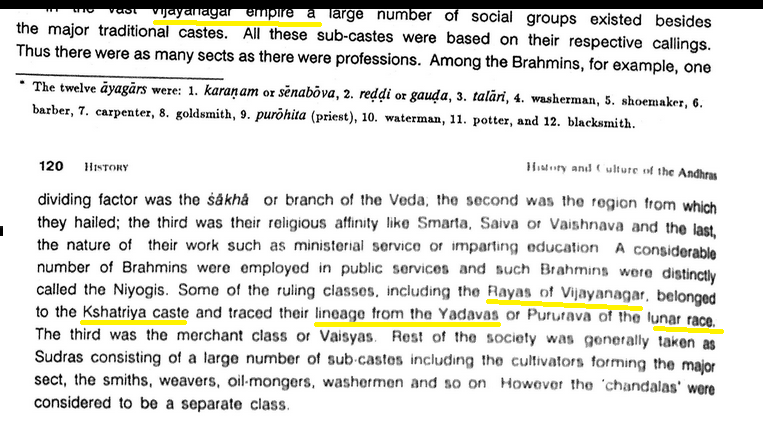
If the Rayas of Vijayanagara were from the Second Varna, then their most loyal lieutenants and regional commanders were from the Fourth Varna. This arrangement worked very well for not only the Chola Empire and the Kakatiya Kingdom, but also the Vijayanagara Empire.
Malampalli Somasekhara Sarma gaaru remains a widely respected historian to this day. Though key periods on his part proved to be revisionist history, he nevertheless was a dedicated scholar who carefully cited archaeological and scriptural evidence. As per him, the Veera Balanjya corporation of traders and businessmen are prominent in inscriptions of this period. [1, 395]
“as the Veera Balanjya corporation was the sole Trade Union which spread its activities over the whole of South India, Ceylon, and some countries and islands in the East, its records are found outside the Andhra country also” [1,396]
As we wrote previously in our article on Andhra Economic History, it was not always brahmins and kshathriyas who provide to be pivotal to the politics of the Telugu people. The fourth varna rose on a number of occasions to prove to be equal to the occasion—where ritual-status failed. The Reddi dynasty proved to be one such in the aftermath of the fall of the Kakatiyas. As per revisionist history, the Musunuris were another. Nevertheless, there was another of note, and this was the Balija Naidu (Naayakudu) community that has proven influential throughout the South (usually—though not always—for the better).
“In some of the Canarese inscriptions of the twelfth century, they are said to have been Bananjigas (Vanajigas) ‘the brave of the brave, protectors of the submissive, cruel to the wicked, good to the good, and conquerors of powerful enemies’. In this inscriptions their warlike spirit is well described” [1, 396.see also chintapalli inscription]
Indeed, not being tied down to tradition and ritual-status permitted the Reddis and later Telugu Naayakas of Tamil Nadu to deploy precisely these qualities to their more treacherous Turkic antagonists. Kshathriya acharya-yuddha (ritual war) has no place in the face of poorna-samgraama (total war). Here—regardless of caste—the Dharma yoddha must fight a true Kurukshetra-style Dharmayuddha (and use all reasonable means to defeat the adharmi). It is not fought only with brawn, but with brain. This is why mere blockheads running high to die in high heaps are unfit to rule kingdoms.
“The Mongols did not find honor in fighting; they found honor in winning.”
https://twitter.com/LColubrum/status/1532963832821272576
Where noble ideals and chivalry fails, these concepts should not be deceased or derided, but de-prioritised and temporarily retired in favour of pragmatism and practical exigencies. One cannot play Satya Harischandra before Raakshasas & Asuras. The Turkic rulers of Delhi proved to be veritable demon kings for their atrocities North and South. From 30,000 dead at Chittor itself to 100,000 dead in the Raichur-doab, suratraanas north and south stood in stark contrast to the more humane “Hindu suratraanas” of Vijayanagara. But one need not engage in civilian depradations to punish a ravenous foe. Focus on the practicalities and tactical flexibilities is what made the mostly Telugu Naayakas of Vijayanagara so useful to their Imperial Overlords.
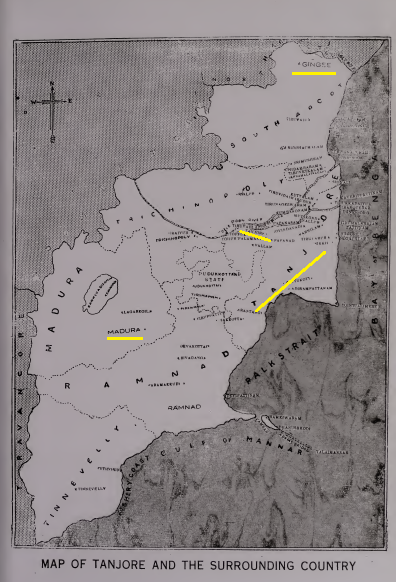
It is for this reason that Emperor Krishna Deva Raya anointed a Telugu Nayak family as rulers of Madurai and veritable Viceroys of the South.
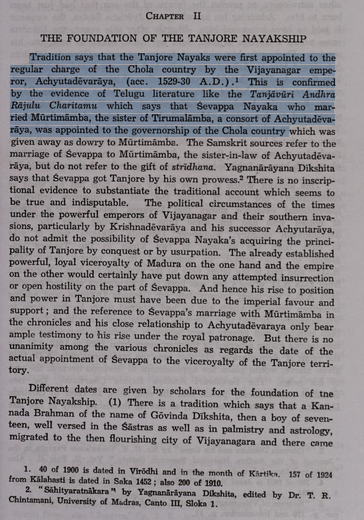
His half-brother Achyuta Raya followed suit and nominated his sister-in-law’s husband as the Nayak King of Tanjore.
Vamsa Vrksha (Genealogy)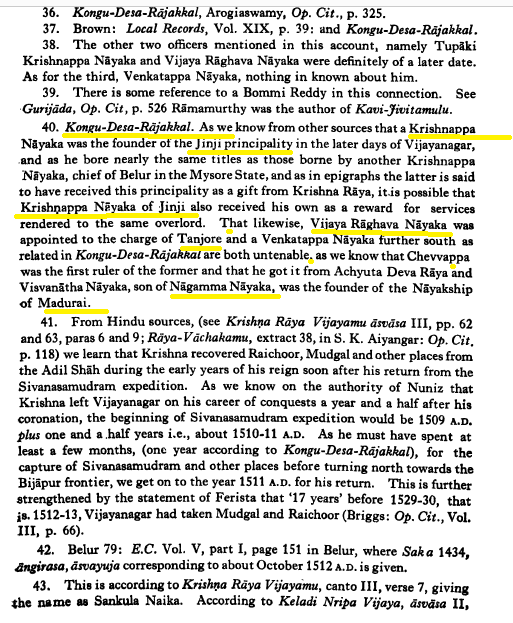
Thanjavur was the famous capital of the Tamil Kshathriya Cholas and the Telugu Braahmana Pallavas, but would also serve as redoubtable redoubt to the Telugu Soodhra Naayakas.
- Madurai, Gingee, Thanjavur, Kandy
Due to various competing caste-claims (all-too-common in Andhra’s caste olympics), here is a listing of these Nayak dynasties (barring the lesser known Kandy kula) as further evidence.
“Poligars, land owners and tax collectors of Tamil Nadu of Balija origin. They ruled over Tamil Nadu with 13 lines of Kings over 300 years. Here they are listed with their surnames.
Madurai Dynasty
* Garikepati (kotikam) Nagama Nayaka
* Garikepati Viswantha Nayaka
* Garikepati Kumara Krishnappa Nayaka
* Garikepati Muthu Krishnappa Nayaka
* Garikepati Tirumala Nayaka
* Garikepati Muthu Alakadri Nayaka
* Garikepati Chokkanadha Nayaka
* Garikepati Ranga krishna Muthu Veerappa Nayaka
* Garikepati Rani Mangamma
* Garikepati Vijaya Ranga Chokkanatha Nayaka
* Garikepati Rani Meenakshi
Chenji / Gingee Dynasty
* Tupakula Periya Ramabhadra Nayaka
* Tupakula Krishnappa Nayaka
* Tupakula Ramalingayya Nayaka
* Tupakula Peda Venkata Perumallu Nayaka
Last, but certainly not least, is the Tanjore (Thanjavur) dynasty under present consideration.
Thanjavur Dynasty
* Alluru Sevappa Nayaka
* Alluru Achyutappa Nayaka
* Alluru Raghunatha Nayaka
* Alluru Vijayaraghava Nayaka
Sevappa Naayaka
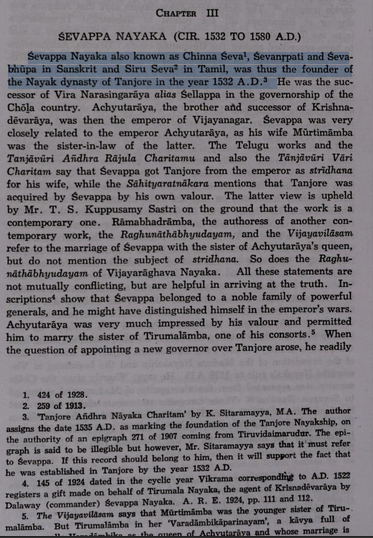
This dynasty’s origins in the region go back to Sevappa Nayaka who was granted the region in 1532 CE. The first Nayak of Thanjavur (Tanjore) had served with distinction as an administrator and builder under Krishna Deva Raya and was Achyuta Raya’s ceremonial betel bearer. Sevappa himself was the son of the viceroy of Arcot, before being rewarded for his loyalty and accomplishment with this vassal kingdom. Hence he was also known as Sevanrpati.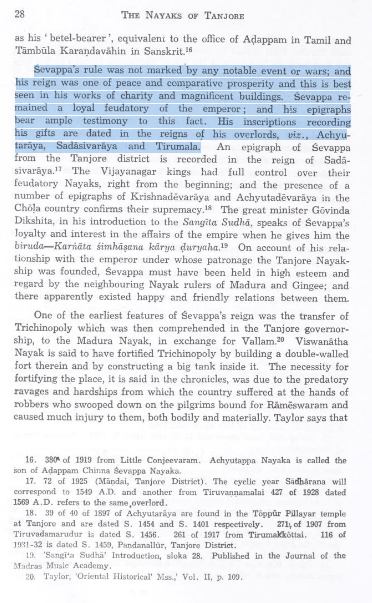
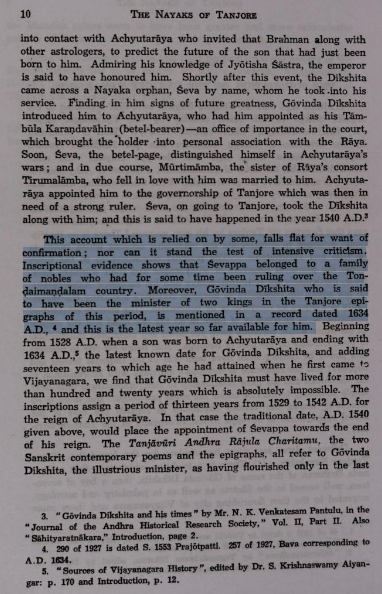
There is much apocrypha over the rise of this foundational dynast. After ruling for many years, he later appointed the famed Govinda Dikshita as purohitha & finally pradhaani. There are many sangh-style cock-and-bull stories (easily identifiable to the true student of history) that mirror the same trends regarding the rise of the bahmanis or tipu, involving such “loyal” characters. Here, even the resident historian avers.
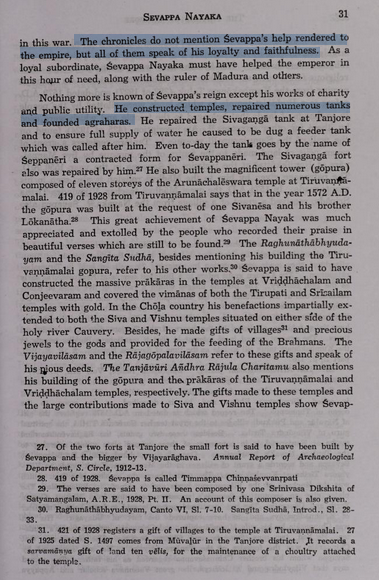
Nevertheless, Sevappa was very munificent patron, and true to the legacy of the Naayakas, was quite generous in Vedic charity. Many an agrahara is traced to him.
Achyutappa Naayaka
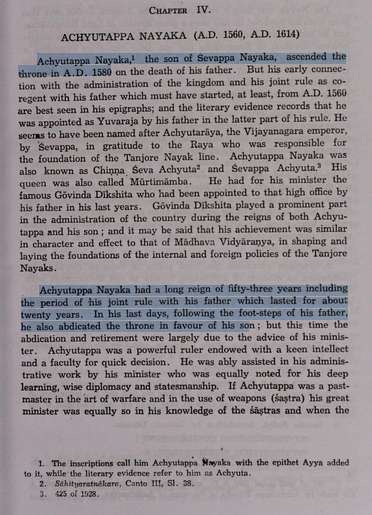
After nearly a half century under the dynasty’s founder, the next Nayak King of Thanjavur was Achyutappa. He would have a long reign as well as a fateful role in the terrible Rebellion that endangered VIjayanagara.
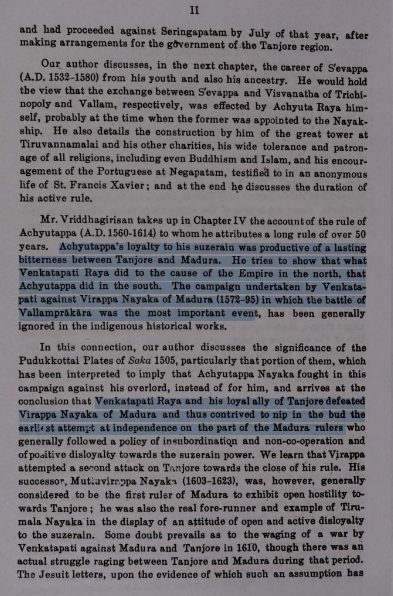 If Madurai proved treacherous, Thanjavur proved loyal and faithfully supported the imperial cause. Despite Thirumala’s attempts to rope them in, they ultimately sided with their rightful overlord rather than bray “gaste unity”, like today’s politicians and elites-in-waiting. The Battle of Vallamprakara proved pivotal. The recalcitrant Madurai Nayak was beaten to submission, Thanjavur rewarded for loyalty, and Emperor Venkatapati I was politically secured.
Raghunatha Nayak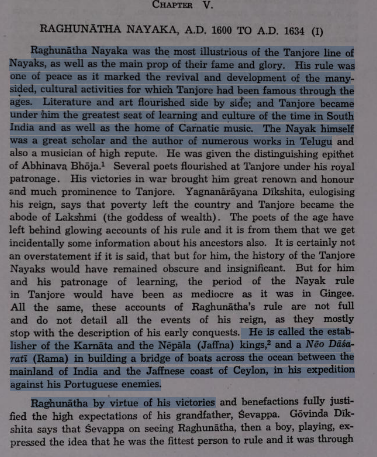
In this dark period of Andhra history, there remained at least one bright light in the name of Raghunatha Nayak. Though of the same community background, Raghunatha and Thirumala are an interesting study in contrasts. While the latter gave in to unrestrained ambition, Raghunatha ultimately saw the greater good of maintaining his loyalty to the cause of the Emperor. After all, did not the Imperial Sovereign of Vijayanagara invest his family in such high position. Rather than betray the trust, it was to be honoured. Unlike the ingrates of Madurai, Thanjavur felt a sense of fealty.
He faithfully served in dispatching the Bijapuris from Penukonda, and ousted the pretender from imperial throne at the Battle of Toppur, during the terrible Civil War. He was also a sworn enemy of the Portuguese and drove them back at every turn through open campaign and intrigue, and ended their rule (albeit temporarily) in Jaffna, Sri Lanka.
In the realm of culture, Raghunatha was no laggard. Indeed, he stood as cultural lodestone for the age.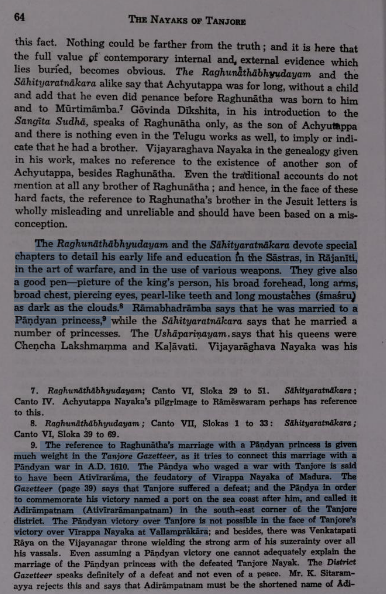
Vijaya Raghava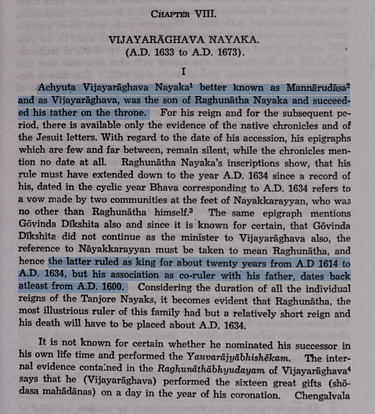
Unfortunately, despite the efforts of Raghunatha, this Nayakdom proved comparatively short-lived to their counterparts in Madurai. Indeed, the blood feud between the two houses proved so great that Raghunatha’s successor, Vijaya Raghava spitefully blew up all the ladies of his house in a fiery combustion rather than hand over his daughter (Madurai nayak’s secret beloved) in marriage to the faithless house of Madurai. He died in battle on the steps of his palace, leaving a grieving Chokkhanatha of Madurai to end the former’s house and install his foster-brother, Azhagiri, in 1634 CE. In time tested fashion, the latter began showing ingratitude almost right away, and behaved curtly as an equal rather than as feudatory. The latter was soon displaced by the Marathas—bringing the rule of Aandhra kings in Thanjavur to an end, and a fresh start with the Maharashtra kings.
The Thanjavur line would in fact go on. The terrible tragedy at the capital did have 1 survivor. However, his brief reign was indicative of the perils not only of staying on too long but trusting the wrong people and rising the wrong way.
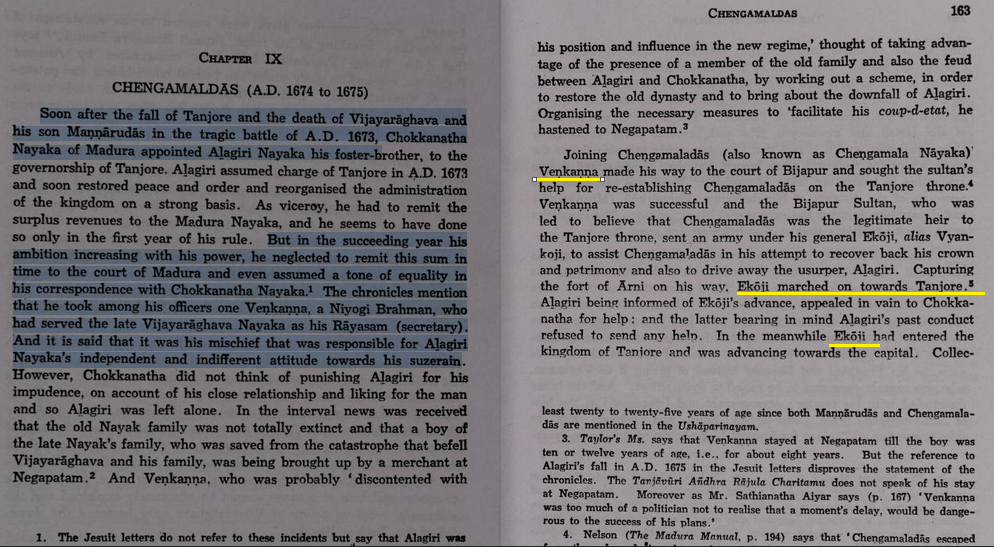
Interestingly, the Thanjavur Nayaks would be replaced not by the Nawabs but by the Bhonsles of Maharashtra. The politicking Venkanna Niyogi felt slighted at being denied the Pradhan (prime minister) position, so he betrayed his ward (Chengamaladasa) and incited Ekoji to replace him on the throne—chaanakyaniti! in action (time for another doordarshan serial).
The latter took the offer, displaced the last of the Tanjore line (rumoured to have sought sanctuary in the Kandy Nayakdom). The Marathas of Tanjore would continue in the cultural tradition of the Nayak Court. Contrary to the invidium and invective thrown at the House of Bhonsle by internet trolls, the Thanjavur Maraatthas were highly respected for their cultural contributions as well. They picked up where the Telugu Nayaks left off and provided a genteel atmosphere for Sanskritic culture, in contrast to their more mlecchafied military & and regal counterparts to the north.
Legacy
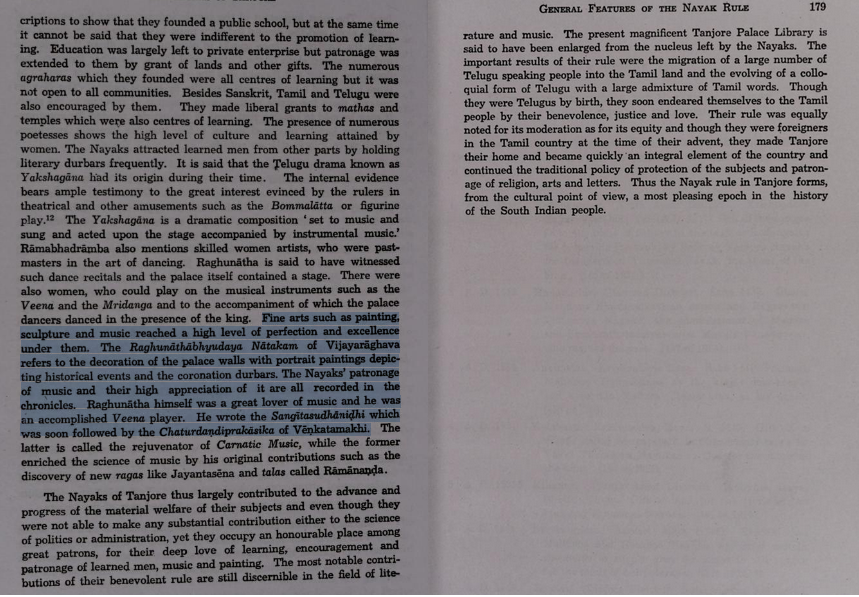 The legacy of the Thanjavur Nayaks is one of fierce loyalty, cultural distinction, & respect for roots & locals. This balancing and blending of Telugu & Tamil culture, imbued with Sanskritic High Culture, made for one of the cultural leaders of India (if not the leader) in this age.
Indeed, Tanjore faltered only once, and that too in the end. Vijaya Raghava was a geriatric ruler long past his prime when his greatest challenge (Golkonda) imposed itself on him. Rather than take a page from Pratap, he became a tributary to the very power his liege-lord (Sriranga III) opposed throughout his reign. One may say, Vijaya Raghava was merely being practical, and that following dharma to his fullest would have been foolhardy, but what was his fate anyways? Rather than go down fighting to his rival kingdom in Madurai, would it not have been better to have made his glorious last stand against Golkonda & Bijapur? He should he had no compunction about blowing up his entire harem and family against a rival, why stain an otherwise polished dynasty as brief feudatory to civilizational foe?
The Tanjore line continued anyways, but as they glibly say, “You either die a hero, or live long enough to see yourself become the villain“. The Nayakdoms, particular of Tanjore, are often the target of caste-bravado or unfair revisionist critique. They lived in a very difficult time, with competing interests, and changing ethics, in the midst of not 1 but 2 impending colonisations. They, like their nemesis in Madurai, nevertheless shielded aasthika culture for well over a century. Carnatic Music, as we know it today, is in no small part due to their patronage, and more important, their protection.
Cultural Contribution

Although one could critique them for their final conduct in the deccani wars, the Tanjore Nayaks invariably shielded the dhaarmika culture of the region for over a century. It is most fitting that one of the traditional historical sources for this period was literally called Thanjavur Andhra Raajula Charithra. That is because historically Aandhra was synonymous with Telugu. It referred not just to the old Aandhra desa region, but the people and culture itself.
“The Andhra society was in a ferment and all castes were affected in some way or other by the social awakening generated by the religious reformers like Basava and Ramanujacharya. The Brahmins no longer confined themselves to religion and learning only. Some of them took up secular avocations and they came to be known as ‘niyogis’. The others who continued to confine themselves to religious pursuits were known as Vidikis.” [6, 57]
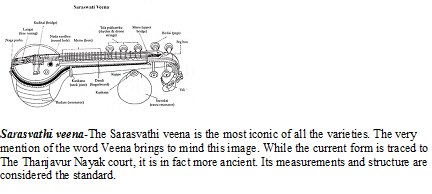 “Raghunatha Nayaka is richly cre-dited for having perfected the Vina which is since called the Tanjavur Vina or Raghunatha Vina, for he played raga, aalaapana and also taana on it.” [6, v]
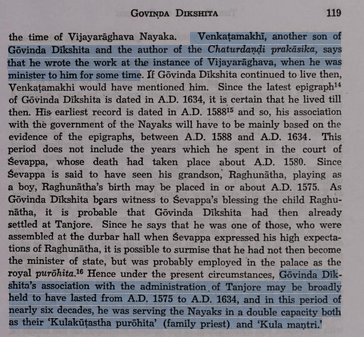
It is not Sevappa or Achyutappa but Raghunatha Naayaka who stands as the greatest of the dynasty, not only militarily but culturally. In this period, Govinda Dikshita (pradhan manthri & more properly, purohitha) was accompanied by his sons Yajnanarayana & Venkatesvara better known as Venkatamakhin. This Venkatamakhin was the time-honoured completer of the 72 Melakartha Raaga system, which finalised Carnatic Classical Music as we know it today. Though it originated with Vidyaranya Svami and was defined by Purandara Dasa, it would be the contributions of Govinda & Venkatamakhin (with plentiful patronage from Raghunatha) that would make the musical tradition what it is today.
This patron of the arts was a gifted musician himself, not only being a skilled veena player, but even pioneering his own carnatic music ragas, talas, and melas (Jayanta sena ragam, Ramananda Talam, Sangita vidya and Raghunatha melas). He also constructed the Saraswathi Mahal Library along with several temples.
His son Vijaya Raghava continued in this literary tradition and wrote more than 30 books in Telugu, himself. Interestingly, the brief but fierce succession crisis saw Venkatamakhi intrigue to bring Vijaya Raghava to the throne—it appears even music masters were not above politicking.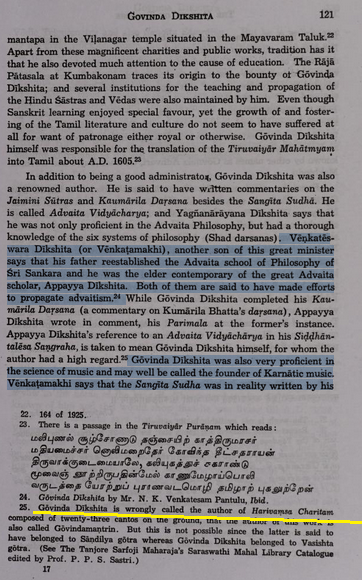
It begs one to wonder what the possibilities for Telugu literature would have been had not the blood feud between Tanjore and Madurai brought this line of Nayaks to a premature end.
Literature
It was in literature that the Nayaks of Thanjavur most distinguished themselves. They proved themselves both poet and patron, and were the centre of cultural vibrance in that period.
If Thirumala of Madurai was a great builder, then Ragunatha of Tanjore was a great composer. A patron of literature, the Nayak of Thanjavur presided over a tremendous production of literature. His son wrote a history of this dynasty called Raghunathabhyudayam and is also described by Yajnanarayana’s Sahitya Ratnakara. One of his wives, Ramabhadramba was also a gifted poetess. He also patronised other Telugu poets such as Madhuravani, Chemakura Venkataraju, and Krishnadhwari. A poet himself, Raghunatha composed the Telugu kavyas Parijatapaharanamu, Valmikicharitram, Rukminiparinaya Yakshaganamand Ramayanam as well as the Sanskrit works Sangita Sudha and Bharatha Sudha.
Sevappa Nayaka
Poluri Govinda Kavi -Taaladasa paamadeepika (telugu), Raagataala Chintaamani (telugu)
Raghunaatha Nayaka -Paarijaatha Paharanam, Achyutabhyudayam, Gajendra Moksham, RukminiSrikrishnavivaaham, Jaanaki Parinayam, , Vaalmeeki Charitra (Telugu), Raamaayanamu (Telugu), Sringaara Savitri (telugu), Nala Charitra (Telugu), Sangeeta Sudha (sanskrit), Mahabhaaratha Thaatparya Sangraham, Raamayana katha sara, Saahithya Sudha (sanskrit), Bharata Sudha (sanskrit).
Chemakura Venkata Kavi -Vijaya Vilaasamu (Telugu), Saarangadhara Charitra (Telugu)
Ramabhadramba -Raghunaathaabhyudayam (sanskrit).
Madhura Vaani -Ramaayana Kaavyasaaratilakam (Sanskrit)
Kumara Tata Charya -Paarijaatha Naatakam (Sanskrit)
Yagnanaarayana Deekshith -Saahithya Ratnaakaram(sanskrit),Raghunadha Vilaasa Naatakam
Krishnadhvari -Raghunaadha bhoopaaleeyam (Sanskrit)
Vijayaraghava Nayaka -Kaaleeya mardanamu (telugu), Sri Krishna Vilaasamu,
Vipranaarayana Charitra, Raghunaadhaabhyudaayamu, Raghunaadha naayakaabhyudaayamu, Poothanaaharanamu, Prahlaadha Charitra
Venkatamakhin -Chathurdandiprakaasika (Sanskrit), kaalaamritam, vaartikaabharanam
Rangajamma -Mannaarudraasa Vilaasamu (telugu), Mannaarudaasa Vilaasa
Naatakamu, Usha parinayamu
Chengalva Kala Kavi -Raajagopaala Vilaasamu (telugu)
Koneti Deekshitha kavi -VIjayaraaghava Kalyaanamu (telugu)
Purushottama Deekshita kavi -Tanjaavurunanadaana Naatakamu (telugu)
Kamarasu Venkatapati Somaya -Vijayraaghava, Chandrikaavihaaramu (telugu)
Mannaru Devudu -Hemaabjanaayikaasvayam Varamu (telugu)
Gollabasava naayaka
Paccha Kappurapu
Tiruvengala Kavi -Chokkanaadha Charitra (telugu)
Viswanaadha Naayaka -Sthanapathi0Raaya Vaachakamu (telugu)
Muddalagiri (Muddu veerappa’s second son)
Ganapa Varapu Venkata kavi -Vidyaavathi dandakamu (telugu), Prabandharaaja Venkateshvara, Vijaya Vilaasam (telugu)
Linganamakhi Kameshvara -Sathyabhaama Santhvanamu (telugu), Dhenukaamahaatmayamu (telugu)
VIjayaranga Chokkanaadha
Vangala Seenayya -Raamaanuja Charitra
Seshamu Venkatapathi -Sasaanka Vijayamu
Surappa Naayaka
Ratnakhet Sreenivasa -Bhaavana purushottamamu (telugu), Bhaishmi Parinayamu
Tupakula Ananthabhoopala -Vishnupuraanam (telugu), Mahabharata Anusaasanika Parvamu
Raamayanamu Sundhara kaanda, Bhagavad Geethamu.
Kundavarapu Kavi Chowdappa -Kavi Chowdappa
Rangajamma -Mannaarudaasa Vilaasam
Kshetrajna -Sringaara Pada
[6, 59]
VijayaRaghava Nayaka had a number of women at his Tanjore court. Most famous were the dancer Chandra Rekha, the scholar Krishnaji, and the poetess Pasupuleti Rangajamma. [6, 55]
Rudramba Sukavani was a scholar poetess in Raghunatha’s court. Madhura vani was given kanaka abhishekam by him. She wrote the translation for Raghunatha’s Telugu Ramayanamu. [6, 52]
In fact, one could argue that these Nayaks were competing in the Letters & Arts when they should have been competing in Navies. As a result, Jinji was no slouch in the cultural department as well.
In Jinji there was a ruler named Surappa Nayaka. “Surappa Nayaka the ruler had in his court Ratnakheta Srinivasa Deekshitha who had written Bhaavanaa purushothamam a play in five acts and dedicated to the ruler. He had also written a ‘Campu’ Kavyam (a dexterous comobination of prose and poetry) known as Bhaishmiparinayam.
Tupakula Venkata Krishnappa the army chief showered his patronage on the famous pada composer Kshetrayya. Kshetrayya in fact had included in the ‘mudra’ of his composi-tions the name of Venkata krishnappa Nayaka. His son Tupakula Anantha bhupala had written to his credit a number of prose works – Vishnupuranam, Anusasanika Parvam of Mahabharatha, Sundara kanda of Ramayana and Bhagavad gita- of them only Vishnupuranam is published.” [6, 59]
Ganavarapu Venkati Kavi was an eminent scholar of 30 works. Only 3 are available. Notably among them is Sarvalakshana Shiromani, which was the first Telugu dictionary in verse form. [6, 58]
Arts
Perhaps most memorable today to the common man is the beautiful Tanjore artwork. It is known for its signature style that is instantly recognisable and appealing even to non-Indophiles (an increasingly rare breed these days…). The gold-foil inlay glitters without being gaudy.
Be that as it may, it was in Dance and Music that the August court of Tanjore most distinguished itself. Most notable here was the great Kakarla, Thyaagabrahmam. Better known as Thyagaraja, all his compositions were full of bhakti and bhaavam and so they become popular and naturally his fame spread all around. The Maharaja of Thanjavur wanted him to be the Royal court musician. Thyagaraja declined the offer by singing a kriti “Nidhi chala sukhama”.
The Thanjavur kings who were connoisseurs of classical music and fine arts, invited Thyagaraja numerous times to come to their court as Aasthaana Vidhvaan, but he repeatedly refused patronage, honours and gifts from the kings as well as other wealthy zamindars and smaller princes. The only gift he willingly accepted was a portrait of Lord Rama presented to him by his disciple Walajapet Venkataramana Bhagavatar. When Thyagaraja was offered this portrait he was so overcome with happy emotion that he composed the beautiful kriti in Mohana ragam “Nannu palimpa nadachi vacchitivo”-Did you come all the way to bless me , O Rama.
Dance
Andhra Pradesh has a rich legacy of the performing and plastic arts eversince man was known to have expressed him-self through Chindu ata (dance step) and pata (song).” [6, iii]
Though Yakshagana was in fact an ancient Sanskritic musical form, preserved best in Karnataka today (and the precursor to Kuchipudi), it found beautiful expression here.
“’Tanjore kings’-a general term attributed to both the Nayaka kings (1600-1684) and the Maratha kings (1684-1832), who ruled South India with Tanjavur as their capital. Popularly called the Golden Age of music dance and the composite dance-drama called the Yakshagana, its particu-lar and peculiar phenomenon is that almost all these kings, be-sides being great patrons and connoiseurs of arts, are also able writers of kavyas, padas and Yakshaganas. Each of the kings patronized hosts of poets, musicians, dancers and performers and saw to it that the newly popular form of Yakshagana was even enacted in the royal auditoria. Raghunatha Nayaka and Vijayaraghava Nayaka, among the kings of the Nayaka period, richly deserve our gratitude for the many works they had them-selves written and many performances of plays they had or-dered to be put up in the court theatres.” [6, iii]
Dance-drama reached its invariable peak in this period. It is remains one of the crest-jewels of culture in Tamil Nadu, Andhra, and India in general. It was the union of not only dance, drama, and music, but also of literature.
“The fine arts reflect a nation’s culture. Their development enrichnment is the hall-mark of a nation’s progress. Literature is the most important among the fine arts. A uni-ting link of all of them, literature functions as the basis.” [6, vi]
Administration
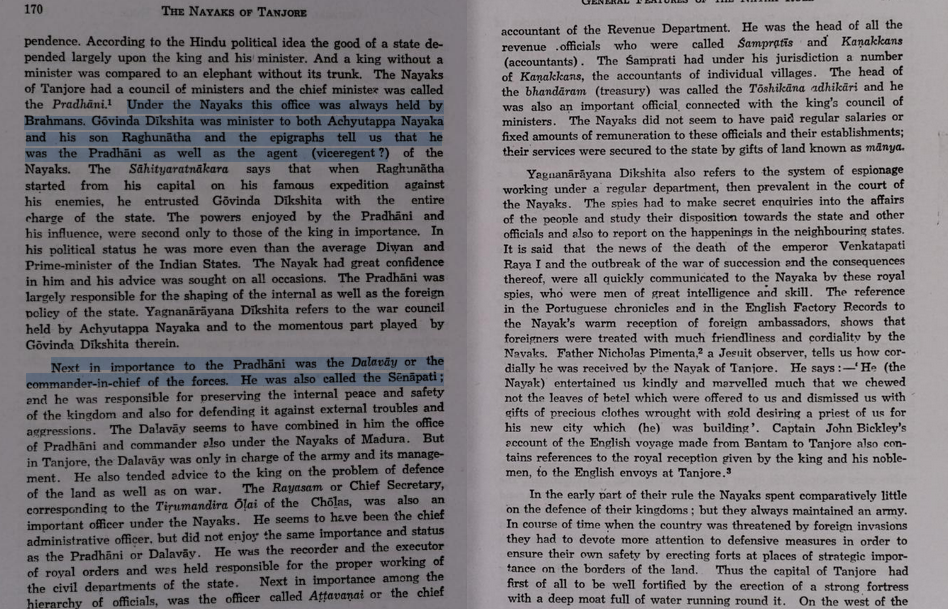
From the rise of Sevappa to the downfall of Chengamaladas, the administration of the Nayakdom of Tanjore remained remarkable static. Unlike the more de-centralised Madurai Nayakdom (which was sub-divided into paalaiyakarars (i.e.the eponymous members of the later “polygar war”), Tanjore retained a large, mostly centralised officialdom. Beyond the pradhan and purohit, it had a rayasam (chief secretary), senapathi (commander-in-chief) and a host of lesser bureacrats, accountants, and tax collectors. Interestingly, the Thanjavur nayaks saved the last Chola king (who had a small principality) and are said to have married into an obscure line of the Paandyas (otherwise said to have gone extinct).
They were munificent patrons of temples and traditional learning. This tradition would continue with the later Bhonsle dynasty. The Maraattha Raja of Thanjavur (Tanjore) gave Syama Sastri‘s father large estates, an agraharam and cultivable lands, along with a temple. This mandiram dedicated to Sri Kamakshi Amma is (as of 1934) served by an Archaka named Natesa Sastri, himself the great grandson of our Great Personality.
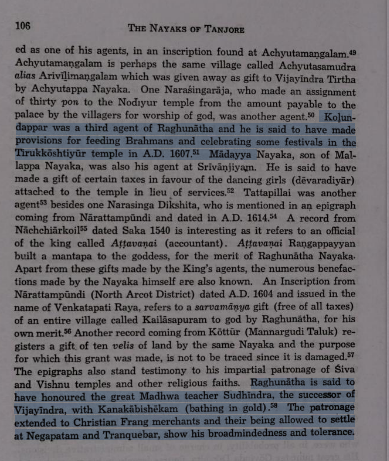
Indeed, the Thanjavur Nayaks, like Vijayanagara in general, proved to be very-broadminded in religious affairs. This was perhaps overly so in the case of the iconoclastic and bigoted portuguese who held an actual Hindu Inquisition in Goa, slaughtering and force-converting many brahmins and even women—through the cruelest methods. Evidence of that stands to this day. Regardless of such stories, whether out of pragmatism or principle, Thanjavur gave patronage to not only the Dvaita sampradaya (which stood in opposition to the predominant Advaitas of the imperium) but also to members of the Moslem faith and Christian as well.
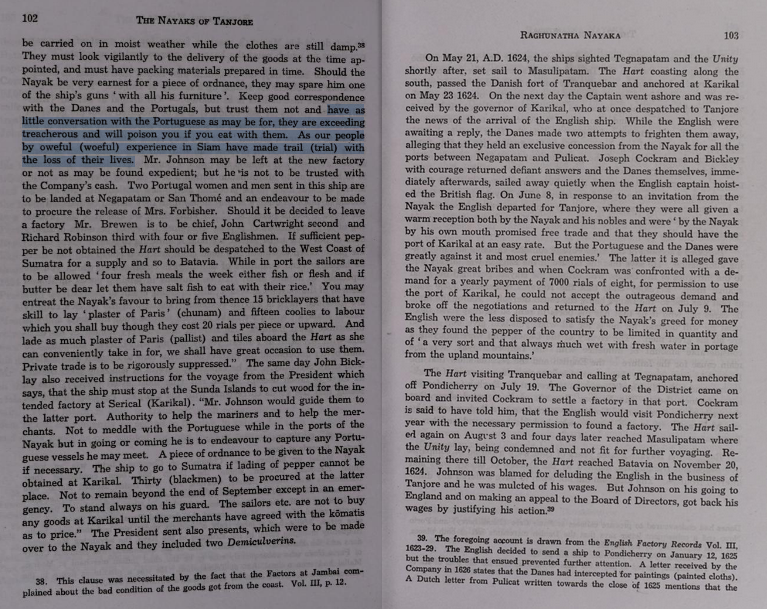
And before one argues prejudice against the piratical portuguese, here is what no less than their later English in-laws had to say (above). To their credit, the Tanjore Nayaks were suspicious of the English from the beginning. They did their utmost to keep them out of the realm, and denied them a port.
Conclusion
The Nayak kingdoms of Madurai, Gingee, Kandy, and ultimately Tanjore took root and ruled at a time when India was beset by foreign invasion not only by land but by sea. The latter proved even more difficult, dangerous, and ultimately fatal, and underscored the importance of naval power.
Nevertheless, there is a perception that the European colonisers merely stepped in to the peninsula and gained instant colonies. In reality, it was a long tug-of-war, differing perceptions, and complex game of intrigue, playing one off against the other. The Portuguese and the French certainly gained colonies in India; however, the extent of them is not only disputed in the present, but was disputed in the past due to differing perceptions. For example, not understanding the missionary zeal of the Catholic faith, the Nayak kings were ordered by the Emperor to retain friendly relations and grant docking/factory rights to the Lusitanians (who had been useful against Bijapur). The Portuguese then used this opportunity to begin converting coastal fisherman (Paravas). They then used their docking rights at San Thome (site of a church) to expand into Negapatnam and Jaffna, Sri Lanka.
This was intolerable to the Nayak king of Tanjore, who then promptly dislodged the Portuguese from Jaffna, and restored the Sinhalese king to his throne. Even the refractory Madurai Nayak (embodiment of selfish stupidity in this period) had the sense to drive out the Portuguese whenever they claim coastal sovereignty and these Parava fisherman as subjects of the Portuguese king on account of said conversion. As such, barring a few places such as Goa and Mangalore, and parts of Sri Lanka, this period is a grey area regarding where pure commercial ties stopped and colonial authority began. It is much like today’s SEZ’s (special economic zones) or MNC-run ports (i.e. China or Dubai Ports Limited—de jure, de facto, and commercial authority can often all be simultaneous or conflicting).
Furthermore, the aforementioned Kandy Nayaks contributed to native freedom by successively defeating the Portuguese and even the Tranquebar-based Danish (in their lone attempt at conquest).
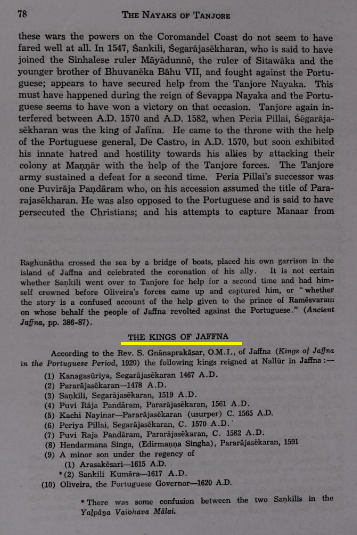
However, the victory over the Portuguese was short-lived. Between 1614 and 1621, Raghunatha Nayaka fought no less than 3 wars to overthrow their rule of Jaffna. The dire straits facing the Nayak kingdoms on land, meant that they (and their liege-lord) could no longer retain their military power at sea. In this vacuum, the portuguese had, of late, overthrown the Tanjore-candidate for the Jaffna throne (who withheld the tribute of his Portuguese-beholden predecessor). This King Sankili of Jaffna was then captured and taken to Goa, being replaced with an official Portuguese governor.
Raghunatha sent at least 3 armies over this decade to dislodge the Portuguese (who were better armed and equipped with the best Navy in the region). He did this not with naval-power, but by engineering power and stitched multiple-boats into a bridge. Despite terrible loss, this shows his commitment to driving out foreign invaders, and that it was not a simple walk-over. Indeed, Raghunatha in particular was an opponent of the peculiar practice of granting the right-to-fortification for European trading companies. After all, a fortified factory is one thing, a formal fort is another.
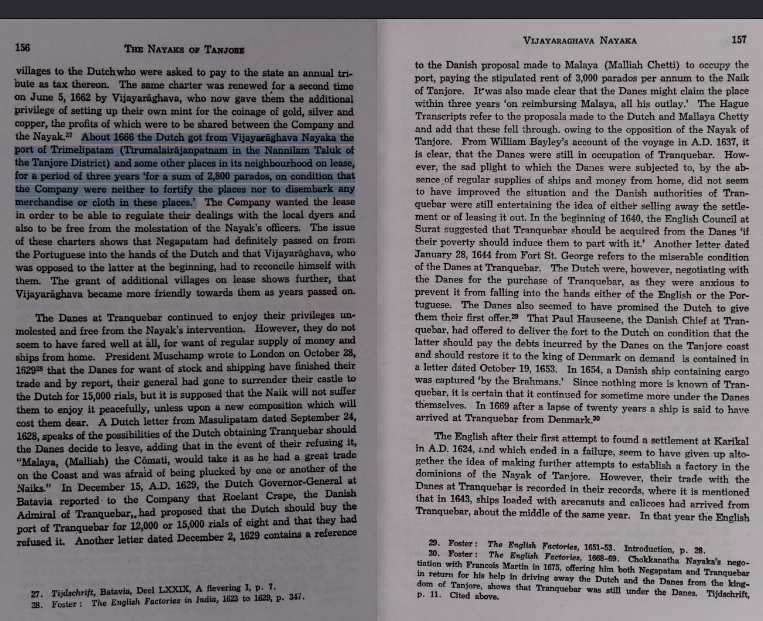
Due to their (unduly) close relations with the failing Danish, the Tanjore Nayak would remain (duly) suspicious of the English (later british), and give them a well deserved frosty audience, but not port or factory.
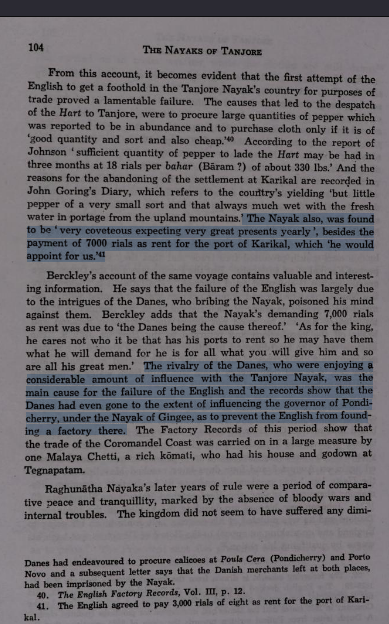 In addition, accounts are often contradictory due to sources often being letters or them mistaken about the identity (i.e.conflating the Nayak of Gingee with the Nayak of Tanjore, etc). Policies too are often contradictory. A general policy not to permit fortification is later belied. Was this due to force or cupidity or treaty violation (usually the latter). Is a factory a fort? Is a fort a settlement? Is a settlement a foreign controlled colony?
Finally, there is the simple reality that being at the pointed end of the peninsula, the Nayak kingdoms were surrounded on all sides (to the North by advancing Bijapur & Golkonda (encouraged by the mughals) in the Southern Sea by encroaching Europeans, and in the middle by their moronic Indic rivals)). 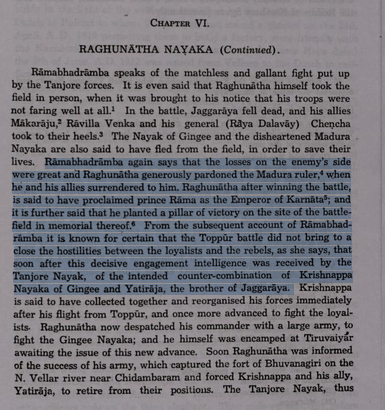 All blame cannot be laid at the feet of Madurai or Mysore for that matter—as the Imperial Family of Vijayanagara was all too frequently beset by succession crises, and one terrible Civil War due to Gobburi Jaggaraya. This frittered away the remaining strength that could have and should have been better deployed against foreign invaders. It is here again that the genius of Shivaji Raje becomes apparent. He intelligently divided his realm so that even when it broke apart from centralised kingdom to de-centralised confederacy, the Maraattha empire could advance in common interest (particularly with the thalassocratic Angres being given an effective naval monopoly).
The back-and-forth between Madurai & Mysore over marginal territorial gains was only rivalled in imbecility by the Madurai & Thanjavur petty rivalry. For all those who think caste monopolies guarantee unity—the hatred between these two kingdoms to the bitter end, shows otherwise. While this extended the native rule in the deep south for over a century, it paved the way for the nizam, tipu, and finally the british to beat all in the 1700s. Even if it were clear that Vijayanagara were finished, wise state policy of prioritising threats & key territories rather than zero-sum petty rivalries should have been the approach.
As the maxim goes: “Hang together or hang separately“, and that is ultimately what happened with The Nayak kingdoms—even Tanjore.
Proxy-Prexy
Another factor was the over-delegation to prime ministers, apparent again in this period. This is something that has transcended mere caste politics (as seen with Kumaragiri Reddi & Pedda Komati Vema). A king who retires to harem is sad but understandable—but retiring to “culture” whilst his minister takes up the full responsibility of governance and war—that is a recipe for disaster that is seen time and again. Culture as hobbie is well-and-good, but culture as be-all-end-all for a king’s pursuit is dereliction of duty.
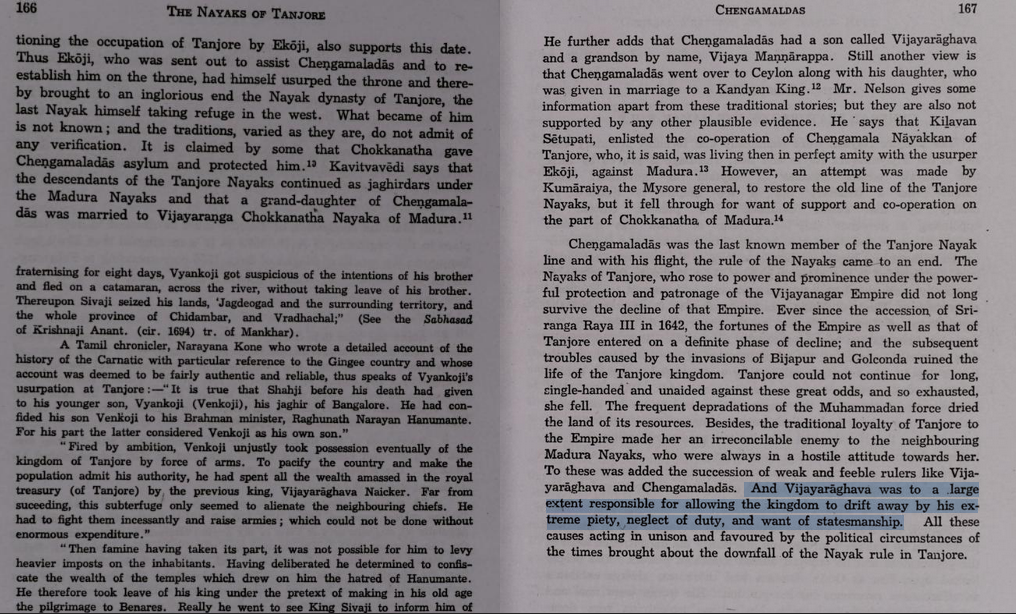
This could be seen not only in the last rulers of Madurai & Tanjore in the South but even in the nawab of Awadh in the north. No wonder all 3 polities were devoured during those reigns. Indeed, even more admiring commentators condemned the overly-pious Vijaya Raghava, who tried to be excessively spiritual, in a time of religiously fanatic foreign invaders. This is what is known as sukrtodheerana (or piety merely for religious show, rather than genuine adherence to the no-nonsense dharma of Sri Krishna).
Even today, our asinine elites-in-waiting try to lionise those who “fought from the front, and died in heaps!“—but lost, rather than those who won with guile and strategy against unethically adharmic foreigners. Whither the notion of ruling for the benefit of the entire family, or simply being content in the dynastic wealth of the legitimate king? This serial instability stands in contrast to foreign-invader kingdoms not because they were better, but because they were worse, or more specifically, more ruthless & intolerant of incompetence. Entire lineages were not only thoroughly wiped out, but entire cities that supported rival candidates were depopulated (read what the british did in the aftermath of 1857).
While videshi vidharmis ruled with massacre, terror, and treaty violation our adharmic clowns (no doubt driven by “chaanakyaniti!” would find each petty claimant was waiting to stake claim either as ruler or as proxy-ruler. It is this greed and myopic stupidity that made so-called “dharmic” polities easier pickings than their vidharmic ones. Also, the latter had a concept of religious war, which would wipe out all traitors who failed to show up for said religious cause. Our soft-hearted statesman not only forgive treason, but reward and protect it (after all most ministers in the later period were protected from capital punishment—just as Sambhaji or more recently the king of Nepal, would find out).
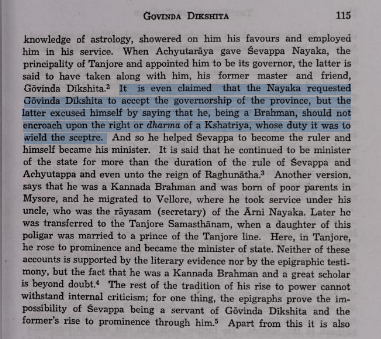
There is also the penchant to proclaim each and every king as “protege” of his minister on the pretext of “guidance”. But this is nowhere proclaimed in rajadharma. A kulaguru should teach and train his princely students, but that is all. An amaathya (councillor) should counsel his king, but that is all. A manthri (minister) must advise and implement the king’s decisions, but that is all. It is only the regent or royal elder that “guides” the king, as Rajmata Jijabai “guided” Shivaji Raje in his early years.
This belief that ministers should “guide” their ruling kings or that acharyas and “rishis” should “guide” to rule-by-proxy is no doubt a product of kapalika-brahmins who oppose vedic brahmins in virtually every age. This was supplemented by their historiographers-descendant who credit every royal achievement to his vipra-councillors, usually inaccurately.
For example, the cinema “Mahamantri Thimmarasu” would have one believe that all achievements of Krishna Deva Raya could effectively be credited to this “brilliant jeenius”, when in reality, there was no Thimmarasu. This popular story and legend (naturally a product of “chaanakyaniti!”) is based on a composite of no less than 3 Thimmas and 1 rasu: Thimma Bhupala (a royal general), Thimma Manthri (an actual Kshathriya minister), & Thimma Naayaka (there were numerous lieutenants by that name), as well as Apparasu (the Amaathya). That is how the same character is credited with policy, military achievement, as well as rebellious sons who had to be punished with capital punishment. And this is the danger of caste narcissism. In the quest for credit, history is destroyed and legend is concocted from composite-conflation.
The conflation of these roles is apparent here:
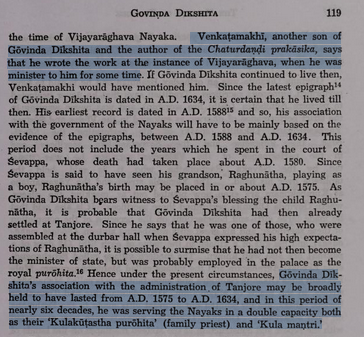
This same conflation has caused people to mistake Madhava Vidhyaranya with Madhava Manthri (brother of Sayana, of dubious dharmasaastra translation). 1 was merely a minister, while the other was a revered Sankaracharya of the Sringeri peettha and veritable Sthapanacharya of the city of Vijayanagara (the empire started at the first capital of Anegondi). This penchant of casteist historiographers no doubt only became worse following the rise of colonial casteist bureaucrats. Indeed, the corruption preceding colonial rule only worsened under its disruption. Nevertheless, there was a silver lining.
As we wrote in our previous article, just as braahmanas were to be amaathyas (councillors) but not manthris (ministers) so too were soodhras often banthulu (soldiers) but not intended to be raajanya (royals & kings).
“The main occupation of the sudras were agricultural labour and military service. It was in fact this fourth caste that supplied the great bulk of infantry to the rulers of the country. Some of the sects of the sudra caste like Ontarlu (Vantarlu) exclusively took to military service. Similarly, a great majority of the fourth caste were employed in agriculture and its allied works. Some sects like Balanjas (corruption-Balijas) followed both trade and military service. Some others were engaged in handicrafts.” [1, 277]
And yet, in the later periods, this is precisely what happened. It was in contravention of the old orthodox Vedic Dharma precisely because it was a time of apad. Apad Dharma necessitates (temporary) adjustment and laxity precisely because vyasana (catastrophe) and foreign invasion and colonisation make it impossible to observe all the rites strictly. Even the ethics of war begins to be bent or broken because a barbarian foe has overcome the land and enslaved the people.
If the Kshathriyas were de-throned by “scheming brahmin ministers”, they only have themselves and their blockheadedness to blame. The self-sabotaging fashion of brahmin ministers is in fact traced not to Chaanakya (he merely codified it…adharmically), but to the Pradyota dynasty. The Pradyotas were the prime ministers of the Barhadhradha dynasty (Jarasandha’s lineage) of Imperial Magadha. They overthrew the last Barhadhra in a fit of regicide. Fearing that similar kshathriya prime ministers would plot to replace them, they anointed the first brahmin Prime Minister—believing in their saatvik honesty they would not plot against them. But true to diabolical Dronacharya’s descent, many a Kautilya, Pusyamitra Sunga, Madhav Manthri, and Shrivardhan Peshwa would plot against their liege-lords and rule-by-proxy instead. This proxy-prexy led to the downfall of not only Karnavati but Bhaaratavarsha itself (as evidenced by the battle of the ironically named Vijaydurg).
Even in this era, the idiotic succession politics of Vijayanagara undid all the promise of this empire under not just the Araveedu dynasty, but even the later Tuluva. It is for this reason that a family that fails to govern itself fails to govern its kingdom or empire, and the true reason the CIty of Victory fell. That is the importance of Vamsa Rajadharma.
For this, Raajus and Rajputs and others asserting kshathriya identity cannot constantly blame brahmins for everything. Whether it was the Salakarajus or Gobburis or even the Sisodias, the cruel internecine warfare for the throne by each and every pretender means other varnas need to start taking responsibility for their own stupidity, instead of laying all blame on brahmins. The internal and external rivalries of the soodhra nayak kingdoms also prove this point.
One may find this commentary overly harsh, but even proponents of the Thanjavur Nayaks most celebrated minister, Govinda Dikshita support this notion:
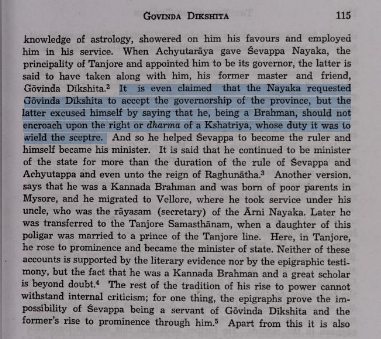
Govinda Dikshita was correct here that it is improper for non-kshathriyas to be governors and kings, but this also applies to the ministry which he accepted as well. Braahmanas, as per Bheeshma in the Raajadharma Anusaasana Parva could be Acharyas and Amatyas (i.e. Purohitas, Dharmasthas, etc). But due to short-sighted squabbling among Kshathriyas & much later, Soodhras, not only did Braahamana ministers become en vogue, but even later, so did Soodhra kings. Uddaret atmane atmana. One should elevate oneself and work, govern, or even rule in the benefit of the kingdom and its people, not with view of sinecure or ministerial monopoly.
Therefore, rather than blame “baman raaj!” for everything (though there is evidence for some of that, even here with the soodhra Tanjore & Madurai Nayaks) other varnas would do well to ask why they have proven so stupidly greedy as to fall for not only such ministers, but also turkic generals such as Hyder Ali or missionaries of colonial Europeans. If there is no sentiment even within one’s own family, how can there be outside one’s own nation?
Perhaps nowhere is this idiocy more apparent in the contrast between how easily Bijapur and Golkonda achieved an understanding, while even national survival failed to bring together Hindu idiots on the other side (time and again, from Lahore to Jinji). Hindus who pride themselves for their intelligence are viewed by all others as ch*tiyas (myopic buffoons for lacking practical judgment).
Who cares how well you compose poetry or play the veena when you do not know how to properly unite (even temporarily) for mutual advantage and national survival. For all the braggadoccio over who was advising whom, one really begins to wonder, just who the hell advised them?
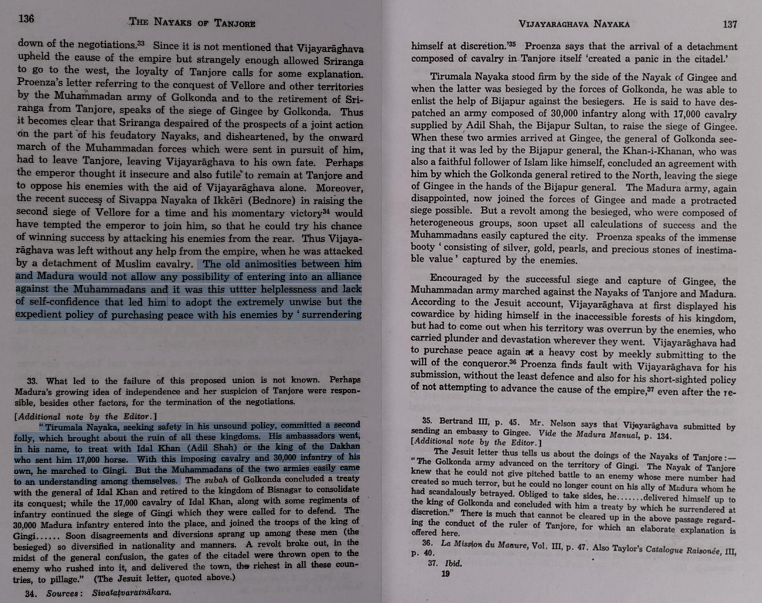
Whether it was the octogenarian Araveedu Raama Raya or the octogenarian Vijaya Raghava, the foolish kings of India really need to know when to retire. No wonder so many a successful ruler failed in his latter years. People are so obsessed with varna that they forget Ashrama—vanaprastha means retire on time!
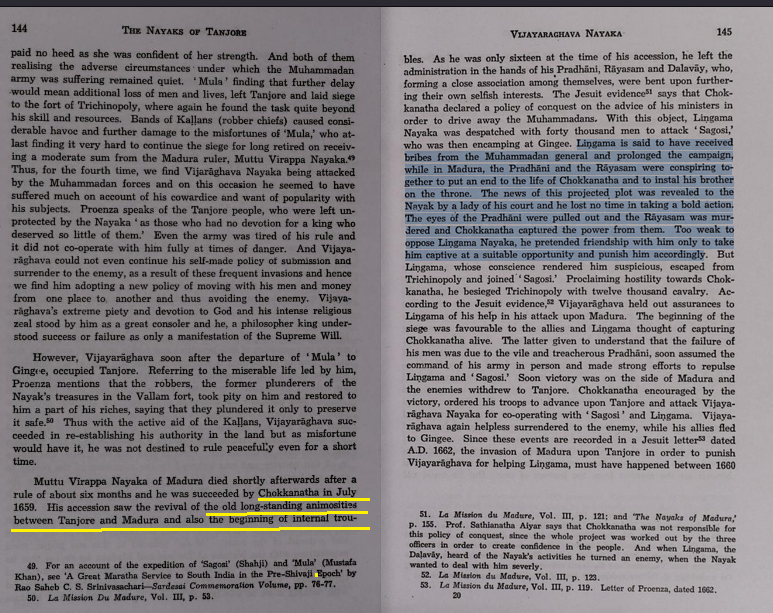
What began as glorious loyalty ended with with inglorious surrender. Here Madurai proved no better, and the externally stupid policy of Chokkhanatha’s predecessors was matched by the treachery of the internal policy of the pradhan, dalavay, and rayasam.
As for those who clamour for the casteism and the return of the old Varnasdhrama Dharma rules, let them also remember the merit of such [j]enetically meritorious candidates. Whatever the “merit” of brahmin ministers, the soodhra aristocrats provided the most consistently unruly and intractable opponent for Turkic invaders. Look no further than Kannu Mantri.
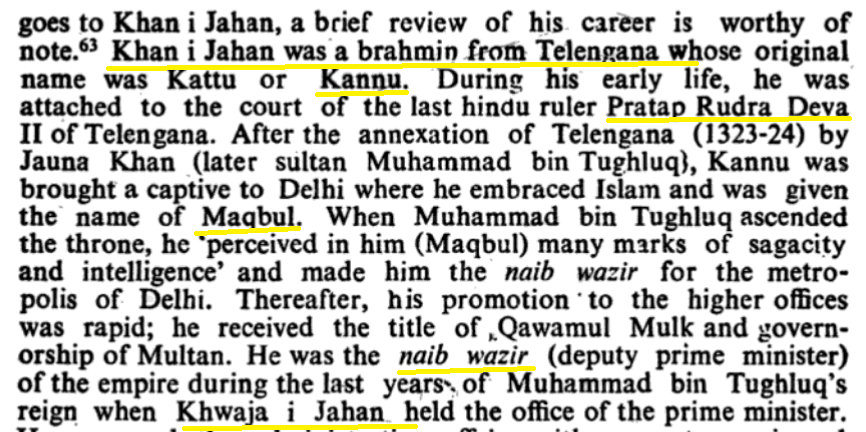
Even when the Kshathriya Royals were defeated and Maliq Maqbul (converted Kannu brahmin) placed as governor, these Soodhra Nayaks continued the Liberation struggle.
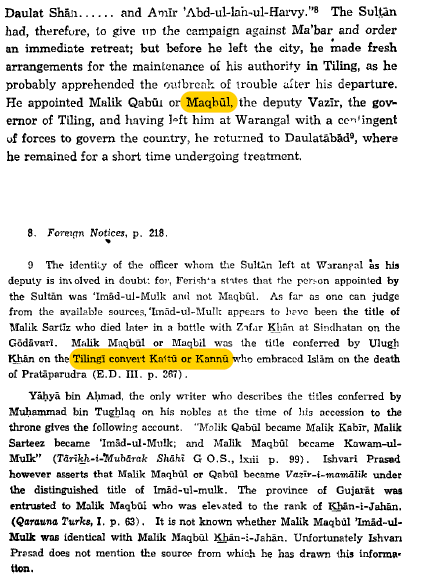 As Prolaya Vema Reddi would proudly proclaim, it was he who restored the agraharas to the vedic brahmanas (vaidikis), despite arising from the Fourth Varna. The so-called “Service Caste” would render an incalculable assistance to the Vedic religion, time-and-again, privilege or no.
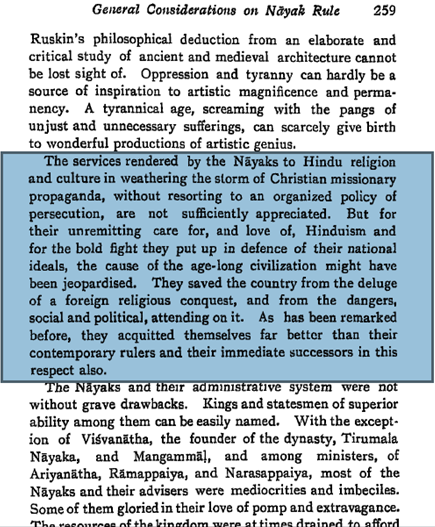
As later proven by the Thanjavur Nayaks, men don’t follow title…they follow courage.
References:
- Malampalli, Somasekhara Sarma. History of the Reddi Kingdoms.Delhi:Facsimile Publ. 2015
- Vriddhagirisan, V. Nayaks of Tanjore. New Delhi: Asian Educational Services. 1995
- Aiyar.R., Sathyanatha, Ed. S.Krishnaswami Aiyangar. History of the Nayakas of Madurai. Oxford. 1924
- Sharma, M.H. Rama. The History of the Vijayanagara Empire. Mysore: Wesley. 1956
- Rao, P.R. History and Culture of Andhra Pradesh: From the earliest times to 1991. Delhi: Sterling. 1994
- Bai, Kusuma K. Music-Dance Forms And Musical Instruments during the Period of the Nayakas.