After an extensive and unintended hiatus from historical dynasties, we return to the topic. Perhaps one of the most influential yet under-rated Royal Houses in Aandhra’s history is one that is better known as feudatory than as sovereignty or suzerainty.
Colloquially known as Chodas, the next Post in our Continuing Series on Andhra History is the Telugu Cholas.
Introduction
The Telugu Cholas are one of those large-scale royal dynasties who have had a widespread yet under-appreciated impact. So prolific and plentiful were these royal lines, that it would be inaccurate to describe them as a singular dynasty.
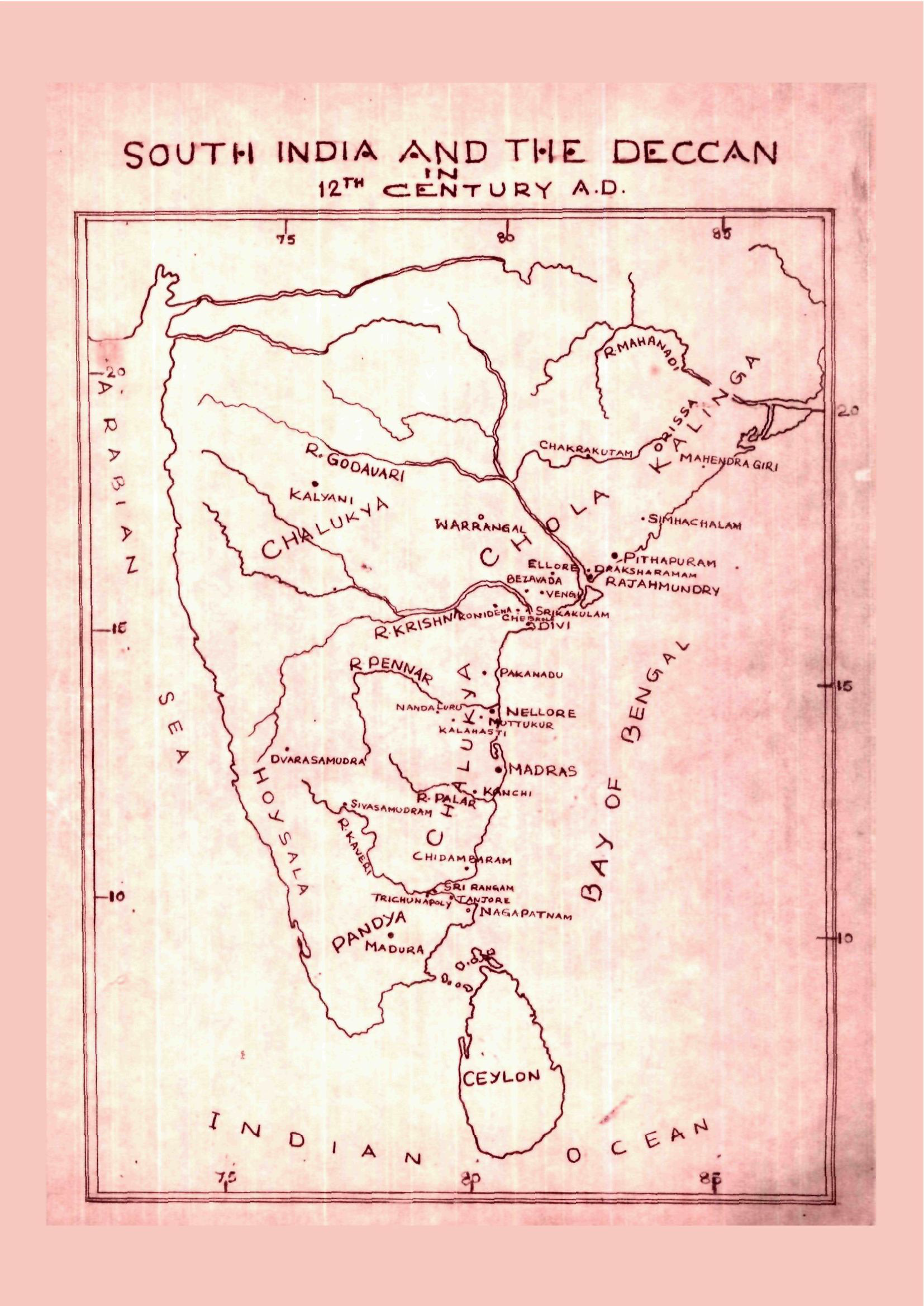
If the Pallavas were Aandhra Brahmins who dominated Tamil Nadu, then the Telugu Cholas were Tamil Kshathriyas who ruled for several centuries in Aandhra. Indeed, it is often questioned whether the Cholas are from Dravida desa or Andhra desa. The reality is, their original domains are in their namesake Chola desa, much of which is divided between modern Andhra Pradesh and Tamil Nadu.
Though the majority of their inscriptions were in Tamil, true to ancient Dharmic kings, they would inscribe their edicts in local languages wherever they went. Indeed, the Renati Cholas in Trilinga desa are credited with some of the first Telugu inscriptions.
As is common with the top two varnas, the Cholas transcend mere language or mother tongue, and made an impact wherever they went, embracing the local culture. And in the case of the Imperial Cholas, this was no small geography of operation.
Background
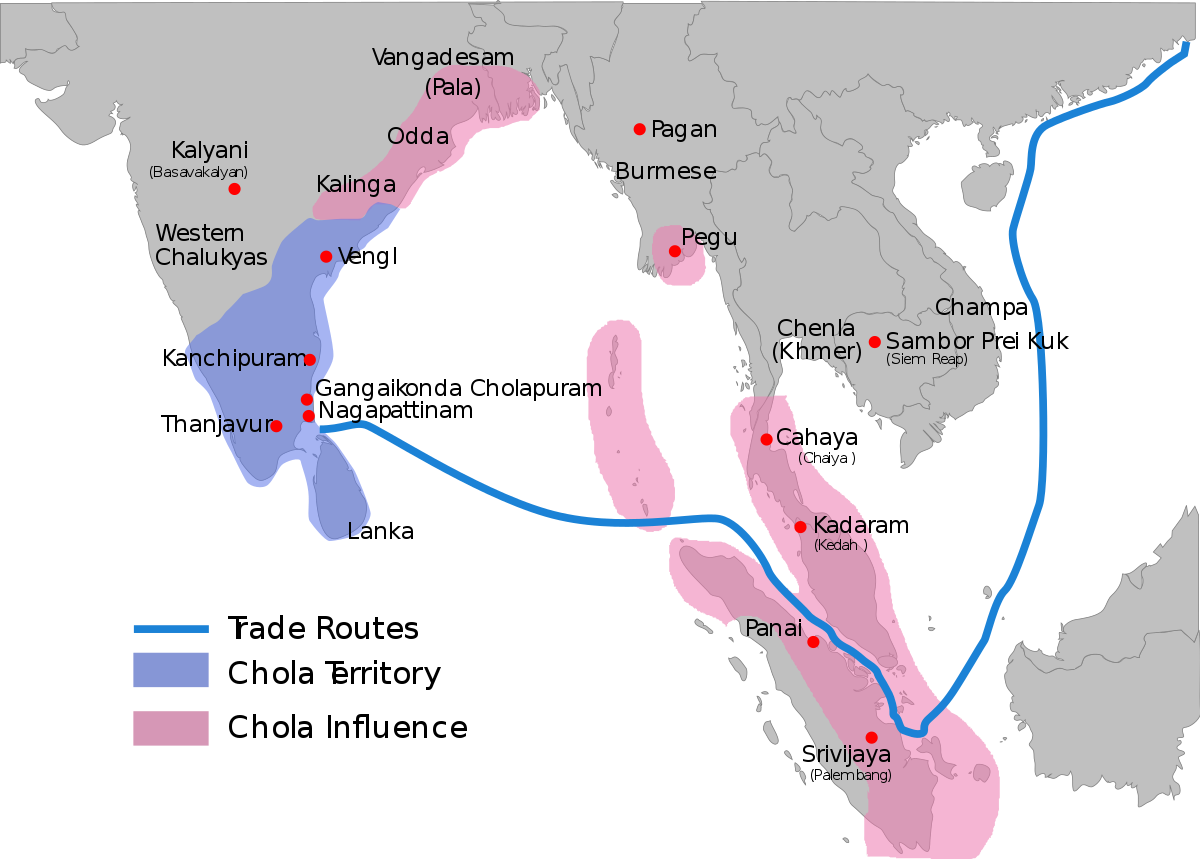
The Imperial Chola Dynasty reached its apex with Raja Raja Chola and Rajendra Chola. They would be feared for not only their peninsular prowess, but for their naval operations and conquests as far as South East Asia. What they did not conquer outright, they laid to tribute and retain commercial power and interests. Powering much of their mercantile and military machine were the Veera Balanjyas, connected to the Ayyavolu 500. The Cholas became the dread of the deep sea.
However, long before this famous family reached national and international fame, it was one of numerous kshathriya polities that dotted Bhaarathavarsha.
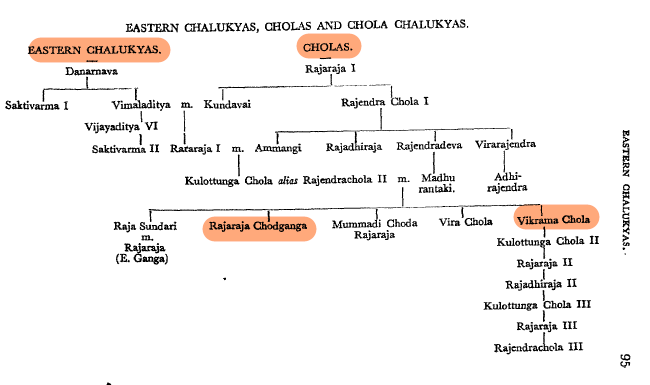
The rise and dominance of the Cholas in Aandhra was inextricably linked with the Eastern Chalukya Dynasty. It is for this reason they are often referred to as the Chalukya Cholas.
Origin
Thanjavur is the site of many an historical episode. It would feature none other than the Telugu Nayak kings, who loyally served the Vijayanagara Rayas as vassals. Their contributions to Telugu and Tamil culture are celebrated even today. However, the history of this temple town dates back even further.
Though the capital of the Imperial Cholas would be at Thanjavur (Tanjore) and Gangaikondacholapuram, their first capital would be at Uraiyur. This family claimed descent from the Suryavamsa and indeed, is mentioned in the Puraanas and the Raghuvamsa of Kalidasa, at a Northern Svayamvara.

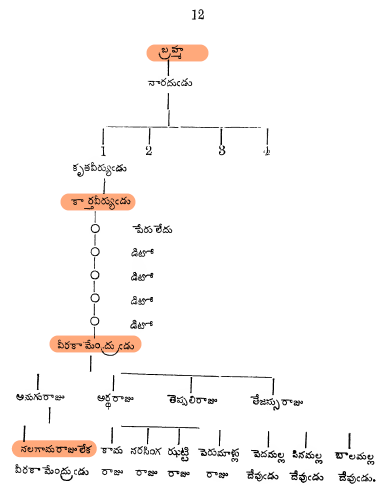
Indeed, many Aandhra Kshathriya Raaju families claim descent from Karikala Chola, and maintain him as part of their Raaja pravara even to this day.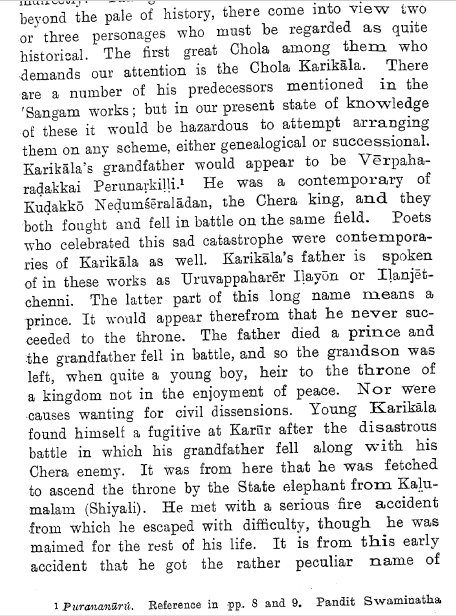 Unlike modern pretenders, the Cholas were exceedingly consistent in their dynastic claims, lineage, and gothra: Surya Mahavamsa, Kasyapa Gothra, Karikala Vamsa.
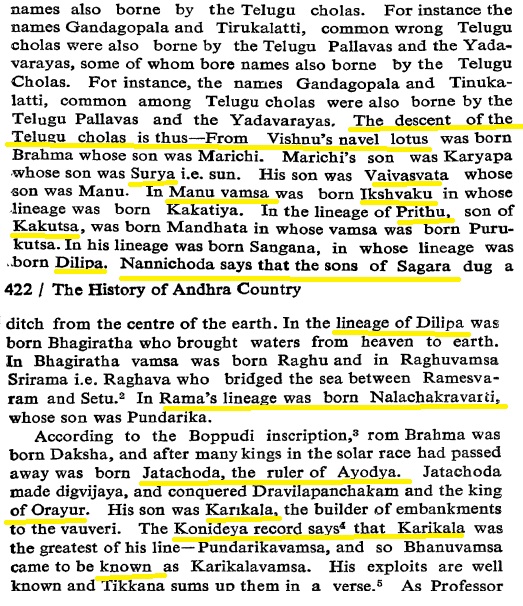
Vamsa Vrksha (Genealogy)
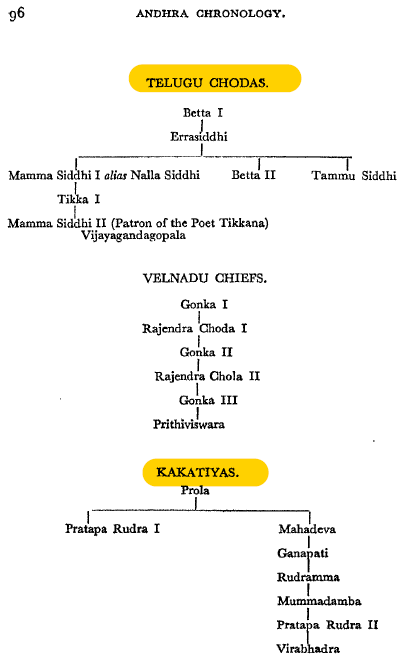 The Vamsa Vrksha (Family Tree) of the Chola Vamsa is as vast as the veritable Ocean that they dominated. Theirs is the ancient, original line of Uraiyur from which Karikala and the collateral Renatis are sprung. These go at least as far back as the 7th or even 6th centuries CE. It is for this reason there is often dispute over whether the origins are Aandhra or Dravida. The answer is neither, as Chola dynasty hails properly from Chola desa (in what is now evenly split between Andhra Pradesh and Tamil Nadu).
Then there is the Imperial mainline of Thanjavur, which originates with Vijayalaya, Parantaka, and Raja Raja I (born as Arul Mozhi Varma, as featured in the epic Tamizh film Ponniyin Selvan). It is here that we see the predominance of Tamil inscriptions and the firm Tamil culture of the Imperial Chola line.
Then, there are the various cadet lines that grew following the period of Imperial Chola ascendancy, in the 10th and 11th centuries. By the 13th and 14th centuries, the Chola Imperium had all but come to an end, and it was replaced by the Kakatiyas and the Pandyas as the primary players on the Coromandel Coast. Indeed, Coromandel is believed to be an anglicisation of Chola-mandalam—the land which derives its name from the dynasty.
Velanadu Cholas
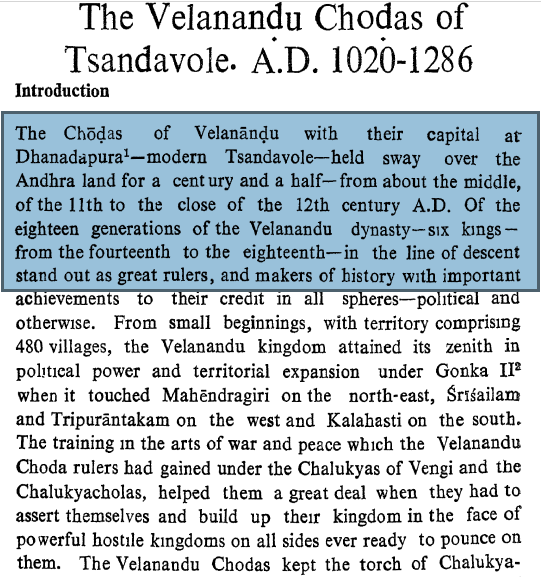
If the Renati Cholas were the earliest of the collateral or cadet Chola lines, then the Velanadu were arguably the most famous.
The dynasty began with Eriya. He and many others of this line were feudatories of the Eastern Chalukyas. Gradually, however, they began to spread their wings. After Maliya, however, there was the great Gonka I. He is considered the true founder of the Velanadu Chola kingdom. [1, 9] His loyalty, however, would be transferred to Kulottunga of the Chalukya-Cholas at Thanjavur.
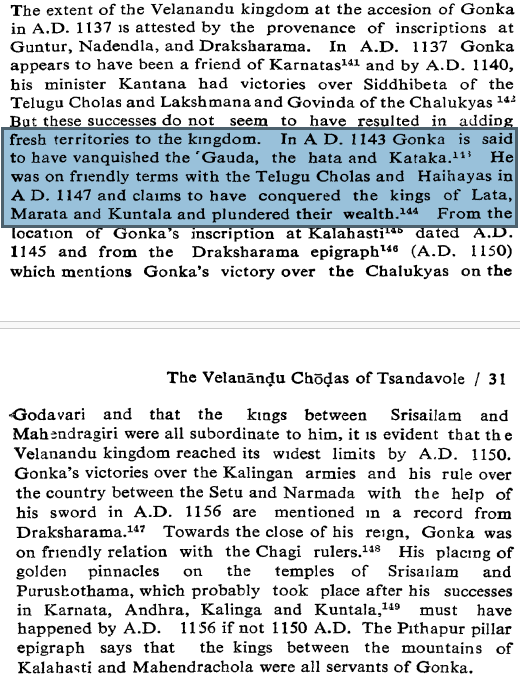
In the Velanati line, the standouts are Gonka I and the greatest of all, Gonka II. 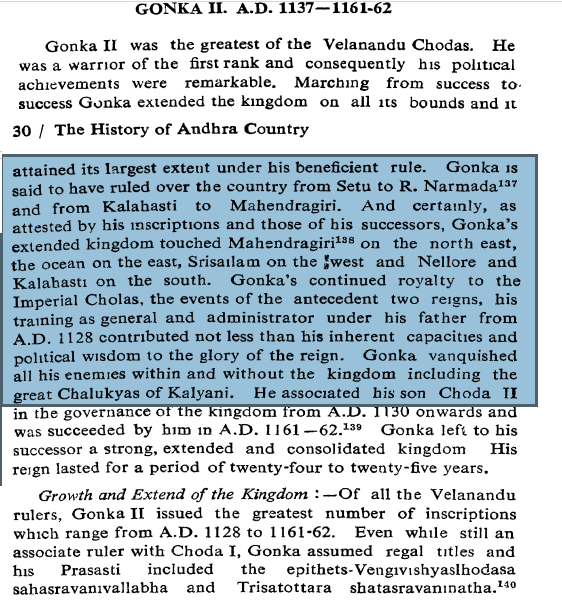 Unlike the others, they played the game of thrones far and away from the original Chola stomping grounds. They were at the Telugu tri-junction of Telangana, Kosta, and Rayalaseema. More appropriate for the time however, one could say that they were at the centre of Trikalinga, with frequent forays into Odia land and Bengal itself.
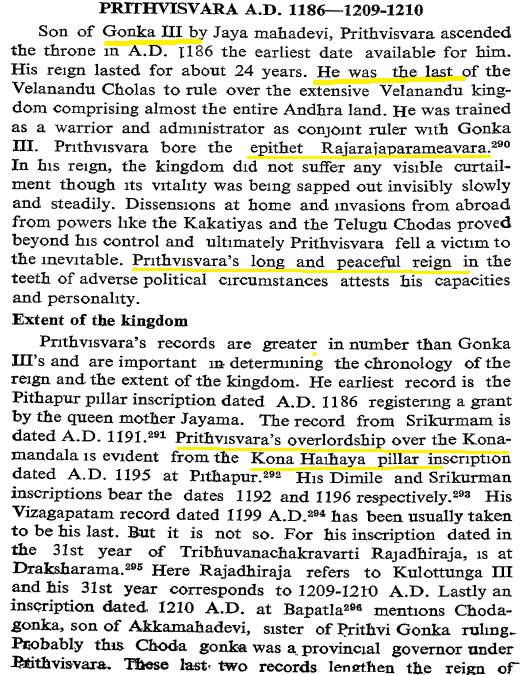
Following Gonka was Choda I, Choda II, Gonka III and finally Prithvishvara, with whose demise the dynasty would effectively conclude. Ironically, he would die at the hands of the Telugu Cholas of Nellore. The long and peaceful reign of this king would feature a violent end both to him and his line. Though the royal line ended, claimants to this house would be found as late as the 1300s. The Velanatis would become feudatories of the Reddi Raajas, later inter-marrying with them.
Konidena Cholas
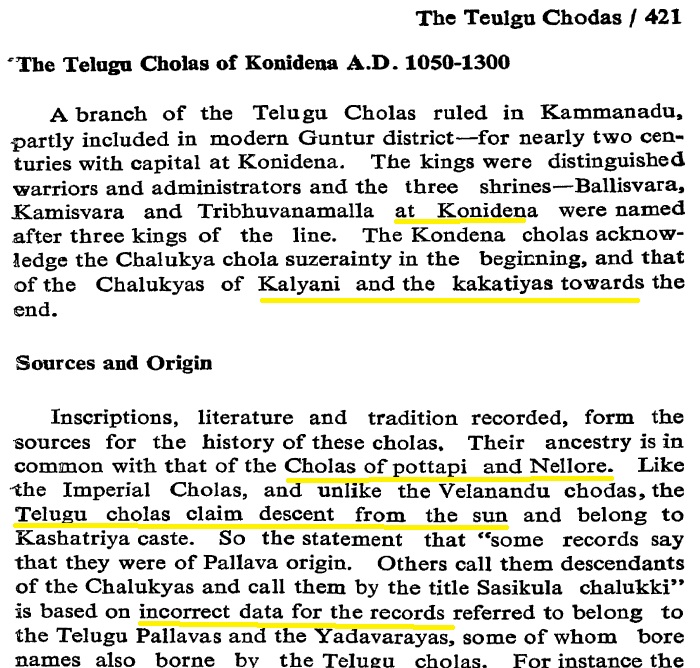
Next in consideration are the Telugu Cholas of Konidena, near Guntur. Though Telugu Choda is the colloquialism, the use of Choda as a personal name make the use of Telugu Chola less confusing and more consistent.
Balliya Chola is the first of this Konidena line. Some refer to him as the last of the Renati line as well.
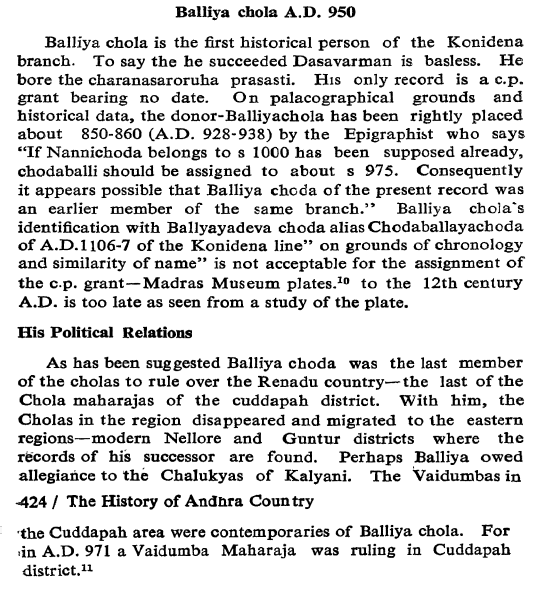 He would be followed by Chodaballi, who in turn would be succeeded by Nannechoda (or at least the first of them).
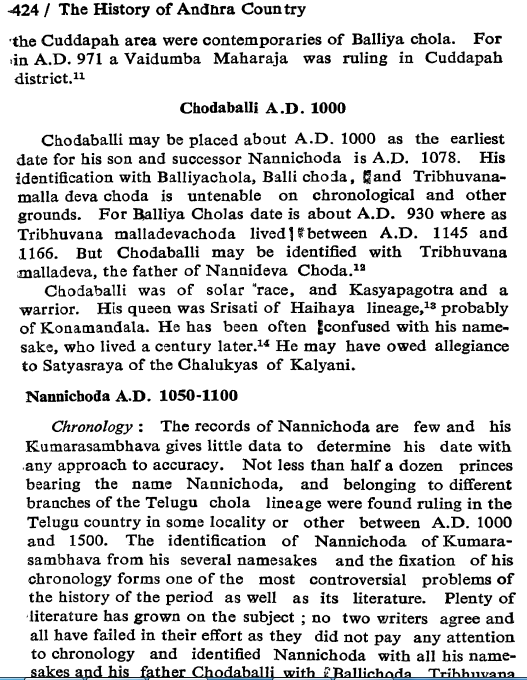
The name Nannechoda would begin to feature in this time. Interestingly, one of these Nannechodas had a son who ruled as feudatory to the Mahratta Seuna Yadavas. The continuity of the name Mahratta (Maharatha) can be seen in this time. The word Maharashtra dates at least as far back as Xuan Zhang, the itinerant from the East.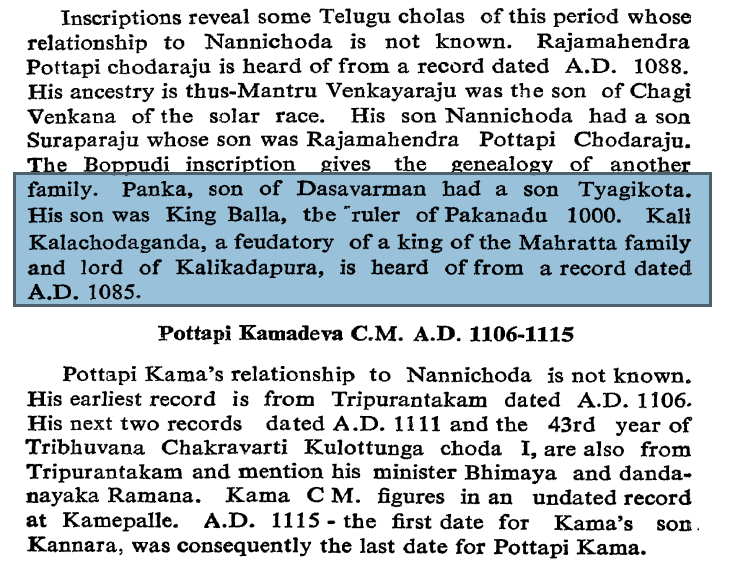
The Kings of Konidena would not last too long. From Kamachoda, we see the decline with Ballichoda. The Velanatis and the Kakatiyas were all closing in. There was not much room to maneuvre or expand. Decline became inevitable.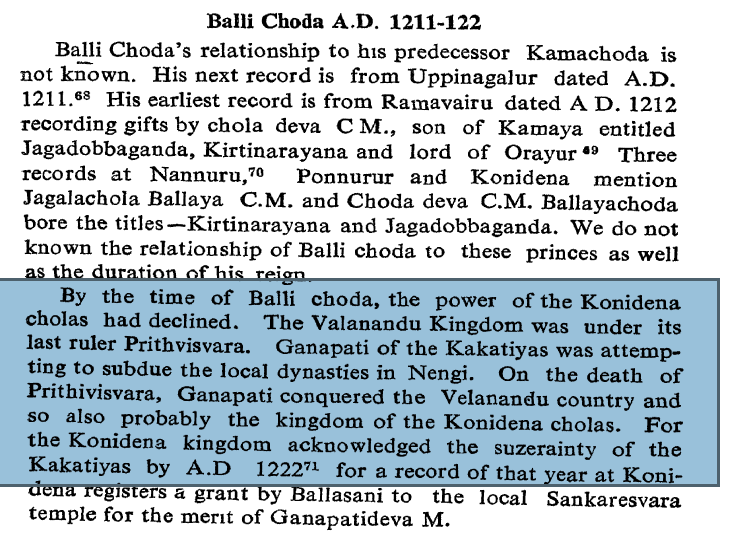 The Konidenas would fade into oblivion by the 14th century. However, they might be noted later for the cultural contributions.
Kalahasti (Pottapi) Cholas
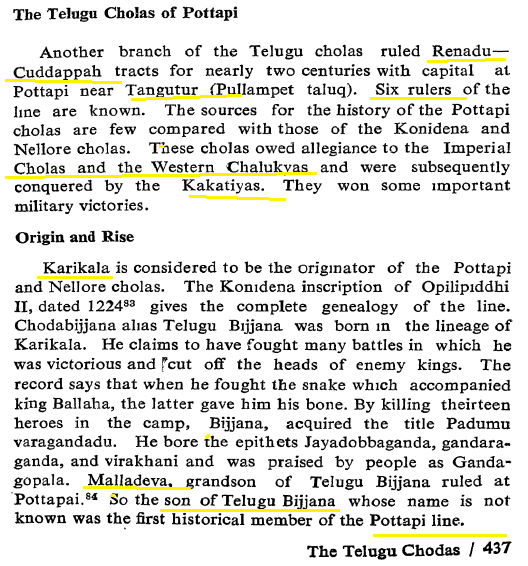
Pottapi Cholas are more properly known as Kalahasti Cholas. There were six prominent rulers of this dynasty, starting with Bettarasa. Nevertheless, the line traces its origin to a King without a name. His father was Bijjana and his son was Malladeva.
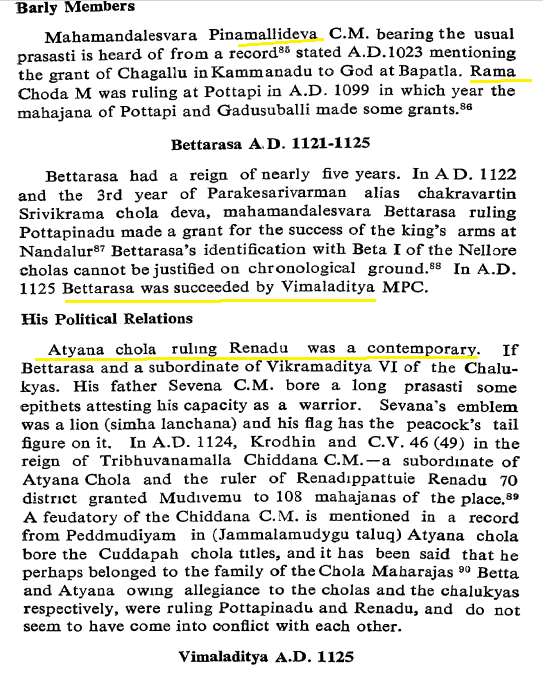
The political situation in 1222 CE is quite clear on whom the rulers were. Across the board, while there is only occasional mention of a minister or sat-soodhra vassal, the kings are clear kshathriya lineages (with an occasional Pallava mention here and there). Chalukya, Chola, Haihaya, and Maharatta Yadava Seunas are all clear on their origins. The point is not to dwell on caste, but to clarify who exactly was a Kshathriya originally, and how the political structure changed in the subsequent centuries.Social mobility is well-and-good, but ritual-status also matters.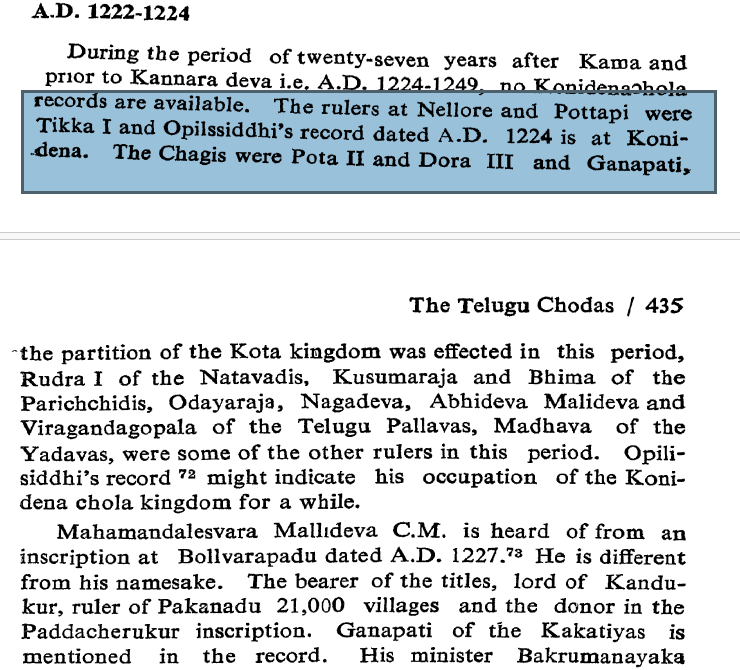 Opilisiddhi was another prominent king of this dynasty. He would be notable as a feudatory of Ganapathi Bhupala of the Kakatiyas. Velanadu is often shorthand for Aruvela-nadu, and the Aruvela Niyogi Community.

Opilisiddhi II is the last of the mainline. With no issue, he was soon followed by Rajadeva and Bhimadeva Kesavadeva. He soon faded from memory, and with that, so did the Pottapi Cholas. There would be feudal dukes or landed aristocrats claiming descent from this line down to 1498 CE, as mahamandaleshvara. [1, 443]
Kanduru Cholas
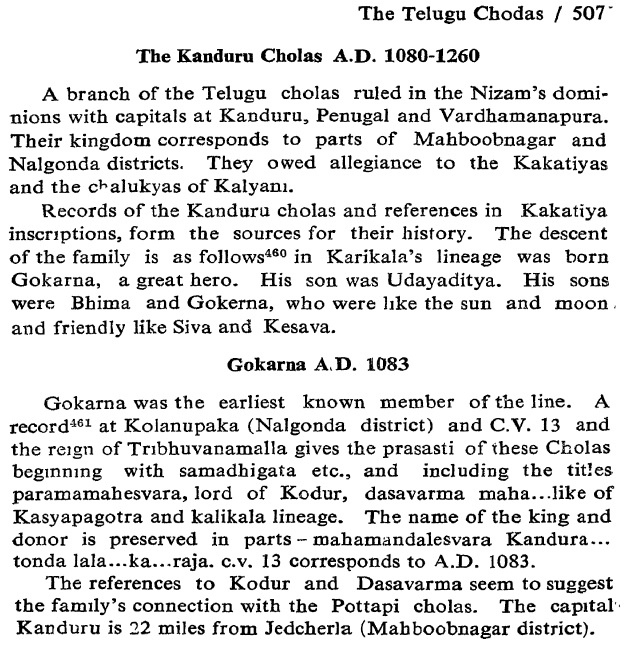 Contrary to the claim of some nizam-dora apologists, the Raaju community (and its antecedents) did rule in the Telangana region of Aandhra desa. This is all the more interesting since avid hatemonger of coastal Aandhras, and razakar-flunkey, KCR is a Velama from Bobbili, whose community itself hails originally from Tamil Nadu.
“Andhrula Sanghika Charitra” (1950): Velamas were part Golla origin, migrated from Tamil areas and settled in Telugu region; hence the word… “Vellala”. And joined Kakaitya armies as soldiers”.
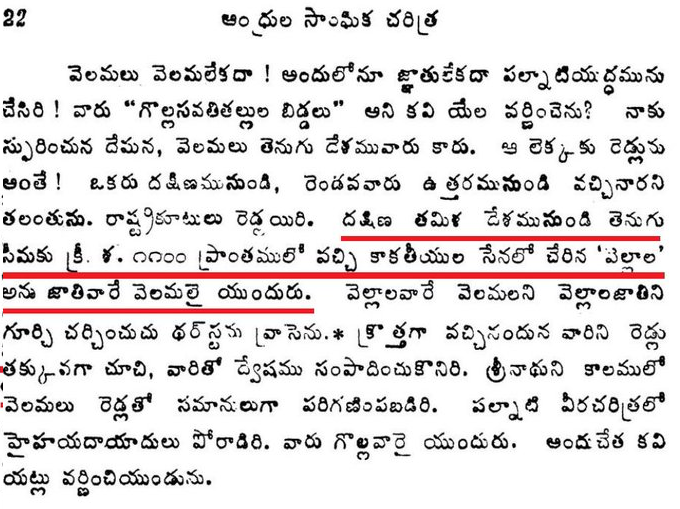
They would be later promoted as Padma Nayakas during the time of the Cholas and their Haihaya feudatories. Eventually breaking off to become the Bahmani allied Devarakonda & Rachakonda Raajas, KCR’s casteists should remember that those who live in glass houses should not throw stones.
In any event, the Telugu Cholas of Kanduru would rule at Nalgonda & what is now Mahbubnagar. There liege-lord was the Kakatiya Kings.
Nellore Cholas
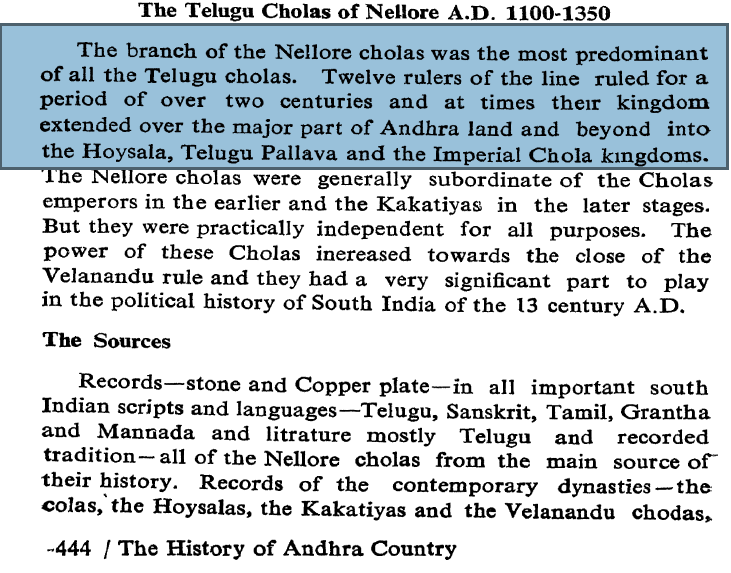
Perhaps the most influential and powerful of all Telugu Cholas was the Nellore Chola line.
The early rulers of this clan were Madhurantaka (interesting in the wake of PS-2), and Manumasiddha I.
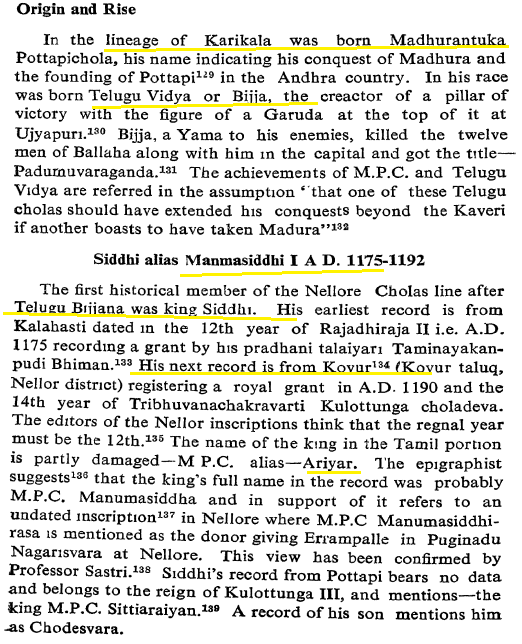
He ruled for 18 years and was followed by Dayabhima and Nallasiddhi I. [1, 446] They would in turn be succeeded by Errasiddhi, Manumasiddha II, and Tammusiddha. Finally, we reach 2 outstanding rulers with interesting nomenclature.
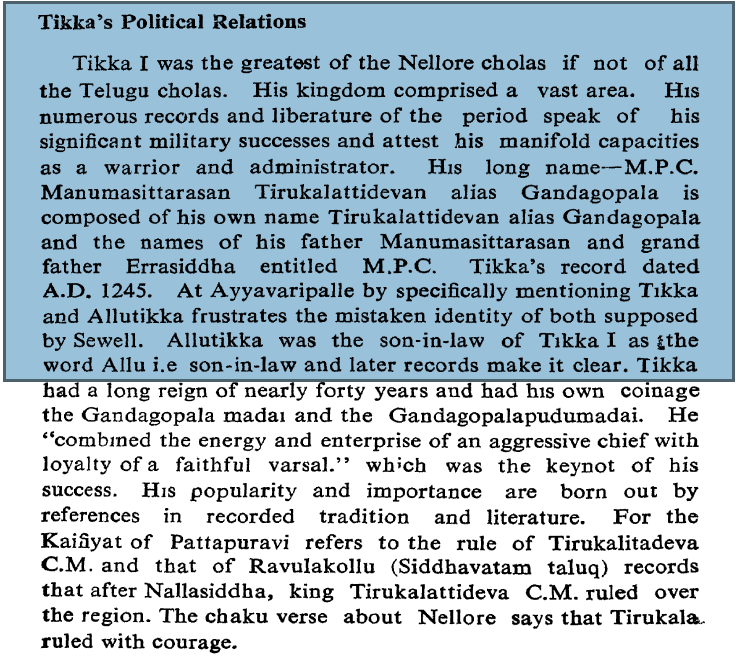
Regarding Tikka & Allutikka, there is of course a joke to be made—but I’m not going to make it. Culinary expertise aside, the names of this period was particularly distinct. Tikka Bhupala was the most powerful of the Kings of Vikramasimhapuri.
 The Southernmost of the Telugu Chola lineages, the Nellore line would frequently interfere in Dravidamandalam, laying claim to Kanchipuram itself.
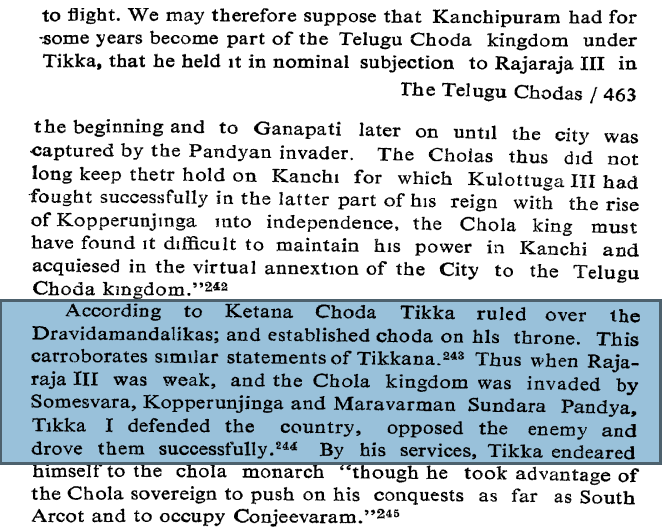 The residual Pallavas featured in the early years of Nellore Chola escapades. By 1231 CE, the Pallavas were all but extinguished as a power player.
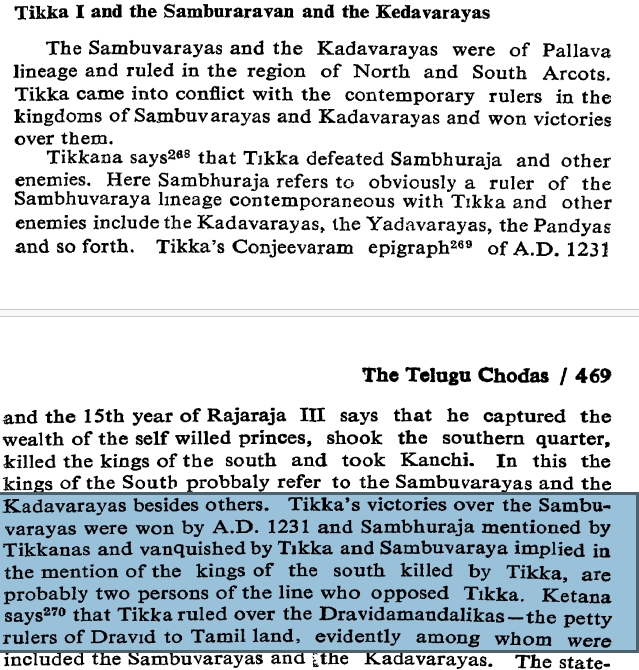
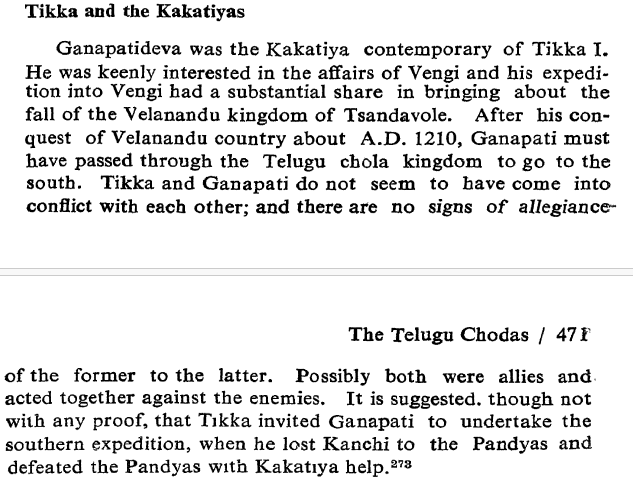
Tikka I is prominent for the early interaction with Ganapathi Deva Kakatiya. He retained his independence in this era, and though there was no allegiance as of yet, there remained the stirrings of an alliance.
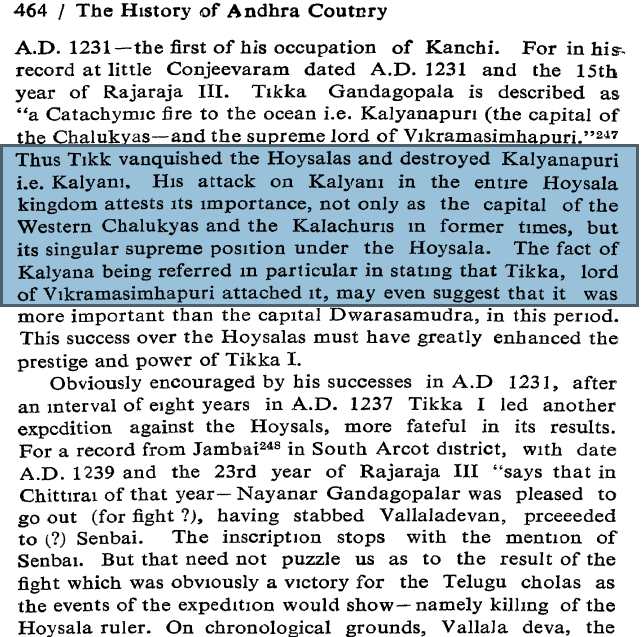
 Tikka did go on the offensive and is credited with the fearsome yet somewhat unchivalrous feat of destroying Kalyani, capital of the Hoysalas. The latter would later relocate their administration to Dhvaarasamudra (Dorasamudra). Ethics of the action aside, this action was testament to the power of the Vikramasimhapuri, and the Nellore Cholas.
 The reign of Tikka I would be followed by a veritable dhvairaajya shared between the aforementioned alimentary anointed Allutikka, and his brother-in-law Manumasiddha III. The more culinary of the Kings would be installed at Kanchi, while the latter (as son of Tikka I) would rule from the traditional Nellore. Nevertheless, the camaraderie between the two was a rare phenomenon for the otherwise bitter and self-sabotaging politics of Hindu polities in the Kali Age.
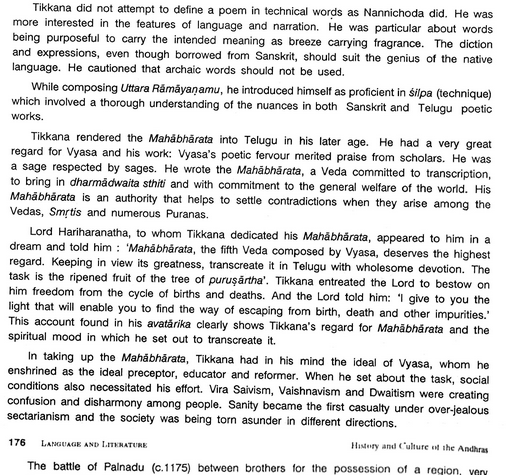
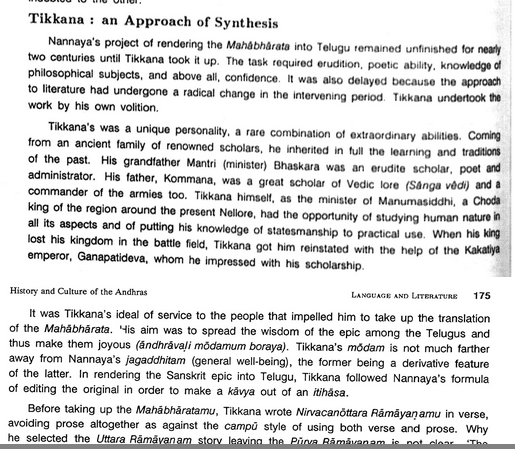
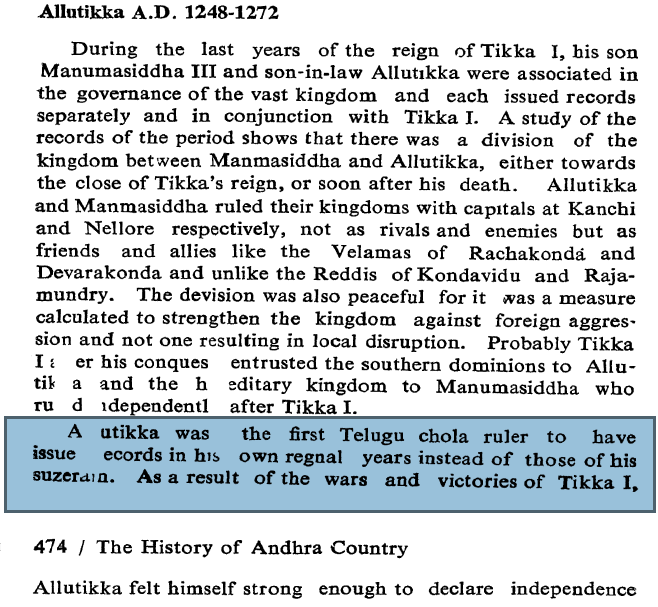 While Allutikka would later declare independence, Manumasiddha III would feature as feudatory to Ganapathi Bhupala of the Kakatiya Great Kingdom. Notably, Tikkana Somayaji would feature as the ambassador to the Court of Warangal, on behalf of the ruling Nellore Chola.

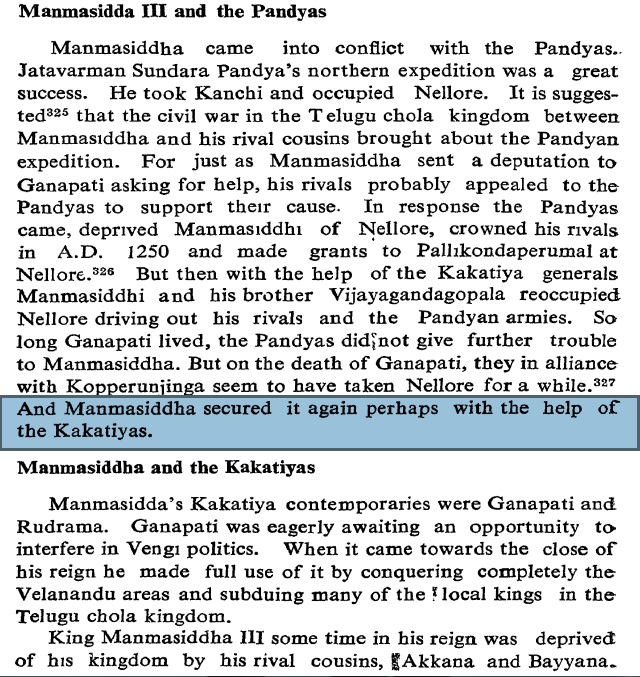
Manumasiddha’s reign would be notable for the fearsome continuation of the rivalry between the Cholas and the Pandyas.The Mani Ratnam mass-starrer would deftly demonstrate the bitterness of the conflict between the rulers of Madurai & Thanjavur. Manumasiddha III would be betrayed by their cousins, who sided with the Pandyas (who promised the Nellore throne). Manumasiddha would be aided by the Kakatiyas and reinstalled by them, establishing firmly the relationship between client and patron.
By the time of Prataparudra Kakatiya, the ruler of Nellore was Rajagandagopala.
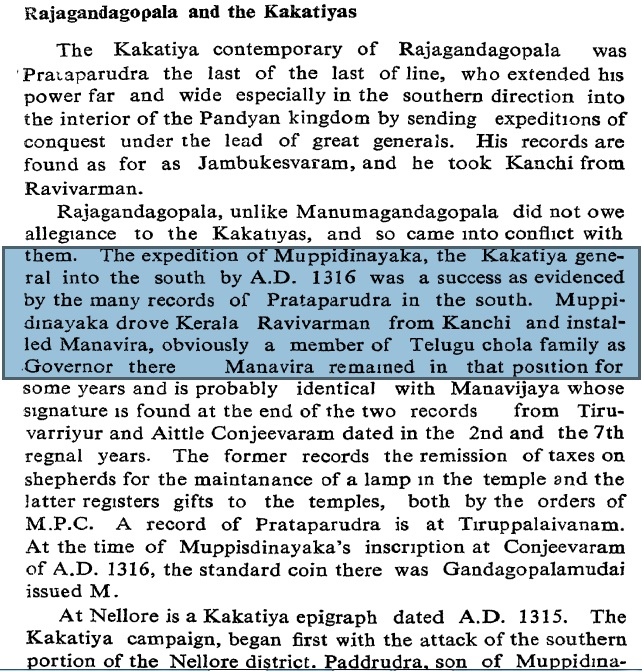
He would prove recalcitrant and would be overthrown by Kakatiya General Muppidi Nayaka. The original Nellore Chola line would be replaced by a rival relative in Manavira. And with that, this most illustrious of Telugu Chola lineages we would hear no more.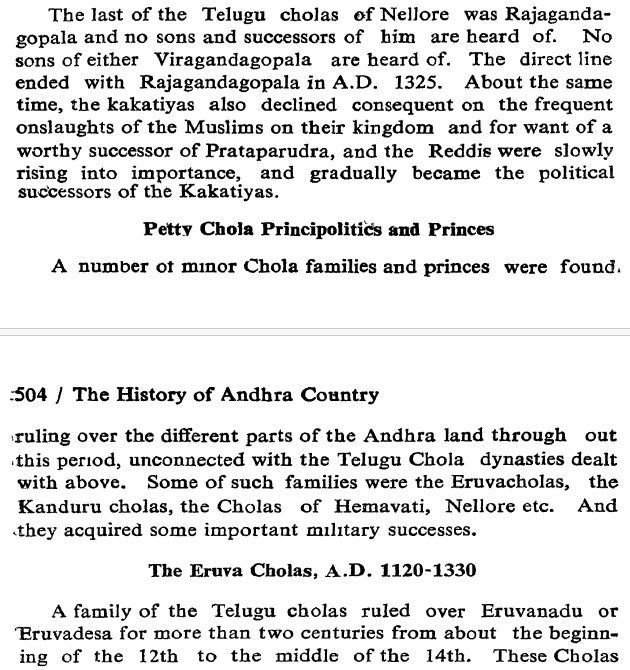
The Eruva Cholas are another minor line that ruled scarcely 2 centuries. They merit only a passing mention that they ruled. A more in-depth study might be justified elsewhere. However, they indicate the existence of a plethora of minor Telugu Chola royal lines and feudal aristocrat kinglets. Each fief in this period often operated as its only petty sovereignty. If not Raaja, the title was the grandiloquent Mahamandaleshvara, or sometimes, Naayaka. But in the end, they too exited the pages of history.
So plentiful were all these families that there was even (briefly) renewed line of Nellore Cholas.
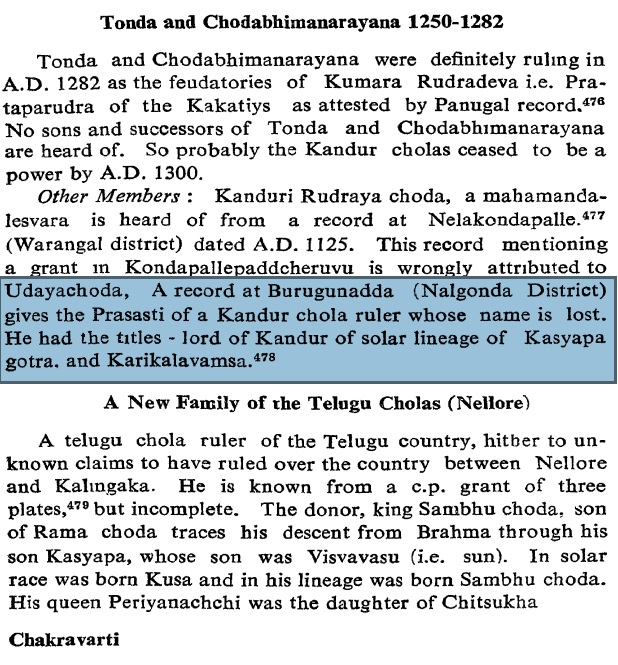 It is of course difficult, perhaps well-nigh impossible to reproduce the entire history of the Telugu Cholas (or even most historical dynasties). For consideration, one should read the comprehensive (if unevenly spell checked) The History of the Andhra Country by B. Yashoda Devi. The two volumes cover not only the historical chronology in the first, but secondarily, the administration and culture.
Offshoots
For any dynasty there are often collateral branches (Western vs Eastern Chalukyas), cadet branches (Telugu Cholas vs Imperial Cholas), and offshoots (Pallavas vs Satavahanas). One of the persistent assertions regarding the Kakatiyas is that Durjaya is misunderstood as a tribal ancestors rather than the Chola desa descendant that traditional sources assert he was. Other than stray references, the Kakatiyas have historically been considered a Suryavanshi Kshathriya dynasty, from the Karikala line.
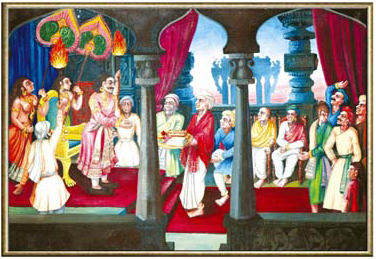
This gothra is maintained today among Aandhra Kshathriya Raajus, and their descendants can be found in Chattisgarh (often caucusing with the Rajput community). Moreover, the social engineer story of Prataparudra II being captured and sent North (suiciding at the Narmada) may in fact not be true, as he and his descendants are said to have continued to the resist from Rekapalli, and yes, the aforementioned Chattisgarh. Inscriptions from the dynasty and Prataparudra’s son and grandson are noted (suppressed?) even today, and end around 1360 CE. Thus, leaving aside the caste origins of the heroic dynasty (the least important matter here), it is apparent that the Kakatiyas continued to resist even after the fall of Warangal in 1323. It’s retaking in 1336 is credited to the great Musunuri Nayaks, but the much of this account is at variance with the inscriptions and even mention in Turkic chronicles
The Telugu Cholas would mostly feature as loyal feudatories to their Kakatiya overlord, even in the midst of Turkic invasion. While Western Historians assert there were 5 wars between Delhi & Warangal and 3-5 walls, traditional historians attest to 7 Wars and modern archaeologists to 7 walls for Warangal. The scoreboard of 2-1-2, may in fact be 4-1-2 in favour of the Kakatiyas. Though they were ultimately defeated, there is reason to believe they, and their vassals, would carry on the war from Chattisgarh.
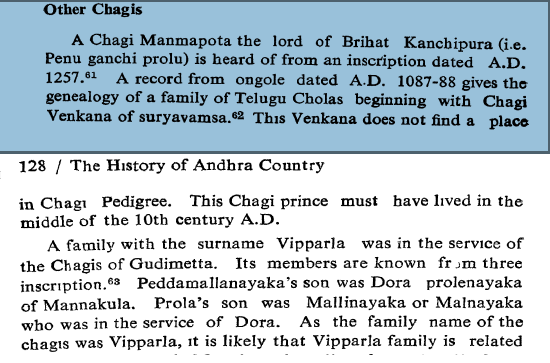
But Telugu Cholas weren’t their only fiefs. The Sagi dynasty (derived from Tyagi), is considered a Chola offshoot as well. The ancient Tamil Arasar caste (now extinct) is considered to have folded back into this cadet dynasty of theirs—still prominent among Telugu Raajus.
 Legacy
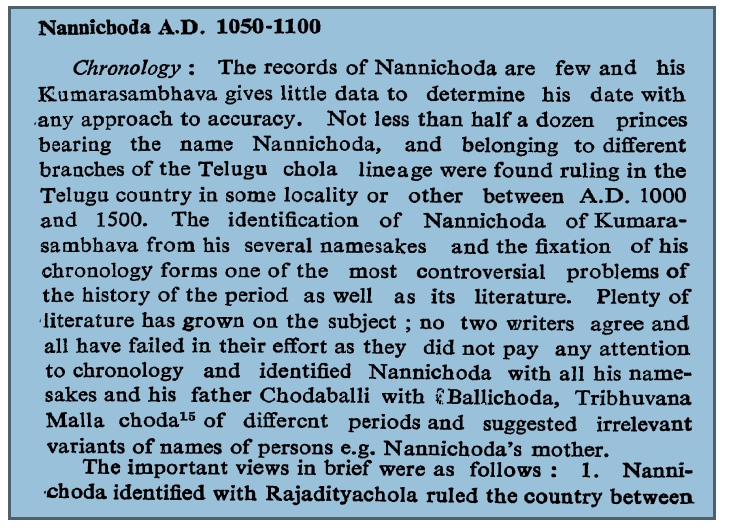 The aforementioned Nannechoda featured not 1 but atleast 5 namesakes. Clarity of each identity becomes difficult, and allocating achievement appropriately becomes well-nigh impossible. What can be asserted is that Nannechoda was one of the earliest Telugu language auteurs, and contributed to the development of the literary tradition. While this will be discussed more elsewhere. The name of this figure must nonetheless be mentioned as a key part of the legacy.
Perhaps another not so savoury aspect of the Telugu Cholas legacy was the growth in the popularity of Kalamukhas. Better known as the useful idiot counterpart to Kapalikas, the twain found many a follower in this period, much to the chagrin of Aasthika Vaidikas.
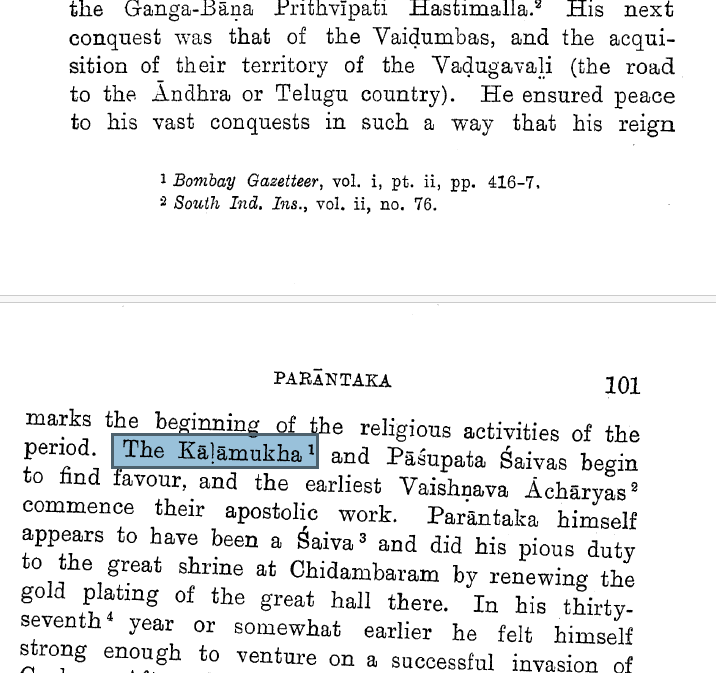
Nevertheless, there were also many bhakthi saints who sought divine favour directly, without intermediaries or sacrifice, but with pure devotion. Furthermore, while these aspects explain the karmic load that Indic Civilization would begin to bear in its heartlands, it should not colour the administrative acumen of the brilliant, Chola governors, viceroys, and kings in the Aandhra desa.
Administration
Building an empire also means governing and dividing it. This would mean not only parceling it out to governors and fiefs, but also establishing an administration with ministers (manthris) and councillors (amaathyas).
The Chola empire brought its own Tamil-esque take to governance.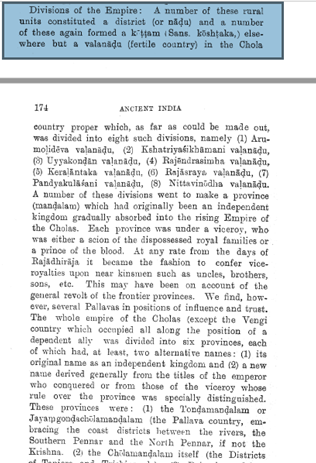 But governance is not meant to be merely top-down. There is the bottom-up aspect of village assemblies as well.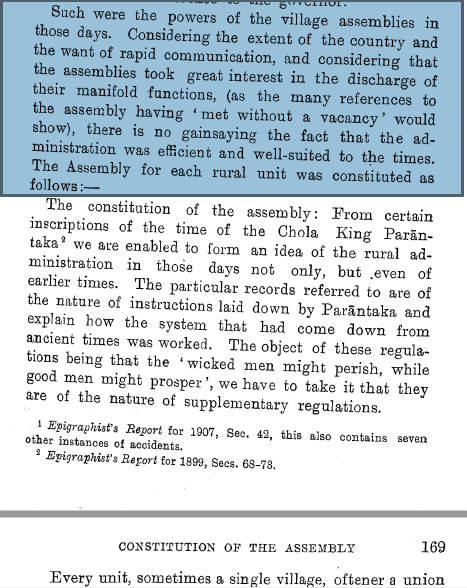
The Chola peninsular and trans-oceanic Imperium would not have been possible without a well-devised and implemented administrative system. Administration being a key aspect of Rajadharma, the Imperial Cholas would have practiced it well.
https://x.com/haraharasankara/status/1386115238739648512
In contrast to the foreign-derived nomenclature of the present, here some of the more traditional names.
https://x.com/haraharasankara/status/1386840014059974657
Civilizational Legacy
One of the long-standing questions has been why at the peak of Ghaznavid incursion did the Chola empire (as the most powerful of the potentates of the era) not organise a Dharmayuddha to liberate at least the coastal country of Sindhu desh. The horripilation of historical counter-factuals aside, the reality is that, like the Vishnukundins before them, the Imperial Cholas did send aid to the North.
Perhaps in asking questions of our kings and ancestors, we should not be so quick to judge them after all. Indeed, over-opinionated and half-read recalcitrance seems to be the bane of the new generations. But this was not the Cultural Contribution of the ancients, leave aside the Telugu Cholas themselves. Indeed, they can be praised for their contributions to political sagacity and societal wisdom, long since lacking the present crop of casteist elites-in-waiting.
Cultural Contribution of the Telugu Cholas
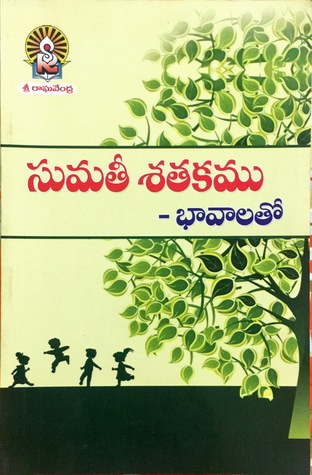
Despite hailing from other parts of India, both the Eastern Chalukyas and the Telugu Cholas had tremendous impact on Telugu culture and literature. If the former commenced the patronage of the Andhra Mahabharata by Nannayya, the latter continued it under Tikkana. However, the Telugu Cholas featured not only as patrons of poetry, but producers of it as well.
One is the previously discussed Nannechoda. The other is the famed Baddena. Better known by the alliterative appellation, Baddena Bhadra Bhupala, this Telugu Chola is credited with 2 primary works, the first of which is the celebrated Sumathi Satakam.
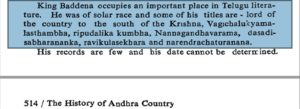
There has been some recent discrepancy as to the origin of Baddena. Due to the incorrigible caste competition in AP, he has been claimed by many groups. However, as per multiple authorities, he was quite clearly a Telugu Chola, and therefore, of Kshathriya background. As per P. Ragunadha Rao:
“The immensely popular works Sumati Satakam is attributed to Baddena, a Telugu Choda king of the Kakatiya period. His other work is Niti Sastra Muktavali. ” [3, 80]
One of the issues with Indic History has been the the frequent use of names without qualifiers. Part of the confusion over who came first, Nannechoda or Baddena has been the result of numerous Nannechodas dotting the Nellore line.
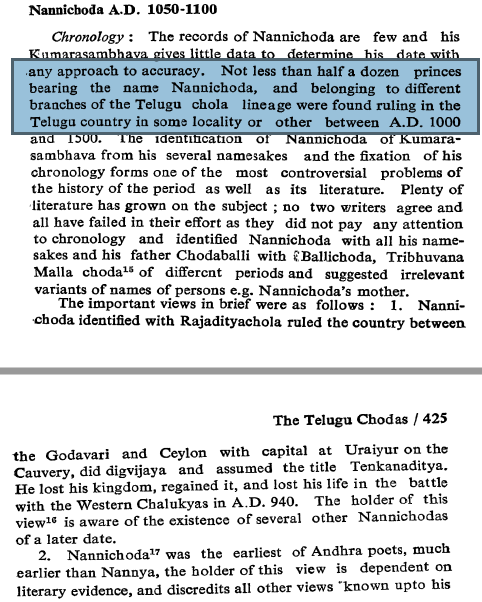
Nannechoda is nevertheless famed for both his poems and his poetics.
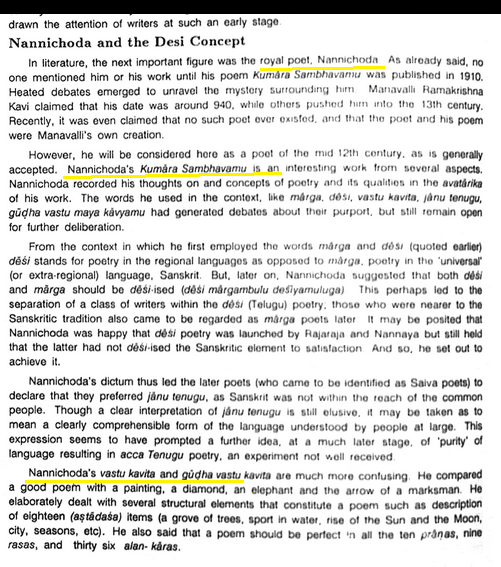
“The twelfth century is often called the Chola period. From an inscription of Kulottunga Chola, it is learnt that the King provided agriculture land for the maintenance of a number of dance halls (theatres). There is adequate inscriptional evidence which shows that, a large number of dance halls were built in temples. In a poetic work, Kumaarasambhava written by poet Nannechoda who lived in this period there are numerous refer-ences to music and dance. It can also be learnt from Kumaarasambhava of Nannechoda and the works of poet Palkuriki Somana that, during this period, music and dance programmes were conducted not only in royal courts and tem-ples, but also on occasions like marriage, the birth of a son, celebration of victory, and other jubilant times like festive pro-cessions” [4,22]
“Nannechoda in his poetic work, narrates that Rambha, the heavenly dancer, performed dance on the occasion of marriage of Parvati and Paramesvara. He describes that Rambha danced concentrating her looks wherever her hand was and concen-trating her mind wherever her looks moved, thereby conveying the richness of message and producing the aesthetic effect ulti-mately in the spectators, in a wonderful manner.” [4, 22]

Nandikeshvara describes Rasa in similar fashion in the Abhinayadarpanam, sl. [4, 57]
“Yato:hastaha tato: drishtihi Yato:dristihi tato: manaha
Yato: manaha tato:bhaavo Yato bhaavaha tato: rasaha” [4, 22-23]
Another prominent of this era was Palkuriki Somanatha.
“There are frequent references to Music and dance in Palkuriki somana’s works, Basavapuraanam and Panditaaraadhya caritra. In Basavapuraanam, the Naatya style Panditaaraadhya caritra. In Basavapuraanam, the Naatya style is described in the episode of Sangayya. A similar instance found in the story of a devotee of Siva, Naatyana Mittandi name. Mittandi sees the Taandava form of Lord Siva is afflicted with a disease, he starts treatment to Siva to no avail. Disap-pointed thus, he prays to Lord Siva who appears before him and explains to Mittandi the nature of Taandava Nritta. Somana, the poet, describes this episode in detail. Further, in another episode there is a comprehensive appreciation of the Art of Music in connection with the worship of Lord Siva by a devotee called Maadiraajayya. In his Panditaaraadhya caritra, also, poet Somana refers to a variety of music and dance styles in the description of Sivaraatri celebrations. Panditaaraadhya caritra may be described as an encyclopedia of the fine arts. In this work, different varieties of Desi Nrittas and Maarga Nrittas are are discussed in detail.” [4, 24]
Nevertheless, it is Nellore’s beloved Tikkana Somayaji who rules the hearts of this epoch.
Conclusion
From the Renatis to the Velanatis to the Pottapis, Konidenas, Kandurus, Eruvas, and above all, the Nellore Kings, the Telugu Cholas were one of the most plentiful political forces in the history of the Aandhra desa. The were prolific in their progeny as well as politico-cultural impact. So much so was this the case, that the half the pravaras of Aandhra Kshathriyas claim some sort of descent from them. Judging from their lineages, this is hard to gainsay.
And yet, of late it has become fashionable for a group of people, let us call them “social engineers”, to take kshathriya figures, dynasties, even identity, and assign it to all and sundry. While they preserve their own (questionable) lineage legends vituperatively, they have no compunction about degrading and deriding that of others. But harmony is not achieved through double standards, but via the golden rule. They have applied a pincer movement, alternating between saying there were only Braahmanas & Soodhras south of the Vindhyas, or that everybody could become a Kshathriya. The first is not only insulting to 96K Marathas & Andhra Kshathriya Raajus, but also to Arya Vaisya Komatis who are long known for their practice of Vaanijya (commerce) & upanayana (Vedic thread ceremony) as appropriate to Vedic Vaisyas of old.
As we mentioned in our previous article, there are a number of valiant communities who have fought for dharma, but are nevertheless not Kshathriyas. Communities such as the Reddis, the Naidus, the Nairs, the Bunts, and the Vellalars have all at one time or another, fought invaders. In later periods, they might have even established their own medium-sized kingdoms. But a 1000 years of feudal status and a 100 years of kingship alone does not a kshathriya make.
Kshathriyas are determined not just by title or by upanayana, but by Raaja Pravara & Rishi Gothra, and basic Veda Adhyaayana. They trace their Patriarchal lineages not just to 1 or 2 dynasties, but across the ages to Surya, Chandra, & Agni and Svayambhuva himself. Social engineers might be mentoring up-and-coming communities to embrace new titles, but they do not have the authority to do so. Just as they are currently assigning Prathihaaras, Prithviraj Chauhan, and even Rana Pratap to agrarian communities (when all know they were Rajputs) they are currently asserting that there were no Kshathriyas south of the Vindhyas (true to their Caldwell masters). Meanwhile the various Satsoodhra communities we listed above are themselves mocked and pilloried by assigning their names to devadasi communities (i.e. “devendra kula” vellalar or “surya” balija, etc). Devadasi/Kalavanthula communities have every right to leave behind any stigma and embrace their own identity—but it shouldn’t be done while providing a shoulder for such social engineers to shoot at others. After all, are vishwakarmas/vishwabraahmanas considered braahmanas by anyone?
Satsoodhra & Dalit communities should be recognised for their achievements (and treated as equals in the modern republic), but there are only 2 lineal Kshathriya communities South of the Vindhyas: 96K Marathas and Raaju Aandhra Kshathriyas—the Tamil Arasars having long ago folded into the larger Raaju community. Nayaka (baron/commander), Reddi (village headman), Kaapu (policeman/protector), and Bunt/Buntulu (soldiers’ caste) are not the same as Vaidika Raajanya (Vedic Kshathriya ruling caste).
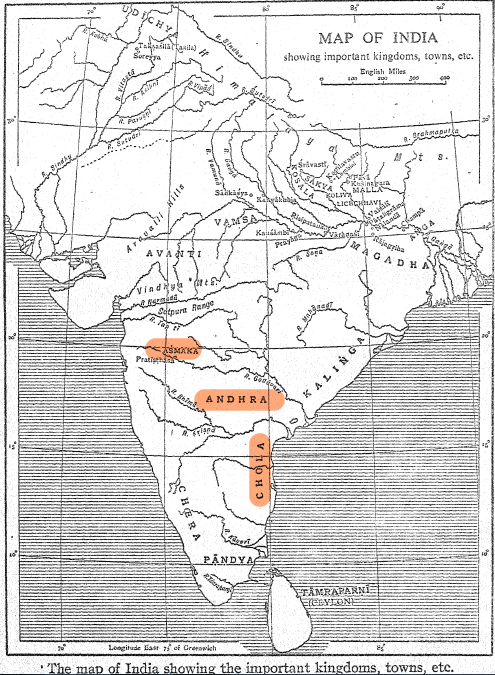
96K Marathas can trace their lineages back to Queen Naganika of the Satavahana era and ultimately to Asmaka & Vidarbha kingdoms. Aandhra Raajus can patrilineally trace their lineages back to the Chandravanshi Haihaya Rajputs, the Agnivanshi Eastern Chaalukyas, and the Suryavanshi Cholas (the Tamil Arasar caste merged into the Raju community’s Sagi dynasty). The Kingdom of Aandhra itself is traced to Andhra Nripathi of Kuru King Yayati’s lineage. All of these are validated not only by upanayana, gothra, puraana, poem, & practice, but even by prasasti.
This consistency in claim, chronicle, vamsaavali, and most inscription, across the ages, is the reason why the Raaju community in Aandhra is the only other ritual-status Kshathriya community in the South, and evidence of the tremendous impact of various all-India dynasties, from the Cholas of Tamil Nadu to the Kalachuri-Haihayas of Rajputana.
 All of this is important because as Vaidhika Dharma is being revived again, history has become not only become battlefied, but propaganda and pr exercise for powerful communities seeking to legitimise their rule. This might make sense in a feudal polity, but not in a democratic republic. Let the various communities from braahamans to satsudras to dalit avarnas celebrate their contributions to our common Aandhra culture and Indic civilization.
However, as anyone who has seen the Mani Ratnam magnum opus can attest, royal and feudal politics can be treacherous. Proper understanding of ancient lineage, ritual, and succession claim is crucial for anybody casting Vedic pretensions and imprimaturs onto their parvenu politicians. As the great Raja Raja Chola I demonstrates in the end of PS-2, the most qualified rulers are the ones willing to step aside (even temporarily) for the greater claim and more dharmic ruler. That, more than anything else, is the sign of a true Vedic Kshathriya, true to the Suryavanshi Cholas themselves.
References:
- The History of Andhra Country, 1000 A.D.-1500 A.D. B.Yashoda Devi. Gyan Publ.1933
- The History of Andhra Country, 1000 A.D.-1500 A.D.Vol.II. B.Yashoda Devi. Gyan Publ.1933
- Rao, P.R. History and Culture of Andhra Pradesh. New Delhi: Sterling. 1994
- Bai, Kusuma K. Music-Dance Forms And Musical Instruments during the Period of the Nayakas.
- Sastri, K.A.Nilakantha. A History of South India. New Delhi: Oxford. 2015
- Aiyyangar, S. Krishnaswamy. Ancient India. Madras: S.P.C.K. Depository. 1911
- Modali, Nagabhushana Sarma, Ed. Mudigonda Veerabhadra Sastry. History and Culture of the Andhras. Hyderabad: Telugu University. 1995
- Ramesam, V. Andhra Chronology (90-1800 A.C.). K.Mahadevan. Mylapore. 1946