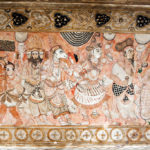
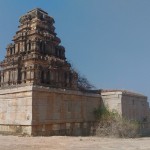
Our readers over at Indic Civilizational Portal would be familiar with our recent article on Naava Sastra, and Bhaaratiya Sea-faring history. Picking up from our recent article on India’s first Naval Chief, is today’s Post on Andhra Maritime Heritage
History
“Andhra has a long coast line, over 1700 kms. in length. It extends from Lake Pulicat in the south to the minor part of Baruva, south of Gopalpur. The coast carries two of the largest deltas of the Peninsula, namely, the Krishna in the south and the Godavari in the north.” [1, 229]
Aandhra’s Maritime Heritage is both antique and accomplished. Ancient Aandhras plied not only the Eastern Sea (Bay of Bengal), but the Western Sea ( Arabian) and the rest of the Indian Ocean. They certainly reached Burma (Myanmar) and the remainder of South East Asia.
It was historically a great commercial power as well. Ports such as Kakinada and Srikakulam were prominent in antiquity, Motupalli & Machilipatnam in the medieval, and Coringa & Vizag in the modern.
Gautamiputra Satakarni styled himself as Tri-samudra-toya-pita-vahana (‘He whose horses drank from the 3 seas‘) as well as ‘Lord of the Eastern & Western Seas‘. However, it was Vasishtiputra Satakarni who is known as the Lord of Ships, boasting of a large navy. Both he and Pulomavi II issued coins with Ships as proof of their Naval Conquests.
Ajanta Caves (famous for their Satavahana era paintings) were also proof of this love of the seas.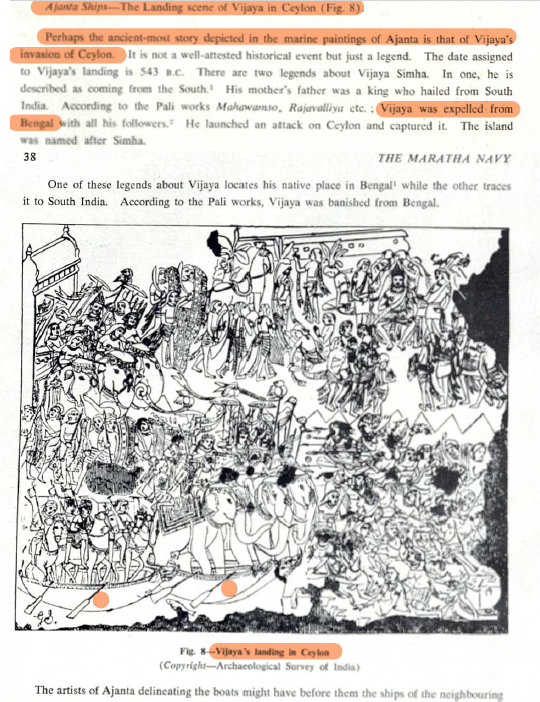 Subsequently, the next Aandhra empire would continue in this tradition. Narasimhavarman Pallava would shelter the Sinhalese prince Maanavarman, and would send 2 naval expeditions to place him on the throne there. Narasimhavarman would be considered the most powerful ruler of Southern India.
United Aandhra
As repeated numerous times, Kakatiya Ganapati Deva was known for his sharp commercial policy and encouragement of international trade. This was memorialised by his Abhaya Saasana at the coastal entrepot of Motupalli. Though Machilipatnam & Yanam replace it in later ages, the indigenous culture will always be better represented by Motupalli. Interestingly, Machilipatnam/Masulipatnam, vulgarly known as Bandar, was also a Kakatiya-era port
“Kakatiya rulers encouraged maritime trade. Merchants from China, Myanmar (Burma), Sri Lanka, Indonesia, Rome and other cities of Italy visited the famous Kakatiya ports like, Motupalli, Machilipatnam, Krishnapatnam to purchase the famous Andhra textiles, diamonds, spices, carpets, etc. In exchange they sold, horses, silk, glass, etc. Tax known as Revu Sunkam was levied on the imports and exports.” [2, 79]
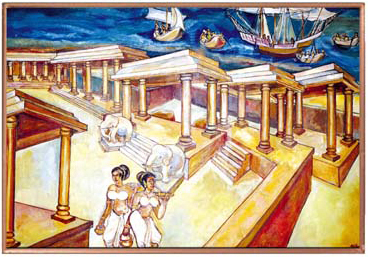
“The Venetian traveller Marco Polo visted Motupalli about A.D.1293 and recorded his impressions about the wealth of the kingdom and the efficiency of its administration”. [2, 79]
The 500 Svamins of Ayyavolu had their own sea-borne achievements: “A perusal of these records shows that they had also a prasasti, not a whit different from but completely identical with, that of the Veera Balanjyas. The Ayyavoles, or lords of Ayyavalipura, also claim to have been the protectors of the Veera Balanjya dharma, to have obtained pancasata veerasaasanas, evidently the same as those claimed by the Veera Balanjya union, and to have immigrated from Ahicchatrapura to Ayyavali, the modern town of Aihole, in the Hangunda talik, Bijapur district” [4, 397 they had 32 sea ports, eighteen cities, [4 , 398].
The Reddi dynasty was not only an oceanic commercial power, but also a naval power in its own right. Pirates are often used to derogatorily paint Indian naval achievements, but Hindu admiralty would make effort to stamp out these outlaws when opportunity permitted.
“Prolayya Vema Reddi, the chief leader to the South of the Krsna, re-captured the coastal tract from the hands of the enemy and emulated the example of his predecessors, the Kakateeya monarchs of Warangal, in clearing the seas of pirates.” [4, 404]
Following the Fall of Warangal to Turkic invaders, the political gravity shifted to Golkonda and the commercial activity to Machilipatnam. There has been some debate about whether Machilipatnam and Motupalli were distinct. The present consensus indicates that they were.
European Mercantilists
Although the entry of European mercantilists would be heralded by the piratical portuguese, it would be the english who would make the biggest impact.
“”Globe’ arrived in Machilipatnam in January 1611. The English opened negotiations with the ruler of Golconda for trading facilities on the coast of Andhra. The English Company was permitted to establish a factory at Machilipatnam in 1611.” [2, 160]
It was the diamond trade, more than anything else, that brought traders from around the world to the coast of Aandhra.
“The highway from Golconda to Machilipatnam port was overcrowded by travellers and merchants of different nationalities. Machilipatnam rivalled Surat, the Mughal port on the west coast. The growth of trade in diamonds and textiles brought the British, Dutch and French trading companies to Machilipatnam and Golconda.” [2, 153]
With the fall of native rule and varnashrama dharma, a curious change in occupation could also be noted during these time period.
“Thousands of workers were employed in more than twenty diamond mines in active operation [Vijayawada, Kurnool, & Vajrakarur]. These mines were operated by private contractors under royal licence. Most of the licencees were Telugu brahmins. As a matter of fact a new sect of Telugu brahmins mostly engaged in diamond trade emerged. They were known as Golconda Vyaparis or Golconda merchants. The income to the state from the royal licences were so huge that it enabled the Golconda kings to engage in many wars with the neighbours.” [2, 152]
Boat-building
The construction of ships is an antediluvian art. It is essential for any polity to ply its trade on river or sea, due to the cost-effective benefits compared to land trade. A rule of commercial thumb is that it is generally 1/10th the cost to ship something by water than it is by land.
- Jinu/Langaru/Rekku—Anchor
- Taramballa—Balancing board
- Eruva—Keel
- Pankaya chakka/Tolabattu/Kattuva—Lee board
- Koyya/koykarra/kompu—Mast
- Tandu karra/Kolalu—Oar
- Meddu/Kola—Paddle
- Badi karra/Badditi chakka—Planks (side)
- Unu kolu—Pole
- Ongu/Vangalu—Ribs
- Chukka/Hal—Rudder
- Chapaduppata/Dupatta—Sail
- Aniya/Talamaram—Stem
There were different types of ships in telugu literature : kappali, jonu, valli, valika, and samman. Foreign observers favourably appreciated them.
Nicolo conti: “They (they natives of India) build some ships larger than ours, capable of containing two thousands butts, and with five sails and as many masts. The lower part is constructed with triple planks in order to withstand the force of the tempests to which they are much exposed. But some ships are so built in compartments, that, should one part be scattered, the other portion remaining entire, may accomplish the voyage” [4, 405]
“The main boat forms [in modern Andhra] include the raft Teppa, a design of the catamaran, sewn plank built boats, such as the Peddavala Padava, Karavala Padava and Padava, with or without keels and the nailed boat forms like Kakinada Nava, Dhow, Botelu, Shoe dhoni and Carakka Padava, used in coastal areas. Classical telugu literature also mentions oda, nauka, kappali, yanapatra, droni and tarani.” [1, 229]
Catamaran
This is based on a five logs, with two stem pieces to give a sharp prow, while the aft is truncated. The logs are leveled and pegged together. The best quality is found in Visakhapatnam and uses karra and maddic timber.
Sewn Boats
“Sewn plank built boats with keel, as seen around Visakhapatnam coast, to the north of Godavari delta are all Padavas…These sewn boats without keel are built of seasoned planks and stitched with coir twine. All types of padavas are built of teak timber…The boats are made water proof with the plank joints filled with coir fibre mixed in tree resins.” [1, 230].
Kakinada naava
“The Kakinada nava, a nailed plank built boat without keel is built with an initially laid skeletal frame and has strong ribs, stem and stern posts, and thwarts, apart from a hull of hard wood and side planks. The ribs give strength to the boat form. A 16 m. long Kakinada nava has as many as 36 ribs“. [1, 230]
Culture & Communities
In Aandhra history we tend to hear about the same communities over and over again, competing over their varying claims to political, economic, or religious power. However, the humble communities of the sea are often forgotten in the midst of all the din. Though those of us hailing from vegetarian families might not care all too much, the pescatarian diet remains pivotal for the majority of the state that is non-vegetarian. Fish (when not contaminated with mercury) is healthier, more ethical and all-round better for the average human being. These traditional fisher castes are therefore central to a self-sufficient, self-sustaining, sustainable society (since sustainability is all the rage these days).
Patronage or at-least state protection for the livelihoods of these traditional communities will permit them to ply their time-tested trade, which has been their way of life since time immemorial. These fisher folk, or dheevaras, are often synonymous with boat-building centres.
“Quite a number of the above stated types of boat forms are built at a number of places all along the Andhra coast. To the south of the Krishna delta, Kottapatnam, Itamukkalla, Ramayyapatnam, Chennaiyapalayam, Tummalapenta, Isakapalle, Maipadu, Krishnapatnam, Kanuparti, Pamanja, Tupila, Durgarajapattnam, Pudi are the main building centres for the smaller crafts.
On the main Circars coast, north of the Krishna mouth, mainly places as boat building and repair centres are known. These include Narasapur, Nizampattinam, Machilipatnam, Talarevu, Kakinada (Jaganathapuram), Korangi, Yenam, Bandumurlanka, Perupalayam, Pudimadakka and Bimilipatnam. Narsapur, Veeravasaram, Korangi had regular yards to repair and build boats.” [1, 236]
One can only imagine how impressive the ship-building centres were in ancient and medieval Aandhra.“With the arrival of colonial traders, much of the boat building activity in Andhra has been on steady decline.” [1, 236]
Today, ship-building continues at a more modest pace.
“Coringa on the Godavari delta inside the bay and Machilipatnam was the main centre of sea-voyages and building yards for the vessels 100 to 300 tones” [1, 236]
Conclusion
Native Sea-faring culture and Indigenous Ship-building are pivotal to any serious society that is serious about international trade & security. Outsourcing everything (including your brain) is a recipe not for success but for slavery. As our article on Andhra Economic Society demonstrated, ports & local ship-building in the hands of the local people are pivotal for local agency and state self-respect. State leaders should get serious with the Centre about not grabbing each and every port and airport from locals and handing it over to the same outside businessman over and over again, in the name of scale. A balance between respect for outside investors and local ownership must be struck—for everyone’s good.
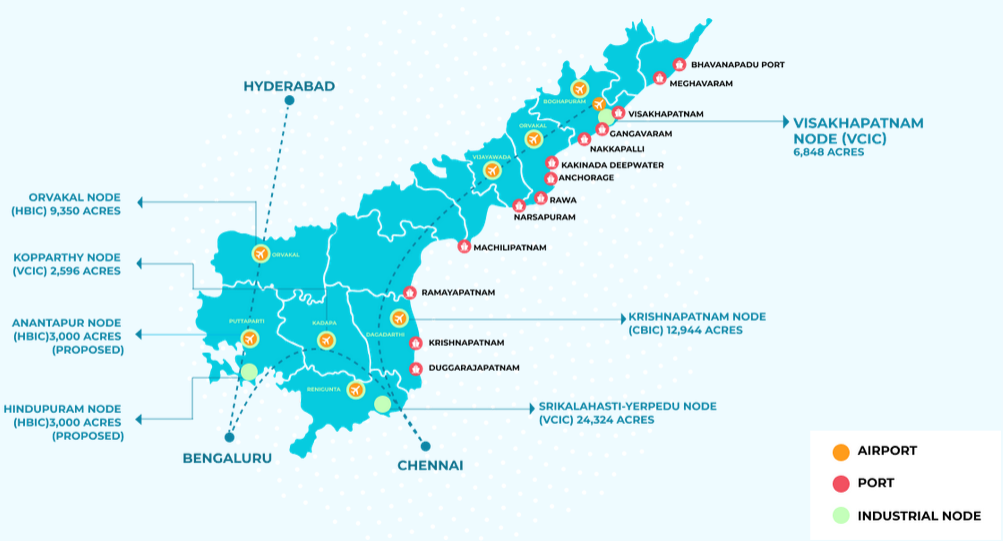
Mastering large-scale ship-construction means starting small and simple. Encouraging local fisherman to continue to ply their ancestral trade in their own ships (built by their own hands) is one way of ensuring that cottage industries don’t die out. Massive industries (whether PSU or MNC) come and go based on the vicissitudes of fate.
The Maritime Heritage of a state and culture as ancient as Aandhra’s should never die out. It’s people must invest in it. Tourism is certainly a starting point (with an emphasis on safety & quality), but those who scream at the top of their lungs for the fortunes of aquaculture should understand, that the best and freshest catch is always caught not by the fish-farmer, but the sea-faring fisherman. That is the importance of a state—any state—retaining some measure of ship-building capacity and sea-faring culture. It is not only practical, but can pique the imagination.
References:
- Arunachalam, Prof B. (Retd). Indian Boat Designs and Forms. Maritime History Society. Mumbai. 2009
- Rao, P.R. History and Culture of Andhra Pradesh. New Delhi. Sterling Publishers. 1994
- Sastri, K.A.Nilakantha. A History of South India. New Delhi: Oxford. 2015
- Malampalli, Somasekhara Sarma. History of the Reddi Kingdoms.Delhi:Facsimile Publ. 2015