Picking up from where we left off, today’s Post is on a figure that played a pivotal role in the court of the Kalachuris of Kalyani Karnataka.
In modern India, language chauvinism remains an irascible trend. Telugus care only to recite homilies on Telugu but in fact do nothing, soft-spoken Kannadigas are now fed up of disrespect, dravidianist Tamilians want to impose while themselves crying imposition, and Hindi (a very recent language of much-questioned provenance) attempts to lord over all.
And yet, the sovereigns of yester-year knew better. The ecumenical Dharmic doyens of yore magnanimously gave patronage to languages beyond their provenance and province. The Imperial Andhra Satavahanas embraced whichever localities they ruled, the vaunted Eastern Chalukyas were Kannadigas who lavished encouragement on Telugu, and the celebrated Krishnadeva Raya (not wading into that origin debate…) showered attention and funds on all. This all-India mentality had countless examples not only in Kings but in non-aristocrats as well. Bhaarathavarsha may have been united by Samskrtham, but it preserved countless languages and dialects amid people with a common origin.
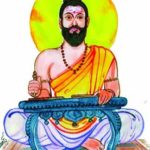
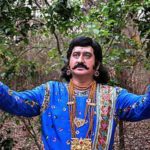
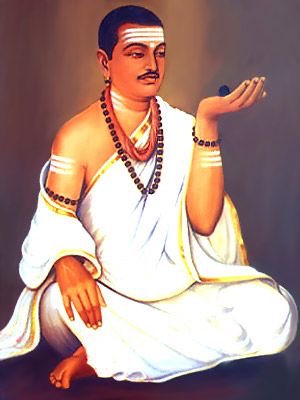
One such Bhaaratheeya was a man named Basavanna, better known today as Basava.
Background
Kannadigas and Telugus normally get along famously, in “chilled out” fashion. It is as though we both know enough to respect each other’s languages and customs, and roll our eyebrows at the parochialisms of both far North and deep South. And yet, the drums of the Dakshinapatha were heard throughout India during the heyday of the all-conquering Satavahanas & Rashtrakutas. Such imperial peoples naturally have a penchant for provincial respect and idiosyncrasies. Being joined at the hip, we find more in common with each other than others.
However, historically competing claims over mighty Vijayanagari (not wading into that origin debate either…) have predictably led to touchiness over mighty personages. Nevertheless, the spirit of truth must respect the true story behind our common heroes and heritage. Despite their Telugu origins, Aandhras have no problem sharing Thyagaraja and Syama Sastri. Cultural figures belong to not only those they originated from, but those among whom they ministered the most. Another such dynamic personality was an actual minister of Karnataka who, it turns out, actually originated from Aandhra.
Per Pandit Kotavenkatachalam, Basaveshvara was an Aandhra Niyogi Brahmin.

He was born in Kalyanpura in modern Telangana. Despite his Telugu origins, his family had settled in Karnataka and avidly embraced kasthoori Kannada as their own.
Elsewhere, Kannadigas claimed he was born in Karnataka itself.
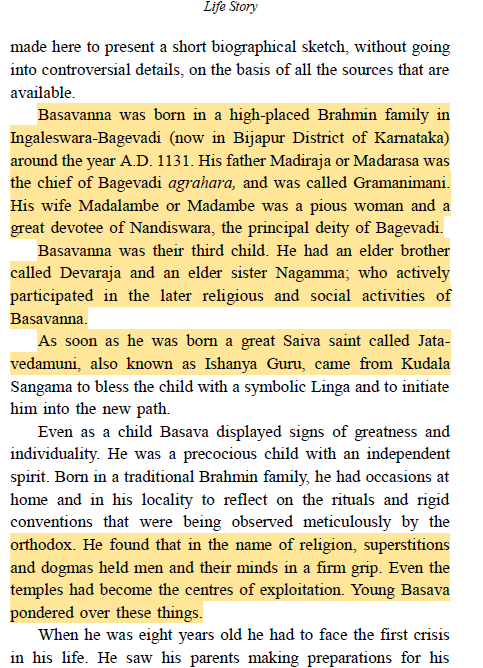
Nevertheless, the young man saw the need to pursue higher education rather than settle in domestic life. He left the place of his birth in search of this calling.
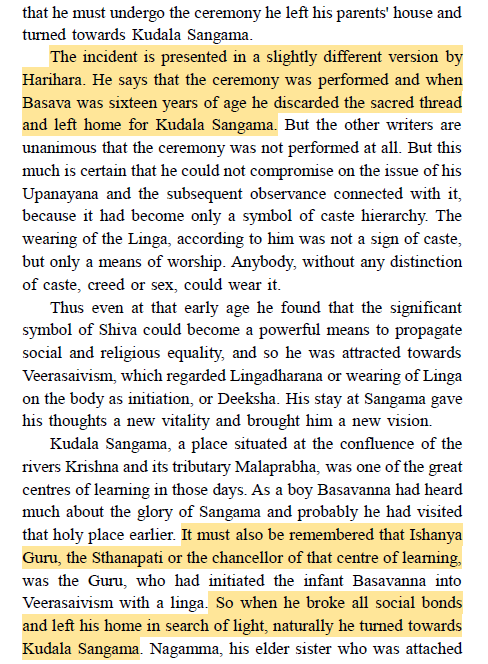
“He might have spent about twelve years at Sangama. Then
came a turning point in his life. Baladeva, his maternal uncle,
was a minister of finance (Bhandari) under Bijjala of Kalachurya
Dynasty. He offered his daughter in marriage to Basavanna. But
Basava, dedicated to the lofty ideal of spiritual pursuit, was not
quite prepared to accept the offer. But Ishanya Guru convinced
him that he should participate in worldly life with his new
message to mankind.
Basavanna left Sangama for Mangalavada (modern Mangalavedhe,
near Pandarapur in Maharashtra) the capital of
Tardavadi of which Bijjala was the ruler.” [1, 7]
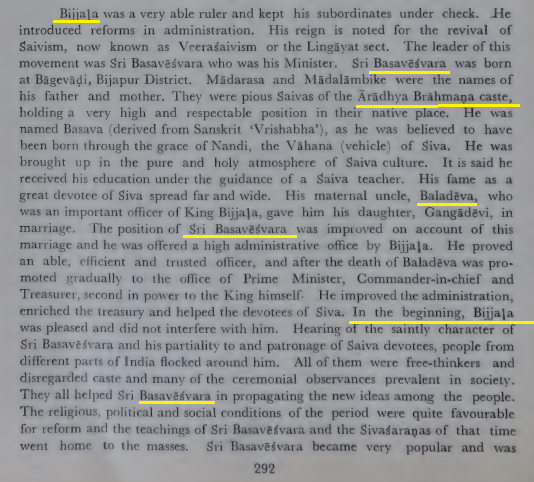
As written in the introductory remarks, the Kalachuris of Kalyani Karnataka were important figures. They were feudatories of the Western Chalukyas, whose empire was tottering. As a result, revolution was in the air, and Kalachuri Bijjala would feature as a figure in all of this. Basava would participate in his administration as a treasurer, so as to allow the latter to spread his life’s message. He would stay there from 1154 to 1167 CE, until the violent end of Bijjala’s middling reign. [1, 8]
Basavanna established an academy called Anubhava Mantapa, open to all. Saints from all over the land came:
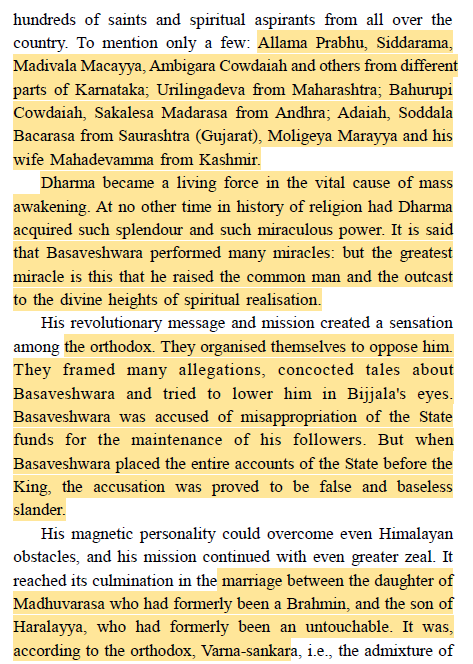
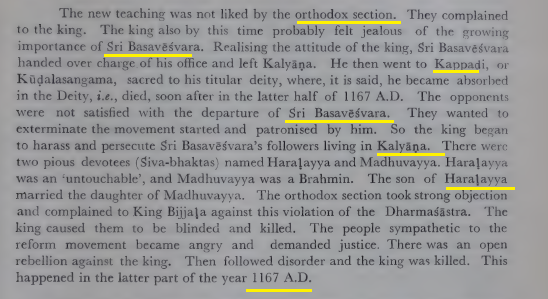
This naturally created a furor among the orthodox. They petitioned Bijjala to intercede. Despite his respect and appreciation for Basaveshvara, he relented in favour of punishing this union.
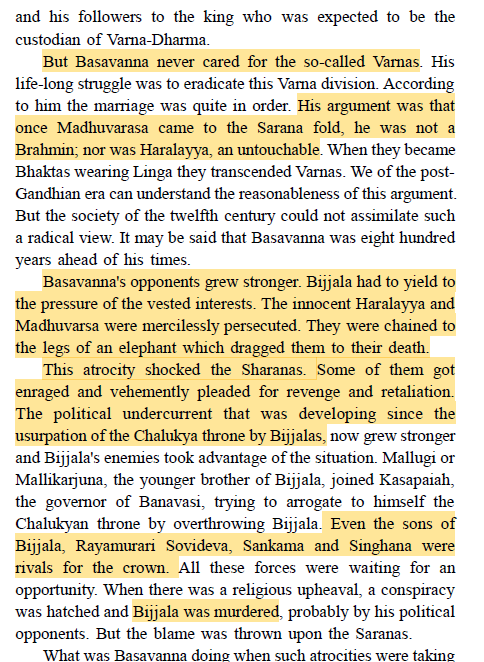
“The Sharanas left Kalyana and scattered in different
directions. One prominent section, including Gangambike,
Nagamma, Shiva Swamy and others headed by Channabasavanna,
proceeded to Ulavi, a place near Gokarna in North Kanara.
Neelambike came to Kudala Sangama with Appanna, a devout
disciple of Basavanna, to be with him in his last days.
As Basaveshwara was not merely a social reformer but a
prophet and a great mystic, he could perceive the divine
dispensation that was working through these happenings. He
thought his mission was over, and he could return to Lord
Sangameswara from whom he had received the mandate to be
the instrument of the Divine Will. He attained Linganga
Samarasya, i.e., consubstantial union, with Lord Sangama
probably in the year 1167, when he was only 36 years old” [1,11]
Thus he left mortal coil at the comparatively young age of 36.
Life’s Work
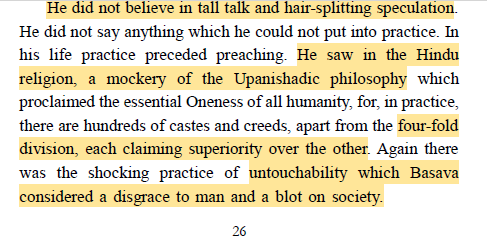
“The system of Caturvarna, the fourfold division of society into the Brahmins, the Kshatriyas, the Vaisyas and the Sudras might have done good in the beginning, when its spirit was properly understood. But in the course of time it led to a fragmentation of society. In the original form it might have been a doctrine of social solidarity. But ultimately it ended in the decadent caste-system, the essential principle of which is division based on birth the abhorred system that has destroyed all ideas of unity.” [1, 3]
The only job of a Brahmin is to study and chant Vedas and then to teach Vedas to others. He should not earn money.#Periyava pic.twitter.com/c38K3snmzK
— Sage of Kanchi (@haraharasankara) November 6, 2017
Varnashrama dharma came with specific rules and regulations. Varnas were not separate tribes or nations within nations (as today), but different classes of the same Vedic Bhaaratheeya Nation (Vedic Indian Ethnicity). Those who did not follow their varna dharma were boycotted and eventually excommunicated and pushed across the Indus (becoming Yavana).
Brahmins left Vedas and defaulted in performing Samskaras. They studied to become babus of beauracracy and entered all materialistic businesses. They ceased to be Brahmins.
— Sage of Kanchi (@haraharasankara) June 20, 2019
The death of spirituality led to the rise of materialism (Lokayata) facilitated by Charvakas, leading to the destruction of varnashrama dharma. A spiritual system that works for a spiritual society can, in the hands of a materialistic society, become a materialistic tyranny. As a result, dharmic became a brand and ideology rather than the principle of righteousness and virtue that it once was.
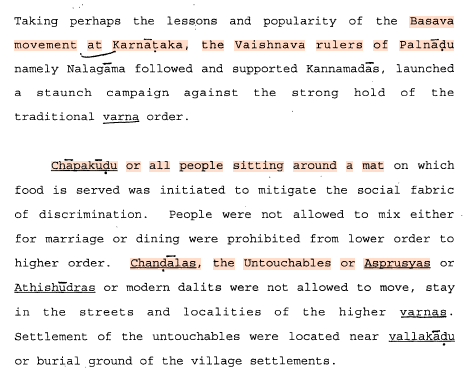
“All the dharmasastras were written or interpreted in support of this view and thus social injustice received the stamp of religious sanction. Added to this was the ignominy of untouchability. The plight of the untouchables was miserable.” [1, 4]
This is the crux of the problem facing Hindu Society today. Some have chosen to reinterpret Chaturvarna as purely spiritual/guna based; others, like Basavacharya, did away with it all-together.
Achievements
- Standardised the Veerashaiva Sampradaya
- Threw open the doors of temples and academic institutions to all castes & genders
- Worked for true equality across occupations & secured royal patronage for this
- Authored numerous vachanas to spread his message
- Attained adherents throughout India for his new sect
The Veerashaiva (alternatively Lingayat) movement is typically traced to Basaveshvara, although many modern adherents assert it antedated him. However, it is undeniable that he standardised the system of worship, and used his position as an Aaradhya (brahmin instructor) to throw open the doors to their non-brahmin counterparts (Jangama). His life story is contained in the Basava Puraanamu, by Palkuriki Somanatha.
Basavanna’s accomplishments are litany, perhaps none more so than his commitment to absolute equality in society. He focused on goodness of character rather than merely convert for the sake of inflating numbers. “Haralayya, Nagamayya, Dhulayya were equal in all respects to Bacarasa, Shantarasa, Madhuvarasa who were converted from
Brahminism.” [1, 32]
Despite this achievement, most conspicuous was his aim to end gender discrimination itself. [1, 32] ” A The age of Maitreyi and Gargi had
ended long long before. Women and Sudras had no right of
access to the Vedas or any other scripture. In such circumstances,
Basava boldly declared that there was no distinction in religion
between man and woman. He threw open the doors of spiritual
pursuit to every one, man or woman, who would enter with a
pure heart and earnest desire. Hence we come across several
women saints like Akkamahadevi, Akkanagamma, Neelambike,
Gangambike, Lakkamma, Lingamma, and Mahadevamma and
others whose very names are associated with elevated spiritual
attainments.” [1, 32]
Presaging the immortal words of Annamacharya hundreds of years later, Basavanna declared all were equal in the eyes of Paramaathma. To him, Bhakti was the fountain from which all could drink and contribute, provided they had purity of heart and action.
Rather than fixate on the multiplicity of Divine forms he touted the all-encompassing nature of the Ishtalinga and advised his chelas to focus on it for meditation. To him, worship was not meant to be mechanical and dry, but personal communion. [1, 35]
The Jangama, to him, was the highest position and status: “But the ‘Jangama’ has a different connotation. Basava read
the term in its widest sense. To him it was not a particular caste
of sect. “Is there harshness in Linga? Is there a caste in
Jangama?'” he asks. The Jangama is one who has become all
pervasive. He is a true Jangama who, having annihilated his ego,
embraces the entire universe and yet transcends it. Having
entered into cosmic consciousness through intuitive awareness
the Jangama ceases to be an individual.” [1, 41]
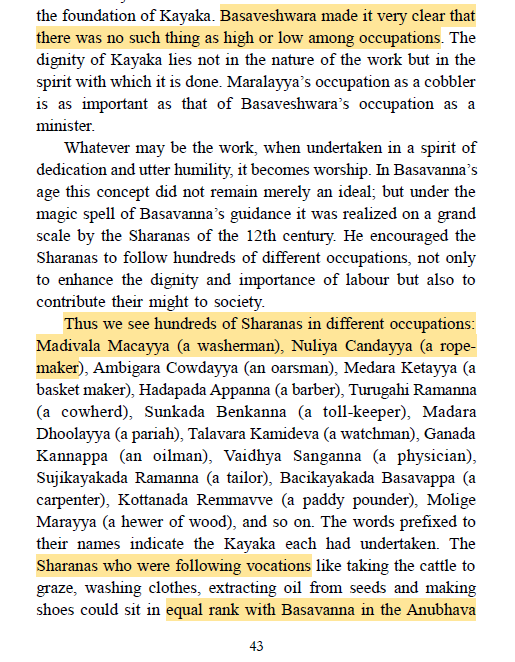
Most impressive was his assertion of equal rank across occupations. He exhorted the dignity of honest-labour over mindless wealth-accumulation and avarice. To him, all honest work was worship. What’s more he was vehemently against any form of exploitation. [1, 47]: “
 While the Vachana literary form is traced to Devara Dasimayya (the first vachanakara), it is Basaveshvara who is credited with wielding it most deftly in the service of the Veerashaiva cause. [1, 49] He deploys it in tandem with credo of living amid samsaara (i.e. doing one’s duty in the world, and enjoying the fruits) while seeking spiritual elevation at the same time. [1, 57] Samarasa prajna (transcendental intellect/consciousness) is experienced when one attains the state of union between Anga & Linga. [1, 57] This Divine Bliss, according to Basavanna, is greater than any material pleasure.
§
“”Bhakti is of the nature of the highest Love,” says Narada
Bhakti Sutra. It is firm love focussed on God without any selfish
desire. But so long as we find pleasure and great satisfaction in
the visible worldly objects, we cannot turn towards the invisible
Divine Power.” [1, 13]
§
“The Rahu of this world has
swallowed me and I am in a total eclipse. I am like a frog under
the hood of snake. The serpent of the world has bit me with the
venomous fang of the five-fold senses. My own mind obeys me
not. It leaps about like a monkey on a bough.”
I have a thought, it has another,
This way I pull, it pulls that way;
It grates and frets me too,
To toil and moil;
And when I long to meet
Lord Kudala Sangama
It casts a darkness on my path
This Maya.
“In a fit of pleasure I am exposing myself to distress without
measure. Do not look into my heart. It is like a country fig. My
life is like a dog licking the sharp edge of a sword for ghee. I
have now become like a beast fallen into a bog. Lord, O Lord,
I cry, could you not answer me ?”” [1, 14]
§
“He is aware of the need to establish contact with the Divine,
but at the same time he is painfully aware of his limitations. But
he does not despair. It is only an initial stage which appears
early during the spiritual pilgrimage. He triumphantly goes
through this ordeal which is called ‘The Dark Night of the Soul’
by some of the western students of Mysticism, and advances to
a stage of declaring :
This mortal world is but the Marker’s mint;
Those who earn merit here, earn also there,
And those who earn not here, earn neither there;
O Kudala Sangama Lord.” [1, 15]
§
“Now his faith is purified and shines with the crystalline
brilliance of spiritual fulfilment. He realizes, by his Guru’s
grace, the ultimate aim of life and also the path which he has to
tread. With total dedication to the Lord he seeks shelter in him:
My father Thou, my mother too;
Thou also all my kith and kin,
Save Thou no kindred is to me
O Kudala Sangama Lord,
Do with me as thou please.
This unparalleled love and absolute surrender known as
prapatti and sharanagati, in the Vaishnava school of Bhakti
make him an instrument of the Divine will. Nothing remains that
he can call his own.” [1, 15]
§
Thus, one can see how whatever the controversies appended to Basaveshvara’s life, he cuts to the core of Veda, while official rejecting it: Advaita Vedanta. “He is able to discern the power of God in every object of the world. He dispels the ‘ego’ in him and keeps open his heart to receive that divine grace. Annihilation of the ego is an essential step in the path of
Bhakti. At every step we build the barriers of ‘I’ and ‘mine’. It is only when the limited ‘I’ perishes that the limitless or universal ‘I’ descends. The ego is a thousand-headed hydra
which raises its head in the form of self, of poverty, of power, of caste superiority, and even of knowledge. The seeker must cautiously pluck its head and prune his ego whenever and in
whatever form it crops up.” [1, 16]
The path to this is stipulated by him as Shat-sthala, or 6 stages to Siva. They are as follows:
“This is what is called Naisthika Bhakti or Bhakti of
unflinching zeal and pointed faith, of Maheshwara Sthala, the
second of the six steps called Sat-Sthala, leading to spiritual
realization, as laid down by Veerasaivism, and followed by all
the Sharanas including Basavanna. Bhakta, Mahesa, Prasadi,
Pranalingi, Sarana and Aikya are the six stages” [1, 17]
This saadhana (spiritual practice) conditions the soul to rise above the ego and see the Divine in all things, even in one’s own voluntary and involuntary actions. Rather than the Doer, the bhaktha realises that he or she is merely an instrument or conduit. Basavanna preaches steadfastness in faith and gives notice to the ardent devotee that he or she will face ardent trials and terrible tests before being deemed fit for final dissolution into the Divine. [1, 18] This reality can be seen in the lives of many of Basaveshvara’s compatriots.
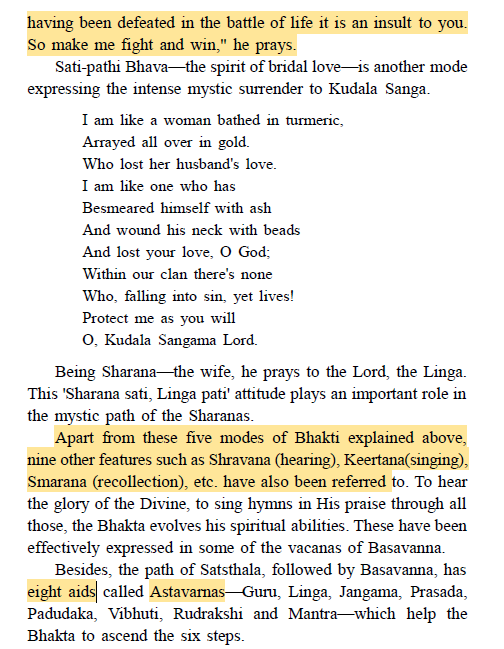
Though he begins with Dvaitha (duality) he ends with Advaitha (non-duality) which is the path of the Veerashaiva. This state is called Aikya-Sthala, where there is direct and indirect intuition of the Way of the Divine. [1, 22] The highest state is effective union, Linganga Samarasya (consubstantial union, of anga and linga). [1, 22] Perhaps the most compelling aspect of Basavanna, is that “His Bhakti strikes a balance between pravrtti (participation in world activity) and nivrtti (withdrawal from all activity)”. [1, 24] In short, in order to earn the right to renounce the world, one must first contribute to society and uplift our fellow man.
His profundity can also be seen here where he exhorts his followers to lead a life of balance, rather than alternate between hedonism and self-mortification.
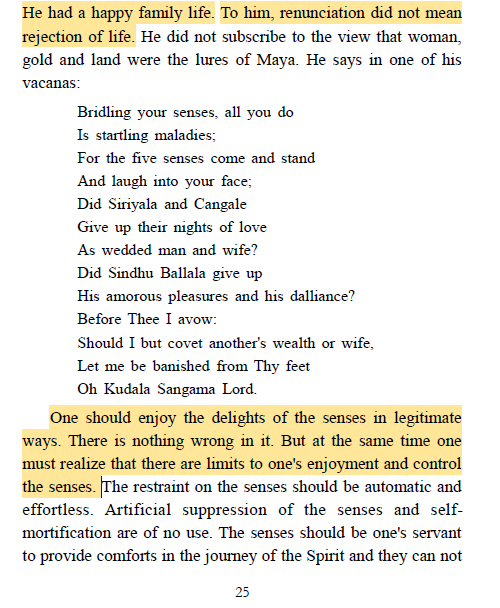 Worldly pleasures in healthy amount is acceptable, but anything in excess is poison. Indeed, a life of mere pleasure does not lead to fulfillment. Greater and greater quanta of material pleasure or material things is the requirement for the same dopamine high that one aims to maintain. It’s never enough. He saw more long-lasting fulfillment in the upliftment of mankind.
Legacy

“The great saints and poets of the world can teach
us how to acquire the spiritual strength we need to pull ourselves out of the rut of daily humdrum circumstances. Basaveshwara or
Basavanna, of Karnataka, was a saint, a poet and an ardent social reformer, and is among the great spiritual teachers of India.” [1,1]
Basava’s impact on Aandhra and Karnataka cannot be minimised. He managed to lead a tremendous social upheaval that would have repercussions for centuries to come. It would simultaneously unite a section of Heterodox Hindus society whilst placing it in direct opposition to orthodoxy.
Interestingly, there was a namesake Basava many centuries later.
Basava Rajiyama
16th century. Kottura village, Aandhra
Authored by Basavaraja, who was a Veerashaiva descended from Nilakantha, this work is also called Vrsha-rajiyam and Basavakam. It is composed in Sanskrit with ancillary verses in Telugu. His father was fittingly named Namah Shivaya, and his teacher was Aradhya Ramadeshika.
The work itself is said to belong to the Agastya/Rudra Sampradaya of medicine. Better known as Siddha Yoga, a distinct form of medicine collateral to Ayurveda, its purpose was to contribute to the general health and well-being of the common person.
“This work was very popular in Andhra Pradesh and Karnataka, especially in the former region. It was such a meticulous compilation of numerous authoritative prescriptions that the physicians acquainted with this work considered it unnecessary to study CS [Charaka Samhita], SS [Sushruta Samhita], or MN [Madhava Nidana]” [3,35]
Successors
The great Basavacharya naturally had numerous successors to take forward his cause. Perhaps the most notable was the Padmanayaka, Brahma Naidu, who carried forward this effort to integrate chandalas (dalits) into the Hindu fold. Nevertheless, there were countless others in Karnataka.
“Fortunately a couple of inscriptions relating to Basavanna have been brought to light. Their value as authentic evidence of some details of his life is immense. Of all the Veerashaiva works, Basavarajadevara Ragale in Kannada and Basavapuranamu in Telugu are very important as their authors, Harihara and Palkurike Somanatha respectively, were near contemporaries to Basavanna. Basavapurana of Bhima Kavi, Sivatattva Chintamani of Lakkanna Dandesa and Amalabasava Charitra popularly known as Singirajapurana of Singiraja may also be considered here. Their intention was not to write history but to sing the glories of Basavanna with devotional fervour leading to deification.” [1, 4]
Conclusion
Varnashrama dharma was by birth, but jaathi and jaathivaadha is a sickness. It is a mental illness invented by fraudacharyas, likely descending from foreign invaders (or their campfollowers). Jati means genus or species. That is how disgusting jatiwadis are in their thinking. The correct word for caste is ‘samudaya’/’samuha’. A janatha has to think like a nation, not nation-within-nation. Those who seek to divide vaidika society whilst uniting with foreign invaders can talk of varna-dhroham all they wish…but they are the dharma-dhrohis fit for bahishkar.
Caste-defamation was considered a punishable offence by Sukra-niti. Time is long overdue for various varnas to clean house internally, lest the authority of the commander of all varnas be asserted to clean house for them. Beef-in-vedas pontificators pontificating on Rajadharma is all the more risible. According to them, the fake “jati-system” is so much more intrinsic that varna that in the future apparently even “jatis will have their own varnas!!!”. If this is not a sign of the stench of insanity in this lot of “hi iq types”, nothing is. Is it any wonder that a Basavacharya had to take birth among us to restore sanity to the spirit of Sanaathana Dharma?
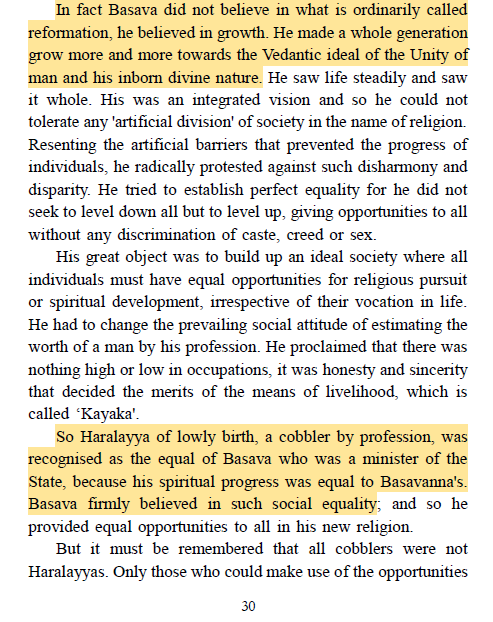
“Thus he declares that man’s worth should be judged not by
his birth but by his thoughts and deeds, by his conduct and
character.
He was disgusted to see hundreds of castes, sub-castes and
the degrading wrangles among them. He conceded only two
classes among human beings: Bhakta and Bhavis, i.e., the good
and the bad. He illustrated his affirmation with a score of
examples of sages and seers and showed that caste by birth
could never be the criterion for the worth of a man” [1, 27]
References:
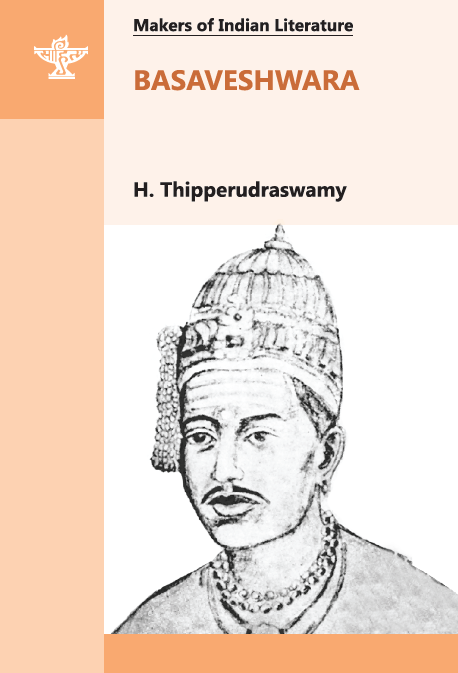
- Thipperudraswamy, H. Makers of Indian Literature: Basaveshwara. Sahitya Akademi. 2017
- Kota, Venkatachalam Pandit. Chronology of Ancient Hindu History Part I.
- Rao, S.K. Ramachandra. Encyclopaedia of Indian Medicine (Volume One): Historical Perspective. Mumbai: Popular Prakashan. 2005
- Divakar, R.R. (Chairman). Karnataka Through the Ages. Bangalore: Govt.of Mysore. 1968